Nobody likes political correctness. Which puts us in the position that it isn’t correct to defend political correctness. It is like picking your nose or flashing in a park – not the kind of thing you want to be associated with.
“I’m so bored. I hate my life.” - Britney Spears
Das Langweilige ist interessant geworden, weil das Interessante angefangen hat langweilig zu werden. – Thomas Mann
"Never for money/always for love" - The Talking Heads
Tuesday, February 08, 2022
Nobody likes political correctness
Saturday, February 05, 2022
Parties
The part about parties
Thursday, February 03, 2022
Flirting and modernity
In the 18th
century, English essayists expressed a lotta anxiety about female reading. The “new” genre of the romance fiction already
created its problems for the classically trained, who rightly suspected that the
prevalence of literacy was having a massive, unpredictable effect.
As Samuel Johnson wrote:
“In the romances formerly written, every transaction and sentiment
was so remote from all that passes among men, that the reader was in very
little danger of making any applications to himself; the virtues and crimes
were equally beyond his sphere of activity; and he amused himself with heroes
and with traitors, deliverers and persecutors, as with beings of another
species, whose actions were regulated upon motives of their own, and who had
neither faults nor excellencies in common with himself.
But when an
adventurer is levelled with the rest of the world, and acts in such scenes of
the universal drama, as may be the lot of any other man; young spectators fix their
eyes upon him with closer attention, and hope, by observing his behaviour and
success, to regulate their own practices, when they shall be engaged in the
like part.”
When the
adventurer is a bit of a scoundrel or a woman, the hypnotic effect upon the
female displaced another bit of the hierarchy – which is why it was necessary
to supervise female reading especially. There was a copious literature about
just that necessity, which has been culled by many feminist literary historians.
But that
scene of literacy and reading in Britain looked a bit differently to intellectuals
from less developed lands. Georg Lichtenberg, an anglophile whose visit to
England was, perhaps, the most dramatic adventure of his life, was one of them.
For him, a woman reading a newspaper was the very image of civilization. And,
he suspected, it was a scene lodged in the superstructure, underneath which
there was a material infrastructure that was dissolving the old separation
between private and public, a structure that held women prisoners of the
household. Although you would never know it from today’s “war of civilization”
Western press, in which the Moslem world’s veiling of women is a throwback to
the stone age, in Europe up through the 19th century there were very
strict rules that applied to women in public. They were not supposed to be
there. The flaneur might be an outlier – the flaneuse was an outlaw. We imagine
city streets in the nineteenth century in the image of 21st century
costume dramas, but in reality, the streets were for men. The women who
appeared on the street was subject to an initiation that had much to do with
the assumption of her sexual availability. To be appropriately covered was a
norm for women that was extremely hazardous to broach.
A French
novelist, Pierre Senges, has recently written a novel that proposes to view
Lichtenberg’s Suedelbucher – Waste books – as fragments of a novel. Lichtenberg
himself was a reader of novels and a thinker about the genre. He wrote in a
sort of proto-Kittler style about the connection between the novel, modernization,
and women, using the English cityscape and mode of transportation as motives to
novel-writing – taking up the challenge of the “levelling of adventure” that
made the (female) reader a potential heroine and seeing in it a freedom from
the old ways.
Lichtenberg tutored
English students in Gottingen, and first visited England in 1770. Those features
that worried the Tory moralist as well as Whig feminists, like Mary Wollstonecraft.
Wollstonecraft wanted education and emancipation, but was not happy about
thrusting women (the bourgeois female subject) into the public sphere:
“Females
are not educated to become public speakers or players; though many young ladies
are now led by fashion to exhibit their persons on a stage, sacrificing to mere
vanity that diffidence and reserve which characterizes youth, and is the most
graceful ornament of the sex.
But if it be allowed
to be a breach of modesty for a woman to obtrude her person or talents on the
public when necessity does not justify and spur her on, yet to be able to read
with propriety is certainly a very desirable attainment: to facilitate this
task, and exercise the voice, many dialogues have been selected; but not always
the most beautiful with respect to composition, as the taste should very
gradually be formed.”
Lichtenberg,
however, saw female publicness as the inevitable accompaniment of
modernization. He observed in England that the house scheme was such as to individualize
the residents, the family members. While in Germany children and adolescents
doubled up in their rooms, and the communal air of the household extended to
watchfulness about the comings and goings of all the members, especially the girls,
in England the house plan allowed for individuals to “own” their rooms, and the
houses were situated so as to give multiple access to the outside. In 1965, a
demographer named John Hajnal proposed that the early modern period saw a
splitting up of European marriage patterns, with the “West” – notably England
and some of France – adhering to a new pattern of family residence. He called the Western
pattern the simple household formation, in which one and only one married
couple were at the center of the household; in the East, you had what he called
a joint household formation, in which two or more related married couples
formed the household. Hajnal claimed that in the sixteenth century, the Western
type of household was new, and characterized by a demographic shift in which
marriage occurred significantly later in life. For women, for instance, the
average age moves from 20 to 25. Meanwhile, in the East, the marriage age
remained very young, and so a married couple of, basically, teenagers remained
in a household with an older couple, usually the husband’s family.
East and West, here, name Cold War entities
that don’t fit Hajnal’s data. Spain and Italy south of Tuscany is “Eastern”,
and Bohemia is Western. Nevertheless, if Hajnal’s theory is right, it says very
important things about Early modernity – namely, that the discovery of youth –
the extended time before marriage – and of “individualism” are entangled.
Lichtenberg definitely had something like
that entaglement in line with his notion that novel reading was connected to
such things as the greater chance for eye to eye contact between men and women
that came about in a modernized carriage system – to which he attributed
enormous adventurous, and thus novelistic, importance. The comparison with the “virtuous”
German system of uncomfortable coaches, potholed roads, and subpar defence
against the elements against the English system brushes back the moralist’s
scolding tone: “Furthermore, the seed of episodes are laid in the all too good
society of comfortable Post carriages in England, that are always full of well
clothed women and where, a situation that Parliament shouldn’t tolerate, the
passengers sit so that they look at each other face to face, from which can
arise a dangerous confusion of eyes, and even more a highly scandalous
confusion of legs, which leads to laughter and after that sometimes an indissoluble
confusion of souls and thoughts, so that many an honorable young man traveling
from London to Oxford will often be traveling to the devil. Something like this
is, thank heaven, not possible with our Post Carriages…”
The mark
of modernization: flirting. What Lichtenberg describes humorously and with sympathy
is found to be slightly wrong even by such authorities, 120 years later, as Freud,
who in some text decries American “flirtation”, which takes the seriousness out
of the erotic.
Monday, January 31, 2022
here we are now - interchange us
This is a paragraph from an essay Musil wrote about Bela Belazs’s famous book about film, Visible Man:
As is so often the case with these Viennese intellectuals, Musil is astonishingly sensitive to the changes being wrought by modernity – with the wisdom; of nemesis perched on the apocalyptic battlements. His reference is shrewdly to religion, rather than to other forms of art – that is, his reference is to the community of souls. The soul as Musil knew was dying out as an intelligible part of modern life. Modernism – or perhaps one should say the industrial system, under the twin aspects of the planned economy and capitalism – operated as a ruthless commissar in the great purge of interiority- and in that purge, killed, as a sort of byproduct, the humanist notion of art. In retrospect, the whole cult of art stood on the shakiest of foundations. What was really coming into being was something else – the entertainment complex. Film’s effect was not some technological accident, but a phenomenon in the social logic that was bringing us to where we are today, when the primary function of the subject is not to think – that antique cogito – but to be entertained. Here we are now, entertain us – Nirvana’s line should have a place of honor next to cogito ergo sum in the history of philosophy, I am entertained, or I am not entertained – these are the fundamental elements of subjectivity. God himself, within these parameters, is nothing other than the first entertainer, world without end.
Saturday, January 29, 2022
post-dogma
Commentaire, the French magazine (a thick journal, to use the Russian phrase), was founded on the idea that communism in France, and more generally Marxism, required gravediggers. The last phrase of the Cold War was, intellectually, a mop up operation, destroying the utopias of the postwar years in the “West” – as the loose coalition of nation states, from Germany to Australia, were called by the Cold Warriors. The name and concept was wrested out of a conservative historiography that had left its sad mark in Germany. The “West” of course called for an “East” – and in due time a South and a North.
I’ve been reading its
back pages, and came upon Jacques Revel’s introduction to a rather obscure
French philosophe of the early 19th century, Theodor Jouffroy (1796-1842),
whose essay, How Dogmas Finish, had a little cult following of rather
disparate figures since it was published in The Globe on May 24, 1825: Sainte-Breuve, Louis Aragon, and a communist
clique that included Andre Thirion. Jouffroy’s
essay is an attempt, after the restauration, to sort out the good and the bad
from the French revolution and, in general, the modernisation of the 18th
century. It is a project that attracted the great Liberals of the 19th
century, with Jouffroy’s essay striking notes that one hears, as well, in John
Stuart Mill’s much more famous essay on Coleridge. For Revel, of course, the “dogma”
in Jouffroy’s title – an obvious reference to the Church – was applicable to
communism in the 20th century. As Communism, according to the Cold
War liberals, was the heir of the negative side of the French revolution, one
wanted a history to show how it went so wildly bad – how it became the God that
failed. The mopping up operation in the 1980s, when the failure of communism, embodied
in the Soviet Union, was pretty much a given on all sides, required some larger
historiographic framework. Of course, the framework at hand, totalitarianism
versus authoritarianism (the latter justifying putting Pinochet’s Chile, the junta’s
Argentina, the death squads of El Salvador and the dictatorship in South Korea
and Taiwan in the “Free world” camp), was being given a good workout by the
Americans. Yet it did not accord enough energy to classical liberalism.
Theodore Jouffroy is
recognizably a contemporary of Stendhal – his French has that malleable structure,
like, famously, Napoleon’s letters to the troops. The thesis Jouffroy pursues
is about the “post-truth” era of a systematic belief system begins the process
of the system’s loss of power – its hold on the masses. This elevates the intellectual
to a high place, one in which the discovery of truth, for instance, about the
facts of the Christian religion, leads from desire for truth itself to a
strategic power position in a society whose rulers want those facts obscured.
“… if the beliefs by
which power lives and reigns are destroyed, power will fall with them, and with
power those who held it; the power will pass to new doctrines; it will be
exercised by their partisans; in a word, the revolution of ideas will bring in
its train a complete revolution in interests; everything that is will find
itself threatened by everything that will be.”
Jouffroy accords a
strong place, in his schema, to ridicule and mockery. Here I think his essay
still has a certain pertinence. In the era of media penetration of all spheres
of private life, mockery and ridicule have a political potency that has not
been properly theorized. John Stuart Mill was too English to go here. In French
culture, however, ridicule has a strong place in the mix of reasons to hold a
belief. To welcome ridicule is the move of either a saint or a fool. Ridicule
arisesas a consequence of the subtle detachment of passion from belief. To
belief passionately becomes ridiculous. This is the trap set by the philosophe
for the devout. It is a dangerous trap, however, since it can catch the
philosophe as well – after all, why be so passionate about the truth as to set
about discovering it? “Thus the people despair of the truth. They only see
tricksters around them. They become defiant towards all, and think that in this
world the unique business is to be as little miserable as possible; and that it
is crazy to lend an ear to the beautiful discourse and big words of the truth,
of justice, of human dignity; that religion and morality are only means to
catch them and to make them serve projects that hardly touch them. They become skeptical
about everything, save their own interest; and passing from indifference for
every dogma and for every party, that value as best only that which costs them
least.”
The social costs of
enlightenment – a theme that we are riding down in our own era of dying dogmas.
Jouffroy's essay was translated in the 1840s by George Ripley. His Ethics was translated by Emerson's friend, William Channing. I'm sure that Emerson comments in his Journals about Jouffroy somewhere.
Wednesday, January 26, 2022
The Clock Repairman's gesture
In his essay, A kaddish for Austria: On Joseph Roth, W.G. Sebald zeroes in on a bit of personal trivia (one of those bits that operate as signatures of some nameless process) that he gets from Roth’s biographer:
“Bronsen reported that Roth collected clocks randomly; and that fooling with clocks in his final years grew into a mania. What fascinated Roth with clocks was condensed into his last piece of published prose in the first weekend of April, 1939 in the Pariser Tageszeitung.”
The essay – one of those feuilleton of which Roth was one of the great masters – was entitled “At the clock repairs shop.” Sebald takes the piece as revelatory of something essential in Roth’s conception of the artist – or storyteller:
„Thus he sat, like the clock repairman, with a magnifying glass stuck in place before his eye, and looed into the broken wonderwork of wheels and gears, “as if he gazed through a blackframed hole into a distant past”. The clock repairman’s hope, like that of the writer, ist that by a small turn of the wrist [durch einen winzigen Eingriff] he can bring everything back to the beginning to restart it all in its correctly intended order.”
„But I have attempted – on the contrary – to produce in my reader a certain feeling of boredom, which is a necessary consequence of linguistic precision and the effort to portray the hollowness of the present not convexly, not to present the insubstantability of our contemporaries as “tragic” or “daemonic” but instead to precisely mirror the hopelessness of this world.”
One could say that Roth is enjoying a little too much his stay at the Hotel Grand Abyss. He was a man who knew Europe’s hotels, eventually making his circuit of the sleaziest among them. Still, there is something in the connection between boredom and Roth’s sense of the impending pogram. Perhaps the boredom is the necessary preface. It is a boredom that emerges from the planned system of excitement, which had its model, in the twenties, in the hypermodernity of Berlin. And which is now our wonderful world.
Or so says one mood. Another mood is: fuck that. Expropriate that boredom. Use it against the military-industrial perpetual entertainment complex. Stand up.
Tuesday, January 25, 2022
Deep (trance) state
My latest cold war story. The whole thing is at Medium, here. I fear this story might be too long and too disconnected to all but CIA mooks. But I had to write it as it jazzed outta me. I'm a victim of my muse.
- You begin by drawing circles around names. You draw lines connecting these circles. You make the lines into arrows. In this way, you build up a profile, a diagram, a secret history. Everyone is interested in a secret history. Secret, put it in the subtitle, market the fuck out of it. That history is like the aether in physics, it fills up the space of history, it mediates between events, mysteries, cases, disappearances, suicides, cries in the asylums, the low watt shadows in solitary. You sit in Langley, to which you have moved from the old hq in D.C., and you are James Angleton, piecing together the great conspiracies over time and place, putting your finger on Nosenko, the false defector, the one you have always expected. Or you are Mark Lane, in a London Hotel, feeling the heat coming in from Swingin’ London, becoming a celebrity yourself just like Paul McCarthy, who had actually called you up on the phone, half satisfied/half afraid that you were finally sticking it to the man on a big scale, leafing through eyewitness testimonies and notes gathered from the Citizens Committee of Inquiry. You are overlaying discrepancy on discrepancy, feeling that the Warren Commission’s tropism towards a predetermined conclusion is itself a clue. “I’m just a patsy,” Oswald tells the reporters. A slogan for our time. The conspiracy theorists out in the street, among the hippies, paranoids in the Movement and beyond, were in a parallel universe to those others in offices at 2430 E Street Northwest, the great Manichean fifties, where everything was an association, an informants tip, a hint at the greater picture of Communist conspiracy. The officers looking at the “brainwashing” of American troops in Korea, or Cardinal Mindszenty in Budapest. The ones collecting files from Wehrmacht Intelligence, 1941–1945. Hiring experts in interrogation, behavioural control. The ones who did the experiments at Dachau. The ones who developed toxins at Auschwitz. The scientists from Unit 731 in Manchuria. Bring them to America, set up labs, tap their knowledge. It was war.
- Everything after World War II was a war. The war on cancer. The war on poverty. The war on communism. The war of circles and connecting arrows.
- “On the subject of being noticed, there is an inverse point that should be noted. At times tricksters have reason to credit, or accuse, some imaginary person with what has been done. A natural mistake is to describe someone of a form, and of actions, which are unusual and striking. It usually is easy to ascertain that no such person has been in the vicinity. The proper description will be of a person average in size and coloring and normal in features, but — and this is a very essential point-having some minor oddity such as the first joint missing of the little finger of the left hand, or a large mole close behind his right ear.”
Goodbye Mr. Thornhill, whoever you are.” — North by Northwest.
2.


- “It wasn’t felt necessary really to go into a lot of detail as to exactly how they were handling the subjects. In general, patients would be of low interest.”
- The man I am after: M.A. and his “derogatory associations”. The face, the voice, the experience, the traveller and desk hound under so many redacted documents. I go into the documents I can find, the ones online, the ones released. I go into the books, in which the stories grow stale, the referent tugs free from the reference, haunts the dreams of the abused. His hasty entrances and puzzling exits, his presence at the fringe of recovered memory. I go to the State Department directory for 1945 to get my bearings.
- M.A. — “b. Washington, D.C., Mar. 6, 1910; Central High Sch. Grad.: Devitt Prep Sch. Grad.: George Washington U., 1927–1940; with U.S. Govt., 1929–1938; investigator, Civil Ser. Commn., 1938–43; U.S. Navy, 1943–46, lt., overseas service; app. Asst. security officer, CAF-12, in the Dept. of State Mar. 12, 1946; married. — CON.” Slots light up on the board. This guy.
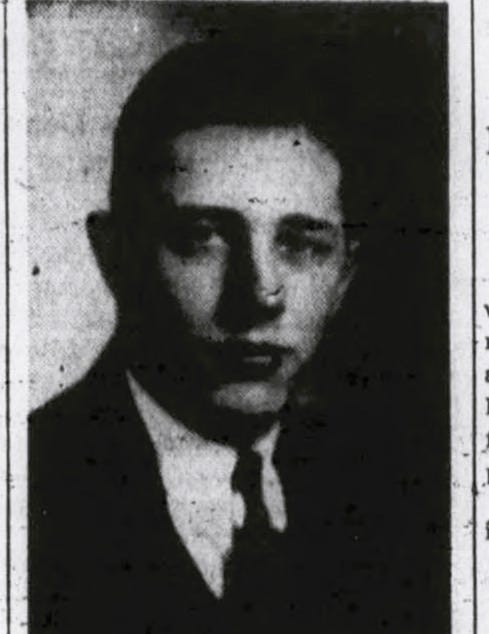
- He emerges into the light in small ways, in out of the way places, but his life, his profile, is sketchy at best. GWU — 1927–1940? Really? How is he with the U.S. Govt. all of this time as well? I have the GWU yearbooks, 1934–1938. I search, I find his picture in the Hatchet. Did he know Bob Bannerman, also at GWU in those years? Bob, his boss at State, his boss at the CIA. Bob, though, wasn’t a presence. He was never chaplain of his frat. He doesn’t seem to have had a frat. Went to night classes there.
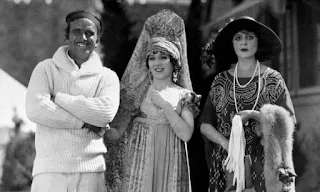
- The photographs that exist in the old D.C. papers — they are of the “juvenile dancer”, the prodigy from the Hoffman and Hoskins Dancing school. Specialty: the cymbal dance. Dressed up as a young Russian — or Cossack.
- D.C. is a small town. Among those donating money to the Hoffman and Hoskins Dancing school: Mrs. Allen Macy Dulles, mother of Allen Dulles. M.A. enters into the Dulles circle early.
3.
- What did the Agency psychologists make of the childhood? A dancer, this kid. And the sexual connotations thereof. Not your refined Ivy League type, not your beefy FBI type, but of a kind generally unmentioned in the literature — the D.C. type, the GWU type, the type whose father or uncle or mother is in government service. It is as natural to a D.C. kid as coal mining is to a kid in Marshall County West Virginia. But behold, such zigzag routes!
- His dad, Emmet his Mom Una calls him, his dad gets his law degree in Iowa, where he no doubt met Una. He does some post-grad work in Michigan. He gets the call to go to Washington D.C., where he gets a position at Treasury. Or is it Labor? The couple get a house, Emmet calls it their “villa”, out on the Northeast edge of the District. Where the streetcar tracks, newly laid down, promise to solve the problem of getting downtown. Una has her Daughters of the American Revolution projects, her church projects. Emmet makes small investments on the side.
- In 1952, M.A. has moved from the sketchy Project Bluebird (was it all about torturing informers, double agents, communists for what info load they could lay down?) to Project Artichoke. What was Artichoke? Department heads were asking. Some wanted a piece of the pie, some were disturbed by what they heard from their people in the field. A Doctor, no less, was sent in by Technical Services — Ray Treichler’s domain — to assess Artichoke. The assessment that came back was scathing. “[redacted], the present team chief, is an investigator of twenty years experience with Civil Service. He has been thoroughly trained in the use and limitation of the polygraph, received four days of instruction from a professional non-M.D. hypnotist in New York City, and has read extensively in the overt material on hypnosis. He has had no scientific background other than that that dealt directly with his work in criminology. He has had extensive contact with the communists in this country and knows their methods. It is not known whether he has a college degree.
“He is not an unusually intelligent man but has a vivid imagination that would be most valuable in the pursuit of this project. He has on several occasions created antagonism in his co-workers because of tactless management. He tends to be cautious and cons3ervative. His long government service has soundly grounded him in the ramifications of intra-Agency politics.” I read this assessment with a pang for M.A. “It is not known whether he has a college degree.” The old farts, retired, often complained of the kind of Ivy League snobbery they bore the brunt of. An image of the multi-lingual, dashing espionage agent, for public consumption. M.A. is not even dashing — cautious and conservative. A Joe Friday. A Dragnet cop.


“He has apparently become a rather able hypnotist, but is hampered in his efforts by his lack of confidence which it is felt stems from his scientific void.”
“It is suggested that the Medical Office with the support of I&SO recommend [sic] that a high-level control of the project be set-up, to consist of civilians with no service affiliation, who are scientifically well-qualified, and who would be full time, to coordinate, evaluate and direct the ARTICHOKE PROJECT.”
- His star routine as an Indian dancer, performed in the Hoffman-Hoskins Kiddies Revue in Washington D.C. at the age of 13. Performed in New York City, where he won a prize for his age class. At that time, Gertrude Hoffmann herself called him “one of the most clever juvenile dancers in America.” But our childhood is an elaborate cut-out, no? It passes, interest wanes, a few pictures (b & w) are put in the album, which falls from the hands of M.A.’s mother, Una, sitting in her cane chair on 131 R street in 1934, dying. “I don’t feel well, Emmet”, she says. But Emmet is always out. He’s got his fingers, or his clumsy hands, in pies. Developing land in the suburbs. Retired from the stats department under Hoover. Her boy at the time was dating that girl named Dotty, whose family seemed nice — but could they trace their heritage back to one of Iowa’s premier pioneers? Back to the Revolution? A DAR girl. Marry a DAR girl, Emmet would say to their son, at the dinner table, big jovial wink. Una dies, and M.A. marries, a year later, in Baltimore.
- Dot: her childhood house on T. Street. Did she meet M.A. when he was fourteen, struggling with pimples and sexual urges, at the streetcar stop, the Eckington Station. Getting off at 13th street, still a little afraid entering the world of Central High. Or was it later?
The view of the top 20 percent income bracket: the great American twenty first century
An interesting variable in U.S. elections is that the top 20 % does most of the talking - the media, the politicians, the "experts...
-
You can skip this boring part ... LI has not been able to keep up with Chabert in her multi-entry assault on Derrida. As in a proper duel, t...
-
Ladies and Gentlemen... the moment you have all been waiting for! An adventure beyond your wildest dreams! An adrenaline rush from start to...
-
LI feels like a little note on politics is called for. The comments thread following the dialectics of diddling post made me realize that, ...