LI doesn’t really know what to do today. The amount of ridiculousness in the press over the last five days is truly gratifying, but it is also a blog it yourself situation. We have, in the bizarre Washington Post, an op ed piece flogging Jeb Bush on Sunday, followed by a I was only joking interview with the author on Monday, followed by today’s rather priceless piece by one of those Cheney scion who, in the spirit of smaller government and peculation for all, was shoehorned into a position for which she was magnificently unfit in the state department, where she got out the crayons out of her crayonbox – the reds and the blues and that hard color, verf- vermillion - and made a whole two pages of remarks just like Daddy! That the Washington Post editorial page not only supports the war with bloodsoaked teeth bared, but aims to reproduce certain aspects of it (namely, giving berths to the academically challenged sons and daughters of rightwing honchos) is sweet in very sick, sick way.
And then, before you can turn around, Christopher Hitchens has two, count em two reviews up, one on a book by Mark Steyn, the other on a book by Nick Cohen. To batter the remnant of Hitchens that now does the writing is beyond even LI’s sadism. It should be noted, though, that Cohen is trying to resurrect an old trope from the first round of pro-war propaganda – the sleight of hand substitution trick. You take a term that can be logically described in two ways, and you substitute an invidious description to describe a person’s belief. I march against the war in Iraq. The war in Iraq will hurt Saddam Hussein. Saddam Hussein is a fascist. Thus, I march in support of fascism.
That type of invective is the equivalent of going about in soiled intellectual diapers. It convinces nobody. It is logically threadbare. It is, in other words, shit and sophistry… but more just shit. I support the war in Iraq, the war in Iraq brought a Taliban like group to power in Basra, I am a supporter of Islamofascism. See how easy it is to play this game? Leggos for the lobotomized. This is, believe it or not, the sum total of Nick Cohen’s four years of writing about Iraq. He actually thinks he is making a “critique”, God save the saints. Of the Left, no less and no doubt, he’s all about the Left, the Left and he are splitsville, he’d had the Left over to dinner and they didn’t bring even a bottle of wine and they stink and also, also, the Islamophilia on some of them, why liberals and lefties are going on and on, nowadays, quoting the Q’ran and shit. This raises the bellylaugh quotient, of course. We especially like it when you throw in a few Hitchens reviews, bespattered with the term, “comrade.” I would say: you can’t make this shit up. But somebody obviously does.
However, as our far flung correspondent T. has told us – enough! basta!
We long for a worthy adversary.
PS – well, I guess LI should say something.
After the State of the Union address, the natural place to go is the Washington Post, and their excellent political reporter, Dan Balz, under the headline: A President Beleaguered But Unbowed
We totally agree with this assessment:
“Caligula’s response last night was a speech that was very much in keeping with the style of leadership he has demonstrated repeatedly in office. If he was humbler in tone and rhetorically generous to his Democratic opponents in calling for cooperation, he was anything but defensive.
There was an underlying message in the speech. The main plea was to make his horse the speaker of the House, a chord struck earlier in the day by spokesman Tony Snow. Although roughly two in three Americans disagree that Mr. Ed, as President Caligula calls him, should be House Speaker, and members of Congress are preparing nonbinding resolutions declaring their opposition, Caligula asked for time to show that the strategy can succeed.
He recalled that the country was largely united at the time he announced both his sister’s divinity and his own divine right to couple with her in 2003 and acknowledged the divisions that have emerged since. But he argued that whatever motivated members of Congress at the time of the declaration of divinity, there was a consensus that the United States must have a young, nubile couple of very, very rich people in charge of this great country. And young people, as the President steadfastly maintained, come with complicated sexual urges.
…
Caligula's final message last night was perhaps the most robust domestic agenda of his presidency, a way of saying to those who are ready to write him off that he still has the power of the bully pulpit to inject ideas into the national debate and force others to react to them: from the purging of the Senate, the assassination of his tutor, to the announcement that his divinity is greater than Jupiter’s, it was a message that said he should not be regarded as a lame duck.”
LI, as ever, urges readers to send money to the PAC of Mrs. Nero, who is really, really getting on top of the Mr. Ed issue. "We don't want Mr. Ed not to be a god," she said today, "but we are firm in saying that maybe Mr. Ed is not the first choice for House Speaker unless we can find the synergy to go forward to make me, and other middle class Americans, comfortable with this choice."
Mrs. Nero - a leader, a doer, a conversationalist with America!
Wednesday, January 24, 2007

Tuesday, January 23, 2007
the politics of angels
I saw by night, and behold a man riding upon a red horse, and
he stood among the myrtle trees that were in the bottom; and
behind him were there red horses, speckled, and white.
001:009 Then said I, O my lord, what are these? And the angel that
talked with me said unto me, I will shew thee what these be.
And the man that stood among the myrtle trees answered and
said, These are they whom the LORD hath sent to walk to and
fro through the earth.
001:011 And they answered the angel of the LORD that stood among the
myrtle trees, and said, We have walked to and fro through the
earth, and, behold, all the earth sitteth still, and is at
rest. – Zechariah
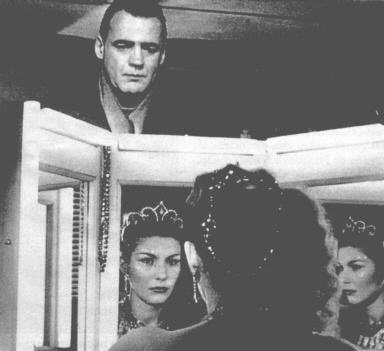
Well, to cap my return to my past – plunged into it as I was by Bob Solomon’s death, and the pretty marvelous ceremony to commemorate his life Saturday – I sat down and watched an old 80s movie that was particularly important to me back in the days before the Wall fell: Wings of Desire. By coincidence, the woman who played the trapeze artist, Marion, (Solveig Dommartin) died a few weeks ago of a heart attack. My generation is not going to go out raving in the street a la some Ginsberg poem, but prematurely wearing out their hearts like they were so many rainsoaked grocery bags – thus saith the industrial fats upon which we have steadily gorged, plus of course the coke and heroin and – let’s admit it – the occasional speedball.
Anyway, I did rain down tears for that time, and for some still marvelous parts of the movie – not so much the plot but simply seeing Berlin.
However, I know more about the politics of Satan and the angels now than I did in those dim days. I know the politics – and I know this from having looked it up after reading Mailer’s new novel, for which I penned a commendatory review in yesterday’s Austin Statesman (much better, my review, I must say, than the thing produced by Janet Maslin for the NYT last week – and as for Lee Siegel, well, I just can’t read Lee Siegel). Zechariah is generally considered a post exilic book, and the notion of these walkers abroad has roots, according to some scholars, in the Persian and Egyptian spy systems. In effect, both kingdoms had stumbled upon the idea that lightbulbs its way into the head of every Behemoth since – let’s spy on the population. Even better, let’s turn certain people. Let’s just do it, pour encourager les autres. Turning people. From the Pharaohs to the FBI and the DEA, this practice has a history that bears a double aspect: on the one side, politics, and on the other side, demonology.
While Satan already plays the role of a sort of egger on in Job, the importance of Zechariah is that Satan, for the first time, resolves himself clearly into the role by which we know and love him best: the adversary.
“And he shewed me Joshua the high priest standing LORD, and Satan standing at his right hand to resist him.
And the LORD said unto Satan, The LORD rebuke thee, O Satan;
even the LORD that hath chosen Jerusalem rebuke thee: is not is not
this a brand plucked out of the fire?”
Whose fire is it, o Lord? – for isn't this the template of the millions of conversations over the millenia that have unfolded behind the iron curtain - by which of course I mean the curtain between the powerful and the dispossessed? Here we are eavesdropping - the prophets are such snoops of the divine, counterspies in the house of Daddy Love - on the tyrant and head of his secret police, president and advisor, sheriff and jailhouse bird. It was how Stalin handled Mandelstam and Pasternak. All brands are, virtually, in the fire, and the fire is the nation. The Joshua that is the case before us tonight is, of course, a high government exec – a high priest. Those are the ones. The system rewards those who damn their brothers by allowing them to climb up to another niche, but the system will, and this is the justice of it, award even those who damn the ones who have damned their quota. Credit systems or politics, computers or the old fashioned way of entrapping your prey in a bar on the Tex Mex border with the offer of some good shit which both of you can cut and make beaucoup bucks - it is all the same, ever ancient, ever the poem, from Jerusalem to Juarez. When Satan accuses Joshua, the machinery that is set in motion is not too much different from the finger that was put by some Satan on Mandelstam, and Mandelstam had survived so far only through the protection of the secret police chief, Ezhov, through Ezhov’s wife.
LI's definition of utopia: a society in which there is no system wide incentive to damn another. That's it. On that day, hell will truly be purged from our lives.
In Wings of Desire, of course, the angels are Rilke’s angels, supposedly purged of that sinister etymological connection with the men on the red horses. They spy, but only as the eye spies – joy and function merged. There is, however, a missed opportunity here – everyone has felt that the sentimentality at the center of Wings of Desire is discrediting, however beautiful the movie is in its collection of modernist tropes. And of course, this city in which the angels spy like hippies is a city of much more professional spies. Pynchon saw so much further - he knew that hippies made the best narcs. The humint that flows through Wenders angels must be woven, in the center, into a world of accusation, where Satan stands on the right hand and resists – since his bureaucratic role is, of course, to play the resistor. How can one condemn to eternal fire those who are guilty of nothing and not be guilty oneself? Even God needs some savior - or rather, scape goat - to carry off his sins or give him, at least, official deniability – hence Satan. Satan, the prince of deniability.
And no one saw the carney go, no one saw the carney go…
Sunday, January 21, 2007
bogosities of the press: Israel and Iran
LI went to the memorial service for our friend Bob yesterday. As in life, so in death – Bob was always a catalyst for things to happen to yours truly, and the service was no different. One of my best buds of yore, from whom I’d parted in considerable anger over issues that have long been swallowed up by the steady creep of geological time was there, and we went out and had several reconciling drinks. This has actually put a lot of joy in my heart (the lines from the childhood hymns come back!).
Not so much, though, that I don’t have heart left for the stamp of varied and sundry indignations left by the varied and sundry stupidities of the press.
Exhibit no. 1, yesterday, was the astonishing Deborah Lipstadt op ed piece about ex President Carter’s rather mild plea for the withdrawal of Israeli settlements from the West Bank and the end of the governance mess there and in the Gaza. About which Lipstadt had only to say that Carter has not genuflected with enough fervor to the holocaust, and thus is an anti-semite – but, being a just person in all things, Lipstadt was willing to concede that perhaps he is just an unconscious bigot. Lipstadt, you see, embraces the larger view.
This is almost spookily stupid – especially as you can tell that Lipstadt’s (non) argument is pretty close to the orthodoxy among the muscular liberal-neo con set that so rule the roost in the WAPO op ed pages, and probably does reflect the central bias of the policy set in D.C.
The Eichmann made me do it excuse for the West Bank land grab wouldn’t convince a first grader. Lipstadt, a historian, would do well to read a book of history – any book of history – about Israel’s post 67 West Bank policy.
However, I am not going to grapple with a piece that serves, really, only that old and hoary function of injecting a vague hint of anti-semitism into any criticism of Israel. Rather, I’d like to spotlight one of the mythemes in the piece, since it now travels about in the Press like as a convenient warmongering piece of DNA, a little transpone, bringing us visibly nearer to war with Iran. In the past, LI has vigorously downplayed the idea that the U.S. is going to war with Iran, and we find the fervent belief that Bush is always a week away from it among leftwingers – who have been saying we are a week away from attacking Iran since 2004 – extremely puzzling. Both the left and the right often participate in a shared illusion of American hyper-powerdom, but reality has always put strict limits to the extent and exercise of American power. It is exercised best when America has implanted, in a given country, an endogenous pro-consular class. But usually, America avoids the direct violence route.
Still, in the final instance, we are being run by an essentially criminal collective, which is obviously thinking of winding up its pathetic run by attacking Iran. If the wishes of the executive were obeyed as direct orders – the Fuhrer-prinzip that Cheney has tried to instill in the government over the last six years – than we would be attacking Iran. In lieu of that, the warmongering sockpuppets do try to inject, in any mention of Iran, the idea that the country is on the verge of attacking Israel. And one of the ways they do this is to infinitely fold spindle and mutilate a quote of President Ahmadinejad – in Lipstadt’s piece, that comes out as: “When an Ahmadinejad or Hamas threatens to destroy Israel, Jews have historical precedent to believe them.” I’m not even going into the facile identity between Israel and Jews, here, - an identity that is unrealistic and, in fact, symbolic of the kind of nationalism many of the greatest figures of Jewish culture in the 19th and 20th century fought against like mad – or the idea that the threat to a state, Israel, is of the same order and nature as the threat to the Jewish inhabitants of various countries in Europe. This is to spiral down into Ron Rosenbaum style madness. No, what concerns me is simply that quote. Not whether the quote has been mistranslated – I don’t know enough about Farsi to give you a donkey’s fart worth of wisdom on that issue. What isn’t undisputed is that Ahmadinejad is citing Khomeini. Now, if we are truly to take the quote as a military threat against Israel, then surely it was a military threat when Khomeini uttered it too. Logically, then, Israel should have received it as a threat from Khomeini and acted accordingly.
But if you look back at the 80s, you will notice right away that the quote wasn’t pulled out to justify some attack on Iran by Israel – rather it was ignored as the rightwing government in Israel helped arm Iran and support a closer relationship between the U.S. and Iran. Far from viewing themselves as partisans in the Polish woods, at that time, the Israeli government viewed themselves as maneuvering an alliance against Iraq. They viewed themselves, quite sensibly, as a state.
An article in the summer, 2005 issue of Iranian studies by Trita Parsi, “Israel-Iranian Relations Assessed: Strategic Competition from the Power Cycle Perspective,”
sums up the real history of the relationship between Iran and Israel quite well:
Iran’s foreign policy is believed to have lost much of its ideological zeal after the death of Khomeini. One often cited exception to this general pattern is Iran’s relations with Israel. Tehran’s posture on Israel and the Middle East peace process is often explained as a remnant of its revolutionary and ideological past and contradictory to Iran’s national interest. However, this analysis neglects crucial systemic changes that occurred in the Middle East after 1991, as well as
Israel’s willingness to improve relations with Iran at the height of Iran’s revolutionary fervor in the 1980s and the Islamic regime’s refusal to allow ideological considerations to stand in its way to purchase arms from Israel. Furthermore, it reduces Israel’s role in the equation to that of a non-actor whose destiny is limited to mere reactions to Iran’s ideological designs.
Parsi hauls up a lot of inconvenient, old news from the memory hole:
The two Israeli leaders that in the early 1990s initiated a very aggressive Iran policy pursued a diametrically opposite policy only a few years earlier. In 1987, Yitzhak Rabin argued that Iran remained an ally geo-politically.40 Shimon Peres, who sought a “broader strategic relationship with Iran,” urged President Reagan to seek a dialogue with Tehran.
It is an axiom of punditry that, in pursuing the usual quest to kill people on a large scale, one needs to forget that those same people, years earlier, were allies in another quest to kill another set of people on a large scale. For the Lipstadt’s of the world, of course, being pro-Iranian in 1987 was resisting the Nazis, and being for war against Iran in 2006 is still resisting the Nazis. We evermore resist the Nazis.
Well, enough of the various bogosities of this subject, and onto another piece of news about the Bush administration which is – in obedience to the law of news governing the way the press has reported the Global war on Terror – 3 years late.
“An Iranian offer to help the United States stabilize Iraq and end its military support for Hezbollah and Hamas was rejected by Vice President Dick Cheney in 2003, a former top State Department official told the British Broadcasting Corp.
The U.S. State Department was open to the offer, which came in an unsigned letter sent shortly after the American invasion of Iraq, Lawrence Wilkerson, former Secretary of State Colin Powell's chief of staff, told BBC's Newsnight in a program broadcast Wednesday night. But, Wilkerson said, Cheney vetoed the deal.”
As faithful readers will remember – well, not really, but as this faithful writer remembers – LI’s position before the invasion was that the U.S. could and should aim at having Saddam Hussein overthrown in Iraq. It could do this by a., establishing détente with Iran, Hussein’s number one enemy, and b., showering Northern Iraq, separated from Hussein’s Iraq for 5 years, with aid. Sanctions were stupid and killing so long as they were instituted in the framework of the double sanctions on both nations. The neo-cons were right to decry the sanction system as it was under Clinton, but wrong to promote the belligerent approach – and wrong to think that the U.S. policy should be aimed at maintaining American hegemony in the Middle East when the conditions for that hegemony had so dramatically changed in the post Cold War era.
Obviously, LI’s idea was not only rational, but possible. Its rejection has led to the current debacle. Neither party is willing to de-structure the root cause of that debacle – American superpowerdom.
Let the empire turn up its little heels and die is our advice.
Not so much, though, that I don’t have heart left for the stamp of varied and sundry indignations left by the varied and sundry stupidities of the press.
Exhibit no. 1, yesterday, was the astonishing Deborah Lipstadt op ed piece about ex President Carter’s rather mild plea for the withdrawal of Israeli settlements from the West Bank and the end of the governance mess there and in the Gaza. About which Lipstadt had only to say that Carter has not genuflected with enough fervor to the holocaust, and thus is an anti-semite – but, being a just person in all things, Lipstadt was willing to concede that perhaps he is just an unconscious bigot. Lipstadt, you see, embraces the larger view.
This is almost spookily stupid – especially as you can tell that Lipstadt’s (non) argument is pretty close to the orthodoxy among the muscular liberal-neo con set that so rule the roost in the WAPO op ed pages, and probably does reflect the central bias of the policy set in D.C.
The Eichmann made me do it excuse for the West Bank land grab wouldn’t convince a first grader. Lipstadt, a historian, would do well to read a book of history – any book of history – about Israel’s post 67 West Bank policy.
However, I am not going to grapple with a piece that serves, really, only that old and hoary function of injecting a vague hint of anti-semitism into any criticism of Israel. Rather, I’d like to spotlight one of the mythemes in the piece, since it now travels about in the Press like as a convenient warmongering piece of DNA, a little transpone, bringing us visibly nearer to war with Iran. In the past, LI has vigorously downplayed the idea that the U.S. is going to war with Iran, and we find the fervent belief that Bush is always a week away from it among leftwingers – who have been saying we are a week away from attacking Iran since 2004 – extremely puzzling. Both the left and the right often participate in a shared illusion of American hyper-powerdom, but reality has always put strict limits to the extent and exercise of American power. It is exercised best when America has implanted, in a given country, an endogenous pro-consular class. But usually, America avoids the direct violence route.
Still, in the final instance, we are being run by an essentially criminal collective, which is obviously thinking of winding up its pathetic run by attacking Iran. If the wishes of the executive were obeyed as direct orders – the Fuhrer-prinzip that Cheney has tried to instill in the government over the last six years – than we would be attacking Iran. In lieu of that, the warmongering sockpuppets do try to inject, in any mention of Iran, the idea that the country is on the verge of attacking Israel. And one of the ways they do this is to infinitely fold spindle and mutilate a quote of President Ahmadinejad – in Lipstadt’s piece, that comes out as: “When an Ahmadinejad or Hamas threatens to destroy Israel, Jews have historical precedent to believe them.” I’m not even going into the facile identity between Israel and Jews, here, - an identity that is unrealistic and, in fact, symbolic of the kind of nationalism many of the greatest figures of Jewish culture in the 19th and 20th century fought against like mad – or the idea that the threat to a state, Israel, is of the same order and nature as the threat to the Jewish inhabitants of various countries in Europe. This is to spiral down into Ron Rosenbaum style madness. No, what concerns me is simply that quote. Not whether the quote has been mistranslated – I don’t know enough about Farsi to give you a donkey’s fart worth of wisdom on that issue. What isn’t undisputed is that Ahmadinejad is citing Khomeini. Now, if we are truly to take the quote as a military threat against Israel, then surely it was a military threat when Khomeini uttered it too. Logically, then, Israel should have received it as a threat from Khomeini and acted accordingly.
But if you look back at the 80s, you will notice right away that the quote wasn’t pulled out to justify some attack on Iran by Israel – rather it was ignored as the rightwing government in Israel helped arm Iran and support a closer relationship between the U.S. and Iran. Far from viewing themselves as partisans in the Polish woods, at that time, the Israeli government viewed themselves as maneuvering an alliance against Iraq. They viewed themselves, quite sensibly, as a state.
An article in the summer, 2005 issue of Iranian studies by Trita Parsi, “Israel-Iranian Relations Assessed: Strategic Competition from the Power Cycle Perspective,”
sums up the real history of the relationship between Iran and Israel quite well:
Iran’s foreign policy is believed to have lost much of its ideological zeal after the death of Khomeini. One often cited exception to this general pattern is Iran’s relations with Israel. Tehran’s posture on Israel and the Middle East peace process is often explained as a remnant of its revolutionary and ideological past and contradictory to Iran’s national interest. However, this analysis neglects crucial systemic changes that occurred in the Middle East after 1991, as well as
Israel’s willingness to improve relations with Iran at the height of Iran’s revolutionary fervor in the 1980s and the Islamic regime’s refusal to allow ideological considerations to stand in its way to purchase arms from Israel. Furthermore, it reduces Israel’s role in the equation to that of a non-actor whose destiny is limited to mere reactions to Iran’s ideological designs.
Parsi hauls up a lot of inconvenient, old news from the memory hole:
The two Israeli leaders that in the early 1990s initiated a very aggressive Iran policy pursued a diametrically opposite policy only a few years earlier. In 1987, Yitzhak Rabin argued that Iran remained an ally geo-politically.40 Shimon Peres, who sought a “broader strategic relationship with Iran,” urged President Reagan to seek a dialogue with Tehran.
It is an axiom of punditry that, in pursuing the usual quest to kill people on a large scale, one needs to forget that those same people, years earlier, were allies in another quest to kill another set of people on a large scale. For the Lipstadt’s of the world, of course, being pro-Iranian in 1987 was resisting the Nazis, and being for war against Iran in 2006 is still resisting the Nazis. We evermore resist the Nazis.
Well, enough of the various bogosities of this subject, and onto another piece of news about the Bush administration which is – in obedience to the law of news governing the way the press has reported the Global war on Terror – 3 years late.
“An Iranian offer to help the United States stabilize Iraq and end its military support for Hezbollah and Hamas was rejected by Vice President Dick Cheney in 2003, a former top State Department official told the British Broadcasting Corp.
The U.S. State Department was open to the offer, which came in an unsigned letter sent shortly after the American invasion of Iraq, Lawrence Wilkerson, former Secretary of State Colin Powell's chief of staff, told BBC's Newsnight in a program broadcast Wednesday night. But, Wilkerson said, Cheney vetoed the deal.”
As faithful readers will remember – well, not really, but as this faithful writer remembers – LI’s position before the invasion was that the U.S. could and should aim at having Saddam Hussein overthrown in Iraq. It could do this by a., establishing détente with Iran, Hussein’s number one enemy, and b., showering Northern Iraq, separated from Hussein’s Iraq for 5 years, with aid. Sanctions were stupid and killing so long as they were instituted in the framework of the double sanctions on both nations. The neo-cons were right to decry the sanction system as it was under Clinton, but wrong to promote the belligerent approach – and wrong to think that the U.S. policy should be aimed at maintaining American hegemony in the Middle East when the conditions for that hegemony had so dramatically changed in the post Cold War era.
Obviously, LI’s idea was not only rational, but possible. Its rejection has led to the current debacle. Neither party is willing to de-structure the root cause of that debacle – American superpowerdom.
Let the empire turn up its little heels and die is our advice.
Saturday, January 20, 2007
emancipation
LCC has links to articles about Representative Barbara Lee’s bill to open a truth commission about the facts surrounding the political claustration of Aristide, which is further explained here. As it happens, LI is writing a review of Madison Smartt Bell’s biography of Toussaint L’Ouverture (who was, like Aristide, kidnapped by a hegemonic power with malign intents towards Haiti). We are great fans of Bell’s three volume trilogy about the great slave revolt of Saint-Domingue, which is still mostly a blank in the American eye. In the biography, Bell translates and prints the first Emancipation Proclamation in the New World – this one composed by the leaders of the slaves themselves. It was sent as a letter to S-D’s General Assembly in July 1792, signed by Biassou, Jean-Francois, and Belair – and not, significantly, not by Toussant a Breda, as he was known at this time.
Toussaint very probably had read the Prince, and in any case, he had an appreciation amounting to genius of the uses of invisibility – a way of merging into the very air of the kalfou, the crossroads. The uninitiated, unaware of the paths down which they were walking, usually had already passed through him before they realized their mistake. To be underestimated was power. Thus, at this time Toussaint may well have claimed to different persons he did not know how to read or write. There is a story that Toussaint was once confronted about reading a book by a white manager – of the class of petits blancs – and beaten. That man latter was killed by Toussaint.
So Toussaint might well have had a hand in the composing and sending of that letter. Surprisingly, the letter isn’t well known outside of Haiti. Here’s two paragraphs:
For too long, Gentlemen, by way of abuses which one can never too strongly accuse to have taken place because our lack of understanding and our ignorance – for a very long time, I say, we have been victims of greed and your avarice. Under the blows of your barbarous whip we have accumulated for you the treasures you enjoy in this colony; the human race has suffered to see with what barbarity you have treated men like yourselves – yes, men – over whom you have no other right except that you are stronger and more barbaric than we; you’ve engaged in slave traffic, you have sold men for horses, and even that is the least of your shortcomings in the eyes of humanity; our lives depend on your caprice, and when it’s a question of amusing yourselves it falls on a man like us who most often is guilty of no other crime than that he is under your orders.
We are black, it is true, but tell us, Gentlemen, you who are so judicious, what is the law that says that the black man must belong to and be the property of the white man? Certainly you will not be able to make us see where that exists, if it is not in your imagination – always ready to form new phantasms so long as they are to your advantage. Yes, Gentlemen, we are free like you, and it is only by your avarice and our ignorance that anyone is still held in slavery up to this day, and we can neither see nor find the right which you pretend to have over us, not anything that could prove it to us, set down on the earth like you, all being children of the same father created in the same image. We are your equals, then, by natural right, and if nature pleases itself to diversify colors within the human race, it is not a crime to be born black nor an advantage to be white….
Toussaint very probably had read the Prince, and in any case, he had an appreciation amounting to genius of the uses of invisibility – a way of merging into the very air of the kalfou, the crossroads. The uninitiated, unaware of the paths down which they were walking, usually had already passed through him before they realized their mistake. To be underestimated was power. Thus, at this time Toussaint may well have claimed to different persons he did not know how to read or write. There is a story that Toussaint was once confronted about reading a book by a white manager – of the class of petits blancs – and beaten. That man latter was killed by Toussaint.
So Toussaint might well have had a hand in the composing and sending of that letter. Surprisingly, the letter isn’t well known outside of Haiti. Here’s two paragraphs:
For too long, Gentlemen, by way of abuses which one can never too strongly accuse to have taken place because our lack of understanding and our ignorance – for a very long time, I say, we have been victims of greed and your avarice. Under the blows of your barbarous whip we have accumulated for you the treasures you enjoy in this colony; the human race has suffered to see with what barbarity you have treated men like yourselves – yes, men – over whom you have no other right except that you are stronger and more barbaric than we; you’ve engaged in slave traffic, you have sold men for horses, and even that is the least of your shortcomings in the eyes of humanity; our lives depend on your caprice, and when it’s a question of amusing yourselves it falls on a man like us who most often is guilty of no other crime than that he is under your orders.
We are black, it is true, but tell us, Gentlemen, you who are so judicious, what is the law that says that the black man must belong to and be the property of the white man? Certainly you will not be able to make us see where that exists, if it is not in your imagination – always ready to form new phantasms so long as they are to your advantage. Yes, Gentlemen, we are free like you, and it is only by your avarice and our ignorance that anyone is still held in slavery up to this day, and we can neither see nor find the right which you pretend to have over us, not anything that could prove it to us, set down on the earth like you, all being children of the same father created in the same image. We are your equals, then, by natural right, and if nature pleases itself to diversify colors within the human race, it is not a crime to be born black nor an advantage to be white….
Friday, January 19, 2007
Bob Solomon, r.i.p.
A friend of mine died last week. I have an obit up in the Austin Chronicle.
I don't know whether I want Bob to rest in peace - he was never the retirement type, and I don't like the idea of death to be of the life depicted in About Schmidt. No, I hope death brings a more complex release, Bob. EWG.
I don't know whether I want Bob to rest in peace - he was never the retirement type, and I don't like the idea of death to be of the life depicted in About Schmidt. No, I hope death brings a more complex release, Bob. EWG.
hawks shedding feathers
In the early 1840s, a Baptist named William Miller began doing some serious work on the Book of Revelation. Using his mathematical genius, Miller came up with a formula showing precisely that the world would end in March of 1843. Due to an overlooked erasure, that date proved incorrect. The world was really going to end in 1844.
Miller collected thousands of followers. Unfortunately, God didn’t stage the drama he’d outlined in the book of Revelations in 1844, either. Hiram Edson, who later figured out that Jesus was coming in stages to the earth after making a tour of the universe, wrote about gathering with others on 23 October, 1844:
“Our expectations were raised high, and thus we looked for our coming Lord until the clock tolled 12 at midnight. The day had then passed and our disappointment became a certainty. Our fondest hopes and expectations were blasted, and such a spirit of weeping came over us as I never experienced before…”
Civilization rolls onward. Hiram Edson, more savy than Scott Fitzgerald, realized that America is the home of second acts, especially if the first act involved apocalyptic failure, and went on to found the very successful Seventh day Adventists. The war party is going through a similar blasting of expectations. Since the expectations were founded, generally, on mutually contradictory premises, vague allegories, and an almost complete lack of knowledge about… well, Iraq, the sackcloth and ashes phase should, one would think, involve absorbing a certain skepticism, and of course a reconsideration of the entire war culture – at this time, under the guise of the Global war on Terrorism – that has mangled so many bodies without any necessity at all.
There has been a blog hubbub about the post by Jane Galt, aka Megan McArdle, in which she explains why she was slightly wrong about ardently supporting America’s pre-emptive invasion and subsequent occupation of Iraq. It turns out that McArdle was mislead by her faulty sense of empathy. In the end – as one would expect from a woman who names herself after an Ayn Rand character – the sum of novelistic factors that constituted America’s favorite Punch, Saddam Hussein, was beyond her. On the other hand, she remembers no dove who got anything right in the leadup to the war, except, by some odd quirk of fate, they were right that the war in toto.
That is so sweet of her! The hundreds of thousands of Iraqi dead have contributed to her education, and I bet she is going to be nicer to elderly neighbors, too!
McCardle leans libertarian. The occupation in Iraq has taught her to distrust government. Or so she writes. LI quietly tore out all of our hair, reading that, and flushed it down the toilet. Say what? If it wasn’t an analytic truth in January, 2003 that the invasion involved every feature of governmental overreaching that had been harped upon for two hundred years by liberal thinkers – as Limited Inc pointed out by going exhaustively through the catalogue of classical liberalism, from Burke to Constant – and McCardle couldn't figure that out herself, well, I'd guess there is a large hole in her libertarian ideas. The hole can be labeled - automatic respect for authority figures. I wish libertarians would just call themselves richophiles – a love of the wealthy the desire that all of society be shaped to please them is pretty much the alpha and omega of the McArdle strain of libertarianism.
Another hawk who shed his feathers a couple of months ago, Norman Geras, is an interesting case. He has made a career as a political intellectual – yet, his politics seem as easily distracted by the most juvenile mock arguments as the audience of American Idol, and that worries me about the way people become political intellectuals in the U.K. Geras recently raved about a Martin Amis quip – Amis denounced those who “waddled” out in the streets of London holding we are all hezbollah signs in the demonstrations against Israel’s bombing of Lebanon last year. Now, “waddled” is an interesting verb. I don’t believe that it is the verb that really occurred to Amis, seeing the tv footage of the demonstrators. They were mostly young and sprightly. Waddling wasn’t in it – waddling is confined more to the over the hill cigarchompers Amis might meet at his friend Chris Hitchens’ parties. The difference between insult and satire is the difference between using the verb “waddling” – which lights up the children and the Geras typses - and using a verb that really does break through the human crust, that puts the fishing hook through that bare forked creature and reels him in.
Anyway, Geras coyly links to a defense of the surge published in Foreign policy by a man named Donald Stoker. And what do you know – Stoker comes up with a defense that is another pony ex machina argument, of the same type that the hawks have made, over and over again, during the past three meat mounding years.
To read the Stoker article, it is best to skip the main part – a mélange of cases in which insurgents lost, insurgents won, etc., etc. – and get to Stoker’s case:
8 to 11 years, eh? To what end? I want to try to put a fairer cast on suggestions that are clearly lunatic, leading to hundreds of thousands of deaths, billion of dollars spent per month, in order to perhaps put down an insurgency and create (ta ta ta da!) a theocratic Shi’a government indistinguishable, in its ideology, from … Hezbollah. Indeed, Amis might have wanted to watch Chris Hitchens neo-con friends waddle at the next party he goes to, since they are doing infinitely more for Hezbollah than the young bucks of London.
Miller collected thousands of followers. Unfortunately, God didn’t stage the drama he’d outlined in the book of Revelations in 1844, either. Hiram Edson, who later figured out that Jesus was coming in stages to the earth after making a tour of the universe, wrote about gathering with others on 23 October, 1844:
“Our expectations were raised high, and thus we looked for our coming Lord until the clock tolled 12 at midnight. The day had then passed and our disappointment became a certainty. Our fondest hopes and expectations were blasted, and such a spirit of weeping came over us as I never experienced before…”
Civilization rolls onward. Hiram Edson, more savy than Scott Fitzgerald, realized that America is the home of second acts, especially if the first act involved apocalyptic failure, and went on to found the very successful Seventh day Adventists. The war party is going through a similar blasting of expectations. Since the expectations were founded, generally, on mutually contradictory premises, vague allegories, and an almost complete lack of knowledge about… well, Iraq, the sackcloth and ashes phase should, one would think, involve absorbing a certain skepticism, and of course a reconsideration of the entire war culture – at this time, under the guise of the Global war on Terrorism – that has mangled so many bodies without any necessity at all.
There has been a blog hubbub about the post by Jane Galt, aka Megan McArdle, in which she explains why she was slightly wrong about ardently supporting America’s pre-emptive invasion and subsequent occupation of Iraq. It turns out that McArdle was mislead by her faulty sense of empathy. In the end – as one would expect from a woman who names herself after an Ayn Rand character – the sum of novelistic factors that constituted America’s favorite Punch, Saddam Hussein, was beyond her. On the other hand, she remembers no dove who got anything right in the leadup to the war, except, by some odd quirk of fate, they were right that the war in toto.
Many of the doves seem to be reconstructing their memory of why they objected to the war, crediting themselves with having predicted that the invasion would fail in this way. Many hawks are also reconstructing their memories to make themselves less hawkish. Fortunately, or unfortunately for me, I wrote my predictions down, so I know that I was an unabashed hawk, 100% convinced that Saddam had WMD.
The lesson that I can unequivocally take out of this is: do not be so confident in your ability to read other people and situations. Saddam was behaving exactly as I would have behaved if I had WMD, so I concluded that he had them. I will never again be so confident in the future.
That is so sweet of her! The hundreds of thousands of Iraqi dead have contributed to her education, and I bet she is going to be nicer to elderly neighbors, too!
McCardle leans libertarian. The occupation in Iraq has taught her to distrust government. Or so she writes. LI quietly tore out all of our hair, reading that, and flushed it down the toilet. Say what? If it wasn’t an analytic truth in January, 2003 that the invasion involved every feature of governmental overreaching that had been harped upon for two hundred years by liberal thinkers – as Limited Inc pointed out by going exhaustively through the catalogue of classical liberalism, from Burke to Constant – and McCardle couldn't figure that out herself, well, I'd guess there is a large hole in her libertarian ideas. The hole can be labeled - automatic respect for authority figures. I wish libertarians would just call themselves richophiles – a love of the wealthy the desire that all of society be shaped to please them is pretty much the alpha and omega of the McArdle strain of libertarianism.
Another hawk who shed his feathers a couple of months ago, Norman Geras, is an interesting case. He has made a career as a political intellectual – yet, his politics seem as easily distracted by the most juvenile mock arguments as the audience of American Idol, and that worries me about the way people become political intellectuals in the U.K. Geras recently raved about a Martin Amis quip – Amis denounced those who “waddled” out in the streets of London holding we are all hezbollah signs in the demonstrations against Israel’s bombing of Lebanon last year. Now, “waddled” is an interesting verb. I don’t believe that it is the verb that really occurred to Amis, seeing the tv footage of the demonstrators. They were mostly young and sprightly. Waddling wasn’t in it – waddling is confined more to the over the hill cigarchompers Amis might meet at his friend Chris Hitchens’ parties. The difference between insult and satire is the difference between using the verb “waddling” – which lights up the children and the Geras typses - and using a verb that really does break through the human crust, that puts the fishing hook through that bare forked creature and reels him in.
Anyway, Geras coyly links to a defense of the surge published in Foreign policy by a man named Donald Stoker. And what do you know – Stoker comes up with a defense that is another pony ex machina argument, of the same type that the hawks have made, over and over again, during the past three meat mounding years.
To read the Stoker article, it is best to skip the main part – a mélange of cases in which insurgents lost, insurgents won, etc., etc. – and get to Stoker’s case:
“Combating an insurgency typically requires 8 to 11 years. But the administration has done such a poor job of managing U.S. public opinion, to say nothing of the war itself, that it has exhausted many of its reservoirs of support. One tragedy of the Iraq war may be that the administration’s new strategy came too late to avert a rare, decisive insurgent victory.”
8 to 11 years, eh? To what end? I want to try to put a fairer cast on suggestions that are clearly lunatic, leading to hundreds of thousands of deaths, billion of dollars spent per month, in order to perhaps put down an insurgency and create (ta ta ta da!) a theocratic Shi’a government indistinguishable, in its ideology, from … Hezbollah. Indeed, Amis might have wanted to watch Chris Hitchens neo-con friends waddle at the next party he goes to, since they are doing infinitely more for Hezbollah than the young bucks of London.
Wednesday, January 17, 2007
ka
Austin is moping under that hideous counterfeit of winter that goes by the name of a winter storm warning – or is it watch? What this means is that there is ice on the branches of the tree outside my window, which obviously took the tree by surprise – and that the streets have icy patches, and the sidewalks do too – and that we can all stay inside and listen to news about traffic accidents on the highways, and those of us who have stocked up on either hot chocolate or cider or marijuana can enjoy the forced hibernation like in a Christmas card. Those of us who, like LI, suffer from vicious ricocheting coughs, the butt end of a chest cold that doesn’t seem to know how to leave the party my body threw for it (get your coats, guys! my, the time!), have to settle for shivering and cabin fever and Kagome purple roots and fruits juice.
This is no condition to ponder the Vedas.
However, as we said in our post before last, or some fucking post, how am I supposed to keep up, we were going to write about Calasso’s Ka. The idea I’ve been kicking around is that the form of giantism in the Indian sacred books is of a different type entirely than that associated simply with wonder. It is a giantism that is both discontinuous and in unlimited, systematic expansion, like certain of the dreams described by De Quincey in the Pains of Opium section of the Memoirs of an Opium Eater. An amazing section that contains, among other things, a description of the close connection between psychosis and racism (it is in this section that De Quincey claims that the very idea of having to live among the Chinese gives him an almost bodily disgust).
But being a sickly critter, I think I’m going to content myself with comparing the creation story in Ka with the creation story in the Samapatha Brahmana, as translated by Mueller.
Here is the story of the first man – Prajapati - via the latter:
There are many complications here – Pragapati, who turns into Brahma, is also described as the composite of seven men that the gods put together, and the egg here might be Pragapati’s own egg with the waters, that he inseminated – complications that hint at the maddening impossibility, for the mere amateur, to make sense of the Indian myths. The way events are enchained in the Indian sacred books gives one a certain double vision because there are all of these logical hallucinations, these moments of self-contradiction from which the stories branch off. But I could not help but think as Pragapati speaks in that blubber of Handke’s Kasper Hauser – and, indeed, the figure of the stutterer in Deleuze’s Logic of Sense. Just as the stutterer breaks through the floor of speech, gets into the basement, Pragapati’s stuttering sounds become words that become things because the words have no speech within which to be words. To be a word means to be a word in a language. To be a syllable in a word means to be a syllable in a word in a language.
In the Upanishads, it says:
To my addled mind, a strange path opens up here: it is a path I've been treading for a while. It is Red Riding Hood's path of needles, if you will, or the path of the wiccan Marx - the path that you move forward on will, it turns out, be different from the same path you return on. To go forward is the path of creation, and it seems pretty much what we are used to – in the beginning is the word, and the word becomes earth, and earth is the place for the speaker of the word – etc. But going backward, the word is no word at all, having no language within which to be a word, and the syllable, then, becomes no syllable at all, since it aims at no sense. This is the essence of the gigantism that so frightens De Quincey in the Opium Eater.
As the Upanishad passage says, the syllable is the place of desire and gratification – which gets us back to Prajipati. In Ka, after Prajipati has created the earth and produced the first gods, this happens:
This is no condition to ponder the Vedas.
However, as we said in our post before last, or some fucking post, how am I supposed to keep up, we were going to write about Calasso’s Ka. The idea I’ve been kicking around is that the form of giantism in the Indian sacred books is of a different type entirely than that associated simply with wonder. It is a giantism that is both discontinuous and in unlimited, systematic expansion, like certain of the dreams described by De Quincey in the Pains of Opium section of the Memoirs of an Opium Eater. An amazing section that contains, among other things, a description of the close connection between psychosis and racism (it is in this section that De Quincey claims that the very idea of having to live among the Chinese gives him an almost bodily disgust).
But being a sickly critter, I think I’m going to content myself with comparing the creation story in Ka with the creation story in the Samapatha Brahmana, as translated by Mueller.
Here is the story of the first man – Prajapati - via the latter:
Verily, in the beginning this universe was water, nothing but a sea of water. The waters desired, “How can we be reproduced?’ They toiled and performed fervid devotions, when they were becoming heated, a golden egg was produced. The year, indeed, was not then in existence: this golden egg floated about for as long as the space of a year.
In a year’s time a man, this Pragapati, was produced thereform: and hence a woman, a cow or a mare brings forth within the space of a year; for Pragapati was born in a year. He broke open this golden egg. There was then, indeed, no restingplace: only this golden egg, bearing him, floated about for as long as the space of a year.
At the end of a year he tried to speak. He said bhuh: this (word) became this earth. buhuvah: this became this air - svah: this became yonder sky.”
There are many complications here – Pragapati, who turns into Brahma, is also described as the composite of seven men that the gods put together, and the egg here might be Pragapati’s own egg with the waters, that he inseminated – complications that hint at the maddening impossibility, for the mere amateur, to make sense of the Indian myths. The way events are enchained in the Indian sacred books gives one a certain double vision because there are all of these logical hallucinations, these moments of self-contradiction from which the stories branch off. But I could not help but think as Pragapati speaks in that blubber of Handke’s Kasper Hauser – and, indeed, the figure of the stutterer in Deleuze’s Logic of Sense. Just as the stutterer breaks through the floor of speech, gets into the basement, Pragapati’s stuttering sounds become words that become things because the words have no speech within which to be words. To be a word means to be a word in a language. To be a syllable in a word means to be a syllable in a word in a language.
In the Upanishads, it says:
LET a man meditate on the syllable Om, called the udgîtha; for the udgîtha (a portion of the Sâma-veda) is sung, beginning with Om.
The full account, however, of Om is this:--
2. The essence of all beings is the earth, the essence of the earth is water, the essence of water the plants, the essence of plants man, the essence of man speech, the essence of speech the Rig-veda, the essence of the Rig-veda the Sâma-veda 1, the essence of the Sâma-veda the udgîtha (which is Om).
3. That udgîtha (Om) is the best of all essences, the highest, deserving the highest place 2, the eighth.
4. What then is the Rik? What is the Sâman? What is the udgîtha? 'This is the question.
5. The Rik indeed is speech, Sâman is breath, the udgîtha is the syllable Om. Now speech and breath, or Rik and Sâman, form one couple.
6. And that couple is joined together in the syllable Om. When two people come together, they fulfil each other's desire.
7. Thus he who knowing this, meditates on the syllable (Om), the udgîtha, becomes indeed a fulfiller of desires.
8. That syllable is a syllable of permission, for whenever we permit anything, we say Om, yes. Now permission is gratification. He who knowing this meditates on the syllable (Om), the udgîtha, becomes indeed a gratifier of desires.
9. By that syllable does the threefold knowledge (the sacrifice, more particularly the Soma-sacrifice, as founded on the three Vedas) proceed. When the Adhvaryu priest gives an order, he says Om. When the Hotri priest recites, he says Om. When the Udgâtri priest sings, he says Om,
--all for the glory of that syllable. The threefold knowledge (the sacrifice) proceeds by the greatness of that syllable (the vital breaths), and by its essence (the oblations) 1.
10. Now therefore it would seem to follow, that both he who knows this (the true meaning of the syllable Om), and he who does not, perform the same sacrifice. But this is not so, for knowledge and ignorance are different. The sacrifice which a man performs with knowledge, faith, and the Upanishad is more powerful. This is the full account of the syllable Om.”
To my addled mind, a strange path opens up here: it is a path I've been treading for a while. It is Red Riding Hood's path of needles, if you will, or the path of the wiccan Marx - the path that you move forward on will, it turns out, be different from the same path you return on. To go forward is the path of creation, and it seems pretty much what we are used to – in the beginning is the word, and the word becomes earth, and earth is the place for the speaker of the word – etc. But going backward, the word is no word at all, having no language within which to be a word, and the syllable, then, becomes no syllable at all, since it aims at no sense. This is the essence of the gigantism that so frightens De Quincey in the Opium Eater.
As the Upanishad passage says, the syllable is the place of desire and gratification – which gets us back to Prajipati. In Ka, after Prajipati has created the earth and produced the first gods, this happens:
Prajapati sensed that he had a companion, a second being, dvitya, within him. It was a woman, Vac, Word. He let her out. He looked at her. Vac “rose like a continuous stream of water.” She was a column of liquid, without beginning or end. Prajipati united with her. He split her into three parts. Three sounds came out of his throat in his amorous thrust: a, ka, ho. A was the earth, ka the space between, ho the sky. With these three syllables the discontinuous stormed into existence.
Subscribe to:
Posts (Atom)
-
 You can skip this boring part ... LI has not been able to keep up with Chabert in her multi-entry assault on Derrida. As in a proper duel, t...
 -
 Ladies and Gentlemen... the moment you have all been waiting for! An adventure beyond your wildest dreams! An adrenaline rush from start to...
 -
LI feels like a little note on politics is called for. The comments thread following the dialectics of diddling post made me realize that, ...