I saw by night, and behold a man riding upon a red horse, and
he stood among the myrtle trees that were in the bottom; and
behind him were there red horses, speckled, and white.
001:009 Then said I, O my lord, what are these? And the angel that
talked with me said unto me, I will shew thee what these be.
And the man that stood among the myrtle trees answered and
said, These are they whom the LORD hath sent to walk to and
fro through the earth.
001:011 And they answered the angel of the LORD that stood among the
myrtle trees, and said, We have walked to and fro through the
earth, and, behold, all the earth sitteth still, and is at
rest. – Zechariah
Well, to cap my return to my past – plunged into it as I was by Bob Solomon’s death, and the pretty marvelous ceremony to commemorate his life Saturday – I sat down and watched an old 80s movie that was particularly important to me back in the days before the Wall fell:
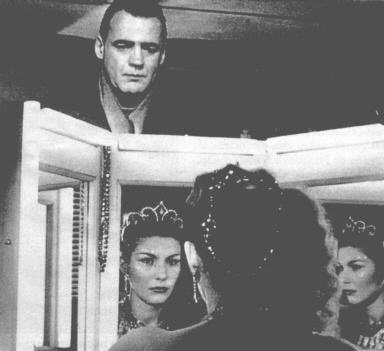
Wings of Desire. By coincidence, the woman who played the trapeze artist, Marion, (Solveig Dommartin) died a few weeks ago of a heart attack. My generation is not going to go out raving in the street a la some Ginsberg poem, but prematurely wearing out their hearts like they were so many rainsoaked grocery bags – thus saith the industrial fats upon which we have steadily gorged, plus of course the coke and heroin and – let’s admit it – the occasional speedball.
Anyway, I did rain down tears for that time, and for some still marvelous parts of the movie – not so much the plot but simply seeing Berlin.
However, I know more about the politics of Satan and the angels now than I did in those dim days. I know the politics – and I know this from having looked it up after reading Mailer’s new novel, for which I penned a commendatory review in yesterday’s Austin Statesman (much better, my review, I must say, than the thing produced by Janet Maslin for the NYT last week – and as for Lee Siegel, well, I just can’t read Lee Siegel). Zechariah is generally considered a post exilic book, and the notion of these walkers abroad has roots, according to some scholars, in the Persian and Egyptian spy systems. In effect, both kingdoms had stumbled upon the idea that lightbulbs its way into the head of every Behemoth since – let’s spy on the population. Even better, let’s turn certain people. Let’s just do it,
pour encourager les autres. Turning people. From the Pharaohs to the FBI and the DEA, this practice has a history that bears a double aspect: on the one side, politics, and on the other side, demonology.
While Satan already plays the role of a sort of egger on in Job, the importance of Zechariah is that Satan, for the first time, resolves himself clearly into the role by which we know and love him best: the adversary.
“And he shewed me Joshua the high priest standing LORD, and Satan standing at his right hand to resist him.
And the LORD said unto Satan, The LORD rebuke thee, O Satan;
even the LORD that hath chosen Jerusalem rebuke thee: is not is not
this a brand plucked out of the fire?”
Whose fire is it, o Lord? – for isn't this the template of the millions of conversations over the millenia that have unfolded behind the iron curtain - by which of course I mean the curtain between the powerful and the dispossessed? Here we are eavesdropping - the prophets are such snoops of the divine, counterspies in the house of Daddy Love - on the tyrant and head of his secret police, president and advisor, sheriff and jailhouse bird. It was how Stalin handled Mandelstam and Pasternak. All brands are, virtually, in the fire, and the fire is the nation. The Joshua that is the case before us tonight is, of course, a high government exec – a high priest. Those are the ones. The system rewards those who damn their brothers by allowing them to climb up to another niche, but the system will, and this is the justice of it, award even those who damn the ones who have damned their quota. Credit systems or politics, computers or the old fashioned way of entrapping your prey in a bar on the Tex Mex border with the offer of some good shit which both of you can cut and make beaucoup bucks - it is all the same, ever ancient, ever the poem, from Jerusalem to Juarez. When Satan accuses Joshua, the machinery that is set in motion is not too much different from the finger that was put by some Satan on Mandelstam, and Mandelstam had survived so far only through the protection of the secret police chief, Ezhov, through Ezhov’s wife.
LI's definition of utopia: a society in which there is no system wide incentive to damn another. That's it. On that day, hell will truly be purged from our lives.
In Wings of Desire, of course, the angels are Rilke’s angels, supposedly purged of that sinister etymological connection with the men on the red horses. They spy, but only as the eye spies – joy and function merged. There is, however, a missed opportunity here – everyone has felt that the sentimentality at the center of Wings of Desire is discrediting, however beautiful the movie is in its collection of modernist tropes. And of course, this city in which the angels spy like hippies is a city of much more professional spies. Pynchon saw so much further - he knew that hippies made the best narcs. The humint that flows through Wenders angels must be woven, in the center, into a world of accusation, where Satan stands on the right hand and resists – since his bureaucratic role is, of course, to play the resistor. How can one condemn to eternal fire those who are guilty of nothing and not be guilty oneself? Even God needs some savior - or rather, scape goat - to carry off his sins or give him, at least, official deniability – hence Satan. Satan, the prince of deniability.
And no one saw the carney go, no one saw the carney go…