Ominous headlines today, making me wonder how my friend S. is ever going to get rid of all the conditioners and shampoos she no doubt packed this morning before she went to the airport.
More ominous than the threat of attack from an Al Qaeda that was, readers will recall, cynically put on tap five years ago in the comedy cut up campaign in Afghanistan, the one designed to give the political establishment a ready, remote control threat (and which has proven to be beyond their control, and which is happily working from its base in Pakistan, to the almost unanimous disinterest of the Western Press). At the moment, there is a tremendous threat by to our civil liberties posed by the ill named Labour party (Surely the name should be the Blood and Soil party) in Britain and the D.C. party – the LieberCheney party – in the U.S.
This is from the horrendous British home secretary, John Reid, the man who espouses the Blairist policy of minimum freedom and maximum unctuousness – that peculiarly British twist on the authoritarian personality:
“John Reid yesterday accused the government's anti-terror critics of putting national security at risk by their failure to recognise the serious nature of the threat facing Britain. "They just don't get it," he said.
"The home secretary yesterday gave the thinktank Demos his strongest hint yet that a new round of anti-terror legislation is on the way this autumn by warning that traditional civil liberty arguments were not so much wrong as just made for another age.
""Sometimes we may have to modify some of our own freedoms in the short term in order to prevent their misuse and abuse by those who oppose our fundamental values and would destroy all of our freedoms in the modern world," he said.”"
LI can see a certain justice in those words, but applies them to the greatest threat to our fundamental values – that posed by the current British and American governments. A sneaking foreign policy, politicized to expand the brute power of the operatives who benefit from it, coddled by a syncophantic crew of journalists, has indeed been striking at all our freedoms; they have thwarted investigations into their low and negligent acts, they have designed, in a remarkably short time, one of the world’s great machines for peculating public funds, showering favored companies with billions, and they have actively delayed any of the necessary changes to our current system of production to prevent an environmental catastrophe, which we actually know is coming. This, more than anything else, will make the depleted future generations curse us.
Now, traditionally the blog thing to do at this point in my rant is to roll out the Nazis as the epitome of evil. I am truly sick to death of the Nazis as stage devils, stalking into that garden of Eden, universal history. I do think there are more devils than are dreamt of in the blogger philosophy – home grown ones too. Reid doesn’t remind me of Hitler – he reminds me of a very British character, Lord Jeffrys.
Jeffrys, like the Home Secretary, was a carious, career tending, threatening man. He became King James II’s right hand man for mass repression. As his biographer, Woolrych, says, “to secure his own fortunes, let the means or consequences be as they might, was the utmost he had any care for, but the difficulty lay in discerning the best political game for accomplishing those ends.”
Jeffrys is most famous for the “bloody Assizes.” This is the story. James II combined the Stuart idea that he was God on Earth with the idea, unpopular in England, that God on Earth should be worshipped in the Roman Catholic way. His accession led to revolts – or, as Reid might say, “the serious nature of the threat facing Britain” was embodied by various invasions, starting with the Duke of Monmouth, one of those handsome, stupid Protestant nobles with a vague, blood claim to the throne, in 1685. Jeffrys was a judge at the time, and had married upward, and was eager to please James, since he had made many enemies among the Dissenters. In fact, he appears to have been a regular New Labour personality, and would certainly have fit in at any of the Murdochian conferences to which Blair likes to flit and kiss, on bended knee, Rupert’s ring.
Jeffrys was appointed as the cleanup man in Western England after the Monmouth army had been defeated. His first victim, Alice Lisle, was dispatched with alacrity – hung. This is how Macaulay describes his coming into Dorchester:
“Jeffreys reached Dorchester, the principal town of the county in which Monmouth had landed; and the judicial massacre began. The court was hung, by order of the Chief Justice, with scarlet; and this innovation seemed to the multitude to indicate a bloody purpose. It was also rumoured that, when the clergyman who preached the assize sermon enforced the duty of mercy, the ferocious mouth of the Judge was distorted by an ominous grin. These things made men augur ill of what was to follow.”
This is Reid, numbering the things that need to change if England is to be purged of terrorism:
"· The media commentators who "apparently give more prominence to the views of Islamist terrorists rather than democratically elected Muslim politicians like premier Maliki of Iraq or President Karzai of Afghanstan"."
Jeffrys, obviously looking down upon Reid with approval, knew just what to do with trash that didn’t praise the democratically elected, god damn it.
"“More than three hundred prisoners were to be tried. The work seemed heavy; but Jeffreys had a contrivance for making it light. He let it be understood that the only chance of obtaining pardon or respite was to plead guilty.”
Another group of people who Reid believes needs to be dashed to the ground are those puling human rightsers:
"“· European judges who passed the "Chahal judgment" that prohibited the home secretary from weighing the security of millions of British people if a suspected terrorist remained in the UK against the risk he faced if deported back to his own country.”"
And who, my Lords, isn’t a suspected terrorist in these troubled times? Yes, the only thing to do is to let those in authority, looking out for your best interest, decide on these things. Preferably in secret.
"“At every spot where two roads met, on every marketplace, on the green of every large village which had furnished Monmouth with soldiers, ironed corpses clattering in the wind, or heads and quarters stuck on poles, poisoned the air, and made the traveller sick with horror. In many parishes the peasantry could not assemble in the house of God without seeing the ghastly face of a neighbour grinning at them over the porch. The Chief Justice was all himself. His spirits rose higher and higher as the work went on. He laughed, shouted, joked, and swore in such a way that many thought him drunk from morning to night. But in him it was not easy to distinguish the madness produced by evil passions from the madness produced by brandy. A prisoner affirmed that the witnesses who appeared against him were not entitled to credit. One of them, he said, was a Papist, and another a prostitute. "Thou impudent rebel," exclaimed the Judge, "to reflect on the King's evidence! I see thee, villain, I see thee already with the halter round thy neck." Another produced testimony that he was a good Protestant. "Protestant! " said Jeffreys; "you mean Presbyterian. I'll hold you a wager of it. I can smell a Presbyterian forty miles." One wretched man moved the pity even of bitter Tories. "My Lord," they said, "this poor creature is on the parish." "Do not trouble yourselves," said the Judge, "I will ease the parish of the burden.""
The latter joke would make them roll in the Blairite conclaves. Get off the dole, you fucking twat – that’s the spirit. Reid, following in the example of his spiritual ancestor, has his own numbers:
"“Mr Reid argued that since 2000 almost 1,000 people have been arrested for terror-related offences, with 154 of them charged and 60 suspects now awaiting trial. Four significant terrorist plots had been disrupted. But the opposition from politicians, media commentators and judges had left the government ill-prepared to tackle the threat.
""In spite of these successes we remain unable to adapt our institutions and legal orthodoxy as fast as we need to," he said. "This is the area that puts us at risk in national security terms. There have been several contributory factors to this, including party political point scoring by the Conservative and Liberal opposition during the passage of key anti-terrorism measures, through to repeated challenges under the Human Rights Act and the convention, which I continue to contest."”
Of course, Reid has turned his face to the source of all the discontent with Britain’s gentle democratizing – the Muslims. Fuck those people.
“Such havoc must have excited disgust even if the sufferers had been generally odious. But they were, for the most part, men of blameless life, and of high religious profession. They were regarded by themselves, and by a large proportion of their neighbours, not as wrongdoers, but as martyrs who sealed with blood the truth of the Protestant religion. Very few of the convicts professed any repentance for what they had done. Many, animated by the old Puritan spirit, met death, not merely with fortitude, but with exultation.”
Suicide bombers, those exulting old Puritans.
Macaulay has a vivid description of one of Jeffrys’ spies, a man named Ferguson. I’d apply this mock heroic catalogue to many in the reactionary network that connects England and America. In fact, this sounds like a job application to work for the Sun, or the Weekly Standard.
“At length he turned his attention almost entirely from theology to the worst part of politics. He belonged to the class whose office it is to render in troubled times to exasperated parties those services from which honest men shrink in disgust and prudent men in fear, the class of fanatical knaves. Violent, malignant, regardless of truth, insensible to shame, insatiable of notoriety, delighting in intrigue, in tumult, in mischief for its own sake, he toiled during many years in the darkest mines of faction. He lived among libellers and false witnesses. He was the keeper of a secret purse from which agents too vile to be acknowledged received hire, and the director of a secret press whence pamphlets, bearing no name, were daily issued.”
Welcome to Reid’s world.
Thursday, August 10, 2006

Wednesday, August 09, 2006
Gwynne Dyer gets it
LI’s recommend of the day is to Gwynne Dyer’s article, “America has to acknowledge its own vulnerability”, in the Kitchener-Waterloo Record (where I found it – Google has a link to it in the Trinidad paper.)
Journalists write way too much to think, which is why one doesn’t go to them for philosophical analysis – one goes to them to see how ‘it’ thinks – the conventional wisdom. ‘It’ actually does most of our thinking – our telephone conversations, jokes, waterfountain talk, is animated mostly by the various, multi-headed it, which has plenty of words and snap together phrases, a lego kit full – which is fine, as long as the world can be represented by legos. But is not when the world is not. However, Dyer’s article actually articulates a distinct thought – one not wrapped up in the usual columnist’s mummery:
“The three most ill-considered (and probably doomed) political enterprises on the international political scene today are the Israeli assault on Lebanon, the American campaign to force Iran to renounce its alleged nuclear weapons program, and the similar campaign that has been mounted against North Korea. What common theme unites these three enterprises? The quest for invulnerability for one side, at the expense of total vulnerability for the other."
Exactly. As Dyer points out, "between 1945 and about 1970," the U.S. had to cope with going from being by far the world's most powerful country to allowing for the fact that the U.S. could never, by way of open warfare, abolish Russia's ability to launch nuclear missiles at it. "By 1970 it was ready to concede nuclear weapons parity to the Soviet Union, an openly hostile totalitarian state, and was negotiating arms-control agreements that limited missile numbers but guaranteed the Soviets the ability to destroy the United States."
This is philosophical analysis in the Husserlian vein – it brackets other considerations that distort the outlines of what really happened – the phenomenon. This is precisely what did happen. The structure of the Cold War was about the U.S. and the U.S.S.R accepting that vulnerability. The structure of the post-War period, or, rather, the Bush end of it, has been a childish attempt to return to American invulnerability.
Dyer applies that model to Israel. I have been thinking that Israel's aggressiveness is the result of being a free rider -- but Dyer is right to point out one of the unexpected results of Israel's success:
“Israel's period of invulnerability began later, after the 1973 war, and has lasted far longer. No combination of Arab armies can defeat Israel in war, or even inflict major casualties on it. And should Israeli generals ever prove so incompetent that Arab armies did make a little headway, Israel still has its regional nuclear weapons monopoly 40 years after developing the things. (America lost its own nuclear monopoly after only four years in its confrontation with the Soviet Union.)”
This is why Israeli actions have been tinged by such arrogance. Menacheim Begin’s election began a new phase in Israel's history, one that seemed to promise power - and Israel has been going down the path, ever since, of expansion and crushing its opponents.
“Israel faces a bigger 'terrorist threat' than the US, but it is still a pretty marginal concern. Hezbollah's activities on Israel's northern borders were an occasional nuisance, but until Israel's quite deliberate overreaction to its hostage-seizure operation on July 12-- bombing targets all across Lebanon -- it had not fired rockets at Israeli towns in years. Hezbollah had the capability to do that, so Israel was theoretically vulnerable (though not very, since the rockets hardly ever hit anyone), but it wasn't actually doing it.”
At last, the acknowledgement of reality! Of course, reality creeps into the newspaper world via rather obscure Caribbean and Canadian papers, but having arrived on this side of the Atlantic, who knows where it will go?
Check it out, people. You can find the full piece here.
Journalists write way too much to think, which is why one doesn’t go to them for philosophical analysis – one goes to them to see how ‘it’ thinks – the conventional wisdom. ‘It’ actually does most of our thinking – our telephone conversations, jokes, waterfountain talk, is animated mostly by the various, multi-headed it, which has plenty of words and snap together phrases, a lego kit full – which is fine, as long as the world can be represented by legos. But is not when the world is not. However, Dyer’s article actually articulates a distinct thought – one not wrapped up in the usual columnist’s mummery:
“The three most ill-considered (and probably doomed) political enterprises on the international political scene today are the Israeli assault on Lebanon, the American campaign to force Iran to renounce its alleged nuclear weapons program, and the similar campaign that has been mounted against North Korea. What common theme unites these three enterprises? The quest for invulnerability for one side, at the expense of total vulnerability for the other."
Exactly. As Dyer points out, "between 1945 and about 1970," the U.S. had to cope with going from being by far the world's most powerful country to allowing for the fact that the U.S. could never, by way of open warfare, abolish Russia's ability to launch nuclear missiles at it. "By 1970 it was ready to concede nuclear weapons parity to the Soviet Union, an openly hostile totalitarian state, and was negotiating arms-control agreements that limited missile numbers but guaranteed the Soviets the ability to destroy the United States."
This is philosophical analysis in the Husserlian vein – it brackets other considerations that distort the outlines of what really happened – the phenomenon. This is precisely what did happen. The structure of the Cold War was about the U.S. and the U.S.S.R accepting that vulnerability. The structure of the post-War period, or, rather, the Bush end of it, has been a childish attempt to return to American invulnerability.
Dyer applies that model to Israel. I have been thinking that Israel's aggressiveness is the result of being a free rider -- but Dyer is right to point out one of the unexpected results of Israel's success:
“Israel's period of invulnerability began later, after the 1973 war, and has lasted far longer. No combination of Arab armies can defeat Israel in war, or even inflict major casualties on it. And should Israeli generals ever prove so incompetent that Arab armies did make a little headway, Israel still has its regional nuclear weapons monopoly 40 years after developing the things. (America lost its own nuclear monopoly after only four years in its confrontation with the Soviet Union.)”
This is why Israeli actions have been tinged by such arrogance. Menacheim Begin’s election began a new phase in Israel's history, one that seemed to promise power - and Israel has been going down the path, ever since, of expansion and crushing its opponents.
“Israel faces a bigger 'terrorist threat' than the US, but it is still a pretty marginal concern. Hezbollah's activities on Israel's northern borders were an occasional nuisance, but until Israel's quite deliberate overreaction to its hostage-seizure operation on July 12-- bombing targets all across Lebanon -- it had not fired rockets at Israeli towns in years. Hezbollah had the capability to do that, so Israel was theoretically vulnerable (though not very, since the rockets hardly ever hit anyone), but it wasn't actually doing it.”
At last, the acknowledgement of reality! Of course, reality creeps into the newspaper world via rather obscure Caribbean and Canadian papers, but having arrived on this side of the Atlantic, who knows where it will go?
Check it out, people. You can find the full piece here.
a monster loses in CT
Mr. Scruggs has advised Limited Inc. of the bad effects of shooting up elections. Soon you become addicted. Soon you actually think they are important. He’s counseled the hard cases, the ones eventually found sprawled, bluefaced, dead, under the set blinking and winking the CNN news. All my friends they died/died! as the song says. But LI –in a junkie’s relapse – was pretty happy about the CT. primary. In the end, we even felt sorry for Lieberman – we wanted his ass kicked, but that clueless fellow, out of his D.C. shell, in the pictures in the NYT seemed so … harmless. We couldn’t put him together with the vicious little prick from his identikit presence on so many blogs, getting his aids to write him up another scorcher for the WSJ editorial page, browbeating the head of the SEC to give accounting firms one more chance to defraud investors and workers – instead, here’s this guy with his hand out in the diner I used to breakfast at in New Haven. You want to lead him to a booth.
Of course, this is the whole problem of democracy, one not often talked about – the elected by a mysterious process become monsters. Their egos become huge and grotesque, Mr. Hydes, stamping around with a cane, pillaging, hobnobing with the worst, vicariously enjoying death. The monster problem is the central problem in democracy – and Carl Schmitt is not the guy you want to go to to have it all explained to you. Try Richard III, instead.
But there are better monsters and worse ones. We know what Lieberman was. Lamont sounds harmless, and he might do some good, who the fuck knows.
In any case: Hurray!
Although I dread the morphine treatment Mistah Scruggs will make me go through in the next coupla weeks.
Of course, this is the whole problem of democracy, one not often talked about – the elected by a mysterious process become monsters. Their egos become huge and grotesque, Mr. Hydes, stamping around with a cane, pillaging, hobnobing with the worst, vicariously enjoying death. The monster problem is the central problem in democracy – and Carl Schmitt is not the guy you want to go to to have it all explained to you. Try Richard III, instead.
But there are better monsters and worse ones. We know what Lieberman was. Lamont sounds harmless, and he might do some good, who the fuck knows.
In any case: Hurray!
Although I dread the morphine treatment Mistah Scruggs will make me go through in the next coupla weeks.
Tuesday, August 08, 2006
advertisements for myself
I hate August, as it is a terrible month for getting editing jobs. No money, no happiness, autumn in my heart and spectacles on my nose, as I. Babel once put it in a different context. The landlady at the door with an axe in her hand… Etc.
So I am going to U.T. and put up my advertisement for editing work here and there. I’ve sent out my flyer to sororities and fraternities, honor societies and all kinds of student organizations, which are all pretty much in suspended animation in the summer. This is a reminder to my readers who may know someone who needs an editor for a paper, an article, or a translator, or a ghostwriter – please refer them to my writing services site. It is here:
http://www.geocities.com/rogergathman/writing.html
So I am going to U.T. and put up my advertisement for editing work here and there. I’ve sent out my flyer to sororities and fraternities, honor societies and all kinds of student organizations, which are all pretty much in suspended animation in the summer. This is a reminder to my readers who may know someone who needs an editor for a paper, an article, or a translator, or a ghostwriter – please refer them to my writing services site. It is here:
http://www.geocities.com/rogergathman/writing.html
Monday, August 07, 2006
Jonathan Chait's heart breaks -- but don't worry, he doesn't use it anyway
Jonathan Chait’s column in the Guardian begins like this:
“Let's face it, Israel's counter offensive in Lebanon doesn't seem to be going very well. Liberals are saying it. Conservatives are saying it. Plenty of Israelis are saying it. But here is the odd thing: nobody is paying very careful attention to the alternative. The criticism of Israel's ground campaign - however sound much of it may be - takes place against an assumption that peace could be at hand if only Israel stopped fighting.”
Of course, we know that Chait, being a clever American, will tell us that peace isn’t the absence of fighting. In this way, a garden variety word, peace, suddenly starts doing summersaults.
“Let's examine that idea. The United Nations types argue that Israel should withdraw from Lebanon and cease its airstrikes and that an international force should patrol southern Lebanon. But every country that could contribute to such a force has insisted they don't want to fight Hizbullah. Kofi Annan has said that a "cardinal principle" of any peacekeeping force would be obtaining Lebanon's consent. And neither Hizbullah nor the Lebanese government has evinced any willingness to remove Hizbullah's forces from southern Lebanon.”
Hmm. So, peace, it turns out, and Israel’s victory are one and the same thing. If Lebanon itself doesn’t have any willingness to remove Hizbullah’s force from Southern Lebanon – an unwillingness reinforced, in the last two weeks, by the evidence that other than having that force there, Israel will invade and batter the country any time it feels like it –well, according to the impeccable logic of Chait, Israel just has to keep fighting. They are fighting, you see, for peace. Such peaceful bombing of children was never seen before. A regular miracle.
In Chait’s view though, the problem is that Israel is threatened. Lebanon, which Israel has invaded now three times in the last twenty years, is, by contrast, unthreatened. Funny, that. To be really unthreatened, you have to have an air force making hundreds of bombing sortees over your cities every day. It makes things more and more peaceful. It is almost like they are dropping apple pie, except the bombs are not sugared, and they rip your guts out and your arms off. But otherwise, it is just like a picnic.
“But the death toll doesn't quite capture the damage wrought by Hizbullah. The purpose of the missile attacks is to force Israelis to live under a constant threat - missile attacks or cross-border raids that, while sporadic, can occur at any time. No nation would consider that condition acceptable. And even if Israel learns to take periodic attacks from Hizbullah with good cheer, there's no guarantee that the attacks won't get worse. After all, Hizbullah is acquiring newer, more powerful rockets from Iran.”
So, we are to consider Israel as doing what any nation would do. There are things that are acceptable for all nations, according to Chait. An interesting concession. Similarly, no nation would allow its neighbor to occupy its land. No nation would allow its neighbor to repeatedly violate its air space. No nation should remain uncompensated for damage wrought over eighteen years of occupation. No nation would tolerate its neighbor calmly planning and carrying out assassinations of its political leaders.
In actuality, just as Chait’s idea of peace is simply war, Chait’s appeal to the universal acceptable behavior of nations is not meant to be taken seriously. One nation, Lebanon, according to Chait, should happily swallow anything that Israel wants to do to it. In return, Israel has the right to reply in any way it feels fit to aggression. But of course, if another nation, say Syria, occupied Lebanon, why that would be a serious crime against humanity.
Chait’s logic is about an equivalence that is simply bogus. That equivalence is between Israel and the more powerful nations. He is simply appealing to the behavior sanctioned by the special group of nations of which he wants to make Israel part – the great powers, the former and present empires, who have given themselves the right to bomb and invade at will.
This overlooks the fact that Israel simply isn’t part of that group, and never will be.
Chait is correct to sum up the pluses and minuses of the Israeli military operation against Hezbollah, but somehow he misses the alternative that would emerge if Israel’s ruling class hadn’t made military supremacy and the settlement of the West Bank Israel’s supreme goals for the last forty years. The inability to triumph militarily in Lebanon is a sign that this ruling clique has lead Israel into a trap. The trap is disguised by Israel’s current idea that it will take unilateral action – which really means endless violence, resting on endless efforts to achieve military supremacy, financed by the United States. That, it seems to me, is the path that Israel is taking in Southern Lebanon. As with many an American proxy, though, Israel is going to find out the limits of existing as a free rider on American benevolence. Squandering its moral stature and its wealth against a militia party that is unlikely to be dislodged at all in Southern Lebanon is not a good deal at all – although no doubt the red meat boys at the New Republic, where Chait writes, think that it is neat. The same thinkers thought invading Iraq was neat.
Unilateralism is dead. Military action has obviously reached its limit. Oh oh, that means the dreaded and wimpy negotiation thing – even, perhaps, giving up the Golan heights, and giving up the settler’s welfare state on the West Bank. If Israel heeds the call of its “friends” such as Chait, however, it will be giving up much more, in the not too distant future.
“The doves are right that any solution that involves attacking innocent civilians is a terrible one. It's heartbreaking to see houses flattened and children killed. But when you have a nation populated in part by murderous religious fanatics who delight in killing enemy civilians and see the deaths of their own civilians as a strategic boon, any option is going to be terrible.
Israel is hoping to change the equation, to force Lebanon to take control of its border or accept an outside force that would do so. The tactic of striking Hizbullah has some chance of bringing that about. Stopping the attack and hoping for the best has no chance at all.”
Heartbreaking, is it? I think those are the mass manufactiured, Hallmark kind of hearts he is alluding to. Any breaks they may suffer are easily healed. It isn't the likes of Chait who will refer, again, to the Children's Massacre in Quana.
However, the more Israel heeds the words of hawks like Chait, the more it is going to confront no choice at all. As Iraq showed, an insurgent force can stop an occupier. And certainly as Israel huffs and puffs about bombing Teheran if Tel Aviv is bombed, they are moving blindly in a direction that has been mapped out by group that has never yet been right in the middle east – the neo cons.
“Let's face it, Israel's counter offensive in Lebanon doesn't seem to be going very well. Liberals are saying it. Conservatives are saying it. Plenty of Israelis are saying it. But here is the odd thing: nobody is paying very careful attention to the alternative. The criticism of Israel's ground campaign - however sound much of it may be - takes place against an assumption that peace could be at hand if only Israel stopped fighting.”
Of course, we know that Chait, being a clever American, will tell us that peace isn’t the absence of fighting. In this way, a garden variety word, peace, suddenly starts doing summersaults.
“Let's examine that idea. The United Nations types argue that Israel should withdraw from Lebanon and cease its airstrikes and that an international force should patrol southern Lebanon. But every country that could contribute to such a force has insisted they don't want to fight Hizbullah. Kofi Annan has said that a "cardinal principle" of any peacekeeping force would be obtaining Lebanon's consent. And neither Hizbullah nor the Lebanese government has evinced any willingness to remove Hizbullah's forces from southern Lebanon.”
Hmm. So, peace, it turns out, and Israel’s victory are one and the same thing. If Lebanon itself doesn’t have any willingness to remove Hizbullah’s force from Southern Lebanon – an unwillingness reinforced, in the last two weeks, by the evidence that other than having that force there, Israel will invade and batter the country any time it feels like it –well, according to the impeccable logic of Chait, Israel just has to keep fighting. They are fighting, you see, for peace. Such peaceful bombing of children was never seen before. A regular miracle.
In Chait’s view though, the problem is that Israel is threatened. Lebanon, which Israel has invaded now three times in the last twenty years, is, by contrast, unthreatened. Funny, that. To be really unthreatened, you have to have an air force making hundreds of bombing sortees over your cities every day. It makes things more and more peaceful. It is almost like they are dropping apple pie, except the bombs are not sugared, and they rip your guts out and your arms off. But otherwise, it is just like a picnic.
“But the death toll doesn't quite capture the damage wrought by Hizbullah. The purpose of the missile attacks is to force Israelis to live under a constant threat - missile attacks or cross-border raids that, while sporadic, can occur at any time. No nation would consider that condition acceptable. And even if Israel learns to take periodic attacks from Hizbullah with good cheer, there's no guarantee that the attacks won't get worse. After all, Hizbullah is acquiring newer, more powerful rockets from Iran.”
So, we are to consider Israel as doing what any nation would do. There are things that are acceptable for all nations, according to Chait. An interesting concession. Similarly, no nation would allow its neighbor to occupy its land. No nation would allow its neighbor to repeatedly violate its air space. No nation should remain uncompensated for damage wrought over eighteen years of occupation. No nation would tolerate its neighbor calmly planning and carrying out assassinations of its political leaders.
In actuality, just as Chait’s idea of peace is simply war, Chait’s appeal to the universal acceptable behavior of nations is not meant to be taken seriously. One nation, Lebanon, according to Chait, should happily swallow anything that Israel wants to do to it. In return, Israel has the right to reply in any way it feels fit to aggression. But of course, if another nation, say Syria, occupied Lebanon, why that would be a serious crime against humanity.
Chait’s logic is about an equivalence that is simply bogus. That equivalence is between Israel and the more powerful nations. He is simply appealing to the behavior sanctioned by the special group of nations of which he wants to make Israel part – the great powers, the former and present empires, who have given themselves the right to bomb and invade at will.
This overlooks the fact that Israel simply isn’t part of that group, and never will be.
Chait is correct to sum up the pluses and minuses of the Israeli military operation against Hezbollah, but somehow he misses the alternative that would emerge if Israel’s ruling class hadn’t made military supremacy and the settlement of the West Bank Israel’s supreme goals for the last forty years. The inability to triumph militarily in Lebanon is a sign that this ruling clique has lead Israel into a trap. The trap is disguised by Israel’s current idea that it will take unilateral action – which really means endless violence, resting on endless efforts to achieve military supremacy, financed by the United States. That, it seems to me, is the path that Israel is taking in Southern Lebanon. As with many an American proxy, though, Israel is going to find out the limits of existing as a free rider on American benevolence. Squandering its moral stature and its wealth against a militia party that is unlikely to be dislodged at all in Southern Lebanon is not a good deal at all – although no doubt the red meat boys at the New Republic, where Chait writes, think that it is neat. The same thinkers thought invading Iraq was neat.
Unilateralism is dead. Military action has obviously reached its limit. Oh oh, that means the dreaded and wimpy negotiation thing – even, perhaps, giving up the Golan heights, and giving up the settler’s welfare state on the West Bank. If Israel heeds the call of its “friends” such as Chait, however, it will be giving up much more, in the not too distant future.
“The doves are right that any solution that involves attacking innocent civilians is a terrible one. It's heartbreaking to see houses flattened and children killed. But when you have a nation populated in part by murderous religious fanatics who delight in killing enemy civilians and see the deaths of their own civilians as a strategic boon, any option is going to be terrible.
Israel is hoping to change the equation, to force Lebanon to take control of its border or accept an outside force that would do so. The tactic of striking Hizbullah has some chance of bringing that about. Stopping the attack and hoping for the best has no chance at all.”
Heartbreaking, is it? I think those are the mass manufactiured, Hallmark kind of hearts he is alluding to. Any breaks they may suffer are easily healed. It isn't the likes of Chait who will refer, again, to the Children's Massacre in Quana.
However, the more Israel heeds the words of hawks like Chait, the more it is going to confront no choice at all. As Iraq showed, an insurgent force can stop an occupier. And certainly as Israel huffs and puffs about bombing Teheran if Tel Aviv is bombed, they are moving blindly in a direction that has been mapped out by group that has never yet been right in the middle east – the neo cons.
Saturday, August 05, 2006
robert kaplan - stooge
The phrase ‘war profiteer’ causes noses to wrinkle among the conventional wisdom set. It is so… angry. And fringe. Not at all the kind of bloodless bloody talk preferred at Georgetown lunches, or Raytheon sponsored golfing trips for congressmen.
However, LI is so damn fringe that we spontaneously generate tie dyed shirts (it is a horrible FX, not suitable for children under 16 not accompanied by parent). And so we think that there are indeed war profiteers, and that wars are fought more often for stuff than for principles (which, actually, has turned out to be a good thing – stuff is limiting) and that the combination of fighting for stuff and claiming to be fighting for principles is the worst of both worlds. We think that there is a subculture, dominant in the U.S., that fattens on spilling human blood. We also think that the flaks of war are immensely important to keep the whole corrupt system going. It is these people that make mass murder exciting. Hip. And oh so serious – strategy rather than butchery. Which reminds us a bit of a parable John Selden, the English antiquarian and friend of Ben Johnson, jotted down in his strange little book, Table Talk:
“Boccaline has this passage of Souldiers, They came to Apollo to have their profession made the Eighth Liberal Science, which he granted. As soon as it was nois’d up and down, it come to the Butchers, and they desir’d their Profession might be made the Ninth: For say they, the Souldiers have this Honour for the killing of Men; now we kill as well as they; but we kill Beasts for the preserving of Men, and why should not we have Honour likewise done to us? Apollo could not Answer their Reasons, so he revers’d his Sentence, and made the Souldiers Trade a Mystery, as the Butchers is.”
This is, of course, obsolete in the age of Robert Kaplan, where all Mysteries have been bureaucratized into security clearances. Kaplan is an important flak who has “promoted/ the third world war” – like the guy in the Highway 61 song, Kaplan believes it can be “easily done.” He is writing in belligeranti mode in his article, Hunting the Taliban in Las Vegas, in this month’s Atlantic. Kaplan does Tom Wolfe like paens to military hardware, but it is like Wolfe with half a brain (unfortunately, that is what Wolfe, too, sounds like as a novelist).
It begins by framing the issue nicely. First we get the decadent civilians, whacking off:
“To embed on some of the niftiest air missions over Iraq and Afghanistan, I had to fly to Las Vegas. 1 drove out of town past the MGM Grand, the Bellagio, and Caesar's Palace and checked in at a low-end hotel-casino complex in Las Vegas for $59 a night. It was crowded with obese people in sweat suits and seniors driving motorized wheelchairs, yanking one-armed bandits in a masturbatory frenzy, and smelling of whiskey, cigarettes, and popcorn. Ten minutes away, at Nellis Air Force Base, I found a cluster of camouflaged trailers.”
Such nice distinctions between worlds. Oh, the nasties in their masturbatory frenzy. Oh, how they just don’t understand the price of Freedom! And oh, on the other side, the hardbody military, the world’s greatest fuckers – so beyond the primitives in 120 Days of Sodom. Sade’s fuckers, with their elaborate sodomies choreographed in cathedrals and vaults, their pitiful excesses of sperm and candle wax, can’t compete with the fucking of cyborg war, where the torture and death can be vicariously enjoyed by fuckers at home – such as Kaplan – dressed, no doubt, in camo. Although the logic remains the same – get to the to the Sadean vanishing point – that moment when pleasure and pain are indistinguishable. So, put on your helmets and enjoy the seared human sweetmeats with the drones!
“The Predator is the most famous of several dozen UAVs (Unmanned Aerial Vehicles) that the military operates. It was first deployed in the 1990s in the Balkans, but made its bones in November 2002 in Yemen, when a Predator fired ACM-114P armor-piercing Hellfire missile incinerated a car in which an al-Qaeda leader, Abu Ali al-Harithi, was traveling with five others through the desert. And a Predator tracked Iraqi insurgency leader Abu Musab al-Zarqawi during the last days of his life.”
al-Zarqawi is a perfect example of the antiquated Sadean fucker – orgasming over chopping off the heads of civilians. No wonder such as Kaplan despise him – oh, how much better to chuckle and grunt over incineration via OUR UAVS – such a great toy, much better than those masturbatory one armed bandits:
“I've been traveling to Iraq and Afghanistan for a quarter century, and yet some of the most illuminating moments I've experienced in those countries occurred here in Las Vegas. Each day began with a pilots' briefing, no different from those I've attended with Air Force pilots elsewhere,with a similar nervous edge to it. To wit, the brief began with "Motherhood"—that is, the idiot-proof basics. Then came an intelligence backgrounder, followed by a detailed weather report (for Iraq and Afghanistan, not Nevada), and concluding with the "Brevity," or code words for the day. The wall clocks focused on three time zones: Iraq's, Afghanistan's, and Zulu. (Zulu Time, or Z Time, is Greenwich Mean Time not adjusted to daylight saving time; the U.S. military uses
Z Time worldwide to prevent confusion.)
"Those who '"fly" Predators are indeed pilots, not operators, even though they don't have to leave the ground. They wear flight suits. Each is a veteran of an A-10, an F-15, a B-1 bomber, a B-52, or any of a host of other aerial platforms. The scrappy, lumbering, low-tech A-10 Warthog may give pilots the best preparation for flying the high-tech Pred. Both Warthogs and Predators are about hitting small targets and gunning down individuals in confined spaces. "If you want to pull the trigger and take out bad guys, you fly a Predator," one Pred pilot told me.”
Doing his hopped up clancyite routine is why Kaplan is just the cutest little reporter the neo-cons ever saw. Of course, the replacement of the face to face encounter by the kindergarten role play encounter of men wearing flight suits as costumes ‘taking out’ bad guys is exactly the reason the U.S. was gunning for military disaster from the moment they set foot in Iraq. Reporters who want to play the people who play the soldiers who kill the bad guys are the reason that, for so long, this obvious fact never emerged in any of the reporting on Iraq. Embedded reporters? Nope. The word is stooge. And Kaplan is the very model of a stooge. Really, he should get into the interactive war game market and compete with the Clance himself.
However, LI is so damn fringe that we spontaneously generate tie dyed shirts (it is a horrible FX, not suitable for children under 16 not accompanied by parent). And so we think that there are indeed war profiteers, and that wars are fought more often for stuff than for principles (which, actually, has turned out to be a good thing – stuff is limiting) and that the combination of fighting for stuff and claiming to be fighting for principles is the worst of both worlds. We think that there is a subculture, dominant in the U.S., that fattens on spilling human blood. We also think that the flaks of war are immensely important to keep the whole corrupt system going. It is these people that make mass murder exciting. Hip. And oh so serious – strategy rather than butchery. Which reminds us a bit of a parable John Selden, the English antiquarian and friend of Ben Johnson, jotted down in his strange little book, Table Talk:
“Boccaline has this passage of Souldiers, They came to Apollo to have their profession made the Eighth Liberal Science, which he granted. As soon as it was nois’d up and down, it come to the Butchers, and they desir’d their Profession might be made the Ninth: For say they, the Souldiers have this Honour for the killing of Men; now we kill as well as they; but we kill Beasts for the preserving of Men, and why should not we have Honour likewise done to us? Apollo could not Answer their Reasons, so he revers’d his Sentence, and made the Souldiers Trade a Mystery, as the Butchers is.”
This is, of course, obsolete in the age of Robert Kaplan, where all Mysteries have been bureaucratized into security clearances. Kaplan is an important flak who has “promoted/ the third world war” – like the guy in the Highway 61 song, Kaplan believes it can be “easily done.” He is writing in belligeranti mode in his article, Hunting the Taliban in Las Vegas, in this month’s Atlantic. Kaplan does Tom Wolfe like paens to military hardware, but it is like Wolfe with half a brain (unfortunately, that is what Wolfe, too, sounds like as a novelist).
It begins by framing the issue nicely. First we get the decadent civilians, whacking off:
“To embed on some of the niftiest air missions over Iraq and Afghanistan, I had to fly to Las Vegas. 1 drove out of town past the MGM Grand, the Bellagio, and Caesar's Palace and checked in at a low-end hotel-casino complex in Las Vegas for $59 a night. It was crowded with obese people in sweat suits and seniors driving motorized wheelchairs, yanking one-armed bandits in a masturbatory frenzy, and smelling of whiskey, cigarettes, and popcorn. Ten minutes away, at Nellis Air Force Base, I found a cluster of camouflaged trailers.”
Such nice distinctions between worlds. Oh, the nasties in their masturbatory frenzy. Oh, how they just don’t understand the price of Freedom! And oh, on the other side, the hardbody military, the world’s greatest fuckers – so beyond the primitives in 120 Days of Sodom. Sade’s fuckers, with their elaborate sodomies choreographed in cathedrals and vaults, their pitiful excesses of sperm and candle wax, can’t compete with the fucking of cyborg war, where the torture and death can be vicariously enjoyed by fuckers at home – such as Kaplan – dressed, no doubt, in camo. Although the logic remains the same – get to the to the Sadean vanishing point – that moment when pleasure and pain are indistinguishable. So, put on your helmets and enjoy the seared human sweetmeats with the drones!
“The Predator is the most famous of several dozen UAVs (Unmanned Aerial Vehicles) that the military operates. It was first deployed in the 1990s in the Balkans, but made its bones in November 2002 in Yemen, when a Predator fired ACM-114P armor-piercing Hellfire missile incinerated a car in which an al-Qaeda leader, Abu Ali al-Harithi, was traveling with five others through the desert. And a Predator tracked Iraqi insurgency leader Abu Musab al-Zarqawi during the last days of his life.”
al-Zarqawi is a perfect example of the antiquated Sadean fucker – orgasming over chopping off the heads of civilians. No wonder such as Kaplan despise him – oh, how much better to chuckle and grunt over incineration via OUR UAVS – such a great toy, much better than those masturbatory one armed bandits:
“I've been traveling to Iraq and Afghanistan for a quarter century, and yet some of the most illuminating moments I've experienced in those countries occurred here in Las Vegas. Each day began with a pilots' briefing, no different from those I've attended with Air Force pilots elsewhere,with a similar nervous edge to it. To wit, the brief began with "Motherhood"—that is, the idiot-proof basics. Then came an intelligence backgrounder, followed by a detailed weather report (for Iraq and Afghanistan, not Nevada), and concluding with the "Brevity," or code words for the day. The wall clocks focused on three time zones: Iraq's, Afghanistan's, and Zulu. (Zulu Time, or Z Time, is Greenwich Mean Time not adjusted to daylight saving time; the U.S. military uses
Z Time worldwide to prevent confusion.)
"Those who '"fly" Predators are indeed pilots, not operators, even though they don't have to leave the ground. They wear flight suits. Each is a veteran of an A-10, an F-15, a B-1 bomber, a B-52, or any of a host of other aerial platforms. The scrappy, lumbering, low-tech A-10 Warthog may give pilots the best preparation for flying the high-tech Pred. Both Warthogs and Predators are about hitting small targets and gunning down individuals in confined spaces. "If you want to pull the trigger and take out bad guys, you fly a Predator," one Pred pilot told me.”
Doing his hopped up clancyite routine is why Kaplan is just the cutest little reporter the neo-cons ever saw. Of course, the replacement of the face to face encounter by the kindergarten role play encounter of men wearing flight suits as costumes ‘taking out’ bad guys is exactly the reason the U.S. was gunning for military disaster from the moment they set foot in Iraq. Reporters who want to play the people who play the soldiers who kill the bad guys are the reason that, for so long, this obvious fact never emerged in any of the reporting on Iraq. Embedded reporters? Nope. The word is stooge. And Kaplan is the very model of a stooge. Really, he should get into the interactive war game market and compete with the Clance himself.
Friday, August 04, 2006
realism about iran
At a seminar in Toronto around the start of the war, historian Bernard Lewis, who was instrumental in advising Vice President Dick Cheney and other top U.S. officials on the Iraq invasion, said: "The Iranian regime won't last very long after an overthrow of the regime in Iraq, and many other regimes in the region will feel threatened." – WSJ, Ancient Rift: Rising Academic Sees Sectarian Split Inflaming Mideast --- Vali Nasr Says 'Shiite Revival' Is Met by Sunni Backlash; Resurgent Iran Leads Way --- Can Mullahs be Moderated? By Peter Waldman
LI advises our readers to check out the Wall Street Journal story on Vali Nasr, a Teheran born academic who advocates pretty much what LI has been advocating – getting real about Iran. That is, recognizing Iran, establishing relations with the nation, “managing” its entrance into Middle Eastern affairs rather than wishing it would go away, or targeting it.
“Mr. Nasr, a professor at the Naval Postgraduate School in Monterey, Calif., calls this a historic "Shiite revival" and has gone further than most in identifying it as a central force in Mideast politics. He also frames a possible U.S. response: Engage Iran, especially over the issue of reducing violence in Iraq, and try to manage Tehran's rise as a regional power rather than isolating it.
"The issues are more than academic for the 46-year-old professor. He was raised in Tehran and hails from a prominent intellectual and literary family in Iran that traces its lineage to the prophet Muhammad. His father was once president of Iran's top science university and chief of staff for the shah's wife.
"In 1979, after the Iranian revolution, the Nasrs "started from zero" in the U.S., says Mr. Nasr. He received a doctorate in political science from the Massachusetts Institute of Technology, writing his thesis on the political dimensions of radical Islam, while his father, Seyyed Hossein Nasr, became a renowned professor of Islamic studies at George Washington University.”
The WSJ editorial board is in the death grip of the neo-con pod people – but the newspaper survives by exploiting a much bigger niche in the general business community, which could care less about the cancerous Weltanschauung of Cheney. When the business community turned against the Vietnam war, the political establishment began its long, bloody disengagement from Vietnam.
I’ve been wondering when Iraq would tip. As the Bush policy seems to call for endless and ever more pointless wars, creating a New Middle East of universal hatred for America, the business community, sated by the tax cuts that poured money into the upper wealth brackets, is beginning to come out of its stupor and object.
“For the U.S., the Sunni-Shiite divide is fraught with challenges --and opportunities. By creating in Iraq the first Shiite-led state in the Arab world since the rise of Islam (Iran is mostly ethnic Persian), the U.S. ignited aspirations among some 150 million Shiites in the region, Mr. Nasr says. Many live under Sunni rule, such as in Saudi Arabia, where they have long been persecuted. Yet U.S. foreign policy still operates under the "old paradigm" of Sunni dominance, he contends.
"Take the current crisis in Lebanon. The U.S. has long relied on its traditional Sunni Arab allies -- Egypt, Jordan and Saudi Arabia -- to keep the Arab-Israeli conflict in check. But now the Sunni axis is failing, says Mr. Nasr, because these nations are incapable of containing a resurgent Iran and its radical clients on the front lines against Israel -- Hezbollah and the Palestinian group Hamas.
"To adapt, the U.S. must "recalibrate" its diplomacy and re-establish contacts with Iran, he says. That would require disavowing any interest in "regime change" in Tehran -- an unrealistic aim anyway, Mr. Nasr argues -- but would offer the best hope of moderating Iran's growing influence.
"The Iranian genie isn't going back in the bottle," he says. "If we deny these changes have happened -- that Cairo, Amman and Riyadh have lost control of the region -- and we continue to exclude Iran, we'd better be prepared to spend a lot of money on troops in the region for a long time," Mr. Nasr says.”
You can tell that Nasr’s argument is being taken seriously when it is dressed in ‘opportunity’ talk, which is that nexus where bad taste metamorphizes into a war crime. However, given the slim pickings in D.C., where the moronic inferno has been whirling for five years without stint, I am going to overlook the gastliness of the vocabulary and find Nasr’s prominence a good sign. He's actually running a line that Hoagland, one of the WAPO superhawks and Chalabi's spokesperson in America, ran in 2003. It is a sign of how bad things are that this is now a progressive view.
LI advises our readers to check out the Wall Street Journal story on Vali Nasr, a Teheran born academic who advocates pretty much what LI has been advocating – getting real about Iran. That is, recognizing Iran, establishing relations with the nation, “managing” its entrance into Middle Eastern affairs rather than wishing it would go away, or targeting it.
“Mr. Nasr, a professor at the Naval Postgraduate School in Monterey, Calif., calls this a historic "Shiite revival" and has gone further than most in identifying it as a central force in Mideast politics. He also frames a possible U.S. response: Engage Iran, especially over the issue of reducing violence in Iraq, and try to manage Tehran's rise as a regional power rather than isolating it.
"The issues are more than academic for the 46-year-old professor. He was raised in Tehran and hails from a prominent intellectual and literary family in Iran that traces its lineage to the prophet Muhammad. His father was once president of Iran's top science university and chief of staff for the shah's wife.
"In 1979, after the Iranian revolution, the Nasrs "started from zero" in the U.S., says Mr. Nasr. He received a doctorate in political science from the Massachusetts Institute of Technology, writing his thesis on the political dimensions of radical Islam, while his father, Seyyed Hossein Nasr, became a renowned professor of Islamic studies at George Washington University.”
The WSJ editorial board is in the death grip of the neo-con pod people – but the newspaper survives by exploiting a much bigger niche in the general business community, which could care less about the cancerous Weltanschauung of Cheney. When the business community turned against the Vietnam war, the political establishment began its long, bloody disengagement from Vietnam.
I’ve been wondering when Iraq would tip. As the Bush policy seems to call for endless and ever more pointless wars, creating a New Middle East of universal hatred for America, the business community, sated by the tax cuts that poured money into the upper wealth brackets, is beginning to come out of its stupor and object.
“For the U.S., the Sunni-Shiite divide is fraught with challenges --and opportunities. By creating in Iraq the first Shiite-led state in the Arab world since the rise of Islam (Iran is mostly ethnic Persian), the U.S. ignited aspirations among some 150 million Shiites in the region, Mr. Nasr says. Many live under Sunni rule, such as in Saudi Arabia, where they have long been persecuted. Yet U.S. foreign policy still operates under the "old paradigm" of Sunni dominance, he contends.
"Take the current crisis in Lebanon. The U.S. has long relied on its traditional Sunni Arab allies -- Egypt, Jordan and Saudi Arabia -- to keep the Arab-Israeli conflict in check. But now the Sunni axis is failing, says Mr. Nasr, because these nations are incapable of containing a resurgent Iran and its radical clients on the front lines against Israel -- Hezbollah and the Palestinian group Hamas.
"To adapt, the U.S. must "recalibrate" its diplomacy and re-establish contacts with Iran, he says. That would require disavowing any interest in "regime change" in Tehran -- an unrealistic aim anyway, Mr. Nasr argues -- but would offer the best hope of moderating Iran's growing influence.
"The Iranian genie isn't going back in the bottle," he says. "If we deny these changes have happened -- that Cairo, Amman and Riyadh have lost control of the region -- and we continue to exclude Iran, we'd better be prepared to spend a lot of money on troops in the region for a long time," Mr. Nasr says.”
You can tell that Nasr’s argument is being taken seriously when it is dressed in ‘opportunity’ talk, which is that nexus where bad taste metamorphizes into a war crime. However, given the slim pickings in D.C., where the moronic inferno has been whirling for five years without stint, I am going to overlook the gastliness of the vocabulary and find Nasr’s prominence a good sign. He's actually running a line that Hoagland, one of the WAPO superhawks and Chalabi's spokesperson in America, ran in 2003. It is a sign of how bad things are that this is now a progressive view.
Wednesday, August 02, 2006
under the harrow - Blair and Uriah Heep
There is something about Tony Blair that arouses the instinct to find some literary counterpart to explain him. How can a man so utterly mealy mouthed, so vacuous, so soft-soapy, an endlessly servile tool to the the Bush clique, an endlessly arrogant tyro to the powers under him, have attained his position? One almost instinctively looks to Dickens, and most of all, to Uriah Heep, to find a key to this rather loathsome soul. This is from the chapter on Uriah’s unmasking in David Copperfield:
“I had not seen Uriah Heep since the time of the blow [David Copperfield had struck Heep in an argument]. Our visit astonished him, evidently; not the less, I dare say, because it astonished ourselves. He did not gather his eyebrows together, for he had none worth mentioning; but he frowned to that degree that he almost closed his small eyes, while the hurried raising of his grisly hand to his chin betrayed some trepidation or surprise. This was only when we were in the act of entering his room, and when I caught a glance at him over my aunt's shoulder. A moment afterwards, he was as fawning and as humble as ever.
'Well, I am sure,' he said. 'This is indeed an unexpected pleasure! To have, as I may say, all friends round St. Paul's at once, is a treat unlooked for! Mr. Copperfield, I hope I see you well, and - if I may umbly express myself so - friendly towards them as is ever your friends, whether or not. Mrs. Copperfield, sir, I hope she's getting on. We have been made quite uneasy by the poor accounts we have had of her state, lately, I do assure you.'
In today’s Murdochworld – encompassing Australian papers, the Weekly Standard, and Fox – there is the usual contingent of the bloodyminded, whose blind belief that Israel is winning in Lebanon and that Israel is on the forefront of all things good is released in the media system like a toxin, to be washed through the Washington Post, the D.C. think tanks, CNN, finally achieving an extra-abstract form in an American made exploding bomb and its result (the wrenched off limb of an infant, the usual Lebanese carcass, the oil that covers the beaches of Lebanon). Among them is Blair, bleating at great length about what this is – this war, this green and pleasant war, this opportunity, this Sabbat, of which he is one of the umble enablers. First of course comes the pat on the back. Others, others could take the easy way. Not the crusaders. Theirs is the way of sacrifice – the stock options, tax cuts, and bribed Lords that mark the lonely monk’s path:
“The root causes of the crisis are supremely indicative of this. Ever since September 11, the US has embarked on a policy of intervention to protect its and our future security. Hence Afghanistan. Hence Iraq. Hence the broader Middle East initiative in support of moves towards democracy in the Arab world.
The purpose of the terrorism in Iraq is absolutely simple: carnage, causing sectarian hatred, leading to civil war.
The point about these interventions, however, military and otherwise, is that they were not just about changing regimes but changing the values systems governing the nations concerned. The banner was not actually "regime change", it was "values change".
The reason I say this is that we could have chosen security as the battleground. But we didn't. We chose values.””
O, Churchillians all! We rally to those values – the preemptive invasions, the curtailing of domestic liberties, the massive, continuous criminal incompetence of those who put their own poltical future, and the wellbeing of their billionaire cronies, well before the national interest!
“Uriah fell back, as if he had been struck or stung. Looking slowly
round upon us with the darkest and wickedest expression that his face could wear, he said, in a lower voice:
'Oho! This is a conspiracy! You have met here by appointment! You are playing Booty with my clerk, are you, Copperfield? Now, take
care. You'll make nothing of this. We understand each other,you and me. There's no love between us. You were always a puppy with a proud stomach,from your first coming here; and you envy me my rise, do you? None of your plots against me; I'll counterplot you!Micawber, you be off. I'll talk to you presently.'
“So the opportunity passed to reactionary Islam and they seized it: first in Gaza, then in Lebanon. They knew what would happen. Their terrorism would provoke massive retaliation by Israel. Within days, the world would forget the original provocation and be shocked by the retaliation. They want to trap the moderates between support for America and an Arab street furious at what they see nightly on their television. This is what has happened.
So the struggle is finely poised. The question is: how do we empower the moderates to defeat the extremists?”
Much port was undoubtedly spilt on many very fine and expensive laps as the crowd leaps to its feet to here this almost completely fictitious account of recent events, complete with that grand euphemism about what the Arab Street is seeing on their tvs. A neat stroke, that, since to say what they are seeing on their televisions rather gives the game away, doesn't it? Israel, which for forty some years has, in defiance of the UN, and with the financing of the US, made every effort to settle people on stolen territory, is being provoked – good, honest Israel! Provoked by, uh, an election. But elections are not, as Blair wisely knows, the essence of democracy – they are ploys and plays, with the higher thing – the imperialism of the those umble clear through to the gizzards in the pursuit of values –that is what we are all about, we who only want the best for Lebanon, for the Middle East, for all the world. We well intentioned few, we CEOs of oil companies and media, we seekers after cheap energy, we believers in the wind of freedom!
'Mr. Micawber,' said I,'there is a sudden change in this fellow
in more respects than the extraordinary one of his speaking the
truth in one particular, which assures me that he is brought to
bay. Deal with him as he deserves!'
'You are a precious set of people, ain't you?' said Uriah, in the
same low voice, and breaking out into a clammy heat, which he wiped
from his forehead, with his long lean hand, 'to buy over my clerk,
who is the very scum of society, - as you yourself were, Copper-field, you know it, before anyone had charity on you, - to defame me with his lies? Miss Trotwood, you had better stop this; or I'll stop your husband shorter than will be pleasant to you. I won't know your story professionally, for nothing, old lady! Miss Wick-field, if you have any love for your father, you had better not
join that gang. I'll ruin him, if you do. Now, come! I have got
some of you under the harrow. Think twice, before it goes over
you. Think twice, you, Micawber, if you don't want to be crushed.
I recommend you to take yourself off, and be talked to presently,
you fool! while there's time to retreat.”
“Our values . . . represent humanity's progress throughout the ages and at each point we have had to fight for them.
No wonder Blair is as popular as a case of piles in his own nation. And no wonder, in Murdochworld, he is everybody’s favorite toady.
“I had not seen Uriah Heep since the time of the blow [David Copperfield had struck Heep in an argument]. Our visit astonished him, evidently; not the less, I dare say, because it astonished ourselves. He did not gather his eyebrows together, for he had none worth mentioning; but he frowned to that degree that he almost closed his small eyes, while the hurried raising of his grisly hand to his chin betrayed some trepidation or surprise. This was only when we were in the act of entering his room, and when I caught a glance at him over my aunt's shoulder. A moment afterwards, he was as fawning and as humble as ever.
'Well, I am sure,' he said. 'This is indeed an unexpected pleasure! To have, as I may say, all friends round St. Paul's at once, is a treat unlooked for! Mr. Copperfield, I hope I see you well, and - if I may umbly express myself so - friendly towards them as is ever your friends, whether or not. Mrs. Copperfield, sir, I hope she's getting on. We have been made quite uneasy by the poor accounts we have had of her state, lately, I do assure you.'
In today’s Murdochworld – encompassing Australian papers, the Weekly Standard, and Fox – there is the usual contingent of the bloodyminded, whose blind belief that Israel is winning in Lebanon and that Israel is on the forefront of all things good is released in the media system like a toxin, to be washed through the Washington Post, the D.C. think tanks, CNN, finally achieving an extra-abstract form in an American made exploding bomb and its result (the wrenched off limb of an infant, the usual Lebanese carcass, the oil that covers the beaches of Lebanon). Among them is Blair, bleating at great length about what this is – this war, this green and pleasant war, this opportunity, this Sabbat, of which he is one of the umble enablers. First of course comes the pat on the back. Others, others could take the easy way. Not the crusaders. Theirs is the way of sacrifice – the stock options, tax cuts, and bribed Lords that mark the lonely monk’s path:
“The root causes of the crisis are supremely indicative of this. Ever since September 11, the US has embarked on a policy of intervention to protect its and our future security. Hence Afghanistan. Hence Iraq. Hence the broader Middle East initiative in support of moves towards democracy in the Arab world.
The purpose of the terrorism in Iraq is absolutely simple: carnage, causing sectarian hatred, leading to civil war.
The point about these interventions, however, military and otherwise, is that they were not just about changing regimes but changing the values systems governing the nations concerned. The banner was not actually "regime change", it was "values change".
The reason I say this is that we could have chosen security as the battleground. But we didn't. We chose values.””
O, Churchillians all! We rally to those values – the preemptive invasions, the curtailing of domestic liberties, the massive, continuous criminal incompetence of those who put their own poltical future, and the wellbeing of their billionaire cronies, well before the national interest!
“Uriah fell back, as if he had been struck or stung. Looking slowly
round upon us with the darkest and wickedest expression that his face could wear, he said, in a lower voice:
'Oho! This is a conspiracy! You have met here by appointment! You are playing Booty with my clerk, are you, Copperfield? Now, take
care. You'll make nothing of this. We understand each other,you and me. There's no love between us. You were always a puppy with a proud stomach,from your first coming here; and you envy me my rise, do you? None of your plots against me; I'll counterplot you!Micawber, you be off. I'll talk to you presently.'
“So the opportunity passed to reactionary Islam and they seized it: first in Gaza, then in Lebanon. They knew what would happen. Their terrorism would provoke massive retaliation by Israel. Within days, the world would forget the original provocation and be shocked by the retaliation. They want to trap the moderates between support for America and an Arab street furious at what they see nightly on their television. This is what has happened.
So the struggle is finely poised. The question is: how do we empower the moderates to defeat the extremists?”
Much port was undoubtedly spilt on many very fine and expensive laps as the crowd leaps to its feet to here this almost completely fictitious account of recent events, complete with that grand euphemism about what the Arab Street is seeing on their tvs. A neat stroke, that, since to say what they are seeing on their televisions rather gives the game away, doesn't it? Israel, which for forty some years has, in defiance of the UN, and with the financing of the US, made every effort to settle people on stolen territory, is being provoked – good, honest Israel! Provoked by, uh, an election. But elections are not, as Blair wisely knows, the essence of democracy – they are ploys and plays, with the higher thing – the imperialism of the those umble clear through to the gizzards in the pursuit of values –that is what we are all about, we who only want the best for Lebanon, for the Middle East, for all the world. We well intentioned few, we CEOs of oil companies and media, we seekers after cheap energy, we believers in the wind of freedom!
'Mr. Micawber,' said I,'there is a sudden change in this fellow
in more respects than the extraordinary one of his speaking the
truth in one particular, which assures me that he is brought to
bay. Deal with him as he deserves!'
'You are a precious set of people, ain't you?' said Uriah, in the
same low voice, and breaking out into a clammy heat, which he wiped
from his forehead, with his long lean hand, 'to buy over my clerk,
who is the very scum of society, - as you yourself were, Copper-field, you know it, before anyone had charity on you, - to defame me with his lies? Miss Trotwood, you had better stop this; or I'll stop your husband shorter than will be pleasant to you. I won't know your story professionally, for nothing, old lady! Miss Wick-field, if you have any love for your father, you had better not
join that gang. I'll ruin him, if you do. Now, come! I have got
some of you under the harrow. Think twice, before it goes over
you. Think twice, you, Micawber, if you don't want to be crushed.
I recommend you to take yourself off, and be talked to presently,
you fool! while there's time to retreat.”
“Our values . . . represent humanity's progress throughout the ages and at each point we have had to fight for them.
No wonder Blair is as popular as a case of piles in his own nation. And no wonder, in Murdochworld, he is everybody’s favorite toady.
Tuesday, August 01, 2006
one ray of light, at least
The news is so bad from Lebanon that LI has barely had time to celebrate Fidel Castro’s upcoming embalming. It is funny how communist parties in the final state of their decay leap over the French revolution and begin imitating Louis XIV. The failure to root themselves in anything but the bureaucracies they create is, perhaps, one reason for this, since family is the last trustworthy precinct in the morass of misrule. We do regret that Castro wasn’t either blown to smithereens by an anarchist bomb or otherwise deposed 35 years ago. Even for his sake -- at least that would have been an aesthetically pleasing terminus. Probably have done something good for the left in Latin America, too. Instead, like an island Franco, he reduced Cuba to a nullity, a welfare spot, a whorehouse for progressive tourists. That malign presence will now pass into the hall of fame of Latin American dictators: Duvalier, Pinochet, Vargas, Somoza, Castro.
Anyway, we can only hope that Raol, that old rotten homophobe, takes a dive into the pit too. Prying the corpse’s hands from the body of Cuba is going to take a long time, however. I hope Reinaldo Arenas is up in heaven, laughing.
Anyway, we can only hope that Raol, that old rotten homophobe, takes a dive into the pit too. Prying the corpse’s hands from the body of Cuba is going to take a long time, however. I hope Reinaldo Arenas is up in heaven, laughing.
the wapo editorial board - operation endless stupidity
“DESPITE THE terrible bloodshed in New York City on the eleventh, including the tragic death of scores of people in the World Trade Center, the United States, Al Qaeda and the Taliban continue to seek the same outcome to the war.”
This is only a slight parody of the truly demented editorial put out by the Washington Post today. It actually said – it actually said – “DESPITE THE terrible bloodshed in Lebanon and Israel over the weekend, including the tragic death of scores of women and children in the village of Qana, the United States, Israel and the Lebanese government continue to seek the same outcome to the war.”
We are becoming a real fan of the new, Fruit Loops style of WAPO punditry, in which black is no longer just white. No, black is a dozen shades of white. Black is oyster white, cream white, lily white. Keeping up its support for the American downward spiral in the Middle East, the editorial board does us all a favor by reminding us: it is the entire culture of D.C., not just Bush, that is diseased. Hubris, the inability to imagine the Middle East from any perspective except that acceptable at Sally Quinn’s cocktail parties, or your average Heritage/Brookings foundation blowfest, and the disconnect from America’s interests are the heads of this condition. The underlying cause is one familiar from previous dying empires – the Soviets, the Habsburg – which is that the political class has finally structured itself internally to so eradicate any consciousness of reality that it can only reach, externally, for the ultimate weapon: war. So, the story line is of unending U.S. power, in the epoch of the unending squandering of U.S. power. The story line elevates a solutions approach to problems it totally misconstrues, problems that, in fact, have no solutions. It casts things in terms of the Cold War and the War Culture just at a time when that metaphor has become unaffordable – when, literally, the Pentagon is eating away at the very foundation of America’s middle class life styles. You can’t continue to waste a trillion dollars every two years indefinitely. But of course, our blind warriors in D.C., who have decided – it would be funny if this wasn’t so painful – that the country Israel is bombing, Lebanon, is aligned with Israel – have gone into some black hole, in which everything happens backwards, logic is abolished, and there is no “then” – there are only the play of principles in the oxygenated air: Freedom! Terror! Principles have the advantage of shucking all “thens”, all actual events.
Unfortunately, the people of Quana have just suffered from an irrevocable ‘then’, and it would surprise the Lebanese to know that they are aligned, right now, in solidarity with Israel. Surely, if only the kids with the smashed skulls and extruded eyes could be given just a little bit of breath, surely they would be going, yeah Israel. Surely the guys in the vans crushed by Israeli missiles would be going, I do like that neighbor to the South. Say, isn’t it a fine thing that the missile that burned off my skin came from the U.S. – fighting for my freedom? The dialogue of the dead, as the WAPO editorialists must imagine it, is a monument to patriotism – American patriotism. The only kind, after all, that is legitimate in the world.
The bottom line, as always, is that our rulers are thieves, liars, and bullshitters. They are pulling the structures down around their own heads, and it would be fun to sit back and watch this, except that I have some sympathy for the human product of their experiments, which does have a tendency to die horribly.
But shucks – it is just another day in Heat Death America.
This is only a slight parody of the truly demented editorial put out by the Washington Post today. It actually said – it actually said – “DESPITE THE terrible bloodshed in Lebanon and Israel over the weekend, including the tragic death of scores of women and children in the village of Qana, the United States, Israel and the Lebanese government continue to seek the same outcome to the war.”
We are becoming a real fan of the new, Fruit Loops style of WAPO punditry, in which black is no longer just white. No, black is a dozen shades of white. Black is oyster white, cream white, lily white. Keeping up its support for the American downward spiral in the Middle East, the editorial board does us all a favor by reminding us: it is the entire culture of D.C., not just Bush, that is diseased. Hubris, the inability to imagine the Middle East from any perspective except that acceptable at Sally Quinn’s cocktail parties, or your average Heritage/Brookings foundation blowfest, and the disconnect from America’s interests are the heads of this condition. The underlying cause is one familiar from previous dying empires – the Soviets, the Habsburg – which is that the political class has finally structured itself internally to so eradicate any consciousness of reality that it can only reach, externally, for the ultimate weapon: war. So, the story line is of unending U.S. power, in the epoch of the unending squandering of U.S. power. The story line elevates a solutions approach to problems it totally misconstrues, problems that, in fact, have no solutions. It casts things in terms of the Cold War and the War Culture just at a time when that metaphor has become unaffordable – when, literally, the Pentagon is eating away at the very foundation of America’s middle class life styles. You can’t continue to waste a trillion dollars every two years indefinitely. But of course, our blind warriors in D.C., who have decided – it would be funny if this wasn’t so painful – that the country Israel is bombing, Lebanon, is aligned with Israel – have gone into some black hole, in which everything happens backwards, logic is abolished, and there is no “then” – there are only the play of principles in the oxygenated air: Freedom! Terror! Principles have the advantage of shucking all “thens”, all actual events.
Unfortunately, the people of Quana have just suffered from an irrevocable ‘then’, and it would surprise the Lebanese to know that they are aligned, right now, in solidarity with Israel. Surely, if only the kids with the smashed skulls and extruded eyes could be given just a little bit of breath, surely they would be going, yeah Israel. Surely the guys in the vans crushed by Israeli missiles would be going, I do like that neighbor to the South. Say, isn’t it a fine thing that the missile that burned off my skin came from the U.S. – fighting for my freedom? The dialogue of the dead, as the WAPO editorialists must imagine it, is a monument to patriotism – American patriotism. The only kind, after all, that is legitimate in the world.
The bottom line, as always, is that our rulers are thieves, liars, and bullshitters. They are pulling the structures down around their own heads, and it would be fun to sit back and watch this, except that I have some sympathy for the human product of their experiments, which does have a tendency to die horribly.
But shucks – it is just another day in Heat Death America.
Thank you, Senator Hagel
Our relationship with Israel is a special and historic one," Hagel said. "But it need not and cannot be at the expense of our Arab and Muslim relationships. That is an irresponsible and dangerous false choice."
"How do we realistically believe," Hagel said, "that a continuation of the systematic destruction of an American friend, the country and people of Lebanon, is going to enhance America's image and give us the trust and credibility to lead a lasting and sustained peace effort in the Middle East?"
He called the showdown in Lebanon between Israel and the Iran-backed Hezbollah guerrillas "sickening slaughter on both sides."
"President Bush must call for an immediate cease-fire," Hagel said. "This madness must stop." - Dow Jones News Service.
One should note that the media approved word about the Middle East is 'solution'. An old, conservative tradition says: there are no solutions in human affairs. LI doesn't think that is completely right, but certainly one should use the word with caution. There is no solution in the Middle East. There are better and worse states of affairs, there. The worst was the eighties. Bush, in his insanity, presumption and ignorance is doing all he can to top that bloody decade.
I am still opposed to impeaching the man -- I want him scorched into the memory of this country, this representative of the low and the cretinous. I want Bush branded on Uncle Sam's behind. But I am beginning to think, hmm, maybe the world can't afford two more years of Bush. Maybe he will have to be impeached, for gross incompetence.
"How do we realistically believe," Hagel said, "that a continuation of the systematic destruction of an American friend, the country and people of Lebanon, is going to enhance America's image and give us the trust and credibility to lead a lasting and sustained peace effort in the Middle East?"
He called the showdown in Lebanon between Israel and the Iran-backed Hezbollah guerrillas "sickening slaughter on both sides."
"President Bush must call for an immediate cease-fire," Hagel said. "This madness must stop." - Dow Jones News Service.
One should note that the media approved word about the Middle East is 'solution'. An old, conservative tradition says: there are no solutions in human affairs. LI doesn't think that is completely right, but certainly one should use the word with caution. There is no solution in the Middle East. There are better and worse states of affairs, there. The worst was the eighties. Bush, in his insanity, presumption and ignorance is doing all he can to top that bloody decade.
I am still opposed to impeaching the man -- I want him scorched into the memory of this country, this representative of the low and the cretinous. I want Bush branded on Uncle Sam's behind. But I am beginning to think, hmm, maybe the world can't afford two more years of Bush. Maybe he will have to be impeached, for gross incompetence.
Monday, July 31, 2006
LI's adventures in the world
The writers LI admires most are scourgers of mankind – Swift, Marx in his political mode, Nietzsche, Kraus, etc., etc. Alas, though we nourish misanthropy in our bosom, hoping to become like them, when we are released into a crowd situation we become as unselectively friendly as a beagle.
So, I went and moderated this panel last night at the Bob Bullock museum. The crowd was sparse, unfortunately. But I loved it that anybody came out at all.
It has been a while since I addressed a number of people, and I was a little nervous. That soon passed. I will not bore you with the play by play of the three panelists and me. One of the panelists, Jim Haley, the historian, is an acquaintance.
The unexpected part of the whole thing, for me, was Ms. Denise McVea. She’s written a controversial book (if you are a Texan) about Emily West de Zavala. E.W.d.Z was the wife of the first vice president of the Texas Republic. Her slave, according to legend, amorously dallied with Santa Ana on the morning of the battle of San Jacinto, thus giving our Texas boys a fatal advantage as we routed the Mex. Our Delilah. McVea’s thesis is that this story is an distorted version of a suppressed fact – that Mrs Zavala was herself black, and possibly had been employed, before she met de Zavala, as a courtisan. This thesis has created a small storm – the Republic of Texas still has a space in the hearts of some of the men and women throughout the state who have never taken kindly to miscegenation, integration, and uppityness. I wish to God that I was caricaturing. I’m not. Denise turned out to be such an absolute doll, and in the Q and A she displayed no countering scorn for her detractors, who are the type to sling all kinds of your usual blog comment insults. Instead, she was the height of … well, dignity is an insufficient word. There is a sort of solemnity that accrues around a person who has a scholarly object that has absorbed her world, and when that solemnity is exposed to the light of the public response, it has a disarmed smile. It is a smile that continues even as the response to one’s researches seem, for mysterious reasons, to have provoked every jerkwater idiot within reach of a keypad to pen some dull and insulting opinion that goes straight for the genitalia or skin color. The serenity of the smile of reason in the storm of unreason stands out, like some broken marble column from a better age, around which spreads the ragged ass tents of a barbarian encampment. So Denise said that she found the response … interesting. Shockingly interesting. Such perfect poise – I was blown away.
Then it was out with a friend to get a couple of drinks on sixth street. Apparently, some convention of largeheaded bald men was happening in the city. A bouncer convention or something, since men with huge shaven heads were parading up and down the street. It looked like a loopy MTV video. And so, as Pepys would say, with some margaritas swimming in my belly, to bed.
So, I went and moderated this panel last night at the Bob Bullock museum. The crowd was sparse, unfortunately. But I loved it that anybody came out at all.
It has been a while since I addressed a number of people, and I was a little nervous. That soon passed. I will not bore you with the play by play of the three panelists and me. One of the panelists, Jim Haley, the historian, is an acquaintance.
The unexpected part of the whole thing, for me, was Ms. Denise McVea. She’s written a controversial book (if you are a Texan) about Emily West de Zavala. E.W.d.Z was the wife of the first vice president of the Texas Republic. Her slave, according to legend, amorously dallied with Santa Ana on the morning of the battle of San Jacinto, thus giving our Texas boys a fatal advantage as we routed the Mex. Our Delilah. McVea’s thesis is that this story is an distorted version of a suppressed fact – that Mrs Zavala was herself black, and possibly had been employed, before she met de Zavala, as a courtisan. This thesis has created a small storm – the Republic of Texas still has a space in the hearts of some of the men and women throughout the state who have never taken kindly to miscegenation, integration, and uppityness. I wish to God that I was caricaturing. I’m not. Denise turned out to be such an absolute doll, and in the Q and A she displayed no countering scorn for her detractors, who are the type to sling all kinds of your usual blog comment insults. Instead, she was the height of … well, dignity is an insufficient word. There is a sort of solemnity that accrues around a person who has a scholarly object that has absorbed her world, and when that solemnity is exposed to the light of the public response, it has a disarmed smile. It is a smile that continues even as the response to one’s researches seem, for mysterious reasons, to have provoked every jerkwater idiot within reach of a keypad to pen some dull and insulting opinion that goes straight for the genitalia or skin color. The serenity of the smile of reason in the storm of unreason stands out, like some broken marble column from a better age, around which spreads the ragged ass tents of a barbarian encampment. So Denise said that she found the response … interesting. Shockingly interesting. Such perfect poise – I was blown away.
Then it was out with a friend to get a couple of drinks on sixth street. Apparently, some convention of largeheaded bald men was happening in the city. A bouncer convention or something, since men with huge shaven heads were parading up and down the street. It looked like a loopy MTV video. And so, as Pepys would say, with some margaritas swimming in my belly, to bed.
Sunday, July 30, 2006
thanks!
LI is such a putz sometimes. We meant to put this in post form yesterday. We want to give a big shout out of thanks to the Anonymous donor who helped us pay the electric bill. This is a bottom of our heart thank you. You don't know how hair thin our escapes have been this summer.
And so... onward towards the Writers' Braggin' panel tonight! Wish me luck.
And so... onward towards the Writers' Braggin' panel tonight! Wish me luck.
Saturday, July 29, 2006
Bela Tarr
Taking advice from our reader, Amie, LI went out and rented Damnation, the Bela Tarr film, the other day. We’ve watched it twice. …
I’m a reviewer of books, not film. I don’t know how to approach the medium. But let’s say something about Damnation anyway. Or one sequence. The sequence begins in a torrential rain – the rain beats down upon the coal mining city where the film is located, with few let ups, all through the film. You see the lights – this is a b&w film -- announcing the Titanik Bar. A car pulls up. A man gets out of it. We see all this from a camera that is mounted just behind the back of another man’s head, which looms in the shadows of the foreground. The camera is watching the bar at approximately his angle. Then the camera goes into the bar. In Goodfellas and Mean Streets, Scorcese made going into a bar or club a virtuoso fugue for camera, fluidly moving into the Copacabana (I think it was, in Goodfellas) through the kitchen and out into the show area with the faces of the people in the kitchen, first, and then the lit tables in the dark all turning to greet Henry and his date, and Henry greeting or stuffing money into the pockets of waiters and busboys. It was a perfect reflection of the giddiness of Henry’s date, but in its uninterrupted flow it stitches that giddiness into a larger glamour - Scorcese's camera seems to be making a liquid dive into the 'night' part of the nightclub, Peggy Lee's night, downtown. Tarr is so different. His camera is infinitely slow, and it will advance by millimeters on some completely trivial detail. There is a sequence, a really great sequence, later on, when the camera just shows a concrete wall sluiced by rainwater for almost two minutes. Going into the Titanik, we slowly go around, examining the patrons, who are often in odd angles and seemingly stunned. The camera has an ancient slowness – it is like an old man carefully examining his surroundings. The patrons and the bus people are like Brueghel’s peasants after the Industrial revolution and two world wars – they work in filth and rain, and outside of work they search for oblivion, escape from all thought, sprawled in stupor in chairs in the corners. We see them, at various moments, throughout the film, until we reach a sequence at the end of the film showing a dance that becomes a collective, linked arm dance, in which the stupor is completely cast off. A man – probably the lover, a man we have seen at the beginning of the film – has his hands over his face. And then the music begins. A deathly slow camera approach to the singer, a blonde woman with a big face, who holds the mike with one hand and holds a cigarette in the other – against which she is also leaning her head. She wears a cheap, crumpled black vinyl raincoat, and her big eyes with the big fake eyelashes are closed. She croons a love song that repeats variations on “its over/there’s no end, no end now.” At one point she does open her eyes, the song goes into a sort of small speaking chant – “he has the upper hand/without him life is barren” – then closes her eyes, and finishes the song. Not only her lover is gone, but he has taken her life. She really does seem to be at the lowest point, that point at which a person realizes that there actually is no lowest point, and that hell is simply an accurate representation of the human nervous system, with its infinite capacity for new and different shades of pain and its limited, even stunted, capacity for pleasure. Bottomless hells, sentimental heavens. The singers thin, exquisite voice – only exquisite in this one sequence, otherwise we only hear her harsh voice, talking, or her angry screams, in future sequences – seems to be trying to strip off not only the tatters of a superficial individual dignity which, offered to her lover, is weighed by him and found wanting, (as though it were the fatal law of the economy of love that the gift offered by the lover loses, in the moment of its surrender, the only value it ever had, which is precisely that it would never be offered) but the tattered dignity of the whole system, the filthy bars, eternal coal mine, the cheap clothes, the wretched faces that have been pounded by the years and years of futile labor.
Now, I am a huge fan of torch singing in movies. Obviously Tarr’s reference point is not Scorcese, but the Blue Angel. Just as that movie ends with Lola’s (Marlene Dietrich’s) lover doing an imitation of a cock crowing, Damnation ends with the lover doing an imitation of a dog. Everything is prefigured in the sequence that shows the song. The Barthesian question is: why do I want to see this sequence over and over?
I’m a reviewer of books, not film. I don’t know how to approach the medium. But let’s say something about Damnation anyway. Or one sequence. The sequence begins in a torrential rain – the rain beats down upon the coal mining city where the film is located, with few let ups, all through the film. You see the lights – this is a b&w film -- announcing the Titanik Bar. A car pulls up. A man gets out of it. We see all this from a camera that is mounted just behind the back of another man’s head, which looms in the shadows of the foreground. The camera is watching the bar at approximately his angle. Then the camera goes into the bar. In Goodfellas and Mean Streets, Scorcese made going into a bar or club a virtuoso fugue for camera, fluidly moving into the Copacabana (I think it was, in Goodfellas) through the kitchen and out into the show area with the faces of the people in the kitchen, first, and then the lit tables in the dark all turning to greet Henry and his date, and Henry greeting or stuffing money into the pockets of waiters and busboys. It was a perfect reflection of the giddiness of Henry’s date, but in its uninterrupted flow it stitches that giddiness into a larger glamour - Scorcese's camera seems to be making a liquid dive into the 'night' part of the nightclub, Peggy Lee's night, downtown. Tarr is so different. His camera is infinitely slow, and it will advance by millimeters on some completely trivial detail. There is a sequence, a really great sequence, later on, when the camera just shows a concrete wall sluiced by rainwater for almost two minutes. Going into the Titanik, we slowly go around, examining the patrons, who are often in odd angles and seemingly stunned. The camera has an ancient slowness – it is like an old man carefully examining his surroundings. The patrons and the bus people are like Brueghel’s peasants after the Industrial revolution and two world wars – they work in filth and rain, and outside of work they search for oblivion, escape from all thought, sprawled in stupor in chairs in the corners. We see them, at various moments, throughout the film, until we reach a sequence at the end of the film showing a dance that becomes a collective, linked arm dance, in which the stupor is completely cast off. A man – probably the lover, a man we have seen at the beginning of the film – has his hands over his face. And then the music begins. A deathly slow camera approach to the singer, a blonde woman with a big face, who holds the mike with one hand and holds a cigarette in the other – against which she is also leaning her head. She wears a cheap, crumpled black vinyl raincoat, and her big eyes with the big fake eyelashes are closed. She croons a love song that repeats variations on “its over/there’s no end, no end now.” At one point she does open her eyes, the song goes into a sort of small speaking chant – “he has the upper hand/without him life is barren” – then closes her eyes, and finishes the song. Not only her lover is gone, but he has taken her life. She really does seem to be at the lowest point, that point at which a person realizes that there actually is no lowest point, and that hell is simply an accurate representation of the human nervous system, with its infinite capacity for new and different shades of pain and its limited, even stunted, capacity for pleasure. Bottomless hells, sentimental heavens. The singers thin, exquisite voice – only exquisite in this one sequence, otherwise we only hear her harsh voice, talking, or her angry screams, in future sequences – seems to be trying to strip off not only the tatters of a superficial individual dignity which, offered to her lover, is weighed by him and found wanting, (as though it were the fatal law of the economy of love that the gift offered by the lover loses, in the moment of its surrender, the only value it ever had, which is precisely that it would never be offered) but the tattered dignity of the whole system, the filthy bars, eternal coal mine, the cheap clothes, the wretched faces that have been pounded by the years and years of futile labor.
Now, I am a huge fan of torch singing in movies. Obviously Tarr’s reference point is not Scorcese, but the Blue Angel. Just as that movie ends with Lola’s (Marlene Dietrich’s) lover doing an imitation of a cock crowing, Damnation ends with the lover doing an imitation of a dog. Everything is prefigured in the sequence that shows the song. The Barthesian question is: why do I want to see this sequence over and over?
Friday, July 28, 2006
the tora bora conspiracy
"Osama bin Laden turned Blackwater into what it is today," Clark said. – Virginia Pilot, series on Blackwater, the mercenary company, July 24, 2006
In one of his weirder essays, “Secret Societies,” De Quincey claimed that at the age of seven (an important age for de Quincey – the age when his father died, and the age when he started dreaming vividly), he was introduced to the literature on secret societies – specifically, the dreaded Illuminati – by a thirty four year old woman. She loaned him Abbe Barruel’s Memoires pour servir a l’histoire du Jamcobinisme, a book that recounted the “dark associations” of a vast society organized to over throw Christianity. De Quincey was particularly – or perhaps morbidly – fascinated by Barruel’s use of a disease metaphor that has perennially clung to the conspiracy discourse
“I had already Latin enough to know that cancer meant a crab; and that the disease so appalling to a child’s imagination, which in English we call a cancer, asoon as it has passed beyond the state of an indolent scirrhous tumour, drew its name from the horrid claws, or spurs, or roots, by which it connected itself with distant points running underground, as it were, baffling detection, and defying radical extirpation.”
De Quincey, at seven, asks the right questions: ‘Then, also, when wickedness was so easy, why did people take all this trouble to be wicked? The how and the why were alike incomprehensible to me.”
“The mysteriousness to me of men becoming partners (and by no means sleeping partners) in a society of which they had never heard, - or, again, of one fellow standing at the beginning of a century, and stretching out his hand as an accomplice towards another fellow standing at the end of it, without either having known of the other’s existence, -- all that did but sharpen the interest of wonder that gathered about the general economy of Secret Societies. Tertullian’s profession of believing things, not in spite of being impossible, but simply because they were impossible, is not the extravagance that most people suppose it. There is a deep truth in it. Many are the things which, in proportion as they attract the highest modes of belief, discover a tendency to repel belief on that part of the scale which is governed by the lower understanding. And here, as so often elsewhere, the axiom with respect to extremes meeting manifests its subtle presence. The highest form of the incredible is sometimes the initial form of the credible.”
Albert Pionke, in Plots of Opportunity, his study of conspiracy literature in Victorian England, highlights the notion of a general economy of secret societies – the phrase being marked, for the literatus, by Bataille’s notion of general economy. But LI loves those last two sentences – English eccentricity finding its metaphysics.
Myself, I take a literary interest in conspiracies. I’ve noticed, however, much talk about conspiracy theory lately on the blogs, including a post on Charlotte Street contrasting conspiracy theory and incompetence. I think Mark Kaplan is responding to the conspiracy theories that still revolve around 9/11. In fact, there are nothing but conspiracy theories that revolve around 9/11. The orthodox view, which I share, is that the 9/11 attack was the result of a conspiracy devised by the leadership of Al Qaeda. Other theories finger other devisers of the attack – none of those theories seem to me to be convincing on any level. De Quincey’s question to the woman who gave him Barruel’s book was, why are the illuminati conspiring to overthrow Christianity? Her response was that then they could commit all kinds of wickedness, to which the wise child replied, but they could commit all kinds of wickedness anyway.
On the other hand, I have nursed my own conspiracy theory about another incident in the “war on terror … ttt-terrorism… ttt-terrorists.” In fact, I am very surprised that this incident has attracted so little attention. Perhaps it is because the Lefty side that opposes Bush has such ambiguous feelings about the Afghanistan war that it doesn't want to investigate what it means to leave a terrorist group on tap. I’m talking, of course, about the battle of Tora Bora, and the escape of Bin Laden into Pakistan.
Here is an instance, I think, when incompetence and conspiracy are two faces of the same coin. What really happened at Tora Bora has been reported, as most of the fuck-ups of the non-war have been reported, long after it really happened. To disarm the news, simply delay it for enough years that people don’t care any more – that does seem to be the strategy of the Big Fix in D.C., and it certainly works on the journalists. None of them, so far, have taken the hint from Suskind about Bush’s meeting with the CIA in August, 2001 and deepened it, so we still don’t know have a complete sense of our unpreparedness due, almost uniquely, to the apathy of the reigning potentate.
Anyway, I recently came across Army Times reporter Sean Naylor’s account of the battle. According to Naylor, the incompetence factor (although he doesn’t put it so bluntly) can be laid at the feet of General “Kick me in the ass” Franks, who operated in our heroic Afghanistan war as a conduit for the senilities of Rumsfeld. Rumsfeld, of course, didn’t want the Afghanistan war to involve regular troops, on the theory that that is where the Russians went wrong. No, we’d used bombing and our super duper special forces – initial decisions that we are paying for today. Anyway, the American force that approached Tora Bora at the end of November, 2001 was extremely small, and depended on Afghan allies that were busy feuding with each other. According to Naylor, as the siege proceeded, the Air Force flew over the twenty mile passage between Tora Bora and Pakistan and recorded “hot spots” on their heat sensing equipment. Now, CENTCOM, unbelievably, had never considered the possibility that Al Qaeda’s forces could escape from Tora Bora – thus, there were no guards on the border between Pakistan and Afghanistan. But the hot spot data did provoke some consultation:
“The Generals in Kuwait recommend[ed] bombing the positions as soon as possible. But Franks [who, you will recall, bravely lead our heroic troops from a boat in Florida] and his staff did not see it like that. “They might be shepherds,” was Control Command’s attitude, according to two officers who sat in on the video-teleconferences in which the matter was discussed. At CFLCC that theory didn’t wash. The idea that scores of shepherds were tending to their flocks at 10,000 feet in the middle of winter was implausible.”
Implausible is a kindly word. Let’s recall what was happening back at the scene in Tora Bora. This is from the NYT Magazine’s rather thorough article about it in 2005:
“The American bombardment of Tora Bora, which had been going on for a month, yielded to saturation airstrikes on Nov. 30 in anticipation of the ground war. Hundreds of civilians died that weekend, along with a number of Afghan fighters, according to Hajji Zaman, who had already dispatched tribal elders from the region to plead with bin Laden's commanders to abandon Tora Bora.” – Mary Ann Weaver, NYT, 9/11/05
Recall, also, that at the time Franks was displaying this untoward shepherdophilia, the U.S. was accepting payment from the Northern alliance in captives gathered at random – the camel driver, the Avon salesman, the cab driver – and subjecting them to the waterboarding, beatings, and sometimes murder that they obviously richly deserved.
So if it wasn’t kindness that drove Franks, what could it be? Well, LI’s search for a theory would begin by asking who would gain an advantage by a stripped down force of Al Qaeda escaping to Pakistan. Hmm. Well, they would provide a ready reminder of “terror” if there were people in the military and in the White House who intended to use the 9/11 attack to provoke, for purely political reasons, further wars that would aggrandize their shaky political position and – oh joy – unleash the fruits of the war culture, giving the government an excuse to spend hundreds of billions of dollars, especially in the Red States, and sweetening the retirement of every general who went along.
The problem with this theory is that it implies that the White House is full of cretinous, treasonous creatures who would flush the interests of the country down the toilet if it gave them an extra meal or two at Signatures restaurant.
Hmmm.
In any case, how nice and thoughtful of OBL to be around, and popping out whenever needed, at the small cost of a few collateral deaths in Casablanca, London, and Madrid.
One of the very grateful people should be the founder of Blackwater, the mercenary company. The Virginia Pilot’s JOANNE KIMBERLIN AND BILL SIZEMORE have written a six piece series on that company. Here are highlights from different articles in the series.
“Blackwater wants all doors open. The company says it has more than two dozen projects under way, an almost dizzying pursuit of new frontiers.
“Among them:
-- In addition to its ongoing assignments guarding American officials and facilities in Iraq and Afghanistan, Blackwater has won contracts to combat the booming opium trade in Afghanistan and to support a SEAL-like maritime commando force in Azerbaijan, an oil-rich former Soviet republic.
-- On the home front, Hurricane Katrina's $73 million purse has persuaded Blackwater officials to position themselves as the go-to guys for natural disasters. Operating licenses are being applied for in every coastal state of the country. Governors are being given the pitch, including California's Arnold Schwarzenegger, whom a Blackwater official recently visited to discuss earthquake response.
"We want to make sure they're aware of who we are and what we can bring to the table," said Seamus Flatley, deputy director of Blackwater's new domestic operations division. "We want to get out ahead of it."
-- Last year, the company opened offices in Baghdad and Amman, Jordan. More recent expansion plans call for a Blackwater West in Southern California and a jungle training facility at the former Subic Bay naval base in the Philippines.”
From the first article:
“The company had spent its first three years struggling for an identity, paying staff with an executive's credit card and begging for customers.
"But in 2000, in the fallout from the terrorist attack on the destroyer Cole, Blackwater found its future: providing security in an increasingly insecure world.
"There is nothing humble about the company today. In March, Fast Company business magazine, under the heading "Private Army," named Blackwater President Gary Jackson No. 11 in its annual "Fast 50" list of leaders who are "writing the history of the next 10 years." It made special note of the company's estimated 600 percent revenue growth between 2002 and 2005.
Blackwater has rocketed from obscurity to the big time in less than a decade. Peter Singer, author of "Corporate Warriors" and a scholar at the Brookings Institution, a Washington think tank, says that although Blackwater might not be the biggest player in the private military industry, "they've certainly gained the biggest profile."”
“While the company had struggled early on, its timing was excellent. Several forces had created a perfect storm for the rise of the private military industry.
"Instead of peace, the end of the Cold War created a power vacuum and a chaotic world order, putting millions of former soldiers out on the market. At the same time, there was a growing trend toward privatization of government functions. The result: a $100 billion-a-year global business.”
Ah, all the disgusting details. Definitely check out these articles at the Virginia Pilot’s site. Yes, who did benefit from OBL’s escape? Hint – it wasn’t shepherds.
In one of his weirder essays, “Secret Societies,” De Quincey claimed that at the age of seven (an important age for de Quincey – the age when his father died, and the age when he started dreaming vividly), he was introduced to the literature on secret societies – specifically, the dreaded Illuminati – by a thirty four year old woman. She loaned him Abbe Barruel’s Memoires pour servir a l’histoire du Jamcobinisme, a book that recounted the “dark associations” of a vast society organized to over throw Christianity. De Quincey was particularly – or perhaps morbidly – fascinated by Barruel’s use of a disease metaphor that has perennially clung to the conspiracy discourse
“I had already Latin enough to know that cancer meant a crab; and that the disease so appalling to a child’s imagination, which in English we call a cancer, asoon as it has passed beyond the state of an indolent scirrhous tumour, drew its name from the horrid claws, or spurs, or roots, by which it connected itself with distant points running underground, as it were, baffling detection, and defying radical extirpation.”
De Quincey, at seven, asks the right questions: ‘Then, also, when wickedness was so easy, why did people take all this trouble to be wicked? The how and the why were alike incomprehensible to me.”
“The mysteriousness to me of men becoming partners (and by no means sleeping partners) in a society of which they had never heard, - or, again, of one fellow standing at the beginning of a century, and stretching out his hand as an accomplice towards another fellow standing at the end of it, without either having known of the other’s existence, -- all that did but sharpen the interest of wonder that gathered about the general economy of Secret Societies. Tertullian’s profession of believing things, not in spite of being impossible, but simply because they were impossible, is not the extravagance that most people suppose it. There is a deep truth in it. Many are the things which, in proportion as they attract the highest modes of belief, discover a tendency to repel belief on that part of the scale which is governed by the lower understanding. And here, as so often elsewhere, the axiom with respect to extremes meeting manifests its subtle presence. The highest form of the incredible is sometimes the initial form of the credible.”
Albert Pionke, in Plots of Opportunity, his study of conspiracy literature in Victorian England, highlights the notion of a general economy of secret societies – the phrase being marked, for the literatus, by Bataille’s notion of general economy. But LI loves those last two sentences – English eccentricity finding its metaphysics.
Myself, I take a literary interest in conspiracies. I’ve noticed, however, much talk about conspiracy theory lately on the blogs, including a post on Charlotte Street contrasting conspiracy theory and incompetence. I think Mark Kaplan is responding to the conspiracy theories that still revolve around 9/11. In fact, there are nothing but conspiracy theories that revolve around 9/11. The orthodox view, which I share, is that the 9/11 attack was the result of a conspiracy devised by the leadership of Al Qaeda. Other theories finger other devisers of the attack – none of those theories seem to me to be convincing on any level. De Quincey’s question to the woman who gave him Barruel’s book was, why are the illuminati conspiring to overthrow Christianity? Her response was that then they could commit all kinds of wickedness, to which the wise child replied, but they could commit all kinds of wickedness anyway.
On the other hand, I have nursed my own conspiracy theory about another incident in the “war on terror … ttt-terrorism… ttt-terrorists.” In fact, I am very surprised that this incident has attracted so little attention. Perhaps it is because the Lefty side that opposes Bush has such ambiguous feelings about the Afghanistan war that it doesn't want to investigate what it means to leave a terrorist group on tap. I’m talking, of course, about the battle of Tora Bora, and the escape of Bin Laden into Pakistan.
Here is an instance, I think, when incompetence and conspiracy are two faces of the same coin. What really happened at Tora Bora has been reported, as most of the fuck-ups of the non-war have been reported, long after it really happened. To disarm the news, simply delay it for enough years that people don’t care any more – that does seem to be the strategy of the Big Fix in D.C., and it certainly works on the journalists. None of them, so far, have taken the hint from Suskind about Bush’s meeting with the CIA in August, 2001 and deepened it, so we still don’t know have a complete sense of our unpreparedness due, almost uniquely, to the apathy of the reigning potentate.
Anyway, I recently came across Army Times reporter Sean Naylor’s account of the battle. According to Naylor, the incompetence factor (although he doesn’t put it so bluntly) can be laid at the feet of General “Kick me in the ass” Franks, who operated in our heroic Afghanistan war as a conduit for the senilities of Rumsfeld. Rumsfeld, of course, didn’t want the Afghanistan war to involve regular troops, on the theory that that is where the Russians went wrong. No, we’d used bombing and our super duper special forces – initial decisions that we are paying for today. Anyway, the American force that approached Tora Bora at the end of November, 2001 was extremely small, and depended on Afghan allies that were busy feuding with each other. According to Naylor, as the siege proceeded, the Air Force flew over the twenty mile passage between Tora Bora and Pakistan and recorded “hot spots” on their heat sensing equipment. Now, CENTCOM, unbelievably, had never considered the possibility that Al Qaeda’s forces could escape from Tora Bora – thus, there were no guards on the border between Pakistan and Afghanistan. But the hot spot data did provoke some consultation:
“The Generals in Kuwait recommend[ed] bombing the positions as soon as possible. But Franks [who, you will recall, bravely lead our heroic troops from a boat in Florida] and his staff did not see it like that. “They might be shepherds,” was Control Command’s attitude, according to two officers who sat in on the video-teleconferences in which the matter was discussed. At CFLCC that theory didn’t wash. The idea that scores of shepherds were tending to their flocks at 10,000 feet in the middle of winter was implausible.”
Implausible is a kindly word. Let’s recall what was happening back at the scene in Tora Bora. This is from the NYT Magazine’s rather thorough article about it in 2005:
“The American bombardment of Tora Bora, which had been going on for a month, yielded to saturation airstrikes on Nov. 30 in anticipation of the ground war. Hundreds of civilians died that weekend, along with a number of Afghan fighters, according to Hajji Zaman, who had already dispatched tribal elders from the region to plead with bin Laden's commanders to abandon Tora Bora.” – Mary Ann Weaver, NYT, 9/11/05
Recall, also, that at the time Franks was displaying this untoward shepherdophilia, the U.S. was accepting payment from the Northern alliance in captives gathered at random – the camel driver, the Avon salesman, the cab driver – and subjecting them to the waterboarding, beatings, and sometimes murder that they obviously richly deserved.
So if it wasn’t kindness that drove Franks, what could it be? Well, LI’s search for a theory would begin by asking who would gain an advantage by a stripped down force of Al Qaeda escaping to Pakistan. Hmm. Well, they would provide a ready reminder of “terror” if there were people in the military and in the White House who intended to use the 9/11 attack to provoke, for purely political reasons, further wars that would aggrandize their shaky political position and – oh joy – unleash the fruits of the war culture, giving the government an excuse to spend hundreds of billions of dollars, especially in the Red States, and sweetening the retirement of every general who went along.
The problem with this theory is that it implies that the White House is full of cretinous, treasonous creatures who would flush the interests of the country down the toilet if it gave them an extra meal or two at Signatures restaurant.
Hmmm.
In any case, how nice and thoughtful of OBL to be around, and popping out whenever needed, at the small cost of a few collateral deaths in Casablanca, London, and Madrid.
One of the very grateful people should be the founder of Blackwater, the mercenary company. The Virginia Pilot’s JOANNE KIMBERLIN AND BILL SIZEMORE have written a six piece series on that company. Here are highlights from different articles in the series.
“Blackwater wants all doors open. The company says it has more than two dozen projects under way, an almost dizzying pursuit of new frontiers.
“Among them:
-- In addition to its ongoing assignments guarding American officials and facilities in Iraq and Afghanistan, Blackwater has won contracts to combat the booming opium trade in Afghanistan and to support a SEAL-like maritime commando force in Azerbaijan, an oil-rich former Soviet republic.
-- On the home front, Hurricane Katrina's $73 million purse has persuaded Blackwater officials to position themselves as the go-to guys for natural disasters. Operating licenses are being applied for in every coastal state of the country. Governors are being given the pitch, including California's Arnold Schwarzenegger, whom a Blackwater official recently visited to discuss earthquake response.
"We want to make sure they're aware of who we are and what we can bring to the table," said Seamus Flatley, deputy director of Blackwater's new domestic operations division. "We want to get out ahead of it."
-- Last year, the company opened offices in Baghdad and Amman, Jordan. More recent expansion plans call for a Blackwater West in Southern California and a jungle training facility at the former Subic Bay naval base in the Philippines.”
From the first article:
“The company had spent its first three years struggling for an identity, paying staff with an executive's credit card and begging for customers.
"But in 2000, in the fallout from the terrorist attack on the destroyer Cole, Blackwater found its future: providing security in an increasingly insecure world.
"There is nothing humble about the company today. In March, Fast Company business magazine, under the heading "Private Army," named Blackwater President Gary Jackson No. 11 in its annual "Fast 50" list of leaders who are "writing the history of the next 10 years." It made special note of the company's estimated 600 percent revenue growth between 2002 and 2005.
Blackwater has rocketed from obscurity to the big time in less than a decade. Peter Singer, author of "Corporate Warriors" and a scholar at the Brookings Institution, a Washington think tank, says that although Blackwater might not be the biggest player in the private military industry, "they've certainly gained the biggest profile."”
“While the company had struggled early on, its timing was excellent. Several forces had created a perfect storm for the rise of the private military industry.
"Instead of peace, the end of the Cold War created a power vacuum and a chaotic world order, putting millions of former soldiers out on the market. At the same time, there was a growing trend toward privatization of government functions. The result: a $100 billion-a-year global business.”
Ah, all the disgusting details. Definitely check out these articles at the Virginia Pilot’s site. Yes, who did benefit from OBL’s escape? Hint – it wasn’t shepherds.
Thursday, July 27, 2006
stuff about lebanon, israel, and why the washington post editorial page is to laugh
LI must confess that we haven’t been doing the rounds of the blogs lately. We go to the news, and wonder how to make comments that are at all equal to the task – watching the rightwing in Israel, which has grown in tandem with the right wing in the U.S., commit the kind of crimes and blunders that are so characteristic of the Bush era, is painful to watch – more painful, I imagine, if you are watching from under the burning wheels of a van struck by an Israeli bomb, after the kindly dropping of pamphlets to tell you that Israel is going to violate the sovereignty of Lebanon and destroy all you possess, so flee down the road. Then we go to our new secret vice, the Google Book search. We look at Walter Savage Landor, or Ruskin’s Praeterita, instead of looking at Atrios, or Crooked Timber.
So: the best opinion piece about Israel/America’s war against Lebanon is, surprisingly, an op ed on the NYT: The Tribes of War by Abbas El Zein. He does a coldly angry rundown of Israel’s last war with Lebanon – the dead, which number more than the richly valued, much reported Israeli dead over the past fifty years – the Israeli insouciance about national boundaries, about proportional force, etc., etc.
El Zein begins with a faux pas – the story of how Israeli planes murdered his grandmother. Please, we can hear the letters now, how about the suicide bomber who blew up my aunt? Those are the polite ones. The others will be of the LGF/Washington Post editorial kind, where the blood is never washed out of the mouth. Even though, curiously, it is proxy blood – no rightwing yahoo in his right mind is going to be fighting in this war, or any other, but some will make brave little tourist trips, like Michael Totten, to assure the lobotomized at home that democracy is our cause, and the people are with us! Except the 90 some percent, the extermination fodder. Of course, the exterminated, nowadays, have something to say about their extermination. Ambushes and nuclear weaponry seem to be on the rise. Globalization, you know. First you get the mcdonalds, then you get the nuclear tipped missile.
El Zein:
“When the civil war in Lebanon ended, in 1990, we took a while to believe it. It could restart at any time, an inner voice told us. A few years later, peace became the norm. Everyone believed in it and belief made it more real. We never suspected that, years later, our original skepticism would be cruelly validated, and the fragility of collective sanity in the Middle East would be exposed once again.
The estimated death toll from the 1982 Israeli invasion of Lebanon was 18,000, about 0.5 percent of the population. Twenty-four years later, I have yet to hear any sign of remorse emanating from Israeli society. Nor were there any reparations for the carnage wrought by the Israeli Army. When the Israeli press, politicians and intellectuals speak with regret about the ''Lebanon War,'' it is usually to say the cost to Israel was too high or to point out that the invasion failed to achieve its objectives. The Lebanese fatalities are rarely discussed.
A joke went around during the civil war that it was safer to be a target of the Israeli warplanes than to be exposed to the ineffectual anti-aircraft fire directed against them. Lebanese bullets seemed certain to hit you if you fled, whereas if you stayed put, the Israeli missiles would probably land in your neighbor's house, not yours.
Since then, air strikes have grown more precise and the Israeli Air Force appears to have expanded its range: planes now target your neighbor's house and your own. Recent images from Lebanon are chillingly familiar -- fathers watching their children die, mothers expiring in children's laps. Dozens of stories like my grandmother's are being re-enacted. Dozens of new graves are being dug.”
I would contrast this with something from the WAPO editorial page, but I don’t have the proxy poxy heart at the moment. The Washington Post has been a good crusader for years, and the El Zein’s of the world aren’t worth a good Georgetown chuckle – how could the plaints of the barbarians even be heard when you are a D.C. mover and shaker, privileged perhaps, to lunch with Charles Krauthammer himself on oysters, martinis and rabies medicine?
For laughs, however, I recommend reading Peter Baker’s analysis, a GOP sob story written as though by a high school YAF member about Bush’s bounce and why the third coming of the Crawford messiah has been delayed. A shame too, for, as Baker observes often in the piece, the President needs to rally the world – for instance, against Iran. The president has successfully created rallies in many parts of the world, at least that part is true. But Baker, being a dimwit (imagine a writer who makes Adam Nagourney look like A.J. Liebling), is in many ways a good reporter to read – the childish superhero motif isn’t hidden in his prose, but comes right to the surface. These people think like ten year old boys. Alas, they are equipped with real thermonuclear weapons.
So: the best opinion piece about Israel/America’s war against Lebanon is, surprisingly, an op ed on the NYT: The Tribes of War by Abbas El Zein. He does a coldly angry rundown of Israel’s last war with Lebanon – the dead, which number more than the richly valued, much reported Israeli dead over the past fifty years – the Israeli insouciance about national boundaries, about proportional force, etc., etc.
El Zein begins with a faux pas – the story of how Israeli planes murdered his grandmother. Please, we can hear the letters now, how about the suicide bomber who blew up my aunt? Those are the polite ones. The others will be of the LGF/Washington Post editorial kind, where the blood is never washed out of the mouth. Even though, curiously, it is proxy blood – no rightwing yahoo in his right mind is going to be fighting in this war, or any other, but some will make brave little tourist trips, like Michael Totten, to assure the lobotomized at home that democracy is our cause, and the people are with us! Except the 90 some percent, the extermination fodder. Of course, the exterminated, nowadays, have something to say about their extermination. Ambushes and nuclear weaponry seem to be on the rise. Globalization, you know. First you get the mcdonalds, then you get the nuclear tipped missile.
El Zein:
“When the civil war in Lebanon ended, in 1990, we took a while to believe it. It could restart at any time, an inner voice told us. A few years later, peace became the norm. Everyone believed in it and belief made it more real. We never suspected that, years later, our original skepticism would be cruelly validated, and the fragility of collective sanity in the Middle East would be exposed once again.
The estimated death toll from the 1982 Israeli invasion of Lebanon was 18,000, about 0.5 percent of the population. Twenty-four years later, I have yet to hear any sign of remorse emanating from Israeli society. Nor were there any reparations for the carnage wrought by the Israeli Army. When the Israeli press, politicians and intellectuals speak with regret about the ''Lebanon War,'' it is usually to say the cost to Israel was too high or to point out that the invasion failed to achieve its objectives. The Lebanese fatalities are rarely discussed.
A joke went around during the civil war that it was safer to be a target of the Israeli warplanes than to be exposed to the ineffectual anti-aircraft fire directed against them. Lebanese bullets seemed certain to hit you if you fled, whereas if you stayed put, the Israeli missiles would probably land in your neighbor's house, not yours.
Since then, air strikes have grown more precise and the Israeli Air Force appears to have expanded its range: planes now target your neighbor's house and your own. Recent images from Lebanon are chillingly familiar -- fathers watching their children die, mothers expiring in children's laps. Dozens of stories like my grandmother's are being re-enacted. Dozens of new graves are being dug.”
I would contrast this with something from the WAPO editorial page, but I don’t have the proxy poxy heart at the moment. The Washington Post has been a good crusader for years, and the El Zein’s of the world aren’t worth a good Georgetown chuckle – how could the plaints of the barbarians even be heard when you are a D.C. mover and shaker, privileged perhaps, to lunch with Charles Krauthammer himself on oysters, martinis and rabies medicine?
For laughs, however, I recommend reading Peter Baker’s analysis, a GOP sob story written as though by a high school YAF member about Bush’s bounce and why the third coming of the Crawford messiah has been delayed. A shame too, for, as Baker observes often in the piece, the President needs to rally the world – for instance, against Iran. The president has successfully created rallies in many parts of the world, at least that part is true. But Baker, being a dimwit (imagine a writer who makes Adam Nagourney look like A.J. Liebling), is in many ways a good reporter to read – the childish superhero motif isn’t hidden in his prose, but comes right to the surface. These people think like ten year old boys. Alas, they are equipped with real thermonuclear weapons.
Wednesday, July 26, 2006
rwg communications
He was a shiftless person, roving and magotieheaded, and sometimes little better than crased. – Anthony a Woods on John Aubrey.
LI is jonesing due to lack of customers for his ‘umble writing services. Unlike Tom Taylor the Water Poet, who liked to take trips without carrying a single pence in his pocket and see who’d put him up for the betterment of all mankind and the sweet English language, LI has so far not convinced Austin power to contribute to the deathless tradition of literature. So, we’re going to advertise two things today. One is the writing service, about which we’ve written a new flyer. And the other is this gig we are doing Sunday.
First the gig, for which this is the official flyer:
PRESS RELEASE
July 26, 2006
Contact: Robert Hicks (512) 936-4600,
robert.hicks@TheStoryofTexas.com
TEXAS AUTHORS SHARE THEIR PASSIONS AT
WRITER'S BRAGGIN' RIGHTS AT
THE BOB BULLOCK TEXAS STATE HISTORY MUSEUM
ON SUNDAY, JULY 30
What: Writer's Braggin' Rights
When: Sunday July 30, 7 - 9 pm
Where: Bob Bullock Texas State History Museum, Texas Spirit Theater
Admission: Free; reservations required
Public Contact: (512) 936-4649 for reservations
Austin, TX -- Visitors to the Bob Bullock Texas State History Museum will find that there's no lack of braggin' when it comes to writing about the Lone Star State. On Sunday July 30th from 7-9 pm in the Texas Spirit Theater, visitors are invited to a free program called Writer's Braggin' Rights where Texas authors will share their stories supporting the exhibit themes of Perseverance, Pride and Vision found in the special exhibition It STILL Ain't Braggin' If It's True.
The program will be moderated by Roger Gathman, an independent writer, translator and editor, and will feature three diverse writers. Texas novelist and historian James L. Haley will present his new book Passionate Nation: The Epic History of Texas; author of Sonnets and Salsa, Carmen Tafolla will discuss her work as a screenwriter and poet; and award-winning journalist Denise McVea will present her new book Making Myth of Emily: Emily West de Zavala and the Yellow Rose of Texas. The authors will be available to sign books and a reception will follow the presentation. Call (512) 936-4649 for reservations.
The Bob Bullock Texas State History Museum is located at 1800 N. Congress Avenue at the corner of Martin Luther King Jr. Blvd. For more information call 512-936-8746 or visit us on-line at www.TheStoryofTexas.com.
The second advertisement is for the writing service. This is my latest advertising/annoying letter.
I am writing to inform you of a writing service especially designed to suit the needs of college students, academics and professionals.
You need my editing services if you are:
· creating texts to meet the highest academic standard
· having trouble achieving the degree of clarity you desire for your work
· writing to meet the particular stylistic requirements of either an academic publication or a dissertation
· or needing help in shaping texts to reach a general audience.
Rates are negotiable, depending on the specifics of the project. I charge per page -- not per hour or per word. Minimum charge is $25.00. If you are working with a tight budget, I can negotiate a lower fee for you. Student fees for papers start at $4.00 per page, with higher cost depending on research required, deadlines, and extent of editing needed. Otherwise, per page cost is from $6.00 on up, depending on complexity, deadline, and amount of research work involved. Independent writers involved in larger projects -- for instance, books - can negotiate aggregated fees outside of my usual per page charges. For instance, if you have a 300 page manuscript, I will charge a total fee, rather than per page. The same offer holds for larger academic projects, like dissertations. Graduate students are often advised to receive researching and editorial help on the literature review section of dissertations. Some chose to extend that help to the whole dissertation. In all such cases, the total fee is lower.
You can go to the following RWG Communications link for further information on our past projects and company philosophy
http://www.geocities.com/rogergathman/writing.html
If this is of interest to someone you know, can you send that person a copy of this letter? 10% off for those clients who mention limitedinc. Thank you.
Yours sincerely,
Roger Gathman
rgathman@netzero.net
LI is jonesing due to lack of customers for his ‘umble writing services. Unlike Tom Taylor the Water Poet, who liked to take trips without carrying a single pence in his pocket and see who’d put him up for the betterment of all mankind and the sweet English language, LI has so far not convinced Austin power to contribute to the deathless tradition of literature. So, we’re going to advertise two things today. One is the writing service, about which we’ve written a new flyer. And the other is this gig we are doing Sunday.
First the gig, for which this is the official flyer:
PRESS RELEASE
July 26, 2006
Contact: Robert Hicks (512) 936-4600,
robert.hicks@TheStoryofTexas.com
TEXAS AUTHORS SHARE THEIR PASSIONS AT
WRITER'S BRAGGIN' RIGHTS AT
THE BOB BULLOCK TEXAS STATE HISTORY MUSEUM
ON SUNDAY, JULY 30
What: Writer's Braggin' Rights
When: Sunday July 30, 7 - 9 pm
Where: Bob Bullock Texas State History Museum, Texas Spirit Theater
Admission: Free; reservations required
Public Contact: (512) 936-4649 for reservations
Austin, TX -- Visitors to the Bob Bullock Texas State History Museum will find that there's no lack of braggin' when it comes to writing about the Lone Star State. On Sunday July 30th from 7-9 pm in the Texas Spirit Theater, visitors are invited to a free program called Writer's Braggin' Rights where Texas authors will share their stories supporting the exhibit themes of Perseverance, Pride and Vision found in the special exhibition It STILL Ain't Braggin' If It's True.
The program will be moderated by Roger Gathman, an independent writer, translator and editor, and will feature three diverse writers. Texas novelist and historian James L. Haley will present his new book Passionate Nation: The Epic History of Texas; author of Sonnets and Salsa, Carmen Tafolla will discuss her work as a screenwriter and poet; and award-winning journalist Denise McVea will present her new book Making Myth of Emily: Emily West de Zavala and the Yellow Rose of Texas. The authors will be available to sign books and a reception will follow the presentation. Call (512) 936-4649 for reservations.
The Bob Bullock Texas State History Museum is located at 1800 N. Congress Avenue at the corner of Martin Luther King Jr. Blvd. For more information call 512-936-8746 or visit us on-line at www.TheStoryofTexas.com.
The second advertisement is for the writing service. This is my latest advertising/annoying letter.
I am writing to inform you of a writing service especially designed to suit the needs of college students, academics and professionals.
You need my editing services if you are:
· creating texts to meet the highest academic standard
· having trouble achieving the degree of clarity you desire for your work
· writing to meet the particular stylistic requirements of either an academic publication or a dissertation
· or needing help in shaping texts to reach a general audience.
Rates are negotiable, depending on the specifics of the project. I charge per page -- not per hour or per word. Minimum charge is $25.00. If you are working with a tight budget, I can negotiate a lower fee for you. Student fees for papers start at $4.00 per page, with higher cost depending on research required, deadlines, and extent of editing needed. Otherwise, per page cost is from $6.00 on up, depending on complexity, deadline, and amount of research work involved. Independent writers involved in larger projects -- for instance, books - can negotiate aggregated fees outside of my usual per page charges. For instance, if you have a 300 page manuscript, I will charge a total fee, rather than per page. The same offer holds for larger academic projects, like dissertations. Graduate students are often advised to receive researching and editorial help on the literature review section of dissertations. Some chose to extend that help to the whole dissertation. In all such cases, the total fee is lower.
You can go to the following RWG Communications link for further information on our past projects and company philosophy
http://www.geocities.com/rogergathman/writing.html
If this is of interest to someone you know, can you send that person a copy of this letter? 10% off for those clients who mention limitedinc. Thank you.
Yours sincerely,
Roger Gathman
rgathman@netzero.net
Tuesday, July 25, 2006
if the blind lead the blind...
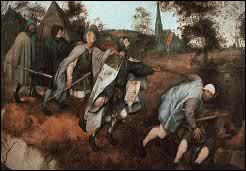
“Let them alone: they be blind leaders of the blind. And if the
blind lead the blind, both shall fall into the ditch.” – Matthew, 15:14.
The phrase comes out of a society and historic period in which the sight of the sighted leading the blind must have been no uncommon thing, just as glaucoma, the effect of parasites, the wear and tear of age, and the clinamen of the genetic arc must have sprinkled the blind and nearsighted over the landscape pretty abundantly. Jesus’ saying has a characteristic starkness – it is in the decisiveness of his inversions and metaphors that one feels the messianic impulse, the making of the first last and the last first. Brueghel’s painting, which multiplies the number of the blind into a small band, much like the bands of beggars one would encounter in the war ravaged low country during the long Dutch revolt against the Spanish, thrusts upon the observer the utter violence of Jesus' phrase. Yet the observer is himself in a peculiar position: he is at the point where, in effect, he is catching the stumbling leader of the pack -- putting him, the observer, the one outside the picture, in the ditch.
But here's what Jesus didn't imagine. Jesus didn’t imagine was that the blind would demand to be lead by the blind, and only the blind. This is an American refinement on stupidity. LI is its prophet.
For an entertaining glimpse into the blind demanding blind leaders and deeper ditches, LI suggests reading the WAPO Q and A with Thomas Ricks, the author of two WAPO articles criticizing the American military strategy in Iraq for being… oh, I suppose the term is disastrous. The articles are derived from Ricks’ book, Fiasco. Here’s the first question:
“Scottsdale, Ariz.: I have not yet read your book. However, just from the titles of your articles, the tone is negative, negative, negative. What has the US and its military done RIGHT..not just tactical activities but strategic decisions and events? In the profession of journalism today, can a journalist be positive and not be viewed by their peers as a cheerleader, or must all critical reviews be critical?”
That is indeed what we need to know. We need more blindness, deeper darkness, another level of hell. And Ricks is well aware of this. Far be it from him to act the part of the sighted. He rushes here, as throughout the Q and A session, to assure all and sundry that far from being gifted with 20/20 vision, he is loyally, absolutely stone blind, blinder than most:
Tom Ricks: “To turn to the first question, from Scottsdale. I think this is a good way to start. Why write a book called "FIASCO" about Iraq.
The short answer is: because I want to win in Iraq. I don't know a lot of officers who think the current posture is sustainable, especially as the chaos continues in Baghdad. But I still think it is possible to win in Iraq, if we get better at recognizing mistakes and adjust better and faster.”
Of course. He wants to win. Win win win. America is about winning. We’re winning all the time. Not losing. Not a debt ridden, addled empire with a load of half educated barbarians, led by a corrupt oil man and his crony, a perpetually adolescent ignoramus who is in it for the superman suit (or the Mission Accomplished suit) that he always imagines himself wearing.
So Ricks wants us to win. So reassuring. Except … questioner no. 2, you are on line:
“Washington, D.C.: Your first answer (..because I want to win in Iraq) illustrates the problem that has plaqued this war from the outset, i.e. what constitutes "winning", and how has whatever was originally intended as constituting winning, changed over time?
Tom Ricks: Thanks. You put your finger on an important question.
I think we could win in the sense of prevailing. But it would not look like victories in some other wars. In this war, for example, it would be a victory if, say, a leading insurgent agreed to put down his weapon and become, say, minister of agriculture.”
So that is what winning is about. It isn’t winning, it is prevailing. And it isn’t prevailing, it is about getting an insurgent to become, say, minister of agriculture. So, uh, what is the cost of this marvelous victory that we must achieve, come hell or high water?
“Salina, Kan.: You did a great job on "Meet the Press." In your opinion, how much longer will our troops be in Iraq?
Tom Ricks: I would bet a loooong time. Maybe 10 to 15 years.”
So, our amazing victory, our win win proposition here, is that we spend between 2 to 3 trillion dollars and lose around 20,000 soldiers, and (sorry to even mention it, it is so unimportant) participate in killing around 300,000 Iraqis so that we can get an insurgent to put down his gun to become, say, minister of agriculture.
Is this wonderful news or what? Ricks is right, this wouldn’t look like victories in other wars – it would look exactly like the worst defeat ever suffered by the U.S. Even worse than Vietnam, being a magnitude more senseless. In fact, the win win policy and the lose everything policy pleasingly converge in one policy – the policy of feeding the War Culture. Thus, the governing class moves from triumph to triumph, or ditch to ditch if you will, each ditch getting bloodier and more expensive, as the jerkwater crowd out there, Bush’s base (a word that, translated into Arabic, comes out – al qaeda) lynches those who can see, rooting them out wherever they are. Remember though – their kids, the children of WAPO writers, their think tank and lobbyist cronies, all the meritocratic idiots, will go to great colleges and get the great jobs they so richly deserve, whereas your kids – well, sorry about that, but if they are patriots they will throw themselves headfirst in the meat grinder. So that we can win!
But what I think is that sometimes, when the blind form an occupying army in, say, D.C., with blind paramilitaries in the hinterlands, that it is alright to resist them. For I come not to bring peace, but the sword – as somebody once said. These people will not be voted out, for these people are on both sides, Blind party one vs. Blind party two. It is other decisions at the grassroots level – talking to friends about Iraq, pointing out the uselessness of fighting there, supporting anti-recruitment efforts, seeing if there are anti-recruiters in your town, etc., etc. – that will knock the block of this vile contingent.
dogs, considered philosophically
I usually comment on Long Sunday symposiums, but a symposium on democracy is a little bit too much like high school civics class book reports for me. I think those guys are, at the moment, symposiumed out.
Since these are the dog days of summer, the time when, traditionally, LI’s financial life passes before our eyes – summer is Motha Hubbard bare indeed around here – we are more interested in the philosophical topic of the dog. As in – when you walk a dog, whose free will is exercised, yours or the pooch’s? And does this depend on the size of the dog? We’ve been reading Roger Grenier’s The Difficulty of Being a Dog (we have a sideline interest in the literature devoted to dogs, from Cervantes Colloquy to Ackerley’s My Dog Tulip). Grenier’s first essay, enigma, begins with a nice anecdote about Paul Valery. It seems that when people would come to see Paul Valery’s grave, the man who ran the cemetery would tell his dog, “Paul Valery,” and the dog would guide them to the sacred spot. The Ministry of culture caught wind of this, and finally decided (no doubt after several meetings and memos), that the man would have to cut it out. Grenier, who knew Valery, says that in all probability Valery would have liked his grave stone being tour guided by a dog. And after all, in all probability, the dog knew as much about Valery’s poems as the man did.
My own experience has not been with genius dogs, but I’ve known some bright ones. Bliss, my friend S’s dog, is a personable mongrel bitch who can cast the slyest glances, so that it is impossible not to wonder what she is thinking. In fact, thinking is the question monomaniac philosophers always put to the animal kind – can you think? However, dogs make you wonder, instead: what are you thinking about? What, for instance, does a dog plan to do when it gets up in the morning? What, in fact, is a morning to a dog? I have a feeling their divisions of time aren't like ours -- where I see day and night, I imagine the dog sees other divisions of the natural flow. However, I do know that, like me, Bliss’ first thought is to pee. The arrangements that lead to relief, for Bliss, are a bit more complex than my matitudinal stagger towards the toilet. A ritual has evolved. S. must find the leash. She has to find the poop bags. Bliss helpfully either points to the door, or sometimes goes down to nose it.
Now, once the walk has begun, if it is a nice day, surely the dog plans to not only take care of her natural functions, but make the round of her favorite places. Dogs get bored, but they are also compulsive creatures, always wanting the same thing. Also, she looks for messages in the dirt and grass, odors left by other dogs, or humans, or cats. There’s an itinerary. So the plan is to go through with the itinerary, then back to the house. But some would say that dogs don’t plan at all, even though they are clearly leading on the leash. But then, these same people would probably bridle at saying dogs improvise. So in general, I don’t pay attention to those people. It is recommended that they content themselves, if they feel the need for pets, with guppies. Goldfish. A few bottom feeders. Generally, this kind of backbiter and sceptic is sniffed out by dogs straightaway, and barked down the street when they pass. Unhappy sods.
Grenier writes: When I’m in the prescence of a dog, I always ask myself a lot of questions. I may be naïve, but I’m in good company, for Paul Valery himself shared my naivete: “The animal, that inevitable enigma, is the opposite of us in its very likeness.”
And he further writes:
“How can such an understanding exist between two species? I t seems more miraculous, more precious to me than any relationship among humans. At the same time, what could be easier? You come across a dog. A word, a caress, and it responds with no further ado. It is the mystery of these exchanges that led me to write this book. But I know it will resolve nothing and that dogs will never cease to amaze me.”
I must recommend the University of Chicago Press cover of the book – the dog on it looks amazingly like Bliss.
Since these are the dog days of summer, the time when, traditionally, LI’s financial life passes before our eyes – summer is Motha Hubbard bare indeed around here – we are more interested in the philosophical topic of the dog. As in – when you walk a dog, whose free will is exercised, yours or the pooch’s? And does this depend on the size of the dog? We’ve been reading Roger Grenier’s The Difficulty of Being a Dog (we have a sideline interest in the literature devoted to dogs, from Cervantes Colloquy to Ackerley’s My Dog Tulip). Grenier’s first essay, enigma, begins with a nice anecdote about Paul Valery. It seems that when people would come to see Paul Valery’s grave, the man who ran the cemetery would tell his dog, “Paul Valery,” and the dog would guide them to the sacred spot. The Ministry of culture caught wind of this, and finally decided (no doubt after several meetings and memos), that the man would have to cut it out. Grenier, who knew Valery, says that in all probability Valery would have liked his grave stone being tour guided by a dog. And after all, in all probability, the dog knew as much about Valery’s poems as the man did.
My own experience has not been with genius dogs, but I’ve known some bright ones. Bliss, my friend S’s dog, is a personable mongrel bitch who can cast the slyest glances, so that it is impossible not to wonder what she is thinking. In fact, thinking is the question monomaniac philosophers always put to the animal kind – can you think? However, dogs make you wonder, instead: what are you thinking about? What, for instance, does a dog plan to do when it gets up in the morning? What, in fact, is a morning to a dog? I have a feeling their divisions of time aren't like ours -- where I see day and night, I imagine the dog sees other divisions of the natural flow. However, I do know that, like me, Bliss’ first thought is to pee. The arrangements that lead to relief, for Bliss, are a bit more complex than my matitudinal stagger towards the toilet. A ritual has evolved. S. must find the leash. She has to find the poop bags. Bliss helpfully either points to the door, or sometimes goes down to nose it.
Now, once the walk has begun, if it is a nice day, surely the dog plans to not only take care of her natural functions, but make the round of her favorite places. Dogs get bored, but they are also compulsive creatures, always wanting the same thing. Also, she looks for messages in the dirt and grass, odors left by other dogs, or humans, or cats. There’s an itinerary. So the plan is to go through with the itinerary, then back to the house. But some would say that dogs don’t plan at all, even though they are clearly leading on the leash. But then, these same people would probably bridle at saying dogs improvise. So in general, I don’t pay attention to those people. It is recommended that they content themselves, if they feel the need for pets, with guppies. Goldfish. A few bottom feeders. Generally, this kind of backbiter and sceptic is sniffed out by dogs straightaway, and barked down the street when they pass. Unhappy sods.
Grenier writes: When I’m in the prescence of a dog, I always ask myself a lot of questions. I may be naïve, but I’m in good company, for Paul Valery himself shared my naivete: “The animal, that inevitable enigma, is the opposite of us in its very likeness.”
And he further writes:
“How can such an understanding exist between two species? I t seems more miraculous, more precious to me than any relationship among humans. At the same time, what could be easier? You come across a dog. A word, a caress, and it responds with no further ado. It is the mystery of these exchanges that led me to write this book. But I know it will resolve nothing and that dogs will never cease to amaze me.”
I must recommend the University of Chicago Press cover of the book – the dog on it looks amazingly like Bliss.
Sunday, July 23, 2006
our bright and shining lie in Iraq - or, stabbing this war in the back, let me count the ways
First, a beggin’ preface: anyone who has been thinking about supporting LI should do it in these dog months. Keep us up with the phone and electric bills, and we will keep writing the bad trip prose that makes reading this site as pleasurable as a visit to a cold fingered proctologist! Check out the pay pal button.
Now, onto today’s s…s…s…schmatter – which is this WAPO article by Thomas Ricks, analyzing the American military failure in Iraq. Ricks details the chronicle of errors, shadowing, all unconsciously, the LI storyline. We are happy to report that he actually captures a few home truths. Unfortunately, at the moment he’s screwed himself to the sticking point, he… unscrews himself. He can’t quite get past the one big conventional D.C. lie, the motherlode of American misadventure. In the end, he stays tamely within the precincts laid down by D.C.’s court society. Like the court society of many a past declining empire, it has crystallized around a few gross misconceptions about the world that it cannot, without dissolving itself, surrender – and which, consequently, lead it to repeat the same disaster over and over again.
What Ricks gets right is that the occupation of Iraq, enacted in spasmodic, blind bursts of violence by the occupiers, was badly designed from the get go, using maximum force when maximum finesse was required. The proconsuls never understood that the advantage, in a state where a certain language is spoken and certain cultural norms adhere, is to the native. Especially when the natives can manufacture IEDs with ease, the world having been flooded for fifty years by the American and European weapons makers to the extent that it is more likely some ravaged area of the planet will run out of food than out of automatic rifles. Plus, having major stockpiles of weapons that the occupying force is too stretched to really guard allows for stop n go resupply.
The specific, personal root of the American malfunction was in the Pentagon. Rumsfeld and General Tommy Franks, between the two of them, have been the worst duo to hit the military since McLellan and Edwin Stanton managed to bungle a simple advance with overwhelming force through the Virginia countryside in the spring of 1862. Franks makes Westmoreland’s tenure as chief of the Joint Chiefs of Staff look like the Golden Age. Franks is the General who couldn’t fight. Luckily for Franks, America spends a trillion dollars every four years – and now, every two – on creating a monster battle machine. A three year old couldn’t go wrong, in classic battle field conditions, with that thing. Unfortunately, if he isn’t facing ducks all lined up in a row, as in a cheap carnee tent, Franks is nonplussed. Which is why he only acts in one way: to do more of what he has been doing. More is the alpha and omega of his military strategy. Bomb more. Use more white phosphorus. Knock down more doors. Imprison more Iraqis. Say, all the military aged men in a village.
Oh, but there is one limit – no more troops, of course. Ass licking Rumsfeld on the troops issue is the first bullet point on the Chief of the JCS job description.
As for Rumsfeld, by now we know the old story. Rumsfeld is insane.
So Ricks rehearses the mistakes made by the occupiers as though it were a clinical study in classical compulsive disorder – which it is. They overreact and retreat. An insufficient force using its technological advantage to, basically, stir up shit.
“"When you're facing a counterinsurgency war, if you get the strategy right, you can get the tactics wrong, and eventually you'll get the tactics right," said retired Army Col. Robert Killebrew, a veteran of Special Forces in the Vietnam War. "If you get the strategy wrong and the tactics right at the start, you can refine the tactics forever, but you still lose the war. That's basically what we did in Vietnam."
"For the first 20 months or more of the American occupation in Iraq, it was what the U.S. military would do there, as well.
""What you are seeing here is an unconventional war fought conventionally," a Special Forces lieutenant colonel remarked gloomily one day in Baghdad as the violence intensified. The tactics that the regular troops used, he added, sometimes subverted American goals.”
B..bb…but just as you think Ricks is creeping up on the unwritten truth of the matter, the heart of what has gone wrong in Iraq, (a symptom of the political compromise between a metastasizing war culture and the credit card lifestyle in Uncle Sam’s green and pleasant land), he bogles it.
"“The U.S. military took a different approach in Iraq. It wasn't indiscriminate in its use of firepower, but it tended to look upon it as good, especially during the big counteroffensive in the fall of 2003, and in the two battles in Fallujah the following year.
"One reason for that different approach was the muddled strategy of U.S. commanders in Iraq. As civil affairs officers found to their dismay, Army leaders tended to see the Iraqi people as the playing field on which a contest was played against insurgents. In Galula's view [Galula wrote a counterinsurgency handbook], the people are the prize.
""The population . . . becomes the objective for the counterinsurgent as it was for his enemy," he wrote.
"From that observation flows an entirely different way of dealing with civilians in the midst of a guerrilla war. "Since antagonizing the population will not help, it is imperative that hardships for it and rash actions on the part of the forces be kept to a minimum," Galula wrote.
"Cumulatively, the American ignorance of long-held precepts of counterinsurgency warfare impeded the U.S. military during 2003 and part of 2004. Combined with a personnel policy that pulled out all the seasoned forces early in 2004 and replaced them with green troops, it isn't surprising that the U.S. effort often resembled that of Sisyphus, the king in Greek legend who was condemned to perpetually roll a boulder up a hill, only to have it roll back down as he neared the top.”
This misses the bloody crux, the structure, the very moral economy of the American way of warfare. If forces are kept to a minimum and if force is proportioned to some threshold point beyond which you antagonize the population, you will, inevitably, suffer much higher casualties. If American soldiers winnow through a village, looking only for insurgents, they are much likely to be injured or killed than if they plow through the village in the balls out, mega-American way. And the soldiers know that. The American soldier has been trained to think that the preservation of his life is the prime objective. He has been raised in the spirit of McLellan, and advances with the firepower of Grant, which is why America always wins the wars that it loses. This is why the American soldier is good in a battlefield situation such as presented itself in WWII, or in the First Gulf War, and entirely sucks at counterinsurgency. And will always suck. Because the higher risk brings with it the question: what am I doing here? Since American interests have nothing to do with the Iraq war – it was commenced and continued solely to serve the vanity of a small D.C. clique – the only way to keep waging it as what it is in reality – the usurpation of American forces for mercenary purposes on the part of a power mad executive – is to wage it with as few American deaths as possible. The Bush doctrine converges with the Powell doctrine – overwhelming force = lucrative contracts to war contractors + lack of visible sacrifice to the Bush base.
The logic here is inexorable. Either a greater number of Americans die, or a greater number of Iraqis die. Americans have decided to pretend that the greater the number of Iraqi deaths, the more the Americans are winning. That, of course, is bullshit. Which is why the argument that the U.S. troops should stay in for humanitarian reasons is bullshit – the logic of American strategy will continue to maximize the number of Iraqi deaths, or it will have to face the repulsion of American public opinion as American deaths go racheting up. It won’t do the latter. The rulers actually fear the American population in their nasty, prolonged wars. Fear that the population doesn't want to fight. This is their worry. This is what they work at. Both parties, it goes without saying. This is what all the bogus talk about "will" is about.
They are afraid of us. Doesn't that imply that they have something to be afraid about?
Stab this war in the back.
PS - Re taking the power back -- a heartening story, in the NYT, about First Lt. Ehren K. Watada. Lt. Watada volunteered for the army after 9/11. LI has no problem with that -- quite the contrary. Unfortunately, the army that is supposed to be defending America is defending no such thing, and has ended up being illegally planted in Iraq, mainly for the purpose of providing a photogenic war for the Rebel in Chief. This came to truly bug Lt. Watada, so much so that he has refused to deploy to Iraq, risking court martial. The NYT goes to one of the usual talking heads to give the Fix's view of the case:
"“Certainly it’s far from unusual in the annals of war for this to happen,” said Michael E. O’Hanlon, a senior fellow in military affairs at the Brookings Institution. “But it is pretty obscure since the draft ended.”
Mr. O’Hanlon said that if other officers followed suit, it would be nearly impossible to run the military. “The idea that any individual officer can decide which war to fight doesn’t really pass the common-sense test,” he said."
O'Hanlon has been no mean promoter of the Iraq war, of course. And for the Fix, that government by clique and egghead which sits on our face, it passes the common sense test to get a loser like O'Hanlon to give us his two cents about this case. In the 'meritocracy,' you never have to apologize for being wrong 100 percent of the time. No pain, a lotta gain -- that's the think tank motto. Now, O'Hanlon has consistently displayed the reasoning powers of an old baggie filled with decaying lunch meat over at the Brookings institute -- he particularly likes gathering together dubious numbers to promote the idea that Iraq is a boomin' country, full of happ happ happy participants in Bush's experiment in free enterprise. Being a war mongering pin head has won him bipartisan respect, which reason he will no doubt be happily moving into some position of responsibility in the next Democratic administration. A Beinart Democrat, a patriot, a easy chair killer.
LI, of course, stands totally behind Lt. Watada. A real hero
Now, onto today’s s…s…s…schmatter – which is this WAPO article by Thomas Ricks, analyzing the American military failure in Iraq. Ricks details the chronicle of errors, shadowing, all unconsciously, the LI storyline. We are happy to report that he actually captures a few home truths. Unfortunately, at the moment he’s screwed himself to the sticking point, he… unscrews himself. He can’t quite get past the one big conventional D.C. lie, the motherlode of American misadventure. In the end, he stays tamely within the precincts laid down by D.C.’s court society. Like the court society of many a past declining empire, it has crystallized around a few gross misconceptions about the world that it cannot, without dissolving itself, surrender – and which, consequently, lead it to repeat the same disaster over and over again.
What Ricks gets right is that the occupation of Iraq, enacted in spasmodic, blind bursts of violence by the occupiers, was badly designed from the get go, using maximum force when maximum finesse was required. The proconsuls never understood that the advantage, in a state where a certain language is spoken and certain cultural norms adhere, is to the native. Especially when the natives can manufacture IEDs with ease, the world having been flooded for fifty years by the American and European weapons makers to the extent that it is more likely some ravaged area of the planet will run out of food than out of automatic rifles. Plus, having major stockpiles of weapons that the occupying force is too stretched to really guard allows for stop n go resupply.
The specific, personal root of the American malfunction was in the Pentagon. Rumsfeld and General Tommy Franks, between the two of them, have been the worst duo to hit the military since McLellan and Edwin Stanton managed to bungle a simple advance with overwhelming force through the Virginia countryside in the spring of 1862. Franks makes Westmoreland’s tenure as chief of the Joint Chiefs of Staff look like the Golden Age. Franks is the General who couldn’t fight. Luckily for Franks, America spends a trillion dollars every four years – and now, every two – on creating a monster battle machine. A three year old couldn’t go wrong, in classic battle field conditions, with that thing. Unfortunately, if he isn’t facing ducks all lined up in a row, as in a cheap carnee tent, Franks is nonplussed. Which is why he only acts in one way: to do more of what he has been doing. More is the alpha and omega of his military strategy. Bomb more. Use more white phosphorus. Knock down more doors. Imprison more Iraqis. Say, all the military aged men in a village.
Oh, but there is one limit – no more troops, of course. Ass licking Rumsfeld on the troops issue is the first bullet point on the Chief of the JCS job description.
As for Rumsfeld, by now we know the old story. Rumsfeld is insane.
So Ricks rehearses the mistakes made by the occupiers as though it were a clinical study in classical compulsive disorder – which it is. They overreact and retreat. An insufficient force using its technological advantage to, basically, stir up shit.
“"When you're facing a counterinsurgency war, if you get the strategy right, you can get the tactics wrong, and eventually you'll get the tactics right," said retired Army Col. Robert Killebrew, a veteran of Special Forces in the Vietnam War. "If you get the strategy wrong and the tactics right at the start, you can refine the tactics forever, but you still lose the war. That's basically what we did in Vietnam."
"For the first 20 months or more of the American occupation in Iraq, it was what the U.S. military would do there, as well.
""What you are seeing here is an unconventional war fought conventionally," a Special Forces lieutenant colonel remarked gloomily one day in Baghdad as the violence intensified. The tactics that the regular troops used, he added, sometimes subverted American goals.”
B..bb…but just as you think Ricks is creeping up on the unwritten truth of the matter, the heart of what has gone wrong in Iraq, (a symptom of the political compromise between a metastasizing war culture and the credit card lifestyle in Uncle Sam’s green and pleasant land), he bogles it.
"“The U.S. military took a different approach in Iraq. It wasn't indiscriminate in its use of firepower, but it tended to look upon it as good, especially during the big counteroffensive in the fall of 2003, and in the two battles in Fallujah the following year.
"One reason for that different approach was the muddled strategy of U.S. commanders in Iraq. As civil affairs officers found to their dismay, Army leaders tended to see the Iraqi people as the playing field on which a contest was played against insurgents. In Galula's view [Galula wrote a counterinsurgency handbook], the people are the prize.
""The population . . . becomes the objective for the counterinsurgent as it was for his enemy," he wrote.
"From that observation flows an entirely different way of dealing with civilians in the midst of a guerrilla war. "Since antagonizing the population will not help, it is imperative that hardships for it and rash actions on the part of the forces be kept to a minimum," Galula wrote.
"Cumulatively, the American ignorance of long-held precepts of counterinsurgency warfare impeded the U.S. military during 2003 and part of 2004. Combined with a personnel policy that pulled out all the seasoned forces early in 2004 and replaced them with green troops, it isn't surprising that the U.S. effort often resembled that of Sisyphus, the king in Greek legend who was condemned to perpetually roll a boulder up a hill, only to have it roll back down as he neared the top.”
This misses the bloody crux, the structure, the very moral economy of the American way of warfare. If forces are kept to a minimum and if force is proportioned to some threshold point beyond which you antagonize the population, you will, inevitably, suffer much higher casualties. If American soldiers winnow through a village, looking only for insurgents, they are much likely to be injured or killed than if they plow through the village in the balls out, mega-American way. And the soldiers know that. The American soldier has been trained to think that the preservation of his life is the prime objective. He has been raised in the spirit of McLellan, and advances with the firepower of Grant, which is why America always wins the wars that it loses. This is why the American soldier is good in a battlefield situation such as presented itself in WWII, or in the First Gulf War, and entirely sucks at counterinsurgency. And will always suck. Because the higher risk brings with it the question: what am I doing here? Since American interests have nothing to do with the Iraq war – it was commenced and continued solely to serve the vanity of a small D.C. clique – the only way to keep waging it as what it is in reality – the usurpation of American forces for mercenary purposes on the part of a power mad executive – is to wage it with as few American deaths as possible. The Bush doctrine converges with the Powell doctrine – overwhelming force = lucrative contracts to war contractors + lack of visible sacrifice to the Bush base.
The logic here is inexorable. Either a greater number of Americans die, or a greater number of Iraqis die. Americans have decided to pretend that the greater the number of Iraqi deaths, the more the Americans are winning. That, of course, is bullshit. Which is why the argument that the U.S. troops should stay in for humanitarian reasons is bullshit – the logic of American strategy will continue to maximize the number of Iraqi deaths, or it will have to face the repulsion of American public opinion as American deaths go racheting up. It won’t do the latter. The rulers actually fear the American population in their nasty, prolonged wars. Fear that the population doesn't want to fight. This is their worry. This is what they work at. Both parties, it goes without saying. This is what all the bogus talk about "will" is about.
They are afraid of us. Doesn't that imply that they have something to be afraid about?
Stab this war in the back.
PS - Re taking the power back -- a heartening story, in the NYT, about First Lt. Ehren K. Watada. Lt. Watada volunteered for the army after 9/11. LI has no problem with that -- quite the contrary. Unfortunately, the army that is supposed to be defending America is defending no such thing, and has ended up being illegally planted in Iraq, mainly for the purpose of providing a photogenic war for the Rebel in Chief. This came to truly bug Lt. Watada, so much so that he has refused to deploy to Iraq, risking court martial. The NYT goes to one of the usual talking heads to give the Fix's view of the case:
"“Certainly it’s far from unusual in the annals of war for this to happen,” said Michael E. O’Hanlon, a senior fellow in military affairs at the Brookings Institution. “But it is pretty obscure since the draft ended.”
Mr. O’Hanlon said that if other officers followed suit, it would be nearly impossible to run the military. “The idea that any individual officer can decide which war to fight doesn’t really pass the common-sense test,” he said."
O'Hanlon has been no mean promoter of the Iraq war, of course. And for the Fix, that government by clique and egghead which sits on our face, it passes the common sense test to get a loser like O'Hanlon to give us his two cents about this case. In the 'meritocracy,' you never have to apologize for being wrong 100 percent of the time. No pain, a lotta gain -- that's the think tank motto. Now, O'Hanlon has consistently displayed the reasoning powers of an old baggie filled with decaying lunch meat over at the Brookings institute -- he particularly likes gathering together dubious numbers to promote the idea that Iraq is a boomin' country, full of happ happ happy participants in Bush's experiment in free enterprise. Being a war mongering pin head has won him bipartisan respect, which reason he will no doubt be happily moving into some position of responsibility in the next Democratic administration. A Beinart Democrat, a patriot, a easy chair killer.
LI, of course, stands totally behind Lt. Watada. A real hero
Saturday, July 22, 2006
petition congress and the president
While it is little enough, and I can't vouch for the organization, please sign this petition calling on the American government to call for a ceasefire in Lebanon: Democracy in Action.
American papers, ranging from mildly pro-Israel to loony tones WAPO editorial types, have presented an odd picture of the Arab world supporting Israel against Hezbollah. This is so absurd it does rival the “good news from Iraq” meme, that sturdy craft of lies and bullshit, that has been afloat these last three years.
The Financial Times, more shrewdly, notes: “events in Lebanon have served as a reminder of how quickly Washington can drop an Arab ally - in this case the Siniora-led government in Beirut - when Israel's "right to self-defence" is at play.”
In fact, beyond the war crime committed by bombing a civilian population and targeting Lebanese infrastructure – beyond the fact, staring anyone in the face, that Israel has chosen a small provocation to launch a war against Lebanon - Israel’s attempt to destroy its neighbor and Bush’s nursing of the Israeli enterprise is going to bring grief down on both the U.S. and Israel. As Israel goes into next week, massacring Shiites in Lebanon, U.S. soldiers are going to be sitting ducks in Iraq. And to expect Arab allies of the U.S. to weather this, an event tailor made to showcase Iranian strength and Gulf monarchy weakness, is just the kind of non-calculation – just the kind of blind stupidity that the Bush administration will long be known for, in story and song.
“Jordan and Egypt, the only Arab states formally at peace with Israel, have both issued measured criticism of Israel's devastation of Lebanon, but it was only yesterday that two Arab governments delivered stronger condemnations. Iraqi prime minister Nuri al-Maliki described the Israeli offensive as "operations of mass destruction" while the Saudi defence minister, Prince Sultan bin Abdul-Aziz, said: "We cannot tolerate that Israel plays with the lives of citizens, civilians, women, old people and children."
“What has been new is that along with Saudi Arabia, Jordan and Egypt also blamed Hizbollah, and indirectly its Syrian and Iranian backers, for stirring a tiger with destabilising consequences for all.”
Israel is also going to lose in the U.S. Israel is generally a popular country for Americans. But the photogenic, mad bombing, and the fact that the bombed, this time, sometimes speak English into the tv set and are wearing shorts and ties and business suits, is going to make this different. Killing black robed hadji in Iraq doesn’t bother the Yankees, but killing people who look like Yankees does. This is obvious from the greatest poem to come from the Iraq war so far, the immortal Hadji girl:
“Her brother and her father shouted…
Dirka Dirka Mohammed Jihad
Sherpa Sherpa Bak Allah
They pulled out their AKs so I could see
... So I grabbed her little sister and pulled her in front of me.
As the bullets began to fly
The blood sprayed from between her eyes
And then I laughed maniacally
Then I hid behind the TV
And I locked and loaded my M-16
And I blew those little fuckers to eternity.
And I said…
Dirka Dirka Mohammed Jihad
Sherpa Sherpa Bak Allah
They should have known they were fucking with a Marine.”
A song that says it all.
But the little sisters who are getting blasted in Tyre and Beirut sometimes are wearing shorts and flip flops, and that is sure to reach even into the damaged humanity of the zombie hordes of the Bush culture.
The Financial Times, more shrewdly, notes: “events in Lebanon have served as a reminder of how quickly Washington can drop an Arab ally - in this case the Siniora-led government in Beirut - when Israel's "right to self-defence" is at play.”
In fact, beyond the war crime committed by bombing a civilian population and targeting Lebanese infrastructure – beyond the fact, staring anyone in the face, that Israel has chosen a small provocation to launch a war against Lebanon - Israel’s attempt to destroy its neighbor and Bush’s nursing of the Israeli enterprise is going to bring grief down on both the U.S. and Israel. As Israel goes into next week, massacring Shiites in Lebanon, U.S. soldiers are going to be sitting ducks in Iraq. And to expect Arab allies of the U.S. to weather this, an event tailor made to showcase Iranian strength and Gulf monarchy weakness, is just the kind of non-calculation – just the kind of blind stupidity that the Bush administration will long be known for, in story and song.
“Jordan and Egypt, the only Arab states formally at peace with Israel, have both issued measured criticism of Israel's devastation of Lebanon, but it was only yesterday that two Arab governments delivered stronger condemnations. Iraqi prime minister Nuri al-Maliki described the Israeli offensive as "operations of mass destruction" while the Saudi defence minister, Prince Sultan bin Abdul-Aziz, said: "We cannot tolerate that Israel plays with the lives of citizens, civilians, women, old people and children."
“What has been new is that along with Saudi Arabia, Jordan and Egypt also blamed Hizbollah, and indirectly its Syrian and Iranian backers, for stirring a tiger with destabilising consequences for all.”
Israel is also going to lose in the U.S. Israel is generally a popular country for Americans. But the photogenic, mad bombing, and the fact that the bombed, this time, sometimes speak English into the tv set and are wearing shorts and ties and business suits, is going to make this different. Killing black robed hadji in Iraq doesn’t bother the Yankees, but killing people who look like Yankees does. This is obvious from the greatest poem to come from the Iraq war so far, the immortal Hadji girl:
“Her brother and her father shouted…
Dirka Dirka Mohammed Jihad
Sherpa Sherpa Bak Allah
They pulled out their AKs so I could see
... So I grabbed her little sister and pulled her in front of me.
As the bullets began to fly
The blood sprayed from between her eyes
And then I laughed maniacally
Then I hid behind the TV
And I locked and loaded my M-16
And I blew those little fuckers to eternity.
And I said…
Dirka Dirka Mohammed Jihad
Sherpa Sherpa Bak Allah
They should have known they were fucking with a Marine.”
A song that says it all.
But the little sisters who are getting blasted in Tyre and Beirut sometimes are wearing shorts and flip flops, and that is sure to reach even into the damaged humanity of the zombie hordes of the Bush culture.
Subscribe to:
Posts (Atom)
-
 You can skip this boring part ... LI has not been able to keep up with Chabert in her multi-entry assault on Derrida. As in a proper duel, t...
 -
 Ladies and Gentlemen... the moment you have all been waiting for! An adventure beyond your wildest dreams! An adrenaline rush from start to...
 -
LI feels like a little note on politics is called for. The comments thread following the dialectics of diddling post made me realize that, ...