‘In a sense, it is the market that free-rides on extra-market values that make our market society a bearable place, by tempering the relentless opportunism that the market model commends. Norms of civility are a public good. Without them, the world would degenerate into a society of relentless mutual suspicion.” – Robert Kuttner
LI’s last post breezily went on about the social imposition of money as the supremely cathected object. To understand that, I thought it would be nice to turn to a product that is on the twilight borderline between white and black magic – blood. You know, the substance the wine turns into during mass. That fascinating liquid with the color that serves no evolutionary purpose – pure accident, that red.
As a matter of fact, blood and its sale was the object of one of the most cited books in defense of the welfare state by Richard Titmuss, who correctly saw that white magic depends on inverting a fundamental human fact – that the gift relationship logically and historically precedes the money relationship. But Titmuss is not nostalgic for the highly hierarchized society overthrown by the white magic. This is why the donation of blood is such an exemplary act for him:
“Unlike gift-exchange in traditional societies, there is in the free gift of blood to unnamed strangers no contract of custom, no legal bond, no functional determinism, no situations of discriminatory power, domination, constraint or compulsion, no sensed of shame or guilt, no gratitude imperative and no need for the penitence of a Chrysostom.”
Blood, like air, love, a fuck, a wank, everyday speech, etc., is one of those seemingly unmonetized things, the things outside the white magic mesh. The task of making money a super-cathectic object entails the double task of either monetizing these things or devaluing them. Those functions are, of course, related. So, for instance, that air is free means that there is no cost to polluting air, no individual hurt. There is no stealing, here. In the white magic world, stealing is a fundamental negative principle, defining what is valuable. Prometheus stealing fire, or Jahweh commanding his people not to steal, are just as founding, in their way, as any incest tabu.
To which subject I will return in another post.
Thursday, December 14, 2006

Wednesday, December 13, 2006
strength through joylessness

“When it happens that a person has to give up a sexual object, there quite often ensues an alteration of his ego which can only be described as a setting up of the object inside the ego, as it occurs in melancholia; the exact nature of this substitution is as yet unknown to us. It may be that [by] this introjection, which is a kind of regression to the mechanism of the oral phase, the ego makes it easier for the object to be given up or renders that process possible. It may be that this identification is the sole condition under which the id can give up its objects. At any rate the process, especially in the early phases of development, is a very frequent one, and it makes it possible to suppose that the character of the ego is a precipitate of abandoned object-cathexes and that it contains the history of those object-choices.” – Freud, the Id and the Ego.
LI did not plan to write anything about Pinochet. But the astonishingly fascist Washington Post editorial, which bears all the hallmarks of a Fred Hiatt special (you can use the same rule of thumb on it as you use to spot rabies in a dog – check for foam around the muzzle) has made LI think again.
The celebration of Pinochet and his apologist, Jean Kirkpatrick, starts out with the patented cigars and whiskey tone that they used to like down at Signatures, the neo-con’s favorite Georgetown restaurant:
“AUGUSTO PINOCHET, who died Sunday at the age of 91, has been vilified for three decades in and outside of Chile, the South American country he ruled for 17 years. For some he was the epitome of an evil dictator. That was partly because he helped to overthrow, with U.S. support, an elected president considered saintly by the international left: socialist Salvador Allende, whose responsibility for creating the conditions for the 1973 coup is usually overlooked. Mr. Pinochet was brutal: More than 3,000 people were killed by his government and tens of thousands tortured, mostly in his first three years. Thousands of others spent years in exile.”
Creating conditions for the coup, that Allende. Hiatt does feel he has to tiptoe around the bodies a bit, but he comes back for the strong finish:
“Like it or not, Mr. Pinochet had something to do with this success. To the dismay of every economic minister in Latin America, he introduced the free-market policies that produced the Chilean economic miracle -- and that not even Allende's socialist successors have dared reverse. He also accepted a transition to democracy, stepping down peacefully in 1990 after losing a referendum.
By way of contrast, Fidel Castro -- Mr. Pinochet's nemesis and a hero to many in Latin America and beyond -- will leave behind an economically ruined and freedomless country with his approaching death. Mr. Castro also killed and exiled thousands. But even when it became obvious that his communist economic system had impoverished his country, he refused to abandon that system: He spent the last years of his rule reversing a partial liberalization. To the end he also imprisoned or persecuted anyone who suggested Cubans could benefit from freedom of speech or the right to vote.
The contrast between Cuba and Chile more than 30 years after Mr. Pinochet's coup is a reminder of a famous essay written by Jeane J. Kirkpatrick, the provocative and energetic scholar and U.S. ambassador to the United Nations who died Thursday. In "Dictatorships and Double Standards," a work that caught the eye of President Ronald Reagan, Ms. Kirkpatrick argued that right-wing dictators such as Mr. Pinochet were ultimately less malign than communist rulers, in part because their regimes were more likely to pave the way for liberal democracies. She, too, was vilified by the left. Yet by now it should be obvious: She was right.”
Praising Pinochet’s economic policy is sheer fantasy, but this editorial does point us backwards and forwards – backwards to the primal beginnings of the neo-liberal world order, emerging as the Bretton Woods structure fell apart, and forwards to our recent, noble attempt to grant the ungrateful Iraqis the same wonderful shock treatments that Pinochet was good enough to visit upon his own people.
All of which makes me think of another event that happened in 1973: the publication of Joachim Fest’s biography of Hitler. In that biography, Fest wrote, at one point, that if Hitler had died in 1938, he would have been regarded as one of Germany’s greatest statesmen.
By coincidence, in 1973, that statement could jump out of the book and be incarnated in a real venue: Chile. In 1933, Hitler had set up seventy some concentration camps, had processed 45,000 people through them, and had effectually terrorized the opposition, unions, the socialists, the communists, and the cultural Bolsheviks, so that by 1938 many of the concentration camps could be closed down. Some of the guards in the more notorious concentration camp were even tried for their excesses – torture and murder. The racial laws in place were moving towards Kristalnacht, but hadn’t got there yet. Hitler had reinflated the economy, was pouring money into the military, was very soundly against the Bolsheviks. He was, of course, laying the foundation for the kind of guns and consumerism economy that West Germany adopted, with some major Social Democratic modifications later on.
I’m less concerned with all of the parallels here (although it would be interesting to see the response if Hiatt wrote an editorial praising the first part of Hitler’s rule, granting that there were certain human rights excesses of it, although one can’t really sympathize with the “saintly” Social Democrats, and surely they deserved blame for the social chaos that necessitated the Nazi seizure of power) than with one of them, which looms larger for me: the persecution of the “cultural Bolsheviks”. Why do these regimes spend so much time imprisoning singers, gays, poets, cabaret female impersonators, beggers, and the lot? Why do they rail against degenerate art, drugs, and the collapse of morality? I think there is an explanation beyond the personal peculiarities of Hitler or Pinochet. The reason, I think, is that authoritarian rightwing regimes aim, ultimately, at instituting a regime of seriousness. Seriousness is a political category. It has to be defended from the attempts of the Cultural Bolsheviks to undermine it because, in so doing, the C.B.s undermine something more important – the psychological underpinnings of the political economy as a whole. For seriousness is, in the end, about the id and its unstable objects of affection. It is about disciplining a nation to adopt one and only one overriding cathectic object.
Now, this psychological structure is somewhat disguised by the use of the slogans of the 19th century about hard work and thrift. That is not what is really happening. A Germany that was drifting towards slave labor was not a Germany that really wanted its population to be particularly industrious. Granted, the break up of the unions is about the greater exploitation of labor to the profit of capital. But in the dawning era of neo-liberalism, the psychological path that is being blazed is to impose a new cathectic object – money – upon the population as a whole. To paraphrase Freud’s famous phrase about the id and the ego, the psychological structure of the authoritarian states created by D.C. involve setting up the leader as an Id proxy, in order to replace him, as the chief sanctioned cathectic object, with money itself. There is, as Freud might put it, a mystery here: why does the fuhrer precede the dollar? I have some ideas about that, but... I will devote another of my lectures in the series, Confessions of an ectoplasm, to that fascinating subject.
But to return to matters at hand: this mass introjection of money is the whole point of the fascist regime. In Hitler’s case, the leader who bore this role was blind to it, but the pattern was set: first a leader who creates a disaster, then the leap into a money centered value system – first the Third Reich, then the West German miracle. Similarly, first Pinochet, then the Washington Consensus. First the Brazilian generals, then the Washington consensus. First the Argentinian generals, then the Washington consensus. First Suharto, phase I - the 800000 dead Indonesian communists - then the Washington consensus.
This is why, actually, LI believes that the U.S. is relatively immune to fascism – the leadership principle, here, would be archaic, a perversion. There is no need for it. Money as the great national cathectic object already rules. Thus, the short lived surge of Bush as the Rebel in Chief was doomed to parody from the beginning.
tilting towards SCIRI
When the obvious becomes obvious, it becomes news. The headlines in the NYT and the scuttlebutt on the political blogs is that the U.S. is trying to create an anti-Sadr coalition, centering around SCIRI, to replace the coalition that currently supports Maliki. Two months ago, on October 08, LI pointed out that the U.S. was leaning heavily towards SCIRI, and explained why:
“The last couple of weeks have seen the reintroduction of a push to ‘federalize’ Iraq – which is a long way to say, SCIRI wants to break off Southern Iraq and use its Badr brigade militia to create a state as autonomous as the Kurdish state, under SCIRI rule. Really, that means under the rule of Mohamad Baqir Al Hakim. This, it might seem at first glance, is counter to the Bush junta’s interests. After all, Hakim is notoriously close to Iran.
But in the dirty war, nothing is what it seems. From the start of the war, the idea of breaking off Southern Iraq and creating a neo-liberal slave state has been floated around as a project. The NYT’s group of reporter/propagandists were particularly dreamy about that prospect in 2003 and 2004, writing thumbsucker pieces about a Chalabi-headed Iraq ‘Singapore.’ To have a notorious thief in charge of territory right above Kuwait, this was an irresistible wet dream to the Bungalow Bill set. James Glanz, one of the worst reporters of the war so far, wrote a story on 2/27/05 with the grotesque title, “Iraq's Serene South Asks, Who Needs Baghdad?” Glanz, in wet dream mode, wrote:
“Several different versions of a southern Iraqi republic have been proposed. One would include only the three or four southernmost provinces -- Basra, Muthanna, Dhi Gar and Maysan; and another would stretch as far north as the holy city of Karbala, 50 miles from Baghdad.
The one that sparks the most interest here, though, is a Singapore-style Republic of Basra alone. Comparable in area to neighboring Kuwait, such a republic could be equally rich. With foreign investment, Ramzi asserted, its economy could overtake that of the tiny but sparkling Gulf emirate of Qatar within three years.”
With the saliva coming out of the corner of his mouth, Glanz conjured up a gentle, business friendly, Brown and Root friendly entity. One of the great things about Glanz as a reporter is that he is so invariably wrong that the article was a sign in itself – surely the war was coming South when a reporter as blind as Glanz couldn’t see it. And so it went, as into the trash went the gentle Singapore south, and out came the new, Taliban version South, envisioned by SCIRI.
Yet, SCIRI’s scheme has annexed the American military, who are presently campaigning to destroy Muqtada al-Sadr’s forces. Sadr is, of course, the enemy of SCIRI. He is also an advocate of Iraqi nationalism. And his party is as popular as or more popular than the proxy party of SCIRI’s.
Why would the Americans have become part of the scheme to break up Iraq and hand a considerable amount of territory to a Islamacist group? Well, the key is still the dreamy dream of Singapore. The South would, to this view, be a smaller, and much more easily dominated entity. And whatever SCIRI’s ties to Iran, they are a group very much interested in the money to be grafted off of privatizing oil resources – under one cover or another. The Dirty intentions of the Bush junta and the dirty intentions of the Badr brigades shake hands over their mutual interest in money money money. And the price is cheap – a few hundred American soldiers, white trash lives the president, and this country, could give a shit about. Being a bold Rebel in Chief, the president is willing to risk American flesh here if the price is right. It will cost him a pang – he’s not an unfeeling brute. Out there, toking up among the Crawford Ranch brush, he might think of the losses suffered by his guys and remind himself how tough he is, to take them. For their wounds are, metaphorically, his wounds. It is the third awakening, and we should count our blessings in getting a sub-messiah like our Bush, but as an even bigger man once said, you gotta take up your cross. And Bush’s cross is made of American and Iraqi bodies.”
LI was happy to see this kind of thinking explained, today, by Josh Marshall, who back in 2003 was a liberal half-a-hawk and thus privy to the important shit going down in the important D.C. circles.
"The folks who brought you the Iraq War have always been weak in the knees for a really whacked-out vision of a Shi'a-US alliance in the Middle East. I used to talk to a lot of these folks before I became persona non grata. So here's basically how the theory went and, I don't doubt, still goes ... We hate the Saudis and the Egyptians and all the rest of the standing Arab governments. But the Iraqi Shi'a were oppressed by Saddam. So they'll like us. So we'll set them up in control of Iraq. You might think that would empower the Iranians. But not really. The mullahs aren't very powerful. And once the Iraqi Shi'a have a good thing going with us. The Iranians are going to want to get in on that too. So you'll see a new government in Tehran. Plus, big parts of northern Saudi Arabia are Shi'a too. And that's where a lot of the oil is. So they'll probably want to break off and set up their own pro-US Shi'a state with tons of oil. So before you know it, we'll have Iraq, Iran, and a big chunk of Saudi Arabia that is friendly to the
US and has a ton of oil. And once that happens we can tell the Saudis to f$#% themselves once and for all.”
“The last couple of weeks have seen the reintroduction of a push to ‘federalize’ Iraq – which is a long way to say, SCIRI wants to break off Southern Iraq and use its Badr brigade militia to create a state as autonomous as the Kurdish state, under SCIRI rule. Really, that means under the rule of Mohamad Baqir Al Hakim. This, it might seem at first glance, is counter to the Bush junta’s interests. After all, Hakim is notoriously close to Iran.
But in the dirty war, nothing is what it seems. From the start of the war, the idea of breaking off Southern Iraq and creating a neo-liberal slave state has been floated around as a project. The NYT’s group of reporter/propagandists were particularly dreamy about that prospect in 2003 and 2004, writing thumbsucker pieces about a Chalabi-headed Iraq ‘Singapore.’ To have a notorious thief in charge of territory right above Kuwait, this was an irresistible wet dream to the Bungalow Bill set. James Glanz, one of the worst reporters of the war so far, wrote a story on 2/27/05 with the grotesque title, “Iraq's Serene South Asks, Who Needs Baghdad?” Glanz, in wet dream mode, wrote:
“Several different versions of a southern Iraqi republic have been proposed. One would include only the three or four southernmost provinces -- Basra, Muthanna, Dhi Gar and Maysan; and another would stretch as far north as the holy city of Karbala, 50 miles from Baghdad.
The one that sparks the most interest here, though, is a Singapore-style Republic of Basra alone. Comparable in area to neighboring Kuwait, such a republic could be equally rich. With foreign investment, Ramzi asserted, its economy could overtake that of the tiny but sparkling Gulf emirate of Qatar within three years.”
With the saliva coming out of the corner of his mouth, Glanz conjured up a gentle, business friendly, Brown and Root friendly entity. One of the great things about Glanz as a reporter is that he is so invariably wrong that the article was a sign in itself – surely the war was coming South when a reporter as blind as Glanz couldn’t see it. And so it went, as into the trash went the gentle Singapore south, and out came the new, Taliban version South, envisioned by SCIRI.
Yet, SCIRI’s scheme has annexed the American military, who are presently campaigning to destroy Muqtada al-Sadr’s forces. Sadr is, of course, the enemy of SCIRI. He is also an advocate of Iraqi nationalism. And his party is as popular as or more popular than the proxy party of SCIRI’s.
Why would the Americans have become part of the scheme to break up Iraq and hand a considerable amount of territory to a Islamacist group? Well, the key is still the dreamy dream of Singapore. The South would, to this view, be a smaller, and much more easily dominated entity. And whatever SCIRI’s ties to Iran, they are a group very much interested in the money to be grafted off of privatizing oil resources – under one cover or another. The Dirty intentions of the Bush junta and the dirty intentions of the Badr brigades shake hands over their mutual interest in money money money. And the price is cheap – a few hundred American soldiers, white trash lives the president, and this country, could give a shit about. Being a bold Rebel in Chief, the president is willing to risk American flesh here if the price is right. It will cost him a pang – he’s not an unfeeling brute. Out there, toking up among the Crawford Ranch brush, he might think of the losses suffered by his guys and remind himself how tough he is, to take them. For their wounds are, metaphorically, his wounds. It is the third awakening, and we should count our blessings in getting a sub-messiah like our Bush, but as an even bigger man once said, you gotta take up your cross. And Bush’s cross is made of American and Iraqi bodies.”
LI was happy to see this kind of thinking explained, today, by Josh Marshall, who back in 2003 was a liberal half-a-hawk and thus privy to the important shit going down in the important D.C. circles.
"The folks who brought you the Iraq War have always been weak in the knees for a really whacked-out vision of a Shi'a-US alliance in the Middle East. I used to talk to a lot of these folks before I became persona non grata. So here's basically how the theory went and, I don't doubt, still goes ... We hate the Saudis and the Egyptians and all the rest of the standing Arab governments. But the Iraqi Shi'a were oppressed by Saddam. So they'll like us. So we'll set them up in control of Iraq. You might think that would empower the Iranians. But not really. The mullahs aren't very powerful. And once the Iraqi Shi'a have a good thing going with us. The Iranians are going to want to get in on that too. So you'll see a new government in Tehran. Plus, big parts of northern Saudi Arabia are Shi'a too. And that's where a lot of the oil is. So they'll probably want to break off and set up their own pro-US Shi'a state with tons of oil. So before you know it, we'll have Iraq, Iran, and a big chunk of Saudi Arabia that is friendly to the
US and has a ton of oil. And once that happens we can tell the Saudis to f$#% themselves once and for all.”
Tuesday, December 12, 2006
random notes - completely weimar free!
IT is now a Doctor. (I think.)Congratulations from all of us here at Limited Inc!
…
Someone asked LI if we were going to say something about the death of Pinochet. No, we have nothing much to add. Pinochet was not only a dirty murderer, but he has also become a ritual object for abuse by lefties who long ago took the don’t-look-back rightist turn – the Jorge Castenedas and Christopher Hitchens. Kicking that corpse gives this group the illusion that they are still fighting the good fight of their youth – when of course they long ago joined the side of the Chicago Boyz and the ‘third way.’ Kicking Kissinger is another thing this group likes to do. It is rather like the boss airguitaring to “Keep on Rockin’ in the Free World.’ You really, really don’t want to see it, be in the room with it, or have to talk to the boss about the rock n roll giants of his youth later.
Give me the fascists of yore, who didn’t wrap the iron fist in the Winnie the Pooh language of the winds, the winds of freedom – and wasn’t that 68 something?
…
I’m reading a book by Geoffrey Hosking, Rulers and Victims: the Russians in the Soviet Union. Hosking’s thesis about communism is, from the beginning, a non-starter – it is a reprise of the tiresome communism-is-a-religion. And there is an astonishing underestimate of the effect of World War I on Russia – Hosking doesn’t even consider it as a major shaping factor in the end of the Czarist system. This is the usual – historians do seem to have problems with the sociological effects of war, and would much prefer to talk about communism-is-a-religion. However, I found this an astonishing fact:
‘During the course of the war, 17.6 million men passed through the barracks, trenches, naval bases, and hospitals of the armed services. Of those, 11.4 million (60.4 percent) never returned…”
But, of course, you will never read a historian include Czar Nicholas II as one of the 20th centuries great mass murderers. It was war, you see. Whereas Lenin, in spite of the fact that Lenin’s prison system was no different than, say, France’s, is a mass murderer. The architect of the Gulag. And all the rest of that total shit.
…
Someone asked LI if we were going to say something about the death of Pinochet. No, we have nothing much to add. Pinochet was not only a dirty murderer, but he has also become a ritual object for abuse by lefties who long ago took the don’t-look-back rightist turn – the Jorge Castenedas and Christopher Hitchens. Kicking that corpse gives this group the illusion that they are still fighting the good fight of their youth – when of course they long ago joined the side of the Chicago Boyz and the ‘third way.’ Kicking Kissinger is another thing this group likes to do. It is rather like the boss airguitaring to “Keep on Rockin’ in the Free World.’ You really, really don’t want to see it, be in the room with it, or have to talk to the boss about the rock n roll giants of his youth later.
Give me the fascists of yore, who didn’t wrap the iron fist in the Winnie the Pooh language of the winds, the winds of freedom – and wasn’t that 68 something?
…
I’m reading a book by Geoffrey Hosking, Rulers and Victims: the Russians in the Soviet Union. Hosking’s thesis about communism is, from the beginning, a non-starter – it is a reprise of the tiresome communism-is-a-religion. And there is an astonishing underestimate of the effect of World War I on Russia – Hosking doesn’t even consider it as a major shaping factor in the end of the Czarist system. This is the usual – historians do seem to have problems with the sociological effects of war, and would much prefer to talk about communism-is-a-religion. However, I found this an astonishing fact:
‘During the course of the war, 17.6 million men passed through the barracks, trenches, naval bases, and hospitals of the armed services. Of those, 11.4 million (60.4 percent) never returned…”
But, of course, you will never read a historian include Czar Nicholas II as one of the 20th centuries great mass murderers. It was war, you see. Whereas Lenin, in spite of the fact that Lenin’s prison system was no different than, say, France’s, is a mass murderer. The architect of the Gulag. And all the rest of that total shit.
Monday, December 11, 2006
an instinct has always told me: it is senseless to be a martyr without effect

Mir hat das mein Instinkt immer gesagt: Märtyrer ohne Wirkung, das ist etwas Sinnloses. – Tucholsky
Eric Kastner said that Tucholsky was a “fat little berliner who wanted to stave off a catastrophe with a typewriter.” Although Karl Kraus’ name has penetrated beyond the Germano-sphere, so that even people who have never read him have read about him, Tucholsky hasn’t been as fortunate.
So here are a few things I like about Kurt Tucholsky.
- He was eminently modern. There was not a shred of false nostalgia in his makeup. In an essay in which he talked about a French essayists phrase that, in Europe, they waste people and spare things, and in America they waste things and spare people, Tucholsky writes about the peasant that spends hours trying to bang out some crookedness in a metal flange and says that it isn’t exactly the height of civilization that we can brag about this banging peasant against the American response – to throw the flange away and get a new one. The elevation of the banging peasant, he thought, smelled a bit too much of reaction.
- He told the truth about war – that it was murder, and that the people who wage war are murderers, as well as the people who order it. He was not a support our soldiers kind of anti-war person: he was for a militaristic pacifism.
- He was wholly for: contraception; abortion rights; gay rights; sexual enlightenment. He was wholly against: catholic obscurantism; the stupid idea of women as breeders; the bourgeois hypocrisies of the family.
- He was against the death penalty.
- He found the upper class laughable.
Since LI has been pondering the Met’s exhibit of what was weirdly enough call the school of lucidity (or was it lucidists?) on the little notes that were attached to the walls where the pictures were hung (and that the truly snobbish viewer – i.e. me – tries not to read, since the snobbish viewer trusts that no curator or curator’s assistant is going to help his eyes along, and that you can pick up the references in medias res), we’ve been thinking of how Tucholsky threw himself at the reactionary forces he could see and feel gathering in Weimar Germany.
Tucholsky died on Dec. 21, 1935. He died from an overdose of painkillers, a death that many called suicide. This site has an interview with Peter Böthig of the Tucholsky-Museum in Rheinsberg, published last year. Here’s a translation:
Herr Böthig, seventy years ago today, Kurt Tucholsky died at the age of 45. Was it suicide?
Peter Böthig: Even today, that is not 100 percent clear. The one thing we can agree on is that it was a desired death. He had briefly before changed his will, written farewell letters, and sent his political testament to Arnold Zweig. Whether on this particular evening he had it in mind to kill himself or whether there was in it a component of accident, that is something we cannot explicate at this point .
Q:Michael Hepp, his biographer, brings up the possibility that it could have been a suicide ‘by mistake’. He speaks of a pill automatism.
Böthig: That is an answer we can agree on. There was also speculation that it could have been a morder.
Q: A political murder?
Böthig: We have proof that the Gestapo knew where Tucholsky was staying. He had intensively sought to conceal that. He received and sent his letters with a counterfeit address in Switzerland. But they certainly knew. He stood high on the list of those that they wanted to liquidate.
Q: What was the most important element in Tucholsky’s choice of death? the existential, the physical or the political motive?
Böthig: You have to give the existential motive the priority. But he was also sick, and very much in pain. And also, his economic situation was becoming ever more impossible. His accounts were sealed, and he had no income. Tucholsky, also, consciously did not join exile circles, didn’t publish. One shouldn’t undervalue political despair. The years between 1933 and 1935 were triumphant years for the Nazis. They had no opponent in Europe. Tucholsky saw very clearly that his epoch was over.
Q: What kind of person was this Tucholsky anyway?
Böthig: He had an artist’s nature. Highly sensible, highly gifted. At the same time he was a man who very much possessed a strong desire for social engagement. Who was really interested in people. He wanted to understand and be read. He wanted to have an effect.
Q: Where did he stand, politically?
Böthig: He belonged to the little group of intellectuals who believed in the possibility of a democracy and a republic – and that were willing to fight for it. With all their power, their minds, their spirit.
Q; Although the criticism is frequently made that Tucholsky ought to have done more to work with the Weimar Republic rather than criticize it.
Böthig: Yes, this argument keeps reappearing. However, it is an infamous inversion of the facts.
Q: The DDR had a hard time knowing what to do with Tucholsky. Why?
Böthig: Because he was a skeptic, who, of course, even critized the holy of holies, Marxism. He didn’t allow himself to become part of any party or group. He trusted his own powers of judgment. .
Q: He hasn’t been published in Israel for over 45 years.
Böthig: That has to do with his bitter and drastic complaints against the jews, to whom he threw the reproach from exile that they put up no resistance in 1933 through cowardice and opportunism, and that they didn’t leave en masse.
Q: What are the questions that drive Tucholsky research today?
Böthig: The question of his extremely complicated relationship to Judaism. Recently there was a conference on Tucholsky and the media. He was also a music critic, reviewing records, and he wrote about film. One tries to displace him from being the journalist of the Weimar time.
Q: What book would you recommend to Tucholsky beginners?
Böthig: A book I really like is the 1927 Pyrennes Book. It is a journey book in Heine’s tradition, a very beautiful essay about France and a very serious polemic against Catholicism, the cult of the saints and the belief in miracles. But also a wonderful read.
Q: What part of Tucholsky do you seriously miss in the present?
Böthig: I miss the concise satirist who was able to condense problems to such a dense point that they hurt. There is too little of this. Maybe Wiglaf Droste. But really, for this kind of literature we lack an informed culture.
Sunday, December 10, 2006
a message from a reader
Peter Beinart, Nude Model, here.
I was relaxing in the hottub the other day with my good friend, Johnny Chait. It had been a hard week, let me tell you. However, the production values on “Is that a gun in your pocket or are you happy to see me, muscular liberal?” have truly been marvelous. Scruggs+Limitedinc+Gulf and Western have really gone all out on this film, which comes in at a cost of 7500 dollars – we even rented a new apartment! I was so getting tired of the couch in producer’s pad that we used in the previous fifty films, let me tell you – I have the polyester burns to prove it. I, of course, play the Pool boy. Well, enough plugging! Chait asked if I had seen the story about the Democrats meeting our President. As my many fans know, I have been trying to avoid D.C., since I made that little booboo in advocating liberating a certain Middle Eastern country. But, as Johnny quickly noticed, every time our President is mentioned, there is something about it that causes Petey to rise to attention. So hard to break old habits!
No, I said. So he gave me the scoop. According to the newspaper:
“… Bush began his talk by comparing himself to President Harry S Truman, who launched the Truman Doctrine to fight communism, got bogged down in the Korean War and left office unpopular.
Bush said that "in years to come they realized he was right and then his doctrine became the standard for America," recalled Senate Majority Whip-elect Richard Durbin, D-Ill.”
Of course, I realized right away what was happening. This was a bi-partisan shout out to me. Besides my new career as a nude model and a much in demand pool boy, I am also, I think I can say immodestly, perhaps the foremost Trumanist in this land of purple mountain’s majesty. In my book, A New Policy to Get America Aggressive Again, I used the example of Truman in a much commented upon way. As we know, in 1947, Soviet aggression was the issue of the hour. In a controversial move, in Christmas of that year, Truman slew and ate a girl scout cookie salesman. There were many in his own party that did not appreciate the message of toughness he was sending. Henry Wallace, already under the sway of the Communists, famously said that, president or not, cannibalism was flat wrong where he came from. We can already see the kind of moral relativism that nearly undid our long twilight struggle against the evil empire. In the first political campaign in which I can vote, Reagan vs. Carter, this of course resurfaced. While JFK had, of course, slain and eaten a girlscout cookie seller to show Khruschev what was what during the Cuban missile crisis (JFK’s greatness was in his willingness to learn), and Johnson had eaten girlscouts ritually every year – barbecuing them, actually, on the ranch in that great old Texas way of his – with Watergate and the failure of our national resolve, the tradition seemed to go into abeyance. In that famous speech to the McGovernite wing in 77, Carter had gone so far as to pledge never to slay and fricassee, fry, poach, or even slowly marinate a girl scout cookie seller. The American people, naturally, had to question a Democratic party that was willing to give up our place in the world as the city on the hill and to slip in decline - and for what? A few buttercreams more? I consider Reagan’s pledge to eat a girl scout cookie seller every Christmas in the second debate to have sent a message of hope with which the Democrats, carping and whining, couldn’t compete.
Of course, when, in 2001, President George Bush and Vice President Cheney roasted a whole troop of girl scouts, I was temporarily bowled over. In retrospect, I should have seen that the crucial element of the will has to be accompanied by an elementary competence. The lack of barbecue sauce, the way they had to order out for skewers at the last moment, and the way Bush ended up with all those buttons in his teeth should have been warning signs for a muscular liberal like me.
However, this isn’t about me, or the frankly hilarious whipped cream scene that my fans will talk about for years, or at least months, or maybe a day or two – no, this is about something even more important: our country, as Johnny and I like to call it. In the long, long, extremely deep, wet oh so wet and did I say long? war gone wild that we are fighting at the present moment, we need to do more than recall Truman: we need, I think, to drop some atom bombs. I don’t know where. I don’t know on who. But I do know that it will should be done, after due deliberation, and in support of democracy. We lose our will at our peril.
Thank you.
I remain,
Peter Beinart
Nude Model
I was relaxing in the hottub the other day with my good friend, Johnny Chait. It had been a hard week, let me tell you. However, the production values on “Is that a gun in your pocket or are you happy to see me, muscular liberal?” have truly been marvelous. Scruggs+Limitedinc+Gulf and Western have really gone all out on this film, which comes in at a cost of 7500 dollars – we even rented a new apartment! I was so getting tired of the couch in producer’s pad that we used in the previous fifty films, let me tell you – I have the polyester burns to prove it. I, of course, play the Pool boy. Well, enough plugging! Chait asked if I had seen the story about the Democrats meeting our President. As my many fans know, I have been trying to avoid D.C., since I made that little booboo in advocating liberating a certain Middle Eastern country. But, as Johnny quickly noticed, every time our President is mentioned, there is something about it that causes Petey to rise to attention. So hard to break old habits!
No, I said. So he gave me the scoop. According to the newspaper:
“… Bush began his talk by comparing himself to President Harry S Truman, who launched the Truman Doctrine to fight communism, got bogged down in the Korean War and left office unpopular.
Bush said that "in years to come they realized he was right and then his doctrine became the standard for America," recalled Senate Majority Whip-elect Richard Durbin, D-Ill.”
Of course, I realized right away what was happening. This was a bi-partisan shout out to me. Besides my new career as a nude model and a much in demand pool boy, I am also, I think I can say immodestly, perhaps the foremost Trumanist in this land of purple mountain’s majesty. In my book, A New Policy to Get America Aggressive Again, I used the example of Truman in a much commented upon way. As we know, in 1947, Soviet aggression was the issue of the hour. In a controversial move, in Christmas of that year, Truman slew and ate a girl scout cookie salesman. There were many in his own party that did not appreciate the message of toughness he was sending. Henry Wallace, already under the sway of the Communists, famously said that, president or not, cannibalism was flat wrong where he came from. We can already see the kind of moral relativism that nearly undid our long twilight struggle against the evil empire. In the first political campaign in which I can vote, Reagan vs. Carter, this of course resurfaced. While JFK had, of course, slain and eaten a girlscout cookie seller to show Khruschev what was what during the Cuban missile crisis (JFK’s greatness was in his willingness to learn), and Johnson had eaten girlscouts ritually every year – barbecuing them, actually, on the ranch in that great old Texas way of his – with Watergate and the failure of our national resolve, the tradition seemed to go into abeyance. In that famous speech to the McGovernite wing in 77, Carter had gone so far as to pledge never to slay and fricassee, fry, poach, or even slowly marinate a girl scout cookie seller. The American people, naturally, had to question a Democratic party that was willing to give up our place in the world as the city on the hill and to slip in decline - and for what? A few buttercreams more? I consider Reagan’s pledge to eat a girl scout cookie seller every Christmas in the second debate to have sent a message of hope with which the Democrats, carping and whining, couldn’t compete.
Of course, when, in 2001, President George Bush and Vice President Cheney roasted a whole troop of girl scouts, I was temporarily bowled over. In retrospect, I should have seen that the crucial element of the will has to be accompanied by an elementary competence. The lack of barbecue sauce, the way they had to order out for skewers at the last moment, and the way Bush ended up with all those buttons in his teeth should have been warning signs for a muscular liberal like me.
However, this isn’t about me, or the frankly hilarious whipped cream scene that my fans will talk about for years, or at least months, or maybe a day or two – no, this is about something even more important: our country, as Johnny and I like to call it. In the long, long, extremely deep, wet oh so wet and did I say long? war gone wild that we are fighting at the present moment, we need to do more than recall Truman: we need, I think, to drop some atom bombs. I don’t know where. I don’t know on who. But I do know that it will should be done, after due deliberation, and in support of democracy. We lose our will at our peril.
Thank you.
I remain,
Peter Beinart
Nude Model
Saturday, December 09, 2006
thoughts on Christmas
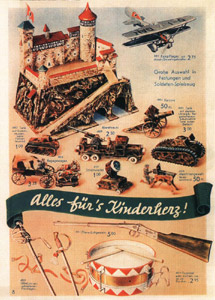
In 1937, for a Christmas present, Goebbels gave Hitler 18 Mickey Mouse films. Goebbels was always a big Disney cartoon fan – Snow White, in particular, was a favorite.
Christmas, too, was a favorite of the Nazis. An officially sanctioned favorite. Long before Bill O’Reilly discovered that Christmas was being traduced by traitors from within, the Nazis had found in Christmas a powerful way to promote a number of their most signal policies. Hitler’s state was the first modern guns and butter regime, and such regimes require a resilient consumer sector. The most zealous Nazis tried to make Weihnacht into a more Aryan holiday, promoting the use of Yule, for instance. But the effect of the Nazi re-inflation in Germany is more coolly represented in Heimat, which shows the high point of the thirties as a Christmas – the Christmas of 1937 or 1938, I believe. Sebald mentions the mythical Christmases of the 30s in his book on the Air War. The Fox news emphasis on the American-ness of this peculiar holiday simply follows, blindly, a logic at work in war culture economies – the identity of country and consumerism in a holiday that sanctifies using a credit card or spending Deutsche marks.
War’s id finds, in Christmas, a particularly rich text. It is a place where all the many poisons in the system can come out as cranberry sauce and war games for the kids. Let them grow up remembering, on this festive occasion in which we can proudly look across the ocean to the piles and piles of Iraqi bodies, all murdered in an act of generosity by the great American people, that America is a uniquely benign super power, for which Jesu Christi was spangled on a Christmas tree. A great baby, a great savior, who never left home without his Visa card. Imagine, this year Santa is splashing through the blood of thousands of bad little Iraqi children just to bring American children, all nestled in their beds of democracy and CO2, the nicest little computer gifts global corporations can provide! Makes me feel warm and snug.
Ah, and here’s a nice little 1919 Christmas poem by Tucholsky to end with. Here’s the German, with my translation:
Einkäufe
Was schenke ich dem kleinen Michel
zu diesem kalten Weihnachtsfest?
Den Kullerball? Den Sabberpichel?
Ein Gummikissen, das nicht näßt?
Ein kleines Seifensiederlicht?
Das hat er noch nicht. Das hat er noch nicht!
Wähl ich den Wiederaufbaukasten?
Schenk ich ihm noch mehr Schreibpapier?
Ein Ding mit schwarzweißroten Tasten;
ein patriotisches Klavier?
Ein objektives Kriegsgericht?
Das hat er noch nicht. Das hat er noch nicht!
Schenk ich den Nachttopf ihm auf Rollen?
Schenk ich ein Moratorium?
Ein Sparschwein, kugelig geschwollen?
Ein Puppenkrematorium?
Ein neues gescheites Reichsgericht?
Das hat er noch nicht. Das hat er noch nicht!
Ach, liebe Basen, Onkels, Tanten –
Schenkt ihr ihm was. Ich find es kaum.
Ihr seid die Fixen und Gewandten,
hängt ihrs ihm untern Tannenbaum.
Doch schenkt ihm keine Reaktion!
Die hat er schon. Die hat er schon!
Purchases
What am I going to get little Mikey
on this cold Christmas day?
The little ball? a bib for the tykie?
A waterproof little rubber tray?
A clue, that’s what I could get!
He doesn’t have that yet. Nope, he doesn’t have that yet.
Perhaps the re-building set, please?
Or how about more stationary?
A thingamabob with whiteblackred keys;
a patriotic piano?
An objective war report I might get?
He doesn’t have that yet. He doesn’t have that yet!
How about a little potty on wheels?
How about a moratorium?
A pig for his pennies, swollen from deals?
Or a G.I. Joe doll crematorium?
Hey, a war tribunal with rights I might get?
He doesn’t have that yet. Oh, he doesn’t have that yet?
O, dear cousins, uncles and aunts –
Give him something good. I can hardly find it.
You day traders, short sellers, financial hot pants
hang it up for him under the Christmas tree.
But don’t give him any more pro-war shit!
He has just enough. Just enough of it!
Friday, December 08, 2006
alienating America's natural constituency in Iraq
It is the time of the year for top ten lists – top ten hits, top ten best books, top ten worst movies. And of course, everybody’s top ten flop, the defeat of the U.S. in Iraq. We are ending up with a normal week – 500 plus Iraqis murdered, 33 U.S. soldiers ditto. Hollywood flops bleed money, this flop bleeds both money and blood. But in D.C., as in Hollywood, you can fail to the top - there will be laughs at the National Press club next year as our president does his imitation of a mass of Iraqis being blown to bit by a car bomb. Talk about funny...
So what went wrong? Dream cast, brilliant photo ops, a strong return to the war theater by old Cap’n Rumsfeld, voted sexiest psychopathic rightwinger of 1985 and still bulging that wrestler honed physique, and introducing Sonny, the Rebel in Chief playing Rebel with a Cause against former marquee magician, Sr.
Among Rumsfeldian deadenders, reference to other occupations, other times are still de rigeur. It is true that allegories of occupation weren’t the guide the deadenders thought; but partly this is because the deadenders never really looked at those occupations. The WWII reference debased itself about 2004, and only surfaces in the slimier parts of the Net, where eager Islamophobes congregate to swap saliva and dreams of mass murder, glassing deserts, flaying the bodies of Moslems, and perhaps even raping the women (although not so much – the homoerotic glorying in twisting the entrails of the dead enemy about one’s neck, the notion of decapitating, of burning the skin off of, of crushing the skulls of infants – this is the all American fantasy of this group of middle management white males. If the Insurgents out there have a moment, they might want to turn to, say, the RedState blog and translate into Arabic the comments that have accrued about what to do next in Iraq. Talk about a motivator for attacking Americans!). However, there is something to be learned about American foreign policy by looking at America’s previous wars.
The thing to learn is simple. America’s wars since 1945 have largely depended on appealing to a constituency, in the targeted country, made up of the upper and upper middle class. This class is the natural American ally. This was the class that the Occupation authority appealed to in both Japan and Germany. This was the class that gravitated towards the U.S. in South Korea and South Vietnam. This was the class that, bitching and moaning, has carried out U.S. friendly policies in Latin America.
It was with this history, sublimated into instinct, that Jay Garner arrived in Iraq in 2003. And it was this history that made it possible, for a historic moment, that the Iraqi upper and upper middle class, which had endured Saddam Hussein with varying degrees of enthusiasm until the debacle of Kuwait, and endured him with silent dissent thereafter, would form their natural alliance with the U.S. But Garner was quickly sidelined, and the U.S. embarked on a program that utterly alienated both the poor and the upper and upper middle class. The question is: was this program simply the result of the personal failings of the Bush nomenklatura? Or is there some interesting pattern emerging here?
The old pattern of interventions went along with the strictures of the post depression New Industrial State. These structures had adapted to state intervention without excessively ideologizing its day to day workings. That Europe adopted a Social Democratic economic structure, gave a stronger role to unions, etc., didn’t really get in the way of American co-operation. However, with the rise of Reaganism and the fall of the Wall, the equilibrium shifted. The new policy could be labeled – why not have it all? why bargain with those lousy rentseekers and government contract nichemen when we could sweep them out by enforcing mass privatization and introduce the 2.0 capital markets shell game, taking their wealth and seamlessly integrating it into the international flow of capital in Friedman’s ‘flat world’. While the personal shouldn’t be entirely discounted – a man as ignorant and vein as President Bush, and a clique as ideologically mad as that which swirled around the Wolfowitz contingent in the Pentagon, and a person as corrupt in all respects as Rove, clearly created a unique set of circumstances that would have fucked up the invasion of Monaco, much less Iraq – the thing about what happened, under Bremer, in Iraq is that, by all accounts, nobody is quite sure who had the ideas. These were puppets of the post-Cold War Zeitgeist, flatlanders by instinct. And thus, quickly, America’s natural constituency in Iraq, the aforesaid uppers, turned against the Americans in pure self protection, while of course American policies impacted heavily on the poor. Still, there was the brief hectic period that can be seen in any country colonized by neo-liberal policies – the explosion of debt and consumer goods. But in Iraq, that explosion took place while the infrastructure visibly degraded – hard to run your new Mercedes on a road that is bumpy with bomb craters and impeded, every few miles, by checkpoints.
So what went wrong? Dream cast, brilliant photo ops, a strong return to the war theater by old Cap’n Rumsfeld, voted sexiest psychopathic rightwinger of 1985 and still bulging that wrestler honed physique, and introducing Sonny, the Rebel in Chief playing Rebel with a Cause against former marquee magician, Sr.
Among Rumsfeldian deadenders, reference to other occupations, other times are still de rigeur. It is true that allegories of occupation weren’t the guide the deadenders thought; but partly this is because the deadenders never really looked at those occupations. The WWII reference debased itself about 2004, and only surfaces in the slimier parts of the Net, where eager Islamophobes congregate to swap saliva and dreams of mass murder, glassing deserts, flaying the bodies of Moslems, and perhaps even raping the women (although not so much – the homoerotic glorying in twisting the entrails of the dead enemy about one’s neck, the notion of decapitating, of burning the skin off of, of crushing the skulls of infants – this is the all American fantasy of this group of middle management white males. If the Insurgents out there have a moment, they might want to turn to, say, the RedState blog and translate into Arabic the comments that have accrued about what to do next in Iraq. Talk about a motivator for attacking Americans!). However, there is something to be learned about American foreign policy by looking at America’s previous wars.
The thing to learn is simple. America’s wars since 1945 have largely depended on appealing to a constituency, in the targeted country, made up of the upper and upper middle class. This class is the natural American ally. This was the class that the Occupation authority appealed to in both Japan and Germany. This was the class that gravitated towards the U.S. in South Korea and South Vietnam. This was the class that, bitching and moaning, has carried out U.S. friendly policies in Latin America.
It was with this history, sublimated into instinct, that Jay Garner arrived in Iraq in 2003. And it was this history that made it possible, for a historic moment, that the Iraqi upper and upper middle class, which had endured Saddam Hussein with varying degrees of enthusiasm until the debacle of Kuwait, and endured him with silent dissent thereafter, would form their natural alliance with the U.S. But Garner was quickly sidelined, and the U.S. embarked on a program that utterly alienated both the poor and the upper and upper middle class. The question is: was this program simply the result of the personal failings of the Bush nomenklatura? Or is there some interesting pattern emerging here?
The old pattern of interventions went along with the strictures of the post depression New Industrial State. These structures had adapted to state intervention without excessively ideologizing its day to day workings. That Europe adopted a Social Democratic economic structure, gave a stronger role to unions, etc., didn’t really get in the way of American co-operation. However, with the rise of Reaganism and the fall of the Wall, the equilibrium shifted. The new policy could be labeled – why not have it all? why bargain with those lousy rentseekers and government contract nichemen when we could sweep them out by enforcing mass privatization and introduce the 2.0 capital markets shell game, taking their wealth and seamlessly integrating it into the international flow of capital in Friedman’s ‘flat world’. While the personal shouldn’t be entirely discounted – a man as ignorant and vein as President Bush, and a clique as ideologically mad as that which swirled around the Wolfowitz contingent in the Pentagon, and a person as corrupt in all respects as Rove, clearly created a unique set of circumstances that would have fucked up the invasion of Monaco, much less Iraq – the thing about what happened, under Bremer, in Iraq is that, by all accounts, nobody is quite sure who had the ideas. These were puppets of the post-Cold War Zeitgeist, flatlanders by instinct. And thus, quickly, America’s natural constituency in Iraq, the aforesaid uppers, turned against the Americans in pure self protection, while of course American policies impacted heavily on the poor. Still, there was the brief hectic period that can be seen in any country colonized by neo-liberal policies – the explosion of debt and consumer goods. But in Iraq, that explosion took place while the infrastructure visibly degraded – hard to run your new Mercedes on a road that is bumpy with bomb craters and impeded, every few miles, by checkpoints.
adams again
In the 1868 presidential campaign, Grant’s election campaign spent an unprecedented amount of money – $250,000, twice as much as his Democrat opponent. The money came from the prosperous class that had benefited very largely from the Civil war: Vanderbilt, William Astor, Hamilton Fish, etc. The money that went into Grant’s election campaign signaled a change in the relationship between the elected and the moneyed, which was, in turn, a product of the changes wrought in the American economy by the Civil War.
This is where Henry Adams enters the picture. In my last post, LI might have puzzled readers by linking Adams to an article warning of the bust inside the commercial real estate bubble. Adams, however, was not merely a belle lettrist – he was a financial journalist too, one of the first of the breed in this country. He obviously benefited from acquaintance with Bagehot, but he also benefited from a sensibility sufficiently sensitive as to be shocked when he came home to the U.S. after being abroad during the Civil War – he served the government, under his father, in Britain – to remark on the massive changes he saw everywhere. As he puts it in the Education, he might as well have been a Tyrian trader from 100 B.C., landing on an unknown shore, so strange was his country to him when he came back in 1868. In one of the more famous anti-Semitic passages (Adams was afflicted with a sort of lyncathropic anti-semitism - in the turn of a phrase he suddenly grows fur and fangs, and the next moment they seem to vanish - however, always beware of a man who carelessly allows himself to become a werewolf) he wrote:
“One could divine pretty nearly where the force lay, since the
last ten years had given to the great mechanical energies --
coal, iron, steam -- a distinct superiority in power over the old
industrial elements -- agriculture, handwork, and learning; but
the result of this revolution on a survivor from the fifties
resembled the action of the earthworm; he twisted about, in vain,
to recover his starting-point; he could no longer see his own
trail; he had become an estray; a flotsam or jetsam of wreckage;
a belated reveller, or a scholar-gipsy like Matthew Arnold's. His
world was dead. Not a Polish Jew fresh from Warsaw or Cracow --
not a furtive Yacoob or Ysaac still reeking of the Ghetto,
snarling a weird Yiddish to the officers of the customs -- but
had a keener instinct, an intenser energy, and a freer hand than
he -- American of Americans, with Heaven knew how many Puritans
and Patriots behind him, and an education that had cost a civil
war.”
Adams came back the year Johnson was impeached and Grant made a successful play for the presidency. That Grant would become president seemed natural, although – of course – for an Adams, not wholly pleasant. Grant was like Washington, Andrew Jackson, William Tyler – a parade of generals who seemed to embody the military virtues of organization and forthrightness without having, at their backs, the threat of standing armies. Adams was, at the time, trying to introduce the kind of sophisticated reportage of politics that he had seen in England, and he stationed himself in D.C. to observe and write long thought pieces for the North American Review. At the same time, his brother Charles engaged in the newest of the new technologies – railroad companies. Charles’ worst business enemy was Jay Gould – and by family loyalty and temperament, he became Henry Adams’ too. This is how Adams decided, in 1870, to publish a revelatory account of Gould’s attempt to corner the gold market in 1869. Here’s how he puts it in the Education:
“Before he got back to Quincy, the summer was already half over,
and in another six weeks the effects of President Grant's
character showed themselves. They were startling -- astounding --
terrifying. The mystery that shrouded the famous, classical
attempt of Jay Gould to corner gold in September, 1869, has never
been cleared up -- at least so far as to make it intelligible to
Adams. Gould was led, by the change at Washington, into the
belief that he could safely corner gold without interference from
the Government. He took a number of precautions, which he
admitted; and he spent a large sum of money, as he also
testified, to obtain assurances which were not sufficient to have
satisfied so astute a gambler; yet he made the venture. Any
criminal lawyer must have begun investigation by insisting,
rigorously, that no such man, in such a position, could be
permitted to plead that he had taken, and pursued, such a course,
without assurances which did satisfy him. The plea was
professionally inadmissible.”
As always, with Adams, it is the pattern that comes first. The sample that defies the pattern calls for explanation; Adams problem was that, in the America of his thirties, the great Gilded Age, the aberrant samples multiplied, while the pattern of the republican order to which he was loyal as a family matter, diminished into a mere blind spot. The Gold conspiracy was part of that exile from the pattern that marked Adams self-consciousness about being American.
This is where Henry Adams enters the picture. In my last post, LI might have puzzled readers by linking Adams to an article warning of the bust inside the commercial real estate bubble. Adams, however, was not merely a belle lettrist – he was a financial journalist too, one of the first of the breed in this country. He obviously benefited from acquaintance with Bagehot, but he also benefited from a sensibility sufficiently sensitive as to be shocked when he came home to the U.S. after being abroad during the Civil War – he served the government, under his father, in Britain – to remark on the massive changes he saw everywhere. As he puts it in the Education, he might as well have been a Tyrian trader from 100 B.C., landing on an unknown shore, so strange was his country to him when he came back in 1868. In one of the more famous anti-Semitic passages (Adams was afflicted with a sort of lyncathropic anti-semitism - in the turn of a phrase he suddenly grows fur and fangs, and the next moment they seem to vanish - however, always beware of a man who carelessly allows himself to become a werewolf) he wrote:
“One could divine pretty nearly where the force lay, since the
last ten years had given to the great mechanical energies --
coal, iron, steam -- a distinct superiority in power over the old
industrial elements -- agriculture, handwork, and learning; but
the result of this revolution on a survivor from the fifties
resembled the action of the earthworm; he twisted about, in vain,
to recover his starting-point; he could no longer see his own
trail; he had become an estray; a flotsam or jetsam of wreckage;
a belated reveller, or a scholar-gipsy like Matthew Arnold's. His
world was dead. Not a Polish Jew fresh from Warsaw or Cracow --
not a furtive Yacoob or Ysaac still reeking of the Ghetto,
snarling a weird Yiddish to the officers of the customs -- but
had a keener instinct, an intenser energy, and a freer hand than
he -- American of Americans, with Heaven knew how many Puritans
and Patriots behind him, and an education that had cost a civil
war.”
Adams came back the year Johnson was impeached and Grant made a successful play for the presidency. That Grant would become president seemed natural, although – of course – for an Adams, not wholly pleasant. Grant was like Washington, Andrew Jackson, William Tyler – a parade of generals who seemed to embody the military virtues of organization and forthrightness without having, at their backs, the threat of standing armies. Adams was, at the time, trying to introduce the kind of sophisticated reportage of politics that he had seen in England, and he stationed himself in D.C. to observe and write long thought pieces for the North American Review. At the same time, his brother Charles engaged in the newest of the new technologies – railroad companies. Charles’ worst business enemy was Jay Gould – and by family loyalty and temperament, he became Henry Adams’ too. This is how Adams decided, in 1870, to publish a revelatory account of Gould’s attempt to corner the gold market in 1869. Here’s how he puts it in the Education:
“Before he got back to Quincy, the summer was already half over,
and in another six weeks the effects of President Grant's
character showed themselves. They were startling -- astounding --
terrifying. The mystery that shrouded the famous, classical
attempt of Jay Gould to corner gold in September, 1869, has never
been cleared up -- at least so far as to make it intelligible to
Adams. Gould was led, by the change at Washington, into the
belief that he could safely corner gold without interference from
the Government. He took a number of precautions, which he
admitted; and he spent a large sum of money, as he also
testified, to obtain assurances which were not sufficient to have
satisfied so astute a gambler; yet he made the venture. Any
criminal lawyer must have begun investigation by insisting,
rigorously, that no such man, in such a position, could be
permitted to plead that he had taken, and pursued, such a course,
without assurances which did satisfy him. The plea was
professionally inadmissible.”
As always, with Adams, it is the pattern that comes first. The sample that defies the pattern calls for explanation; Adams problem was that, in the America of his thirties, the great Gilded Age, the aberrant samples multiplied, while the pattern of the republican order to which he was loyal as a family matter, diminished into a mere blind spot. The Gold conspiracy was part of that exile from the pattern that marked Adams self-consciousness about being American.
Thursday, December 07, 2006
the pilgrim finally gets back home
I’m back. I’m alive. Yesterday, my birthday, I spent the entire day in transit – from the car that was supposed to pick me up in NYC at 10:30 am, and decided that it had other priorities, to the great Continental guy who, with the largesse of the royal prerogative that came with the keyboard and the quiet corner at JFK, gave me a seat on a plane going in the vague direction of Texas, to the long waits in various airport-expensive bars mulling my bad luck. Since getting to NYC had taken two days, one of which was spent in the Austin airport while they played pocket pool with the flight that I was supposed to take (it would regularly appear and disappear on the schedule of flights, until, heartstoppingly, it stopped appearing at all - at which point I found a harried Delta employee who told me I had to find a flight for the next day), getting away from the place in only one day was a strange sort of mercy. There is something medieval about air travel now – at least, I could have recited the whole fucking Canterbury Tales while waiting around in various departure areas. In these hairy intervals, I was subjected to more tv news than I had seen for the past year. Mostly CNN, although at one point – if I wasn’t hallucinating – Geraldo Rivera was talking to Bill O’Reilly about the lifestyle of Britney Spears. Or was it Britney Spears talking to Geraldo about the lifestyle of Bill O’Reilly? I don’t really think that it matters much – the rule, among celebrity variables, is that they are infinitely inter-substituteable. But mostly it was CNN. It all looked like news from some grim and ruined Disneyland. I noted that the Iraqis still play the bit parts in their war, foregrounding cars and buildings on fire, being out there, unseen, as the clip of the American soldiers firing weapons unspools. I was happy to see that, compared to other years (I see CNN pretty much only when I am in airports), the Rebel in Chief no longer receives wraparound coverage. Perhaps the coin has dropped: this guy is ratings poison.
…
Well, enough of that. My plan for this post was to talk about the truly tasteless, odorless and colorless essay on Henry Adams by Peter Heller in the Smithsonian, timed for the centennial of the Education. LI is always glad to see a revival of interest in Adams, but … this article simply gives you the cheat sheet of his life, which do we really need? Adams survey of the 'stupid nineteenth century' - as a famous fascist pamphleteer named it - was much fiercer than Heller depicts. Heller is right, however, that Adams is curiously absent at the moment – for instance, there wasn’t a single review of Pynchon’s recent novel, which starts in 1893, at the Colombian Exhibit, that collated it with the Education chapter on the Virgin and the Dynamo. This is odd, insofar as it is an old, petrified part of Pynchon criticism that V and the early stories took a lot from Adams, and in particular Adams amateur’s fascination with entropy.
Huh. Well, I might get back to that column. On the other hand, I have another post on Coriolanus written up in a notebook, and a post on the column by Pearlstein in the WP about the secret, 1987-like cancer in the financial system – to wit, the current craze for private equity companies, and their use of the old LBO techniques of the eighties. Here’s the gist of the Pearlstein column:
“…But enough hand-wringing over the residential real-estate market. Not much anyone can do about that now. The new story is the bubble in the commercial real estate market -- offices, hotels and retail establishments -- which has generated spectacular returns for investors over the past few years.
Prices have risen to ridiculous levels, relative to the risk involved and the amount of income generated by these properties. But even those prices don't seem to scare away pension funds, university endowments and Arab investors, who continue to pour hundreds of billions of dollars into real estate investment trusts, private-equity real estate funds and hedge funds that specialize in real estate finance.
Exhibit A is the purchase of Equity Office Properties, the country's biggest owner of office buildings, by the real-estate arm of the Blackstone Group, a private equity firm. What you need to know about this $36 billion deal is that 80 percent of the purchase price will be financed with debt, and that the "cap rate" -- the rate of return from next year's rental income -- is an estimated 5.5 percent.
What, exactly, does that mean?
First of all, it means that the lessons of the past five real estate crashes have, once again, been forgotten, and real estate has once again become a highly leveraged investment class. So, when the inevitable downturn finally happens and the price falls by more than 20 percent, there's a pretty good chance the value of the collateral will fall below the value of the loans, which in financial circles is considered a no-no. To make things even worse, it's a good probability that these are interest-only loans, which means that even in good times, the borrower is not paying down principal.
These numbers also mean that once you take into account things like the need to invest each year in maintaining the properties, investors will earn a premium of less than 1 percentage point for the risks associated with real-estate investing -- little things like tenants who don't pay rent or vacant property that can't be rented -- as compared with risk-free Treasury bonds. As risk premiums go, that's as low as anyone can remember.”
LI has a theory about business cyclical phenomena like this and their derivation from increases in wealth inequality (operating as a special case of the regular Keynesian supply and demand cycle) that would have interested Adams, always a sucker for theories about patterns in history. We will, someday, spring it on you all…
…
Well, enough of that. My plan for this post was to talk about the truly tasteless, odorless and colorless essay on Henry Adams by Peter Heller in the Smithsonian, timed for the centennial of the Education. LI is always glad to see a revival of interest in Adams, but … this article simply gives you the cheat sheet of his life, which do we really need? Adams survey of the 'stupid nineteenth century' - as a famous fascist pamphleteer named it - was much fiercer than Heller depicts. Heller is right, however, that Adams is curiously absent at the moment – for instance, there wasn’t a single review of Pynchon’s recent novel, which starts in 1893, at the Colombian Exhibit, that collated it with the Education chapter on the Virgin and the Dynamo. This is odd, insofar as it is an old, petrified part of Pynchon criticism that V and the early stories took a lot from Adams, and in particular Adams amateur’s fascination with entropy.
Huh. Well, I might get back to that column. On the other hand, I have another post on Coriolanus written up in a notebook, and a post on the column by Pearlstein in the WP about the secret, 1987-like cancer in the financial system – to wit, the current craze for private equity companies, and their use of the old LBO techniques of the eighties. Here’s the gist of the Pearlstein column:
“…But enough hand-wringing over the residential real-estate market. Not much anyone can do about that now. The new story is the bubble in the commercial real estate market -- offices, hotels and retail establishments -- which has generated spectacular returns for investors over the past few years.
Prices have risen to ridiculous levels, relative to the risk involved and the amount of income generated by these properties. But even those prices don't seem to scare away pension funds, university endowments and Arab investors, who continue to pour hundreds of billions of dollars into real estate investment trusts, private-equity real estate funds and hedge funds that specialize in real estate finance.
Exhibit A is the purchase of Equity Office Properties, the country's biggest owner of office buildings, by the real-estate arm of the Blackstone Group, a private equity firm. What you need to know about this $36 billion deal is that 80 percent of the purchase price will be financed with debt, and that the "cap rate" -- the rate of return from next year's rental income -- is an estimated 5.5 percent.
What, exactly, does that mean?
First of all, it means that the lessons of the past five real estate crashes have, once again, been forgotten, and real estate has once again become a highly leveraged investment class. So, when the inevitable downturn finally happens and the price falls by more than 20 percent, there's a pretty good chance the value of the collateral will fall below the value of the loans, which in financial circles is considered a no-no. To make things even worse, it's a good probability that these are interest-only loans, which means that even in good times, the borrower is not paying down principal.
These numbers also mean that once you take into account things like the need to invest each year in maintaining the properties, investors will earn a premium of less than 1 percentage point for the risks associated with real-estate investing -- little things like tenants who don't pay rent or vacant property that can't be rented -- as compared with risk-free Treasury bonds. As risk premiums go, that's as low as anyone can remember.”
LI has a theory about business cyclical phenomena like this and their derivation from increases in wealth inequality (operating as a special case of the regular Keynesian supply and demand cycle) that would have interested Adams, always a sucker for theories about patterns in history. We will, someday, spring it on you all…
Friday, December 01, 2006
identifying marks
LI has wanted to get rid of the picture of himself here since he put it up - but in the interest of being identifiable in the dark corner of a bar in Alphabet City, we let it hang around on this blog.
Well, yesterday's meeting was more of a success in terms of translators than of readers of LI - one reader, Mr. NYP, did show up, bearing a delicious tartine like confection baked to honor Vermin Direct. Alas, Mr. Scruggs couldn't make it. Our far flung correspondent, Mr. T, was there, and he pointed out that LI's riff on Coriolanus - hey, we are a literary bunch! - was not necessarily necessary. An old friend of mine, Lorin, who hadn't read my blog, nonetheless said that he believed I was well on my way to becoming a backwards Jesus - but Lorin has always expected me to eventually follow the narrative track of the protagonist in Wise Blood. When I do, he wants to get rights for the made for TV movie. Natasha Wimmer, who just translated Roberto Bolano's The Savage Detectives - the best novel I've read this year, which is coming out this spring, when all people of good will will be buying it - was there, and an editor at Publishers Weekly, Michael Scharf, and a filmmaker friend of mine, James Carmen, who, after the crowd broke up, told me some Bela Tarr stories - turns out he knew Tarr in Berlin, and Tarr eventually denounced him for having no taste. There you are - not quite Page Six, or whatever the fuck that page is in the Post, b-but so sue me.
I am trying to store memories of the cold to take back to Austin. Sunday, Mr. T. and I went to the Met to see the Neue Sachlichkeit exhibit - and it shamed me. I need to be much more savage about this country. It also gave me some ideas for my graphic novel. I was planning on going to Church street, where Tom Paine, in the greatest pain, warded off the ambitions of young preachers eager to convert the old reprobate and died unrepentent, but I probably won't have time - I hope his spirit forgives me.
Well, yesterday's meeting was more of a success in terms of translators than of readers of LI - one reader, Mr. NYP, did show up, bearing a delicious tartine like confection baked to honor Vermin Direct. Alas, Mr. Scruggs couldn't make it. Our far flung correspondent, Mr. T, was there, and he pointed out that LI's riff on Coriolanus - hey, we are a literary bunch! - was not necessarily necessary. An old friend of mine, Lorin, who hadn't read my blog, nonetheless said that he believed I was well on my way to becoming a backwards Jesus - but Lorin has always expected me to eventually follow the narrative track of the protagonist in Wise Blood. When I do, he wants to get rights for the made for TV movie. Natasha Wimmer, who just translated Roberto Bolano's The Savage Detectives - the best novel I've read this year, which is coming out this spring, when all people of good will will be buying it - was there, and an editor at Publishers Weekly, Michael Scharf, and a filmmaker friend of mine, James Carmen, who, after the crowd broke up, told me some Bela Tarr stories - turns out he knew Tarr in Berlin, and Tarr eventually denounced him for having no taste. There you are - not quite Page Six, or whatever the fuck that page is in the Post, b-but so sue me.
I am trying to store memories of the cold to take back to Austin. Sunday, Mr. T. and I went to the Met to see the Neue Sachlichkeit exhibit - and it shamed me. I need to be much more savage about this country. It also gave me some ideas for my graphic novel. I was planning on going to Church street, where Tom Paine, in the greatest pain, warded off the ambitions of young preachers eager to convert the old reprobate and died unrepentent, but I probably won't have time - I hope his spirit forgives me.
Thursday, November 30, 2006
More details on the LI in NYC thing
LI is swimming against the current of duty today – reviews to finish, papers to edit, clothes to sort through, and cross your fingers for that last check in the mail. So all the pretty things we had to say about Coriolanus are going to have to take a back seat. Shit. In place of commentary on the Romulus and Remus of War and the State, we can only recommend the knee breaking tackle of a review in , the LRB of Christopher Hitchens book on Tom Paine (the very existence of which LI, by the way, bitterly resents – Paine does not deserve to be kidnapped by an imperialist tool with a bungalow Bill vocabulary. Hitchens sticks onto the book a dedication to the man who is currently conferring with the leaders of Iran, Talabani, thus doubling the insult - a book dedicated to a warlord, written by a buffoon, about a man who put the crusher, the kneelock and the backflip on both types).
Also, our plans for a NYC LI-orama are on track. We’ve received some heartening emails, some threatening phone calls, and the FBI has proposed photographing all participants! The time will be Monday, Dec. 4, at 6:30, at 7b, a bar that apparently fell so in love with iteration that it named itself after its location, at the corner of 7th St and Ave B. LI and our far flung correspondent, Mr. T., will try to get a table. LI can be easily recognized, since I look like Joan of Arc at the moment – or, rather, I will be the only man in the joint who looks like he mistakenly thinks he looks like Joan of Arc. Also, there will be a red baseball cap with the slogan, Sipahi on guard, on the table, for those not gifted with the ability to see what people think they look like – out of towners, this latter group, surely.
Also, our plans for a NYC LI-orama are on track. We’ve received some heartening emails, some threatening phone calls, and the FBI has proposed photographing all participants! The time will be Monday, Dec. 4, at 6:30, at 7b, a bar that apparently fell so in love with iteration that it named itself after its location, at the corner of 7th St and Ave B. LI and our far flung correspondent, Mr. T., will try to get a table. LI can be easily recognized, since I look like Joan of Arc at the moment – or, rather, I will be the only man in the joint who looks like he mistakenly thinks he looks like Joan of Arc. Also, there will be a red baseball cap with the slogan, Sipahi on guard, on the table, for those not gifted with the ability to see what people think they look like – out of towners, this latter group, surely.
Wednesday, November 29, 2006
coriolan - polemos vs. polis
Cavell is a pretty fine reader of Shakespeare, and he tosses out some great bon mots in his discussion of the plays. For instance, this, which begins the essay on The Winter’s Tale in the lectures, In quest of the ordinary. Cavell is giving a philosophical defense of romanticism, and he moves from considering a poem by Wordsworth to the play:
Apart form any more general indebtedness of the romantics to Shakespeare, The Winter’s Tale is particularly apt in relation to the romatic themses I have emphasized of reawakening or revival, beginning with the figure of the six year old boy of Wordsworth’s Intimatins Ode and the ode’s idea of the adult’s world as “remains”, as of corpses. In my precedeing lecture I associate this figure, especially in view of his difficulties over remembering, with Freud’s report of a phobia in a five year old boy, partly simply to commemorate Freud’s acknowledgement that he was preceded in his perceptions by the poets, more specifically because of Freud’s consequent perception, in this case, of adult human life struggling toward happiness from within its own ‘debris’.
That last sentence tells me so much about psychoanalysis that … it puts the fear of God in me. As in, where to start?
So I quite respect Cavell’s decision not to give a political reading of Coriolanus, but a psychoanalytic one. In his view, there is a core of baffled narcissism at the heart of Coriolanus. To make that view work, he takes Coriolanus’ relationship to his mother as central to the play, and the images of “feeding upon oneself” and other metaphors of cannibalism as the metaphoric of a narcissistic meltdown, essentially determining Coriolanus’ failure. Yet I think that there is a false distinction at work, here, separating the two domains, as though the self and the family could be walled off from the dynamics of the polis and, to my mind most particularly, polemos.
So, I’m going to leave that as something to return to – and no doubt I will forget it.
I want to look at Coriolanus in terms of war, politics and exile. It is striking to me how much more ‘likeable’ Coriolanus is in the scene in which he actually bids farewell to Rome – his speeches remind me very much of another battle hardened man taking grief in stride: the Earl of Kent. When Kent, over Gloucester’s objections, is put in the stocks, this is what he says:
“Glou. I am sorry for thee, friend. 'Tis the Duke's pleasure,
Whose disposition, all the world well knows,
Will not be rubb'd nor stopp'd. I'll entreat for thee.
Kent. Pray do not, sir. I have watch'd and travell'd hard.
Some time I shall sleep out, the rest I'll whistle.
A good man's fortune may grow out at heels.
Give you good morrow!
Glou. The Duke 's to blame in this; 'twill be ill taken.
Exit.”
This is very like Coriolanus at the gates of Rome.
“My (sometime) Generall,
I haue seene the Sterne, and thou hast oft beheld
Heart-hardning spectacles. Tell these sad women,
Tis fond to waile ineuitable strokes,
As 'tis to laugh at 'em.”
What hangs over him at this point – what hangs over the play itself – is a double act of banishment. Coriolanus has been banished from Rome – but he himself has “banished’ Rome, in an act that, to my mind, raises up all kinds of questions the relationship between war and the city:
“Corio. You common cry of Curs, whose breath I hate,
As reeke a'th' rotten Fennes: whose Loues I prize,
As the dead Carkasses of vnburied men,
That do corrupt my Ayre: I banish you,
And heere remaine with your vncertaintie.
Let euery feeble Rumor shake your hearts:
Your Enemies, with nodding of their Plumes
Fan you into dispaire: Haue the power still
To banish your Defenders, till at length
Your ignorance (which findes not till it feeles,
Making but reseruation of your selues,
Still your owne Foes) deliuer you
As most abated Captiues, to some Nation
That wonne you without blowes, despising
For you the City. Thus I turne my backe;
There is a world elsewhere.”
Well, I’ll take this up tomorrow if I can. These are hasty days, as I finish up my affairs before taking my big trip. There is a world elsewhere.
Apart form any more general indebtedness of the romantics to Shakespeare, The Winter’s Tale is particularly apt in relation to the romatic themses I have emphasized of reawakening or revival, beginning with the figure of the six year old boy of Wordsworth’s Intimatins Ode and the ode’s idea of the adult’s world as “remains”, as of corpses. In my precedeing lecture I associate this figure, especially in view of his difficulties over remembering, with Freud’s report of a phobia in a five year old boy, partly simply to commemorate Freud’s acknowledgement that he was preceded in his perceptions by the poets, more specifically because of Freud’s consequent perception, in this case, of adult human life struggling toward happiness from within its own ‘debris’.
That last sentence tells me so much about psychoanalysis that … it puts the fear of God in me. As in, where to start?
So I quite respect Cavell’s decision not to give a political reading of Coriolanus, but a psychoanalytic one. In his view, there is a core of baffled narcissism at the heart of Coriolanus. To make that view work, he takes Coriolanus’ relationship to his mother as central to the play, and the images of “feeding upon oneself” and other metaphors of cannibalism as the metaphoric of a narcissistic meltdown, essentially determining Coriolanus’ failure. Yet I think that there is a false distinction at work, here, separating the two domains, as though the self and the family could be walled off from the dynamics of the polis and, to my mind most particularly, polemos.
So, I’m going to leave that as something to return to – and no doubt I will forget it.
I want to look at Coriolanus in terms of war, politics and exile. It is striking to me how much more ‘likeable’ Coriolanus is in the scene in which he actually bids farewell to Rome – his speeches remind me very much of another battle hardened man taking grief in stride: the Earl of Kent. When Kent, over Gloucester’s objections, is put in the stocks, this is what he says:
“Glou. I am sorry for thee, friend. 'Tis the Duke's pleasure,
Whose disposition, all the world well knows,
Will not be rubb'd nor stopp'd. I'll entreat for thee.
Kent. Pray do not, sir. I have watch'd and travell'd hard.
Some time I shall sleep out, the rest I'll whistle.
A good man's fortune may grow out at heels.
Give you good morrow!
Glou. The Duke 's to blame in this; 'twill be ill taken.
Exit.”
This is very like Coriolanus at the gates of Rome.
“My (sometime) Generall,
I haue seene the Sterne, and thou hast oft beheld
Heart-hardning spectacles. Tell these sad women,
Tis fond to waile ineuitable strokes,
As 'tis to laugh at 'em.”
What hangs over him at this point – what hangs over the play itself – is a double act of banishment. Coriolanus has been banished from Rome – but he himself has “banished’ Rome, in an act that, to my mind, raises up all kinds of questions the relationship between war and the city:
“Corio. You common cry of Curs, whose breath I hate,
As reeke a'th' rotten Fennes: whose Loues I prize,
As the dead Carkasses of vnburied men,
That do corrupt my Ayre: I banish you,
And heere remaine with your vncertaintie.
Let euery feeble Rumor shake your hearts:
Your Enemies, with nodding of their Plumes
Fan you into dispaire: Haue the power still
To banish your Defenders, till at length
Your ignorance (which findes not till it feeles,
Making but reseruation of your selues,
Still your owne Foes) deliuer you
As most abated Captiues, to some Nation
That wonne you without blowes, despising
For you the City. Thus I turne my backe;
There is a world elsewhere.”
Well, I’ll take this up tomorrow if I can. These are hasty days, as I finish up my affairs before taking my big trip. There is a world elsewhere.
Tuesday, November 28, 2006
coriolanus
First, some LI stuff. LI is comin’ to NYC – due to the generosity of our far flung correspondent, Mr. T. – next week. And we are thinking of having a happy hour reception for our own self next Monday – which is Dec. 4th, I think - at either Sophie's (5th Street between Aves A and B) or 7B (corner of 7th St and Ave B). But we would like to know if any Gotham LI readers are interested in this, or if you all think that sounds infinitely tedious, the downing of the dominoes in that gray hour when the ball has lost its coherence, and the guests have drifted off to private parties, bearbaiting or bed. Anyway, write me at rgathman@netzero.net to tell me if you think this is a good idea. If I get some responses (and please, tell me which bar you think it should be), I’ll pick one of them and a time and inform you in an upcoming post. Oh, and of course, there will be an animated discussion of the Zizekian sublime and last year’s American idol finale…
Ho ho ho. I’m joking. I’M JOKING!
Okay, second. On to… Coriolanus.
Coriolanus is the most unloveable of Shakespeare’s tragic heroes, and he casts an eagle’s cold shadow over the play. In the 30s, the play came in for a lot of attention from the likes of people like Wyndham Lewis, since there seemed to be such obvious hookups between Coriolanus and fascism – in an era when fascism still designated a tight bundle of material characteristics, instead of now, when fascism designates a loose set of unpleasant psychological attitudes. Among the material characteristics for English writers (not only Lewis, but, for example, Shaw) was the idea that politics ultimately boiled down to leadership.
However, Coriolanus acted, even then, as a counter-case to the cult of leadership – even if it did not lead one to a possible politics of non-leadership. Now, LI is obviously obsessed at the moment with the state, war, and the treadmill of production, and just as the jealous man sees the world in green and the man on the blue guitar sees the world in blue, LI sees the system of commodified violence, the epoch beginning with the mass death initiated in 1492, reaching its extreme limit in the death of the ocean and the theft of the atmosphere, those approaching norms of planetary mortality, in every raindrop that falls – so we are certainly going to import our obsessions into a play that seems to invite them.
We’ve been reading the play in conjunction with North’s translation of Plutarch’s life, and with Stanley Cavell’s essay, who does the wolf love? While Coriolanus might seem – fuck it, is – a bit of an illogical jump from our previous thread about Lenin and the percipient/agent dialectic, what can we say? LI has as little talent for staying on topic as a Mexican jumping bean. But one of the great things about obsession is that you don’t have to worry to much about staying on topic – you will inevitably find your way back to the topics of your particular cancer. You will inevitably bump against the shore you are seeking, which will, unexpectedly, appear in Shakespeare, or a news story, or a burst of static on the radio. This is a good thing, until it becomes a very bad thing.
So LI is going to do a post or two about Coriolanus. Here, let’s remind my readers of the plot and context of the thing. The events in the play are set at the beginning of the Roman Republic. The plebians have rebelled against the debt they have been forced into in order to feed themselves, and which they are desperately repaying by selling themselves and their families into bondage. The oligarchs, of course, then as now, are on the lender’s side. The rebellion finds expression in a threat to migrate from Rome, and the plebes even settle on a hill near Rome. They are persuaded to come back by an embassy from the oligarchs headed by Menenius, depicted by Shakespeare as one of those grand old pols: a drinker, close to the oligarch families but able to understand, if not approve, of the plebe culture. Think of a machine Democrat – or even one of the Longs. Earl Long, for instance. Menenius tells the plebes the ‘parable of the belly’ – which is basically the same in North’s Plutarch and in Shakespeare – and – as much by his willingness to talk to them at their own level as by the parable itself – wins them back to Rome. At this opportune time, the Volsces threaten the Roman state. Caius Martius (aka Coriolanus), who has been the most intransigent opponent of the plebes, and especially indignant at the creation of plebian offices, like the tribunes of the people, joins the Roman army and performs such heroic feats against the Volsces that he almost personally drives them back. According Coriolanus is heavily favored to become consul. However, in order to take that office, he must gain the voice of the people through the ritual forms – and in the process, Coriolanus shows himself so scornful of the people and the forms that he incites the popular will against him and is exiled from Rome. In exile, he joins the Volsces to get revenge on his native city – only to be greeted, at the gates, by his mother, who begs him to spare Rome. Coriolanus bows to his mother’s will, betrays the Volsces, and suffers for that betrayal.
Now, one interesting note about the above described plot. In Plutarch, the revolt of the plebes is described like this: “… it fortuned that there grew sedition in the city, because the Senate did favour the rich against the people, who did complain of the sore oppression of usurers, of whom they borrowed money. For those that had little, yet were spoiled of that little they had by their creditors, for lack of ability to pay the usury: who offered their goods to be sold to them that would give most. And such as had nothing left, their bodies were laid hold on, and they were made their bondmen, notwithstanding all the wounds and cuts they shewed, which they had received in many battles, fighting for defence of their country and commonwealth: of the which, the last war they made was against the Sabines, wherein they fought upon the promise the rich men had med them that from thenceforth they would intreat them more gently…” In a brilliant bit of the negation of the negation, Shakespeare inverts this (o black magic moment, that hath such monsters in it!) and makes it Coriolanus who has to show his wounds to the people in order to get their voice – a ritual he is unwilling, in the end, to go through with. So the people never really see his wounds – he is a wound tease – although the people (in the audience) have witnessed the getting of them. It is part of the unloveliness of Coriolanus that his attack on the people extents to an attack on the audience, of which it is a safe bet that 99 percent will not possess the bloodlines such as a Coriolanus would respect. Talk about putting a shark filled moat around identifying with the hero...
Ho ho ho. I’m joking. I’M JOKING!
Okay, second. On to… Coriolanus.
Coriolanus is the most unloveable of Shakespeare’s tragic heroes, and he casts an eagle’s cold shadow over the play. In the 30s, the play came in for a lot of attention from the likes of people like Wyndham Lewis, since there seemed to be such obvious hookups between Coriolanus and fascism – in an era when fascism still designated a tight bundle of material characteristics, instead of now, when fascism designates a loose set of unpleasant psychological attitudes. Among the material characteristics for English writers (not only Lewis, but, for example, Shaw) was the idea that politics ultimately boiled down to leadership.
However, Coriolanus acted, even then, as a counter-case to the cult of leadership – even if it did not lead one to a possible politics of non-leadership. Now, LI is obviously obsessed at the moment with the state, war, and the treadmill of production, and just as the jealous man sees the world in green and the man on the blue guitar sees the world in blue, LI sees the system of commodified violence, the epoch beginning with the mass death initiated in 1492, reaching its extreme limit in the death of the ocean and the theft of the atmosphere, those approaching norms of planetary mortality, in every raindrop that falls – so we are certainly going to import our obsessions into a play that seems to invite them.
We’ve been reading the play in conjunction with North’s translation of Plutarch’s life, and with Stanley Cavell’s essay, who does the wolf love? While Coriolanus might seem – fuck it, is – a bit of an illogical jump from our previous thread about Lenin and the percipient/agent dialectic, what can we say? LI has as little talent for staying on topic as a Mexican jumping bean. But one of the great things about obsession is that you don’t have to worry to much about staying on topic – you will inevitably find your way back to the topics of your particular cancer. You will inevitably bump against the shore you are seeking, which will, unexpectedly, appear in Shakespeare, or a news story, or a burst of static on the radio. This is a good thing, until it becomes a very bad thing.
So LI is going to do a post or two about Coriolanus. Here, let’s remind my readers of the plot and context of the thing. The events in the play are set at the beginning of the Roman Republic. The plebians have rebelled against the debt they have been forced into in order to feed themselves, and which they are desperately repaying by selling themselves and their families into bondage. The oligarchs, of course, then as now, are on the lender’s side. The rebellion finds expression in a threat to migrate from Rome, and the plebes even settle on a hill near Rome. They are persuaded to come back by an embassy from the oligarchs headed by Menenius, depicted by Shakespeare as one of those grand old pols: a drinker, close to the oligarch families but able to understand, if not approve, of the plebe culture. Think of a machine Democrat – or even one of the Longs. Earl Long, for instance. Menenius tells the plebes the ‘parable of the belly’ – which is basically the same in North’s Plutarch and in Shakespeare – and – as much by his willingness to talk to them at their own level as by the parable itself – wins them back to Rome. At this opportune time, the Volsces threaten the Roman state. Caius Martius (aka Coriolanus), who has been the most intransigent opponent of the plebes, and especially indignant at the creation of plebian offices, like the tribunes of the people, joins the Roman army and performs such heroic feats against the Volsces that he almost personally drives them back. According Coriolanus is heavily favored to become consul. However, in order to take that office, he must gain the voice of the people through the ritual forms – and in the process, Coriolanus shows himself so scornful of the people and the forms that he incites the popular will against him and is exiled from Rome. In exile, he joins the Volsces to get revenge on his native city – only to be greeted, at the gates, by his mother, who begs him to spare Rome. Coriolanus bows to his mother’s will, betrays the Volsces, and suffers for that betrayal.
Now, one interesting note about the above described plot. In Plutarch, the revolt of the plebes is described like this: “… it fortuned that there grew sedition in the city, because the Senate did favour the rich against the people, who did complain of the sore oppression of usurers, of whom they borrowed money. For those that had little, yet were spoiled of that little they had by their creditors, for lack of ability to pay the usury: who offered their goods to be sold to them that would give most. And such as had nothing left, their bodies were laid hold on, and they were made their bondmen, notwithstanding all the wounds and cuts they shewed, which they had received in many battles, fighting for defence of their country and commonwealth: of the which, the last war they made was against the Sabines, wherein they fought upon the promise the rich men had med them that from thenceforth they would intreat them more gently…” In a brilliant bit of the negation of the negation, Shakespeare inverts this (o black magic moment, that hath such monsters in it!) and makes it Coriolanus who has to show his wounds to the people in order to get their voice – a ritual he is unwilling, in the end, to go through with. So the people never really see his wounds – he is a wound tease – although the people (in the audience) have witnessed the getting of them. It is part of the unloveliness of Coriolanus that his attack on the people extents to an attack on the audience, of which it is a safe bet that 99 percent will not possess the bloodlines such as a Coriolanus would respect. Talk about putting a shark filled moat around identifying with the hero...
Monday, November 27, 2006
let a thousand pundits pout - Max Boot
The pack of pundits, LI has noted, has generally been pouting about the war they so ardently helped blow into life three years ago. When the American populace goes off the reservation, as they did in 1998 when they refused to knock the president off for his office quickie, the pundits do this. Centrists of mammon, shills of the war culture, the pundits generally consider that they have backdoor privileges on the American psyche, which shuns extremes and loves reforms and finds its true voice in the arthritic angers of the various wattled turkeys that end up on news talk shows, endlessly retreading cliches. This is what the American people love. Strong on defense. Oh how they love defense. And reform, too. Oh how they love reforms. Plus they love spreading democracy. Gots to spread that democracy. The last time the American populace failed their pundit spokesman, in 1998, the turkeys spead their wings. They got angry. It was the death of outrage and the slouching towards Gomorrah.
Is it time for that again? The neo-cons, after covering reams of paper with bullshit paens to the City on the Hill, are radically revising their view of American history downward, or so at least seems to be the distinct undercurrent. It broke cover in Max Boot’s column in the LA Times this Sunday, which is full of pop gun anger usually to be directed against, say, the French:
“MANY AMERICANS have been wondering why so many Iraqis are willing to fight for militias and terrorist groups but not for the American-backed government. Look at it from their perspective. Would you stake your life on a regime whose existence depends on Washington's continuing support? Given our long, shameful record of leaving allies in the lurch, that has never seemed to be a smart bet.”
“Long, shameful record”??? Whatever happened to the benign empire? How quickly we’ve fallen from the cynosure of history to the dunce. But, besides the usual grumblings of a discredited faction, the interesting thing about Boot’s column is how thoroughly it ventilates what one could call the state of the art in American thinking. That is, non-thinking.
Here’s the theme. Since the war against the Barbary pirates, the U.S. has promiscuously picked up and discarded allies. Shocking, eh?
“We have been betraying friends since our first overseas conflict, against the Barbary pirates who captured ships off the African coast and enslaved their crews. To defeat the pasha of Tripoli, the U.S. made common cause with his brother, Hamet Karamanli. In 1804, American envoy William Eaton led a motley force of mercenaries and Marines across North Africa to install Karamanli on the throne. The offensive was called off prematurely when President Jefferson's envoy reached a deal with the pasha to free his American captives in return for $60,000. Karamanli was evacuated to the U.S., but his family members were left as hostages. Eaton raged: "Our too credulous ally is sacrificed to a policy, at the recollection of which, honor recoils, and humanity bleeds." “
Now, let’s grant for a second the premise here. Actually, it is eminently grant-able – since the U.S. is simply operating as all nations have operated since the beginning of the nation state. What is interesting, here, is that this history should certainly have applied three years ago as well as now. In other words, when Boot was advocating swarming into Iraq back in 2003, he should have know that “we have been betraying friends since our first overseas conflict…” So, this should have effected his thinking re said attack. You go to war with the history that you have, not the history you pull out of your ass – as per Donald Rumsfeld. Meaning…
Meaning that any conflict labors under a time constraint. The constraint runs something like this: American wars have certain broadly agreed upon goals – and then some of them have less broadly agreed on goals. The agreed upon goal in the war against the Barbary pirates was to free the American captives – not to overturn piracy. The war in Iraq was about overthrowing Saddam Hussein – not about making good Chamber of Commerce Republicans out of the sheiks of Ramadi.
Say, however, you want to piggyback your war on the war that the Americans are fighting – which is the essence and body of the neo-con deal. That means you have to fight the war right – in other words, no drift, no aimless strategizing, no fiasco. Given this goal, the neo-cons should have been the most radical critics of the pursuit of the occupation from April, 2003, onward. In fact, they became a chorus line of approval for every dumb and dumber move made by the administration in Iraq. A chorus line of zombies.
And now they are suddenly aware that the time is running out???
Which gets us back to the state of the art of American thinking, circa this year of our lord, 2006. The characteristic that strikes the unbiased observer is an astonishing inability to put puzzle pieces together to form a coherent image. Rather, like monkeys at a jigsaw puzzle, our pundits continually put together a botch and call it a picture. Small people, misused forums, lightless imaginations, failures on the ever upward track – that is what American thinking, at the moment, consists of.
Is it time for that again? The neo-cons, after covering reams of paper with bullshit paens to the City on the Hill, are radically revising their view of American history downward, or so at least seems to be the distinct undercurrent. It broke cover in Max Boot’s column in the LA Times this Sunday, which is full of pop gun anger usually to be directed against, say, the French:
“MANY AMERICANS have been wondering why so many Iraqis are willing to fight for militias and terrorist groups but not for the American-backed government. Look at it from their perspective. Would you stake your life on a regime whose existence depends on Washington's continuing support? Given our long, shameful record of leaving allies in the lurch, that has never seemed to be a smart bet.”
“Long, shameful record”??? Whatever happened to the benign empire? How quickly we’ve fallen from the cynosure of history to the dunce. But, besides the usual grumblings of a discredited faction, the interesting thing about Boot’s column is how thoroughly it ventilates what one could call the state of the art in American thinking. That is, non-thinking.
Here’s the theme. Since the war against the Barbary pirates, the U.S. has promiscuously picked up and discarded allies. Shocking, eh?
“We have been betraying friends since our first overseas conflict, against the Barbary pirates who captured ships off the African coast and enslaved their crews. To defeat the pasha of Tripoli, the U.S. made common cause with his brother, Hamet Karamanli. In 1804, American envoy William Eaton led a motley force of mercenaries and Marines across North Africa to install Karamanli on the throne. The offensive was called off prematurely when President Jefferson's envoy reached a deal with the pasha to free his American captives in return for $60,000. Karamanli was evacuated to the U.S., but his family members were left as hostages. Eaton raged: "Our too credulous ally is sacrificed to a policy, at the recollection of which, honor recoils, and humanity bleeds." “
Now, let’s grant for a second the premise here. Actually, it is eminently grant-able – since the U.S. is simply operating as all nations have operated since the beginning of the nation state. What is interesting, here, is that this history should certainly have applied three years ago as well as now. In other words, when Boot was advocating swarming into Iraq back in 2003, he should have know that “we have been betraying friends since our first overseas conflict…” So, this should have effected his thinking re said attack. You go to war with the history that you have, not the history you pull out of your ass – as per Donald Rumsfeld. Meaning…
Meaning that any conflict labors under a time constraint. The constraint runs something like this: American wars have certain broadly agreed upon goals – and then some of them have less broadly agreed on goals. The agreed upon goal in the war against the Barbary pirates was to free the American captives – not to overturn piracy. The war in Iraq was about overthrowing Saddam Hussein – not about making good Chamber of Commerce Republicans out of the sheiks of Ramadi.
Say, however, you want to piggyback your war on the war that the Americans are fighting – which is the essence and body of the neo-con deal. That means you have to fight the war right – in other words, no drift, no aimless strategizing, no fiasco. Given this goal, the neo-cons should have been the most radical critics of the pursuit of the occupation from April, 2003, onward. In fact, they became a chorus line of approval for every dumb and dumber move made by the administration in Iraq. A chorus line of zombies.
And now they are suddenly aware that the time is running out???
Which gets us back to the state of the art of American thinking, circa this year of our lord, 2006. The characteristic that strikes the unbiased observer is an astonishing inability to put puzzle pieces together to form a coherent image. Rather, like monkeys at a jigsaw puzzle, our pundits continually put together a botch and call it a picture. Small people, misused forums, lightless imaginations, failures on the ever upward track – that is what American thinking, at the moment, consists of.
please send me a note
Oddness. LI got up this morning, went to this site, and confronted a picture in the middle of the post we put up yesterday that we did not put there. Worse, it destroyed the post. The security of my blog has never been an issue with me, or even a thought in my head. However, the person who inserted that photo should send me an email and tell me how and why you did it, please.
Saturday, November 25, 2006
i can only slake my desire for infinite revenge with an infinitely deep lake of blood
“Two sides to every story
Somebody had to stop me
I'm not the same as when I began
I will not be treated as property”
Public Image
- John Lydon
In 2004, LI compared what was happening in Iraq to a chess game. This was a radically simplifying image, meant only to highlight the fact that, a., “American strategy” was not the salient factor, by that time, in Iraq’s affairs in spite of the myopic depictions of the American newspapers; and b., there would be no deus ex machina, no special suspension of the laws of causality, for the Americans. Whenever the governing class confronts one of those crises that results from a combination of erroneous assumptions and its own deepseated corruption, it immediately begins to evoke a suspension of the laws of causality, along the lines of “… but if Iraq improves in the next three months,” etc.Behind the cloud that is supposed to hide cause and effect, the elites scramble to put in place the usual deals and violence. But of course, in 2003 the elites, to even manage the affair of plunging the U.S. into an unprovoked, aggressive war, had already bet that the violence would be so easy – that a major war could be waged with the resources of limited war, with the surplus cost going, of course, to a network of seedy mercenaries of all kind, an immense machine dedicated to hiring politicos and producing goods and services that were as expensive as they were unnecessary. Of course, you can’t wage a major war as though it were a limited war – which LI pointed out in 2002-2003 in increasingly hysterical tones, like a mockingbird with an adenoid problem. But even LI, at that time, couldn’t imagine how fucked up the U.S. effort was going to be.
Well, as John Lydon said, “You never listen to a word that I said…” Me, plus how many million worldwide, out in the streets protesting, and given the kind of rush one usually reserves for a prophylactic salesman’s phone call at dinnertime. Fuck off wasn’t in it – this was a truly historic silence, an indication of the absolute decay of democracy world wide – a silence compared to which the Czar’s soldier’s trampling down and shooting the crowd petitioning the Winter Palace in 1905 was actually more democratic, more responsive. Poof, the crowds went. Poof, the protest went. Poof, the protest went about the occupation. Oh, we all went poof, we were all so so so fucked. But we ate, we shat, we fucked, and we watched other crowds get it in the neck, in the groin, get the dental drill, the black hood, the drone bombardment, the white phosphorus.
Anyway, the chess metaphor served to point out some facts, but the problem with chess is, of course, that the ritual sequencing of moves, the waiting while one’s opponent makes his move, organizes the game tidily away from reality, where the moves are made by millions, all at once, on countless number of boards, according to an inferno of rules. So, while LI has pressed for one thing since the invasion – unilateral, immediate American withdrawal - and we still believe in pressing for that, we aren’t insane. Nobody hears, and nobody certainly is going to give this result in the American system. We will be in Iraq, in all probability, until 2008 and beyond. The way to get out of Iraq, from the American side, is to press in every way, from discouraging recruitment to demoralizing the war effort to pressing congress. Unfortunately, when the Peace movement went poof, it disheartened those who would organize the stabbing in the back of the American military effort – and the anti-war effort has since been mainly directed by those who abjure the whole stabbing in the back thing in order to remain, uh, politically viable. Yeah, right. Well, we are ardently pro-stab, and hope that the demoralization of the American will – that vaunted tool of the para psychos in DC – will lead to massive, permanent cuts in American military expenditure and a radically revampted foreign policy that no longer relies on military threat, period.
However, there is what you want and there is reality. The one thing a small blog can do is work to promote the decomposition of the American will, and particularly the illusion, which is still prevalent, that the Americans are over there to prevent a bloodbath – which illusion was, in the Vietnam war, beginning to crack under the strain of too much reality by 1967. Still, it is a perennial American misconception. It is like thinking a man purchases an elephant gun to protect elephants.
However, as it is likely the America Will is not going to respond to LI’s flea circus, we have another goal we want to promote, even though it is in contradiction to the goal of withdrawal. This is simply to call for unconditional negotiations between all parties in Iraq – the Americans, Al Qaeda, the Badr Brigade, etc. – simply in order to establish a basic level of self-policing and a significant diminishment of attacks. On the table should be the ridding of the criminal gangs that have attached themselves to all factions (including the Americans – we have heard too much about the private military services to not think they’ve engaged in murder and robbery). Does such a suggestion have a snowball’s chance in Cheney’s undisclosed underground location?
I don't know.
Somebody had to stop me
I'm not the same as when I began
I will not be treated as property”
Public Image
- John Lydon
In 2004, LI compared what was happening in Iraq to a chess game. This was a radically simplifying image, meant only to highlight the fact that, a., “American strategy” was not the salient factor, by that time, in Iraq’s affairs in spite of the myopic depictions of the American newspapers; and b., there would be no deus ex machina, no special suspension of the laws of causality, for the Americans. Whenever the governing class confronts one of those crises that results from a combination of erroneous assumptions and its own deepseated corruption, it immediately begins to evoke a suspension of the laws of causality, along the lines of “… but if Iraq improves in the next three months,” etc.Behind the cloud that is supposed to hide cause and effect, the elites scramble to put in place the usual deals and violence. But of course, in 2003 the elites, to even manage the affair of plunging the U.S. into an unprovoked, aggressive war, had already bet that the violence would be so easy – that a major war could be waged with the resources of limited war, with the surplus cost going, of course, to a network of seedy mercenaries of all kind, an immense machine dedicated to hiring politicos and producing goods and services that were as expensive as they were unnecessary. Of course, you can’t wage a major war as though it were a limited war – which LI pointed out in 2002-2003 in increasingly hysterical tones, like a mockingbird with an adenoid problem. But even LI, at that time, couldn’t imagine how fucked up the U.S. effort was going to be.
Well, as John Lydon said, “You never listen to a word that I said…” Me, plus how many million worldwide, out in the streets protesting, and given the kind of rush one usually reserves for a prophylactic salesman’s phone call at dinnertime. Fuck off wasn’t in it – this was a truly historic silence, an indication of the absolute decay of democracy world wide – a silence compared to which the Czar’s soldier’s trampling down and shooting the crowd petitioning the Winter Palace in 1905 was actually more democratic, more responsive. Poof, the crowds went. Poof, the protest went. Poof, the protest went about the occupation. Oh, we all went poof, we were all so so so fucked. But we ate, we shat, we fucked, and we watched other crowds get it in the neck, in the groin, get the dental drill, the black hood, the drone bombardment, the white phosphorus.
Anyway, the chess metaphor served to point out some facts, but the problem with chess is, of course, that the ritual sequencing of moves, the waiting while one’s opponent makes his move, organizes the game tidily away from reality, where the moves are made by millions, all at once, on countless number of boards, according to an inferno of rules. So, while LI has pressed for one thing since the invasion – unilateral, immediate American withdrawal - and we still believe in pressing for that, we aren’t insane. Nobody hears, and nobody certainly is going to give this result in the American system. We will be in Iraq, in all probability, until 2008 and beyond. The way to get out of Iraq, from the American side, is to press in every way, from discouraging recruitment to demoralizing the war effort to pressing congress. Unfortunately, when the Peace movement went poof, it disheartened those who would organize the stabbing in the back of the American military effort – and the anti-war effort has since been mainly directed by those who abjure the whole stabbing in the back thing in order to remain, uh, politically viable. Yeah, right. Well, we are ardently pro-stab, and hope that the demoralization of the American will – that vaunted tool of the para psychos in DC – will lead to massive, permanent cuts in American military expenditure and a radically revampted foreign policy that no longer relies on military threat, period.
However, there is what you want and there is reality. The one thing a small blog can do is work to promote the decomposition of the American will, and particularly the illusion, which is still prevalent, that the Americans are over there to prevent a bloodbath – which illusion was, in the Vietnam war, beginning to crack under the strain of too much reality by 1967. Still, it is a perennial American misconception. It is like thinking a man purchases an elephant gun to protect elephants.
However, as it is likely the America Will is not going to respond to LI’s flea circus, we have another goal we want to promote, even though it is in contradiction to the goal of withdrawal. This is simply to call for unconditional negotiations between all parties in Iraq – the Americans, Al Qaeda, the Badr Brigade, etc. – simply in order to establish a basic level of self-policing and a significant diminishment of attacks. On the table should be the ridding of the criminal gangs that have attached themselves to all factions (including the Americans – we have heard too much about the private military services to not think they’ve engaged in murder and robbery). Does such a suggestion have a snowball’s chance in Cheney’s undisclosed underground location?
I don't know.
Friday, November 24, 2006
win win in iraq - can't you just taste the slaughter?
And I brought you into a plentiful country, to eat the fruit
thereof and the goodness thereof; but when ye entered, ye
defiled my land, and made mine heritage an abomination
LI doesn’t have the equipment to respond to the news from Baghdad. The evil done yesterday, and the day before, and the day before, going all the way back to the invasion, the massive links in that chain forged by criminals in Washington – and the mediate links through all of the criminals, literally, on the streets of Baghdad – and the inevitable tit for tat braiding of all Iraqi blood for blood – the incredibly stupid sudden grab for Sadr in 2004, balanced and exceeded by the razing of Fallujah in 2004, while the zombie American war crowd howled, like the dead in the Odyssey, blind bats attracted to blood sacrifices, the sportifs getting hardons from the purple revolution - exhausts the pittance of my empathy and imagination, which is contained in only so much nerve and neuron, insufficient collective tissue to curse and moan, to beg God above to rain down fire and brimstone on this dangerous, disgusting country of ADD aggression. No God, though, and no matches. Not really much to that, in the end, surely? Fuckin’ pitiful. Truly a cunt prophet, LI, not even one of Nobodaddy’s emissaries, but doing my utmost to imitate, in prose, the projectile vomiting of my indignation.
So, track some blood in the house. The slaughter in Sadr City, yesterday, which the American forces, striving to achieve the bogus objective of pleasing the diseased vanity of our Rebel in Chief, were helpless to contain or prevent, is the dark cloud in the Iraq picture – but hark, a little brightness for the war gamer crowd – a pitched battle! This should make the sucklings of the War industry, all those gamer belligerents, hard:
“American soldiers fought such units in a pitched battle last week in Turki, a village 25 miles south of this Iraqi Army base in volatile Diyala Province, bordering Iran. At least 72 insurgents and two American officers were killed in more than 40 hours of fighting. American commanders said they called in 12 hours of airstrikes while soldiers shot their way through a reed-strewn network of canals in extremely close combat.”
Yes, this is the family friendly movie of combat, and what Americans do best – or at least, since they spend 500 billion per year on this kind of scenario, the only thing the American military really knows how to do.
There was a story last year (December 18, 2005) in the Boston Globe Vietnam and Victory, by Matt Steinglass about the brand new brand new thinking of the Rumsfeldian military, sniffing, in the Iraq situation, the smell of victory – and as we all know, the Bushies are all about accomplishing missions, leading to victories, leading to wearing butch clothing and an all around distribution of medals and defense contracts.
Here’s a bit of it:
“SUPPORTERS OF the American invasion and occupation of Iraq have often argued that it has little in common with the Vietnam War. But judging by President Bush's new "National Strategy for Victory in Iraq," unveiled Nov. 30 and promoted in a series of recent speeches, the administration itself may have started to see some parallels. The document envisions a three-pronged security strategy for fighting the Iraqi insurgency: "Clear, Hold, and Build." It is no accident that this phrase evokes the "clear and hold" counterinsurgency strategy pursued by the American military in the final years of the Vietnam War. For months, as the Washington Post's David Ignatius and The New Republic's Lawrence Kaplan have reported, influential military strategists inside and outside the Pentagon have been pushing to resurrect "clear and hold" in Iraq, claiming that the US effort to suppress the Viet Cong was actually a success.
The argument that "clear and hold" vanquished the Viet Cong is made most forcefully in "A Better War," the 1999 book by Vietnam veteran and former Army strategy analyst Lewis Sorley. The book focuses on General Creighton Abrams, who replaced General William Westmoreland as supreme commander in Vietnam in 1968 and moved from Westmoreland's discredited strategy of seeking out and killing enemy soldiers ("search and destroy") to one of controlling and defending patches of territory and population ("clear and hold"). In Sorley's telling, this new approach, combined with the severe losses the Viet Cong suffered during the 1968 Tet Offensive, virtually wiped out the insurgency. By late 1970, Sorley writes, "the war was won." Sorley's book has reportedly been widely read this year by US military strategists, including the commander of US forces in Iraq, General John Abizaid. Its influence can also be seen in a key article in the September/October issue of Foreign Affairs by military analyst Andrew Krepinevich Jr., himself a Vietnam War historian, which called for adopting a "clear and hold" approach. But the idea that the strategy that beat the Viet Cong could work in Iraq elides a fundamental question: Did "clear and hold" actually beat the Viet Cong? For most historians of the war, not to mention for those who fought on the winning side, the answer is no. And the lessons for Iraq are far from clear. . . . "The Sorley analysis is wrong," writes David Elliott, author of the exhaustive and widely lauded "The Vietnamese War: Revolution and Social Change in the Mekong Delta, 1930-75." "For the life of me, I cannot understand why anyone would think [clear and hold] was a success in Vietnam," writes William Turley, author of "The Second Indochina War, 1954-1975." "Lewis Sorley is completely wrong," concurred retired General Le Ngoc Hien in a recent interview. As deputy chief of staff for operations in the North Vietnamese Army, Hien was responsible for compiling the overall military strategies for both the army and the Viet Cong. The argument is not about whether the Viet Cong suffered severe losses between 1968 and 1972; everyone acknowledges that it did. Hien agrees with Sorley that "major mistakes" were made in planning the Tet Offensive, including expecting pro-Communist uprisings by the urban populations in cities the Viet Cong seized (they never happened), and trying to hold on to the cities against overwhelming US and South Vietnamese counterattacks. More importantly, in 1969 and '70, the Viet Cong lost control over huge swathes of countryside and population. The Viet Cong, Hien acknowledges, found it impossible to locally recruit new guerrillas to replace those decimated in '68; tens of thousands of regular soldiers had to be sent down from the North to fill out Viet Cong units.
The debate, then, is over the reasons for the Viet Cong's reversals-and their significance. Sorley claims the tide was turned by Abrams's use of smaller American units working in close concert with South Vietnamese Army and Civil Guard troops at the village level, and by the Civil Operations and Revolutionary Development (CORDS) program, which targeted economic aid to government- controlled villages in a campaign to win the locals' "hearts and minds." Elliott disagrees. He thinks Viet Cong setbacks resulted from a much simpler and more brutal tactic: The US and the South Vietnamese Army emptied Communist-controlled areas of people. "Only the 'clear' part [of 'clear and hold'] was a success," according to Elliott. In terms of controlling the population, the key was "indiscriminate bombing and artillery shelling which led to rural depopulation." Elliott's book is largely based on 400 interviews with Viet Cong defectors, some of which Elliott himself collected as a Rand Corporation researcher in South Vietnam during the war. Interviewees speak of villages hit by 300 or more mortar shells a day, of tiny hamlets with dozens of civilians killed by artillery and bombs. In one six-month operation in 1969, the US 9th Division came up with a body count of over 10,000 "enemy" dead, but only 751 weapons, suggesting huge civilian casualties.
"People hated the Americans," Elliott quotes one defector saying-a far cry from "winning hearts and minds." In sum, where Sorley paints a picture of in-depth village-level deployments between cooperating American and Vietnamese units, combined with economic aid, building villagers' loyalty and sense of security, Elliott and Hien paint a picture of indiscriminate firepower driving villagers off of their land, creating an atomized and demoralized, but controllable, population. This, presumably, is not the new strategy the US envisions winning hearts and minds in Iraq. . . .
A second critique of Sorley's thesis goes to the significance of the Viet Cong's reversals. According to Hien, the aim of the Tet Offensive was only partly to seize the South's cities; it was also intended to break the will of the American political leadership to continue the war. In this, it succeeded. Hien calls Tet "a victory with heavy casualties." It may have been a sacrifice from which the Viet Cong never entirely recovered, but it was a sacrifice which helped drive the US from the field, ultimately enabling the North to win the war. "The American historians want to isolate a short period of history and claim a victory," Hien remarks. "But at the end of the war, which side achieved its strategic and political aims?" Hien is right that some American analysts are eager to "claim a victory" in Vietnam. Sorley doesn't just argue that "clear and hold" beat the Viet Cong. He goes on to argue that the Vietnamization program in general was a success, and that by the time the last US troops left in 1973, the South Vietnamese Army was capable of defending the country.”
Is this cool or what? The Bush administration not only gets the U.S. into a losing war, but then goes through past losing wars in order to stock up on more losing strategies. And, as we can see – as we will see, although nobody is really going to see the hundreds of dead per day in America, since at heart the country has no heart – the Bushies have managed to lose Iraq in more than one way – they are burning a hole in America’s position in the Middle East for the next decade.
thereof and the goodness thereof; but when ye entered, ye
defiled my land, and made mine heritage an abomination
LI doesn’t have the equipment to respond to the news from Baghdad. The evil done yesterday, and the day before, and the day before, going all the way back to the invasion, the massive links in that chain forged by criminals in Washington – and the mediate links through all of the criminals, literally, on the streets of Baghdad – and the inevitable tit for tat braiding of all Iraqi blood for blood – the incredibly stupid sudden grab for Sadr in 2004, balanced and exceeded by the razing of Fallujah in 2004, while the zombie American war crowd howled, like the dead in the Odyssey, blind bats attracted to blood sacrifices, the sportifs getting hardons from the purple revolution - exhausts the pittance of my empathy and imagination, which is contained in only so much nerve and neuron, insufficient collective tissue to curse and moan, to beg God above to rain down fire and brimstone on this dangerous, disgusting country of ADD aggression. No God, though, and no matches. Not really much to that, in the end, surely? Fuckin’ pitiful. Truly a cunt prophet, LI, not even one of Nobodaddy’s emissaries, but doing my utmost to imitate, in prose, the projectile vomiting of my indignation.
So, track some blood in the house. The slaughter in Sadr City, yesterday, which the American forces, striving to achieve the bogus objective of pleasing the diseased vanity of our Rebel in Chief, were helpless to contain or prevent, is the dark cloud in the Iraq picture – but hark, a little brightness for the war gamer crowd – a pitched battle! This should make the sucklings of the War industry, all those gamer belligerents, hard:
“American soldiers fought such units in a pitched battle last week in Turki, a village 25 miles south of this Iraqi Army base in volatile Diyala Province, bordering Iran. At least 72 insurgents and two American officers were killed in more than 40 hours of fighting. American commanders said they called in 12 hours of airstrikes while soldiers shot their way through a reed-strewn network of canals in extremely close combat.”
Yes, this is the family friendly movie of combat, and what Americans do best – or at least, since they spend 500 billion per year on this kind of scenario, the only thing the American military really knows how to do.
There was a story last year (December 18, 2005) in the Boston Globe Vietnam and Victory, by Matt Steinglass about the brand new brand new thinking of the Rumsfeldian military, sniffing, in the Iraq situation, the smell of victory – and as we all know, the Bushies are all about accomplishing missions, leading to victories, leading to wearing butch clothing and an all around distribution of medals and defense contracts.
Here’s a bit of it:
“SUPPORTERS OF the American invasion and occupation of Iraq have often argued that it has little in common with the Vietnam War. But judging by President Bush's new "National Strategy for Victory in Iraq," unveiled Nov. 30 and promoted in a series of recent speeches, the administration itself may have started to see some parallels. The document envisions a three-pronged security strategy for fighting the Iraqi insurgency: "Clear, Hold, and Build." It is no accident that this phrase evokes the "clear and hold" counterinsurgency strategy pursued by the American military in the final years of the Vietnam War. For months, as the Washington Post's David Ignatius and The New Republic's Lawrence Kaplan have reported, influential military strategists inside and outside the Pentagon have been pushing to resurrect "clear and hold" in Iraq, claiming that the US effort to suppress the Viet Cong was actually a success.
The argument that "clear and hold" vanquished the Viet Cong is made most forcefully in "A Better War," the 1999 book by Vietnam veteran and former Army strategy analyst Lewis Sorley. The book focuses on General Creighton Abrams, who replaced General William Westmoreland as supreme commander in Vietnam in 1968 and moved from Westmoreland's discredited strategy of seeking out and killing enemy soldiers ("search and destroy") to one of controlling and defending patches of territory and population ("clear and hold"). In Sorley's telling, this new approach, combined with the severe losses the Viet Cong suffered during the 1968 Tet Offensive, virtually wiped out the insurgency. By late 1970, Sorley writes, "the war was won." Sorley's book has reportedly been widely read this year by US military strategists, including the commander of US forces in Iraq, General John Abizaid. Its influence can also be seen in a key article in the September/October issue of Foreign Affairs by military analyst Andrew Krepinevich Jr., himself a Vietnam War historian, which called for adopting a "clear and hold" approach. But the idea that the strategy that beat the Viet Cong could work in Iraq elides a fundamental question: Did "clear and hold" actually beat the Viet Cong? For most historians of the war, not to mention for those who fought on the winning side, the answer is no. And the lessons for Iraq are far from clear. . . . "The Sorley analysis is wrong," writes David Elliott, author of the exhaustive and widely lauded "The Vietnamese War: Revolution and Social Change in the Mekong Delta, 1930-75." "For the life of me, I cannot understand why anyone would think [clear and hold] was a success in Vietnam," writes William Turley, author of "The Second Indochina War, 1954-1975." "Lewis Sorley is completely wrong," concurred retired General Le Ngoc Hien in a recent interview. As deputy chief of staff for operations in the North Vietnamese Army, Hien was responsible for compiling the overall military strategies for both the army and the Viet Cong. The argument is not about whether the Viet Cong suffered severe losses between 1968 and 1972; everyone acknowledges that it did. Hien agrees with Sorley that "major mistakes" were made in planning the Tet Offensive, including expecting pro-Communist uprisings by the urban populations in cities the Viet Cong seized (they never happened), and trying to hold on to the cities against overwhelming US and South Vietnamese counterattacks. More importantly, in 1969 and '70, the Viet Cong lost control over huge swathes of countryside and population. The Viet Cong, Hien acknowledges, found it impossible to locally recruit new guerrillas to replace those decimated in '68; tens of thousands of regular soldiers had to be sent down from the North to fill out Viet Cong units.
The debate, then, is over the reasons for the Viet Cong's reversals-and their significance. Sorley claims the tide was turned by Abrams's use of smaller American units working in close concert with South Vietnamese Army and Civil Guard troops at the village level, and by the Civil Operations and Revolutionary Development (CORDS) program, which targeted economic aid to government- controlled villages in a campaign to win the locals' "hearts and minds." Elliott disagrees. He thinks Viet Cong setbacks resulted from a much simpler and more brutal tactic: The US and the South Vietnamese Army emptied Communist-controlled areas of people. "Only the 'clear' part [of 'clear and hold'] was a success," according to Elliott. In terms of controlling the population, the key was "indiscriminate bombing and artillery shelling which led to rural depopulation." Elliott's book is largely based on 400 interviews with Viet Cong defectors, some of which Elliott himself collected as a Rand Corporation researcher in South Vietnam during the war. Interviewees speak of villages hit by 300 or more mortar shells a day, of tiny hamlets with dozens of civilians killed by artillery and bombs. In one six-month operation in 1969, the US 9th Division came up with a body count of over 10,000 "enemy" dead, but only 751 weapons, suggesting huge civilian casualties.
"People hated the Americans," Elliott quotes one defector saying-a far cry from "winning hearts and minds." In sum, where Sorley paints a picture of in-depth village-level deployments between cooperating American and Vietnamese units, combined with economic aid, building villagers' loyalty and sense of security, Elliott and Hien paint a picture of indiscriminate firepower driving villagers off of their land, creating an atomized and demoralized, but controllable, population. This, presumably, is not the new strategy the US envisions winning hearts and minds in Iraq. . . .
A second critique of Sorley's thesis goes to the significance of the Viet Cong's reversals. According to Hien, the aim of the Tet Offensive was only partly to seize the South's cities; it was also intended to break the will of the American political leadership to continue the war. In this, it succeeded. Hien calls Tet "a victory with heavy casualties." It may have been a sacrifice from which the Viet Cong never entirely recovered, but it was a sacrifice which helped drive the US from the field, ultimately enabling the North to win the war. "The American historians want to isolate a short period of history and claim a victory," Hien remarks. "But at the end of the war, which side achieved its strategic and political aims?" Hien is right that some American analysts are eager to "claim a victory" in Vietnam. Sorley doesn't just argue that "clear and hold" beat the Viet Cong. He goes on to argue that the Vietnamization program in general was a success, and that by the time the last US troops left in 1973, the South Vietnamese Army was capable of defending the country.”
Is this cool or what? The Bush administration not only gets the U.S. into a losing war, but then goes through past losing wars in order to stock up on more losing strategies. And, as we can see – as we will see, although nobody is really going to see the hundreds of dead per day in America, since at heart the country has no heart – the Bushies have managed to lose Iraq in more than one way – they are burning a hole in America’s position in the Middle East for the next decade.
Thursday, November 23, 2006
C’est le renversement de toutes choses
“Who was safe? No one. From the moment that the devil was taken to be the revenger of God, from the moment that one wrote, under his dictation, the names of those who could pass into the flames, each had, day and night, the terrible nightmare of the stake.” - Michelet
That the devil would be inside God as his hitman is, in a sense, part of the white magic mythology – that mythology that reconciled the pains of man to the benignity of the deity, with the assumption that God allowed evil as a part of the scheme for the greater good. For other stories (for instance, that God enjoyed evil as well as good, or even that the devil’s evils disguised his own dark good intents) – they sank to the nasty Gnostic bottom, where only the poets muck about.
The Devil inside God is God’s devil – and, LI would claim, there at the very origin of human organization. It is an Uncle Tom Devil, and I know it intimately.
These quotes are picked out of the the Gauffridi chapter in Michelet’s La Sorciere – to which, readers will notice, I all too often refer. Louis Gauffridi was a priest burned in Aix in 1613, after having been accused by two Ursuline nuns of having subdued an entire convent to the will of the devil. Michelet gives one account of this rather famous case of possession and persecution. It preceded the Loudun case, and served in some ways as a template.
Gaufridi, confronting the nuns, was nonplussed. The nuns in this case, Louise and Madeleine, were an interesting pair – Louise, possessed by a devil named Verrine, dared all things, having a demonic freedom granted to her to mock, to accuse, and in general to run over Madeleine (who, Michelet points out, had made the mistake of claiming too high a regard from the demons – an impudence that Louis’ behavior soon cowed out of her, as Louise seem to inexorably cow all who got in her way). Gauffridi was formally accused by Madeleine of presiding over sabbats with the usual sex and blasphemies, and despite his his standing, was inexorably pulled, by the competition between religious orders, and the impressiveness of Louise and Madeleine's devils, into a meat mangle from which there was no exit. And so he was imprisoned, questioned, denied all charges, and burnt, after which a pseudo-confession was circulated by the exorcists to blacken his posthumous reputation.
An old, barbarous story. What interests LI is the way in which Michelet grasps its essence – the way in which power, panic and rumor are the elemental spirits of this trial. LI can’t help but think of the twisted logic of our own GWOT era, in which all terrors are permitted to the terror-hunters. Louise and Madeleine agreed that the satanic convulsions and phrases they would banter – blaspheming the mess, parading through the streets proclaiming Belzebuub – were actually emanating from Gaufridi – Gaufridi was the master ventriloquist here, especially before he had been thrown into jail and made his confession. Louise, asked why she, possessed by a devil, would so betray Gaufridi, to whom she would seem to owe some discretion at least, replied, ‘why shouldn’t there be treason among demons?” Louise was, in general, a veritable participant-observer in the demon world, and was continually being quizzed by the inquisitors as to demonic moeurs. Michelet doesn’t include all of her responses, some of which are quite interesting. For instance, it turns out that Belzebuub cried out against printing. “Cursed be the first who began to write! cursed be the printer! cursed be the doctors who approve the works!”
Interesting, too, as evidence of how justice does not accrue to the victims, is how the pseudo-confession of Gaufridi gradually supplanted his actual pleas of not guilty as his name comes down, through the years, among the historians and artists who gradually want there to be this satanic priest who supposedly seduced through his very breath – which the devil made of such sweetness that no woman could resist. And so the Uncle Tom Devil had his way with Gauffridi in death and in the afterlife. As with so many millions of victims, one is left to ask in vain: “Where are all those beauties that those ashes owed?”
And on that grim note: Happy Thanksgiving to all of our readers!
That the devil would be inside God as his hitman is, in a sense, part of the white magic mythology – that mythology that reconciled the pains of man to the benignity of the deity, with the assumption that God allowed evil as a part of the scheme for the greater good. For other stories (for instance, that God enjoyed evil as well as good, or even that the devil’s evils disguised his own dark good intents) – they sank to the nasty Gnostic bottom, where only the poets muck about.
The Devil inside God is God’s devil – and, LI would claim, there at the very origin of human organization. It is an Uncle Tom Devil, and I know it intimately.
These quotes are picked out of the the Gauffridi chapter in Michelet’s La Sorciere – to which, readers will notice, I all too often refer. Louis Gauffridi was a priest burned in Aix in 1613, after having been accused by two Ursuline nuns of having subdued an entire convent to the will of the devil. Michelet gives one account of this rather famous case of possession and persecution. It preceded the Loudun case, and served in some ways as a template.
Gaufridi, confronting the nuns, was nonplussed. The nuns in this case, Louise and Madeleine, were an interesting pair – Louise, possessed by a devil named Verrine, dared all things, having a demonic freedom granted to her to mock, to accuse, and in general to run over Madeleine (who, Michelet points out, had made the mistake of claiming too high a regard from the demons – an impudence that Louis’ behavior soon cowed out of her, as Louise seem to inexorably cow all who got in her way). Gauffridi was formally accused by Madeleine of presiding over sabbats with the usual sex and blasphemies, and despite his his standing, was inexorably pulled, by the competition between religious orders, and the impressiveness of Louise and Madeleine's devils, into a meat mangle from which there was no exit. And so he was imprisoned, questioned, denied all charges, and burnt, after which a pseudo-confession was circulated by the exorcists to blacken his posthumous reputation.
An old, barbarous story. What interests LI is the way in which Michelet grasps its essence – the way in which power, panic and rumor are the elemental spirits of this trial. LI can’t help but think of the twisted logic of our own GWOT era, in which all terrors are permitted to the terror-hunters. Louise and Madeleine agreed that the satanic convulsions and phrases they would banter – blaspheming the mess, parading through the streets proclaiming Belzebuub – were actually emanating from Gaufridi – Gaufridi was the master ventriloquist here, especially before he had been thrown into jail and made his confession. Louise, asked why she, possessed by a devil, would so betray Gaufridi, to whom she would seem to owe some discretion at least, replied, ‘why shouldn’t there be treason among demons?” Louise was, in general, a veritable participant-observer in the demon world, and was continually being quizzed by the inquisitors as to demonic moeurs. Michelet doesn’t include all of her responses, some of which are quite interesting. For instance, it turns out that Belzebuub cried out against printing. “Cursed be the first who began to write! cursed be the printer! cursed be the doctors who approve the works!”
Interesting, too, as evidence of how justice does not accrue to the victims, is how the pseudo-confession of Gaufridi gradually supplanted his actual pleas of not guilty as his name comes down, through the years, among the historians and artists who gradually want there to be this satanic priest who supposedly seduced through his very breath – which the devil made of such sweetness that no woman could resist. And so the Uncle Tom Devil had his way with Gauffridi in death and in the afterlife. As with so many millions of victims, one is left to ask in vain: “Where are all those beauties that those ashes owed?”
And on that grim note: Happy Thanksgiving to all of our readers!
Wednesday, November 22, 2006
maximalism, or I want a sword for Christmas
LI has a small pain in the back this morning, due to some pinched nerve business going on in the lower lumbar region. And we have a debt on our mind – we floated this Lenin as the inventor of the modern party structure theme posts and posts ago, and hoped to have the wrap up with the usual bloggish smash and grab rampage through What is to be done? But… what is to be done? There are tides in the affairs of LI when we simply weaken, when the hams unclench, when we emanate a distinct aura of boredom. Not that we are bored, but … we are boring. The intellect dims, the jokes fall flat, either sucked into a black hole of infradig reference or limping around like retired vaudevillians. Every word that comes out of our keyboarding fingers has a vaguely p.r. sound – the blackboard scraping sound of cliché.
So – we truly want to pursue the dialectic between agent and percipient, we want to poke and prod Lenin’s idea of the party as the manufacturer of theory, and to call y’all’s attention to the fact that this role is now taken for granted – or at least that one of the signs of true political sterility is that the party becomes the subject and object of political talk, becomes the percipient and the agent, and crowds out the spontaneous moment.
…
But no, lets go for something easier today. A reading suggestion – the new Harper’s has a story about fundamentalism in America by Jeff Sharlet that contains this interesting graf:
“Is "fundamentalism" too limited a word for a belief system of such scope and intimacy? Lately, some scholars prefer "maximalism," a term meant to convey the movement's ambition to conform every aspect of society to God. In contemporary America from the Cold War to the Iraq War, the period of the current incarnation's ascendancy--that means a culture born again in the image of a Jesus strong but tender, a warrior who hates the carnage he must cause, a man-god ordinary men will follow. These are days of the sword, literally; affluent members of the movement gift one another with real blades crafted to medieval standards, a fad inspired by a best-selling book called Wild at Heart. As jargon, then, "maximalism" isn't bad, an unintended tribute to Maximus, the fighting hero of Gladiator, which is a film celebrated in Christian manhood guides as almost supplemental scripture. But I think "fundamentalism"--coined in 1920 as self-designation by those ready to do "battle royal for the fundamentals," hushed up now as too crude for today's chevaliers--still strikes closest to the movement's desire for a story that never changes, a story to redeem all that seems random, a rock upon which history can rise.”
Sharlet writes in the very alarmed mode of a man who has discovered that his neighbors have been replaced by pod people. I am not as sure as he is that the fundamentalists are everywhere, or that they have as much power in America as he imagines. I like the phrase maximalism, though – since it does point to the odd way in which fundamentalists seemingly can’t get out of America. They import the new world into everything – the bible; the various wars jacked up by War Inc; life itself, the cosmos, and even that heaven in the sky, where even the traffic jams are fun – but of course, even God dare not ban the SUV. Especially as his son drives one.
Sharlet throws himself into the Fundie mindset, and in particular the new, alternative history approved by Bob Jones University and snakeoiled out there to the masses by Tim LeHaye.
“…I was "unschooling" myself, Bill Apelian, director of Bob Jones University's BJU Press, explained. What seemed to me a self-directed course of study was, in fact, the replacement of my secular education with a curriculum guided by God. When BJU Press, one of the biggest Christian educational publishers, started out thirty years ago, science was their most popular subject, and it could be summed up in one word: "created." Now American history is on the rise. "We call it Heritage Studies," Apelian said, and explained its growing centrality: "History is God's working in man."
My unschooling continued. I read the works of Rushdoony's most influential student, the late Francis Schaeffer, an American whose Swiss mountain retreat, L'Abri ("The Shelter"), served as a Christian madrasah at which a generation of fundamentalist intellectuals studied an American past "Christian in memory." And I read Schaeffer's disciples: Tim LaHaye, who, besides coauthoring the hugely popular Left Behind series of novels, has published an equally fantastical work about history called Mind Siege. And David Barton, the president of a history ministry called WallBuilders (as in, to keep the heathen out). And Charles Colson, who, in titles such as. How Now Shall We Live? (a play on Schaeffer's How Should We Then Live? The Rise and Decline of Western Thought and Culture) and Against the Night: Living in the New Dark Ages, searches from Plato to the American Founders to fellow Watergate felon G. Gordon Liddy for the essence of the Christian "worldview," a vision of an American future so entirely Christ-filtered that beside it "theocracy"--the clumsy governance of priestly bureaucrats--seems a modest ambition. "Theocentric" is the preferred term, Randall Terry, another Schaeffer disciple who went on to found Operation Rescue, told me. "That means you view the world in His terms. Theocentrists don't believe man can create law. Man can only embrace or reject law."
History matters not just for its progression of "fact, fact, fact," Michael McHugh, a pioneer of fundamentalist education, told me, but for "key personalities." In Francis Schaeffer's telling of U.S. history, for instance, John Witherspoon--the only pastor to have signed the Declaration of Independence--looms as large as Thomas Jefferson, because it was Witherspoon who infused the founding with the idea of "Lex Rex," "law is king" (divine law, that is), derived from the fiercest Protestant reformers of the seventeenth century, men who considered John Calvin's Geneva too gentle for God. Key personalities are often soldiers, such as General Douglas MacArthur. After the war, McHugh explained, MacArthur ruled Japan "according to Christian principles" for five years. "To what end?" I asked. Japan is hardly any more Christian for this divine intervention. "The Japanese people did capture a vision," McHugh said. Not the whole Christian deal, but one of its essential foundations. "MacArthur set the stage for free enterprise," he explained. With Japan committed to capitalism, the United States was free to turn its attention toward the Soviet Union. The general's providential flanking maneuver, you might say, helped America win the Cold War.”
All of which would be more droll if one didn’t suspect that the Prez is, at present, very attracted to these ideas. A more frightening chock full of nuts fundie is the one who was just appointed the “anti-birth control czar,” Eric Keroak (who, inshallah, can't be, can't be related in any way to Jack!), about whom this Slate story delivers the goods.
So – we truly want to pursue the dialectic between agent and percipient, we want to poke and prod Lenin’s idea of the party as the manufacturer of theory, and to call y’all’s attention to the fact that this role is now taken for granted – or at least that one of the signs of true political sterility is that the party becomes the subject and object of political talk, becomes the percipient and the agent, and crowds out the spontaneous moment.
…
But no, lets go for something easier today. A reading suggestion – the new Harper’s has a story about fundamentalism in America by Jeff Sharlet that contains this interesting graf:
“Is "fundamentalism" too limited a word for a belief system of such scope and intimacy? Lately, some scholars prefer "maximalism," a term meant to convey the movement's ambition to conform every aspect of society to God. In contemporary America from the Cold War to the Iraq War, the period of the current incarnation's ascendancy--that means a culture born again in the image of a Jesus strong but tender, a warrior who hates the carnage he must cause, a man-god ordinary men will follow. These are days of the sword, literally; affluent members of the movement gift one another with real blades crafted to medieval standards, a fad inspired by a best-selling book called Wild at Heart. As jargon, then, "maximalism" isn't bad, an unintended tribute to Maximus, the fighting hero of Gladiator, which is a film celebrated in Christian manhood guides as almost supplemental scripture. But I think "fundamentalism"--coined in 1920 as self-designation by those ready to do "battle royal for the fundamentals," hushed up now as too crude for today's chevaliers--still strikes closest to the movement's desire for a story that never changes, a story to redeem all that seems random, a rock upon which history can rise.”
Sharlet writes in the very alarmed mode of a man who has discovered that his neighbors have been replaced by pod people. I am not as sure as he is that the fundamentalists are everywhere, or that they have as much power in America as he imagines. I like the phrase maximalism, though – since it does point to the odd way in which fundamentalists seemingly can’t get out of America. They import the new world into everything – the bible; the various wars jacked up by War Inc; life itself, the cosmos, and even that heaven in the sky, where even the traffic jams are fun – but of course, even God dare not ban the SUV. Especially as his son drives one.
Sharlet throws himself into the Fundie mindset, and in particular the new, alternative history approved by Bob Jones University and snakeoiled out there to the masses by Tim LeHaye.
“…I was "unschooling" myself, Bill Apelian, director of Bob Jones University's BJU Press, explained. What seemed to me a self-directed course of study was, in fact, the replacement of my secular education with a curriculum guided by God. When BJU Press, one of the biggest Christian educational publishers, started out thirty years ago, science was their most popular subject, and it could be summed up in one word: "created." Now American history is on the rise. "We call it Heritage Studies," Apelian said, and explained its growing centrality: "History is God's working in man."
My unschooling continued. I read the works of Rushdoony's most influential student, the late Francis Schaeffer, an American whose Swiss mountain retreat, L'Abri ("The Shelter"), served as a Christian madrasah at which a generation of fundamentalist intellectuals studied an American past "Christian in memory." And I read Schaeffer's disciples: Tim LaHaye, who, besides coauthoring the hugely popular Left Behind series of novels, has published an equally fantastical work about history called Mind Siege. And David Barton, the president of a history ministry called WallBuilders (as in, to keep the heathen out). And Charles Colson, who, in titles such as. How Now Shall We Live? (a play on Schaeffer's How Should We Then Live? The Rise and Decline of Western Thought and Culture) and Against the Night: Living in the New Dark Ages, searches from Plato to the American Founders to fellow Watergate felon G. Gordon Liddy for the essence of the Christian "worldview," a vision of an American future so entirely Christ-filtered that beside it "theocracy"--the clumsy governance of priestly bureaucrats--seems a modest ambition. "Theocentric" is the preferred term, Randall Terry, another Schaeffer disciple who went on to found Operation Rescue, told me. "That means you view the world in His terms. Theocentrists don't believe man can create law. Man can only embrace or reject law."
History matters not just for its progression of "fact, fact, fact," Michael McHugh, a pioneer of fundamentalist education, told me, but for "key personalities." In Francis Schaeffer's telling of U.S. history, for instance, John Witherspoon--the only pastor to have signed the Declaration of Independence--looms as large as Thomas Jefferson, because it was Witherspoon who infused the founding with the idea of "Lex Rex," "law is king" (divine law, that is), derived from the fiercest Protestant reformers of the seventeenth century, men who considered John Calvin's Geneva too gentle for God. Key personalities are often soldiers, such as General Douglas MacArthur. After the war, McHugh explained, MacArthur ruled Japan "according to Christian principles" for five years. "To what end?" I asked. Japan is hardly any more Christian for this divine intervention. "The Japanese people did capture a vision," McHugh said. Not the whole Christian deal, but one of its essential foundations. "MacArthur set the stage for free enterprise," he explained. With Japan committed to capitalism, the United States was free to turn its attention toward the Soviet Union. The general's providential flanking maneuver, you might say, helped America win the Cold War.”
All of which would be more droll if one didn’t suspect that the Prez is, at present, very attracted to these ideas. A more frightening chock full of nuts fundie is the one who was just appointed the “anti-birth control czar,” Eric Keroak (who, inshallah, can't be, can't be related in any way to Jack!), about whom this Slate story delivers the goods.
Subscribe to:
Posts (Atom)
The view of the top 20 percent income bracket: the great American twenty first century
An interesting variable in U.S. elections is that the top 20 % does most of the talking - the media, the politicians, the "experts...

-
 You can skip this boring part ... LI has not been able to keep up with Chabert in her multi-entry assault on Derrida. As in a proper duel, t...
 -
 Ladies and Gentlemen... the moment you have all been waiting for! An adventure beyond your wildest dreams! An adrenaline rush from start to...
 -
LI feels like a little note on politics is called for. The comments thread following the dialectics of diddling post made me realize that, ...