He was a shiftless person, roving and magotieheaded, and sometimes little better than crased. – Anthony a Woods on John Aubrey.
LI is jonesing due to lack of customers for his ‘umble writing services. Unlike Tom Taylor the Water Poet, who liked to take trips without carrying a single pence in his pocket and see who’d put him up for the betterment of all mankind and the sweet English language, LI has so far not convinced Austin power to contribute to the deathless tradition of literature. So, we’re going to advertise two things today. One is the writing service, about which we’ve written a new flyer. And the other is this gig we are doing Sunday.
First the gig, for which this is the official flyer:
PRESS RELEASE
July 26, 2006
Contact: Robert Hicks (512) 936-4600,
robert.hicks@TheStoryofTexas.com
TEXAS AUTHORS SHARE THEIR PASSIONS AT
WRITER'S BRAGGIN' RIGHTS AT
THE BOB BULLOCK TEXAS STATE HISTORY MUSEUM
ON SUNDAY, JULY 30
What: Writer's Braggin' Rights
When: Sunday July 30, 7 - 9 pm
Where: Bob Bullock Texas State History Museum, Texas Spirit Theater
Admission: Free; reservations required
Public Contact: (512) 936-4649 for reservations
Austin, TX -- Visitors to the Bob Bullock Texas State History Museum will find that there's no lack of braggin' when it comes to writing about the Lone Star State. On Sunday July 30th from 7-9 pm in the Texas Spirit Theater, visitors are invited to a free program called Writer's Braggin' Rights where Texas authors will share their stories supporting the exhibit themes of Perseverance, Pride and Vision found in the special exhibition It STILL Ain't Braggin' If It's True.
The program will be moderated by Roger Gathman, an independent writer, translator and editor, and will feature three diverse writers. Texas novelist and historian James L. Haley will present his new book Passionate Nation: The Epic History of Texas; author of Sonnets and Salsa, Carmen Tafolla will discuss her work as a screenwriter and poet; and award-winning journalist Denise McVea will present her new book Making Myth of Emily: Emily West de Zavala and the Yellow Rose of Texas. The authors will be available to sign books and a reception will follow the presentation. Call (512) 936-4649 for reservations.
The Bob Bullock Texas State History Museum is located at 1800 N. Congress Avenue at the corner of Martin Luther King Jr. Blvd. For more information call 512-936-8746 or visit us on-line at www.TheStoryofTexas.com.
The second advertisement is for the writing service. This is my latest advertising/annoying letter.
I am writing to inform you of a writing service especially designed to suit the needs of college students, academics and professionals.
You need my editing services if you are:
· creating texts to meet the highest academic standard
· having trouble achieving the degree of clarity you desire for your work
· writing to meet the particular stylistic requirements of either an academic publication or a dissertation
· or needing help in shaping texts to reach a general audience.
Rates are negotiable, depending on the specifics of the project. I charge per page -- not per hour or per word. Minimum charge is $25.00. If you are working with a tight budget, I can negotiate a lower fee for you. Student fees for papers start at $4.00 per page, with higher cost depending on research required, deadlines, and extent of editing needed. Otherwise, per page cost is from $6.00 on up, depending on complexity, deadline, and amount of research work involved. Independent writers involved in larger projects -- for instance, books - can negotiate aggregated fees outside of my usual per page charges. For instance, if you have a 300 page manuscript, I will charge a total fee, rather than per page. The same offer holds for larger academic projects, like dissertations. Graduate students are often advised to receive researching and editorial help on the literature review section of dissertations. Some chose to extend that help to the whole dissertation. In all such cases, the total fee is lower.
You can go to the following RWG Communications link for further information on our past projects and company philosophy
http://www.geocities.com/rogergathman/writing.html
If this is of interest to someone you know, can you send that person a copy of this letter? 10% off for those clients who mention limitedinc. Thank you.
Yours sincerely,
Roger Gathman
rgathman@netzero.net
Wednesday, July 26, 2006

Tuesday, July 25, 2006
if the blind lead the blind...
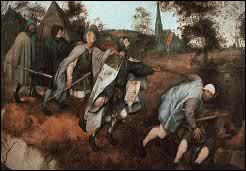
“Let them alone: they be blind leaders of the blind. And if the
blind lead the blind, both shall fall into the ditch.” – Matthew, 15:14.
The phrase comes out of a society and historic period in which the sight of the sighted leading the blind must have been no uncommon thing, just as glaucoma, the effect of parasites, the wear and tear of age, and the clinamen of the genetic arc must have sprinkled the blind and nearsighted over the landscape pretty abundantly. Jesus’ saying has a characteristic starkness – it is in the decisiveness of his inversions and metaphors that one feels the messianic impulse, the making of the first last and the last first. Brueghel’s painting, which multiplies the number of the blind into a small band, much like the bands of beggars one would encounter in the war ravaged low country during the long Dutch revolt against the Spanish, thrusts upon the observer the utter violence of Jesus' phrase. Yet the observer is himself in a peculiar position: he is at the point where, in effect, he is catching the stumbling leader of the pack -- putting him, the observer, the one outside the picture, in the ditch.
But here's what Jesus didn't imagine. Jesus didn’t imagine was that the blind would demand to be lead by the blind, and only the blind. This is an American refinement on stupidity. LI is its prophet.
For an entertaining glimpse into the blind demanding blind leaders and deeper ditches, LI suggests reading the WAPO Q and A with Thomas Ricks, the author of two WAPO articles criticizing the American military strategy in Iraq for being… oh, I suppose the term is disastrous. The articles are derived from Ricks’ book, Fiasco. Here’s the first question:
“Scottsdale, Ariz.: I have not yet read your book. However, just from the titles of your articles, the tone is negative, negative, negative. What has the US and its military done RIGHT..not just tactical activities but strategic decisions and events? In the profession of journalism today, can a journalist be positive and not be viewed by their peers as a cheerleader, or must all critical reviews be critical?”
That is indeed what we need to know. We need more blindness, deeper darkness, another level of hell. And Ricks is well aware of this. Far be it from him to act the part of the sighted. He rushes here, as throughout the Q and A session, to assure all and sundry that far from being gifted with 20/20 vision, he is loyally, absolutely stone blind, blinder than most:
Tom Ricks: “To turn to the first question, from Scottsdale. I think this is a good way to start. Why write a book called "FIASCO" about Iraq.
The short answer is: because I want to win in Iraq. I don't know a lot of officers who think the current posture is sustainable, especially as the chaos continues in Baghdad. But I still think it is possible to win in Iraq, if we get better at recognizing mistakes and adjust better and faster.”
Of course. He wants to win. Win win win. America is about winning. We’re winning all the time. Not losing. Not a debt ridden, addled empire with a load of half educated barbarians, led by a corrupt oil man and his crony, a perpetually adolescent ignoramus who is in it for the superman suit (or the Mission Accomplished suit) that he always imagines himself wearing.
So Ricks wants us to win. So reassuring. Except … questioner no. 2, you are on line:
“Washington, D.C.: Your first answer (..because I want to win in Iraq) illustrates the problem that has plaqued this war from the outset, i.e. what constitutes "winning", and how has whatever was originally intended as constituting winning, changed over time?
Tom Ricks: Thanks. You put your finger on an important question.
I think we could win in the sense of prevailing. But it would not look like victories in some other wars. In this war, for example, it would be a victory if, say, a leading insurgent agreed to put down his weapon and become, say, minister of agriculture.”
So that is what winning is about. It isn’t winning, it is prevailing. And it isn’t prevailing, it is about getting an insurgent to become, say, minister of agriculture. So, uh, what is the cost of this marvelous victory that we must achieve, come hell or high water?
“Salina, Kan.: You did a great job on "Meet the Press." In your opinion, how much longer will our troops be in Iraq?
Tom Ricks: I would bet a loooong time. Maybe 10 to 15 years.”
So, our amazing victory, our win win proposition here, is that we spend between 2 to 3 trillion dollars and lose around 20,000 soldiers, and (sorry to even mention it, it is so unimportant) participate in killing around 300,000 Iraqis so that we can get an insurgent to put down his gun to become, say, minister of agriculture.
Is this wonderful news or what? Ricks is right, this wouldn’t look like victories in other wars – it would look exactly like the worst defeat ever suffered by the U.S. Even worse than Vietnam, being a magnitude more senseless. In fact, the win win policy and the lose everything policy pleasingly converge in one policy – the policy of feeding the War Culture. Thus, the governing class moves from triumph to triumph, or ditch to ditch if you will, each ditch getting bloodier and more expensive, as the jerkwater crowd out there, Bush’s base (a word that, translated into Arabic, comes out – al qaeda) lynches those who can see, rooting them out wherever they are. Remember though – their kids, the children of WAPO writers, their think tank and lobbyist cronies, all the meritocratic idiots, will go to great colleges and get the great jobs they so richly deserve, whereas your kids – well, sorry about that, but if they are patriots they will throw themselves headfirst in the meat grinder. So that we can win!
But what I think is that sometimes, when the blind form an occupying army in, say, D.C., with blind paramilitaries in the hinterlands, that it is alright to resist them. For I come not to bring peace, but the sword – as somebody once said. These people will not be voted out, for these people are on both sides, Blind party one vs. Blind party two. It is other decisions at the grassroots level – talking to friends about Iraq, pointing out the uselessness of fighting there, supporting anti-recruitment efforts, seeing if there are anti-recruiters in your town, etc., etc. – that will knock the block of this vile contingent.
dogs, considered philosophically
I usually comment on Long Sunday symposiums, but a symposium on democracy is a little bit too much like high school civics class book reports for me. I think those guys are, at the moment, symposiumed out.
Since these are the dog days of summer, the time when, traditionally, LI’s financial life passes before our eyes – summer is Motha Hubbard bare indeed around here – we are more interested in the philosophical topic of the dog. As in – when you walk a dog, whose free will is exercised, yours or the pooch’s? And does this depend on the size of the dog? We’ve been reading Roger Grenier’s The Difficulty of Being a Dog (we have a sideline interest in the literature devoted to dogs, from Cervantes Colloquy to Ackerley’s My Dog Tulip). Grenier’s first essay, enigma, begins with a nice anecdote about Paul Valery. It seems that when people would come to see Paul Valery’s grave, the man who ran the cemetery would tell his dog, “Paul Valery,” and the dog would guide them to the sacred spot. The Ministry of culture caught wind of this, and finally decided (no doubt after several meetings and memos), that the man would have to cut it out. Grenier, who knew Valery, says that in all probability Valery would have liked his grave stone being tour guided by a dog. And after all, in all probability, the dog knew as much about Valery’s poems as the man did.
My own experience has not been with genius dogs, but I’ve known some bright ones. Bliss, my friend S’s dog, is a personable mongrel bitch who can cast the slyest glances, so that it is impossible not to wonder what she is thinking. In fact, thinking is the question monomaniac philosophers always put to the animal kind – can you think? However, dogs make you wonder, instead: what are you thinking about? What, for instance, does a dog plan to do when it gets up in the morning? What, in fact, is a morning to a dog? I have a feeling their divisions of time aren't like ours -- where I see day and night, I imagine the dog sees other divisions of the natural flow. However, I do know that, like me, Bliss’ first thought is to pee. The arrangements that lead to relief, for Bliss, are a bit more complex than my matitudinal stagger towards the toilet. A ritual has evolved. S. must find the leash. She has to find the poop bags. Bliss helpfully either points to the door, or sometimes goes down to nose it.
Now, once the walk has begun, if it is a nice day, surely the dog plans to not only take care of her natural functions, but make the round of her favorite places. Dogs get bored, but they are also compulsive creatures, always wanting the same thing. Also, she looks for messages in the dirt and grass, odors left by other dogs, or humans, or cats. There’s an itinerary. So the plan is to go through with the itinerary, then back to the house. But some would say that dogs don’t plan at all, even though they are clearly leading on the leash. But then, these same people would probably bridle at saying dogs improvise. So in general, I don’t pay attention to those people. It is recommended that they content themselves, if they feel the need for pets, with guppies. Goldfish. A few bottom feeders. Generally, this kind of backbiter and sceptic is sniffed out by dogs straightaway, and barked down the street when they pass. Unhappy sods.
Grenier writes: When I’m in the prescence of a dog, I always ask myself a lot of questions. I may be naïve, but I’m in good company, for Paul Valery himself shared my naivete: “The animal, that inevitable enigma, is the opposite of us in its very likeness.”
And he further writes:
“How can such an understanding exist between two species? I t seems more miraculous, more precious to me than any relationship among humans. At the same time, what could be easier? You come across a dog. A word, a caress, and it responds with no further ado. It is the mystery of these exchanges that led me to write this book. But I know it will resolve nothing and that dogs will never cease to amaze me.”
I must recommend the University of Chicago Press cover of the book – the dog on it looks amazingly like Bliss.
Since these are the dog days of summer, the time when, traditionally, LI’s financial life passes before our eyes – summer is Motha Hubbard bare indeed around here – we are more interested in the philosophical topic of the dog. As in – when you walk a dog, whose free will is exercised, yours or the pooch’s? And does this depend on the size of the dog? We’ve been reading Roger Grenier’s The Difficulty of Being a Dog (we have a sideline interest in the literature devoted to dogs, from Cervantes Colloquy to Ackerley’s My Dog Tulip). Grenier’s first essay, enigma, begins with a nice anecdote about Paul Valery. It seems that when people would come to see Paul Valery’s grave, the man who ran the cemetery would tell his dog, “Paul Valery,” and the dog would guide them to the sacred spot. The Ministry of culture caught wind of this, and finally decided (no doubt after several meetings and memos), that the man would have to cut it out. Grenier, who knew Valery, says that in all probability Valery would have liked his grave stone being tour guided by a dog. And after all, in all probability, the dog knew as much about Valery’s poems as the man did.
My own experience has not been with genius dogs, but I’ve known some bright ones. Bliss, my friend S’s dog, is a personable mongrel bitch who can cast the slyest glances, so that it is impossible not to wonder what she is thinking. In fact, thinking is the question monomaniac philosophers always put to the animal kind – can you think? However, dogs make you wonder, instead: what are you thinking about? What, for instance, does a dog plan to do when it gets up in the morning? What, in fact, is a morning to a dog? I have a feeling their divisions of time aren't like ours -- where I see day and night, I imagine the dog sees other divisions of the natural flow. However, I do know that, like me, Bliss’ first thought is to pee. The arrangements that lead to relief, for Bliss, are a bit more complex than my matitudinal stagger towards the toilet. A ritual has evolved. S. must find the leash. She has to find the poop bags. Bliss helpfully either points to the door, or sometimes goes down to nose it.
Now, once the walk has begun, if it is a nice day, surely the dog plans to not only take care of her natural functions, but make the round of her favorite places. Dogs get bored, but they are also compulsive creatures, always wanting the same thing. Also, she looks for messages in the dirt and grass, odors left by other dogs, or humans, or cats. There’s an itinerary. So the plan is to go through with the itinerary, then back to the house. But some would say that dogs don’t plan at all, even though they are clearly leading on the leash. But then, these same people would probably bridle at saying dogs improvise. So in general, I don’t pay attention to those people. It is recommended that they content themselves, if they feel the need for pets, with guppies. Goldfish. A few bottom feeders. Generally, this kind of backbiter and sceptic is sniffed out by dogs straightaway, and barked down the street when they pass. Unhappy sods.
Grenier writes: When I’m in the prescence of a dog, I always ask myself a lot of questions. I may be naïve, but I’m in good company, for Paul Valery himself shared my naivete: “The animal, that inevitable enigma, is the opposite of us in its very likeness.”
And he further writes:
“How can such an understanding exist between two species? I t seems more miraculous, more precious to me than any relationship among humans. At the same time, what could be easier? You come across a dog. A word, a caress, and it responds with no further ado. It is the mystery of these exchanges that led me to write this book. But I know it will resolve nothing and that dogs will never cease to amaze me.”
I must recommend the University of Chicago Press cover of the book – the dog on it looks amazingly like Bliss.
Sunday, July 23, 2006
our bright and shining lie in Iraq - or, stabbing this war in the back, let me count the ways
First, a beggin’ preface: anyone who has been thinking about supporting LI should do it in these dog months. Keep us up with the phone and electric bills, and we will keep writing the bad trip prose that makes reading this site as pleasurable as a visit to a cold fingered proctologist! Check out the pay pal button.
Now, onto today’s s…s…s…schmatter – which is this WAPO article by Thomas Ricks, analyzing the American military failure in Iraq. Ricks details the chronicle of errors, shadowing, all unconsciously, the LI storyline. We are happy to report that he actually captures a few home truths. Unfortunately, at the moment he’s screwed himself to the sticking point, he… unscrews himself. He can’t quite get past the one big conventional D.C. lie, the motherlode of American misadventure. In the end, he stays tamely within the precincts laid down by D.C.’s court society. Like the court society of many a past declining empire, it has crystallized around a few gross misconceptions about the world that it cannot, without dissolving itself, surrender – and which, consequently, lead it to repeat the same disaster over and over again.
What Ricks gets right is that the occupation of Iraq, enacted in spasmodic, blind bursts of violence by the occupiers, was badly designed from the get go, using maximum force when maximum finesse was required. The proconsuls never understood that the advantage, in a state where a certain language is spoken and certain cultural norms adhere, is to the native. Especially when the natives can manufacture IEDs with ease, the world having been flooded for fifty years by the American and European weapons makers to the extent that it is more likely some ravaged area of the planet will run out of food than out of automatic rifles. Plus, having major stockpiles of weapons that the occupying force is too stretched to really guard allows for stop n go resupply.
The specific, personal root of the American malfunction was in the Pentagon. Rumsfeld and General Tommy Franks, between the two of them, have been the worst duo to hit the military since McLellan and Edwin Stanton managed to bungle a simple advance with overwhelming force through the Virginia countryside in the spring of 1862. Franks makes Westmoreland’s tenure as chief of the Joint Chiefs of Staff look like the Golden Age. Franks is the General who couldn’t fight. Luckily for Franks, America spends a trillion dollars every four years – and now, every two – on creating a monster battle machine. A three year old couldn’t go wrong, in classic battle field conditions, with that thing. Unfortunately, if he isn’t facing ducks all lined up in a row, as in a cheap carnee tent, Franks is nonplussed. Which is why he only acts in one way: to do more of what he has been doing. More is the alpha and omega of his military strategy. Bomb more. Use more white phosphorus. Knock down more doors. Imprison more Iraqis. Say, all the military aged men in a village.
Oh, but there is one limit – no more troops, of course. Ass licking Rumsfeld on the troops issue is the first bullet point on the Chief of the JCS job description.
As for Rumsfeld, by now we know the old story. Rumsfeld is insane.
So Ricks rehearses the mistakes made by the occupiers as though it were a clinical study in classical compulsive disorder – which it is. They overreact and retreat. An insufficient force using its technological advantage to, basically, stir up shit.
“"When you're facing a counterinsurgency war, if you get the strategy right, you can get the tactics wrong, and eventually you'll get the tactics right," said retired Army Col. Robert Killebrew, a veteran of Special Forces in the Vietnam War. "If you get the strategy wrong and the tactics right at the start, you can refine the tactics forever, but you still lose the war. That's basically what we did in Vietnam."
"For the first 20 months or more of the American occupation in Iraq, it was what the U.S. military would do there, as well.
""What you are seeing here is an unconventional war fought conventionally," a Special Forces lieutenant colonel remarked gloomily one day in Baghdad as the violence intensified. The tactics that the regular troops used, he added, sometimes subverted American goals.”
B..bb…but just as you think Ricks is creeping up on the unwritten truth of the matter, the heart of what has gone wrong in Iraq, (a symptom of the political compromise between a metastasizing war culture and the credit card lifestyle in Uncle Sam’s green and pleasant land), he bogles it.
"“The U.S. military took a different approach in Iraq. It wasn't indiscriminate in its use of firepower, but it tended to look upon it as good, especially during the big counteroffensive in the fall of 2003, and in the two battles in Fallujah the following year.
"One reason for that different approach was the muddled strategy of U.S. commanders in Iraq. As civil affairs officers found to their dismay, Army leaders tended to see the Iraqi people as the playing field on which a contest was played against insurgents. In Galula's view [Galula wrote a counterinsurgency handbook], the people are the prize.
""The population . . . becomes the objective for the counterinsurgent as it was for his enemy," he wrote.
"From that observation flows an entirely different way of dealing with civilians in the midst of a guerrilla war. "Since antagonizing the population will not help, it is imperative that hardships for it and rash actions on the part of the forces be kept to a minimum," Galula wrote.
"Cumulatively, the American ignorance of long-held precepts of counterinsurgency warfare impeded the U.S. military during 2003 and part of 2004. Combined with a personnel policy that pulled out all the seasoned forces early in 2004 and replaced them with green troops, it isn't surprising that the U.S. effort often resembled that of Sisyphus, the king in Greek legend who was condemned to perpetually roll a boulder up a hill, only to have it roll back down as he neared the top.”
This misses the bloody crux, the structure, the very moral economy of the American way of warfare. If forces are kept to a minimum and if force is proportioned to some threshold point beyond which you antagonize the population, you will, inevitably, suffer much higher casualties. If American soldiers winnow through a village, looking only for insurgents, they are much likely to be injured or killed than if they plow through the village in the balls out, mega-American way. And the soldiers know that. The American soldier has been trained to think that the preservation of his life is the prime objective. He has been raised in the spirit of McLellan, and advances with the firepower of Grant, which is why America always wins the wars that it loses. This is why the American soldier is good in a battlefield situation such as presented itself in WWII, or in the First Gulf War, and entirely sucks at counterinsurgency. And will always suck. Because the higher risk brings with it the question: what am I doing here? Since American interests have nothing to do with the Iraq war – it was commenced and continued solely to serve the vanity of a small D.C. clique – the only way to keep waging it as what it is in reality – the usurpation of American forces for mercenary purposes on the part of a power mad executive – is to wage it with as few American deaths as possible. The Bush doctrine converges with the Powell doctrine – overwhelming force = lucrative contracts to war contractors + lack of visible sacrifice to the Bush base.
The logic here is inexorable. Either a greater number of Americans die, or a greater number of Iraqis die. Americans have decided to pretend that the greater the number of Iraqi deaths, the more the Americans are winning. That, of course, is bullshit. Which is why the argument that the U.S. troops should stay in for humanitarian reasons is bullshit – the logic of American strategy will continue to maximize the number of Iraqi deaths, or it will have to face the repulsion of American public opinion as American deaths go racheting up. It won’t do the latter. The rulers actually fear the American population in their nasty, prolonged wars. Fear that the population doesn't want to fight. This is their worry. This is what they work at. Both parties, it goes without saying. This is what all the bogus talk about "will" is about.
They are afraid of us. Doesn't that imply that they have something to be afraid about?
Stab this war in the back.
PS - Re taking the power back -- a heartening story, in the NYT, about First Lt. Ehren K. Watada. Lt. Watada volunteered for the army after 9/11. LI has no problem with that -- quite the contrary. Unfortunately, the army that is supposed to be defending America is defending no such thing, and has ended up being illegally planted in Iraq, mainly for the purpose of providing a photogenic war for the Rebel in Chief. This came to truly bug Lt. Watada, so much so that he has refused to deploy to Iraq, risking court martial. The NYT goes to one of the usual talking heads to give the Fix's view of the case:
"“Certainly it’s far from unusual in the annals of war for this to happen,” said Michael E. O’Hanlon, a senior fellow in military affairs at the Brookings Institution. “But it is pretty obscure since the draft ended.”
Mr. O’Hanlon said that if other officers followed suit, it would be nearly impossible to run the military. “The idea that any individual officer can decide which war to fight doesn’t really pass the common-sense test,” he said."
O'Hanlon has been no mean promoter of the Iraq war, of course. And for the Fix, that government by clique and egghead which sits on our face, it passes the common sense test to get a loser like O'Hanlon to give us his two cents about this case. In the 'meritocracy,' you never have to apologize for being wrong 100 percent of the time. No pain, a lotta gain -- that's the think tank motto. Now, O'Hanlon has consistently displayed the reasoning powers of an old baggie filled with decaying lunch meat over at the Brookings institute -- he particularly likes gathering together dubious numbers to promote the idea that Iraq is a boomin' country, full of happ happ happy participants in Bush's experiment in free enterprise. Being a war mongering pin head has won him bipartisan respect, which reason he will no doubt be happily moving into some position of responsibility in the next Democratic administration. A Beinart Democrat, a patriot, a easy chair killer.
LI, of course, stands totally behind Lt. Watada. A real hero
Now, onto today’s s…s…s…schmatter – which is this WAPO article by Thomas Ricks, analyzing the American military failure in Iraq. Ricks details the chronicle of errors, shadowing, all unconsciously, the LI storyline. We are happy to report that he actually captures a few home truths. Unfortunately, at the moment he’s screwed himself to the sticking point, he… unscrews himself. He can’t quite get past the one big conventional D.C. lie, the motherlode of American misadventure. In the end, he stays tamely within the precincts laid down by D.C.’s court society. Like the court society of many a past declining empire, it has crystallized around a few gross misconceptions about the world that it cannot, without dissolving itself, surrender – and which, consequently, lead it to repeat the same disaster over and over again.
What Ricks gets right is that the occupation of Iraq, enacted in spasmodic, blind bursts of violence by the occupiers, was badly designed from the get go, using maximum force when maximum finesse was required. The proconsuls never understood that the advantage, in a state where a certain language is spoken and certain cultural norms adhere, is to the native. Especially when the natives can manufacture IEDs with ease, the world having been flooded for fifty years by the American and European weapons makers to the extent that it is more likely some ravaged area of the planet will run out of food than out of automatic rifles. Plus, having major stockpiles of weapons that the occupying force is too stretched to really guard allows for stop n go resupply.
The specific, personal root of the American malfunction was in the Pentagon. Rumsfeld and General Tommy Franks, between the two of them, have been the worst duo to hit the military since McLellan and Edwin Stanton managed to bungle a simple advance with overwhelming force through the Virginia countryside in the spring of 1862. Franks makes Westmoreland’s tenure as chief of the Joint Chiefs of Staff look like the Golden Age. Franks is the General who couldn’t fight. Luckily for Franks, America spends a trillion dollars every four years – and now, every two – on creating a monster battle machine. A three year old couldn’t go wrong, in classic battle field conditions, with that thing. Unfortunately, if he isn’t facing ducks all lined up in a row, as in a cheap carnee tent, Franks is nonplussed. Which is why he only acts in one way: to do more of what he has been doing. More is the alpha and omega of his military strategy. Bomb more. Use more white phosphorus. Knock down more doors. Imprison more Iraqis. Say, all the military aged men in a village.
Oh, but there is one limit – no more troops, of course. Ass licking Rumsfeld on the troops issue is the first bullet point on the Chief of the JCS job description.
As for Rumsfeld, by now we know the old story. Rumsfeld is insane.
So Ricks rehearses the mistakes made by the occupiers as though it were a clinical study in classical compulsive disorder – which it is. They overreact and retreat. An insufficient force using its technological advantage to, basically, stir up shit.
“"When you're facing a counterinsurgency war, if you get the strategy right, you can get the tactics wrong, and eventually you'll get the tactics right," said retired Army Col. Robert Killebrew, a veteran of Special Forces in the Vietnam War. "If you get the strategy wrong and the tactics right at the start, you can refine the tactics forever, but you still lose the war. That's basically what we did in Vietnam."
"For the first 20 months or more of the American occupation in Iraq, it was what the U.S. military would do there, as well.
""What you are seeing here is an unconventional war fought conventionally," a Special Forces lieutenant colonel remarked gloomily one day in Baghdad as the violence intensified. The tactics that the regular troops used, he added, sometimes subverted American goals.”
B..bb…but just as you think Ricks is creeping up on the unwritten truth of the matter, the heart of what has gone wrong in Iraq, (a symptom of the political compromise between a metastasizing war culture and the credit card lifestyle in Uncle Sam’s green and pleasant land), he bogles it.
"“The U.S. military took a different approach in Iraq. It wasn't indiscriminate in its use of firepower, but it tended to look upon it as good, especially during the big counteroffensive in the fall of 2003, and in the two battles in Fallujah the following year.
"One reason for that different approach was the muddled strategy of U.S. commanders in Iraq. As civil affairs officers found to their dismay, Army leaders tended to see the Iraqi people as the playing field on which a contest was played against insurgents. In Galula's view [Galula wrote a counterinsurgency handbook], the people are the prize.
""The population . . . becomes the objective for the counterinsurgent as it was for his enemy," he wrote.
"From that observation flows an entirely different way of dealing with civilians in the midst of a guerrilla war. "Since antagonizing the population will not help, it is imperative that hardships for it and rash actions on the part of the forces be kept to a minimum," Galula wrote.
"Cumulatively, the American ignorance of long-held precepts of counterinsurgency warfare impeded the U.S. military during 2003 and part of 2004. Combined with a personnel policy that pulled out all the seasoned forces early in 2004 and replaced them with green troops, it isn't surprising that the U.S. effort often resembled that of Sisyphus, the king in Greek legend who was condemned to perpetually roll a boulder up a hill, only to have it roll back down as he neared the top.”
This misses the bloody crux, the structure, the very moral economy of the American way of warfare. If forces are kept to a minimum and if force is proportioned to some threshold point beyond which you antagonize the population, you will, inevitably, suffer much higher casualties. If American soldiers winnow through a village, looking only for insurgents, they are much likely to be injured or killed than if they plow through the village in the balls out, mega-American way. And the soldiers know that. The American soldier has been trained to think that the preservation of his life is the prime objective. He has been raised in the spirit of McLellan, and advances with the firepower of Grant, which is why America always wins the wars that it loses. This is why the American soldier is good in a battlefield situation such as presented itself in WWII, or in the First Gulf War, and entirely sucks at counterinsurgency. And will always suck. Because the higher risk brings with it the question: what am I doing here? Since American interests have nothing to do with the Iraq war – it was commenced and continued solely to serve the vanity of a small D.C. clique – the only way to keep waging it as what it is in reality – the usurpation of American forces for mercenary purposes on the part of a power mad executive – is to wage it with as few American deaths as possible. The Bush doctrine converges with the Powell doctrine – overwhelming force = lucrative contracts to war contractors + lack of visible sacrifice to the Bush base.
The logic here is inexorable. Either a greater number of Americans die, or a greater number of Iraqis die. Americans have decided to pretend that the greater the number of Iraqi deaths, the more the Americans are winning. That, of course, is bullshit. Which is why the argument that the U.S. troops should stay in for humanitarian reasons is bullshit – the logic of American strategy will continue to maximize the number of Iraqi deaths, or it will have to face the repulsion of American public opinion as American deaths go racheting up. It won’t do the latter. The rulers actually fear the American population in their nasty, prolonged wars. Fear that the population doesn't want to fight. This is their worry. This is what they work at. Both parties, it goes without saying. This is what all the bogus talk about "will" is about.
They are afraid of us. Doesn't that imply that they have something to be afraid about?
Stab this war in the back.
PS - Re taking the power back -- a heartening story, in the NYT, about First Lt. Ehren K. Watada. Lt. Watada volunteered for the army after 9/11. LI has no problem with that -- quite the contrary. Unfortunately, the army that is supposed to be defending America is defending no such thing, and has ended up being illegally planted in Iraq, mainly for the purpose of providing a photogenic war for the Rebel in Chief. This came to truly bug Lt. Watada, so much so that he has refused to deploy to Iraq, risking court martial. The NYT goes to one of the usual talking heads to give the Fix's view of the case:
"“Certainly it’s far from unusual in the annals of war for this to happen,” said Michael E. O’Hanlon, a senior fellow in military affairs at the Brookings Institution. “But it is pretty obscure since the draft ended.”
Mr. O’Hanlon said that if other officers followed suit, it would be nearly impossible to run the military. “The idea that any individual officer can decide which war to fight doesn’t really pass the common-sense test,” he said."
O'Hanlon has been no mean promoter of the Iraq war, of course. And for the Fix, that government by clique and egghead which sits on our face, it passes the common sense test to get a loser like O'Hanlon to give us his two cents about this case. In the 'meritocracy,' you never have to apologize for being wrong 100 percent of the time. No pain, a lotta gain -- that's the think tank motto. Now, O'Hanlon has consistently displayed the reasoning powers of an old baggie filled with decaying lunch meat over at the Brookings institute -- he particularly likes gathering together dubious numbers to promote the idea that Iraq is a boomin' country, full of happ happ happy participants in Bush's experiment in free enterprise. Being a war mongering pin head has won him bipartisan respect, which reason he will no doubt be happily moving into some position of responsibility in the next Democratic administration. A Beinart Democrat, a patriot, a easy chair killer.
LI, of course, stands totally behind Lt. Watada. A real hero
Saturday, July 22, 2006
petition congress and the president
While it is little enough, and I can't vouch for the organization, please sign this petition calling on the American government to call for a ceasefire in Lebanon: Democracy in Action.
American papers, ranging from mildly pro-Israel to loony tones WAPO editorial types, have presented an odd picture of the Arab world supporting Israel against Hezbollah. This is so absurd it does rival the “good news from Iraq” meme, that sturdy craft of lies and bullshit, that has been afloat these last three years.
The Financial Times, more shrewdly, notes: “events in Lebanon have served as a reminder of how quickly Washington can drop an Arab ally - in this case the Siniora-led government in Beirut - when Israel's "right to self-defence" is at play.”
In fact, beyond the war crime committed by bombing a civilian population and targeting Lebanese infrastructure – beyond the fact, staring anyone in the face, that Israel has chosen a small provocation to launch a war against Lebanon - Israel’s attempt to destroy its neighbor and Bush’s nursing of the Israeli enterprise is going to bring grief down on both the U.S. and Israel. As Israel goes into next week, massacring Shiites in Lebanon, U.S. soldiers are going to be sitting ducks in Iraq. And to expect Arab allies of the U.S. to weather this, an event tailor made to showcase Iranian strength and Gulf monarchy weakness, is just the kind of non-calculation – just the kind of blind stupidity that the Bush administration will long be known for, in story and song.
“Jordan and Egypt, the only Arab states formally at peace with Israel, have both issued measured criticism of Israel's devastation of Lebanon, but it was only yesterday that two Arab governments delivered stronger condemnations. Iraqi prime minister Nuri al-Maliki described the Israeli offensive as "operations of mass destruction" while the Saudi defence minister, Prince Sultan bin Abdul-Aziz, said: "We cannot tolerate that Israel plays with the lives of citizens, civilians, women, old people and children."
“What has been new is that along with Saudi Arabia, Jordan and Egypt also blamed Hizbollah, and indirectly its Syrian and Iranian backers, for stirring a tiger with destabilising consequences for all.”
Israel is also going to lose in the U.S. Israel is generally a popular country for Americans. But the photogenic, mad bombing, and the fact that the bombed, this time, sometimes speak English into the tv set and are wearing shorts and ties and business suits, is going to make this different. Killing black robed hadji in Iraq doesn’t bother the Yankees, but killing people who look like Yankees does. This is obvious from the greatest poem to come from the Iraq war so far, the immortal Hadji girl:
“Her brother and her father shouted…
Dirka Dirka Mohammed Jihad
Sherpa Sherpa Bak Allah
They pulled out their AKs so I could see
... So I grabbed her little sister and pulled her in front of me.
As the bullets began to fly
The blood sprayed from between her eyes
And then I laughed maniacally
Then I hid behind the TV
And I locked and loaded my M-16
And I blew those little fuckers to eternity.
And I said…
Dirka Dirka Mohammed Jihad
Sherpa Sherpa Bak Allah
They should have known they were fucking with a Marine.”
A song that says it all.
But the little sisters who are getting blasted in Tyre and Beirut sometimes are wearing shorts and flip flops, and that is sure to reach even into the damaged humanity of the zombie hordes of the Bush culture.
The Financial Times, more shrewdly, notes: “events in Lebanon have served as a reminder of how quickly Washington can drop an Arab ally - in this case the Siniora-led government in Beirut - when Israel's "right to self-defence" is at play.”
In fact, beyond the war crime committed by bombing a civilian population and targeting Lebanese infrastructure – beyond the fact, staring anyone in the face, that Israel has chosen a small provocation to launch a war against Lebanon - Israel’s attempt to destroy its neighbor and Bush’s nursing of the Israeli enterprise is going to bring grief down on both the U.S. and Israel. As Israel goes into next week, massacring Shiites in Lebanon, U.S. soldiers are going to be sitting ducks in Iraq. And to expect Arab allies of the U.S. to weather this, an event tailor made to showcase Iranian strength and Gulf monarchy weakness, is just the kind of non-calculation – just the kind of blind stupidity that the Bush administration will long be known for, in story and song.
“Jordan and Egypt, the only Arab states formally at peace with Israel, have both issued measured criticism of Israel's devastation of Lebanon, but it was only yesterday that two Arab governments delivered stronger condemnations. Iraqi prime minister Nuri al-Maliki described the Israeli offensive as "operations of mass destruction" while the Saudi defence minister, Prince Sultan bin Abdul-Aziz, said: "We cannot tolerate that Israel plays with the lives of citizens, civilians, women, old people and children."
“What has been new is that along with Saudi Arabia, Jordan and Egypt also blamed Hizbollah, and indirectly its Syrian and Iranian backers, for stirring a tiger with destabilising consequences for all.”
Israel is also going to lose in the U.S. Israel is generally a popular country for Americans. But the photogenic, mad bombing, and the fact that the bombed, this time, sometimes speak English into the tv set and are wearing shorts and ties and business suits, is going to make this different. Killing black robed hadji in Iraq doesn’t bother the Yankees, but killing people who look like Yankees does. This is obvious from the greatest poem to come from the Iraq war so far, the immortal Hadji girl:
“Her brother and her father shouted…
Dirka Dirka Mohammed Jihad
Sherpa Sherpa Bak Allah
They pulled out their AKs so I could see
... So I grabbed her little sister and pulled her in front of me.
As the bullets began to fly
The blood sprayed from between her eyes
And then I laughed maniacally
Then I hid behind the TV
And I locked and loaded my M-16
And I blew those little fuckers to eternity.
And I said…
Dirka Dirka Mohammed Jihad
Sherpa Sherpa Bak Allah
They should have known they were fucking with a Marine.”
A song that says it all.
But the little sisters who are getting blasted in Tyre and Beirut sometimes are wearing shorts and flip flops, and that is sure to reach even into the damaged humanity of the zombie hordes of the Bush culture.
Thursday, July 20, 2006
Calasso's perpetual war
Continuing the line of thought from our last post….
There’s an essay by Arthur Machen about a spiritualist who surprises himself by successfully conjuring up a dead spirit. Looking at the vision he has been pursuing, the spiritualist feels a hand go through him, which does not press his physical organs so much as it squeezes something unknown – his very soul. This contact proves to be so overwhelming that the spiritualist never again tries to conjure up a spirit.
Well, LI can’t claim to have experienced anything that grotesquely metaphysical when we read Roberto Calasso’s essay, Perpetual War, but we did feel contacted. The essay is about Kraus’ “The Last Days of Mankind.” This is a five hundred page play, an epic theater event never, actually, staged. Kraus wrote it during World War I, and read from it in lecture halls. Elias Canetti, among others, has described the fevered atmosphere that surrounded Kraus in the twenties at those readings.
Calasso’s essay does a number of brilliant things. For instance, Calasso shows how a modern version of stupidity intersects with the modern project of building an all encompassing war culture. Bêtise was the obsession of three modern authors in particular – its anti-evangelists: Flaubert, Leon Bloy, and Kraus. Readers of LI will recognize these as the patron saints of this site, although we maintain a more extensive hagiology – we throw in Peguy, the Shaw of the prefaces, Nietzsche, Marx and Engels (in their political journalism). In particular, Engels phrase, “the official legend,” which I find so much more useful than the term “ideology” to talk about the system of modern unintelligence. The official legend is where the marriage of betise and war is officially sealed. While it is official in the sense that the same picked over phrases from it occur over and over in the mouths of officials, pundits, soldiers, clerks, farmers, etc., it is never codified in one place or another. It isn’t a constitution or a law. The official legend not only brings about and justifies wars, but it tells us how to think about them, and how to pretend that our peaces are different from wars. According to the official legend, wars are subordinate to states, and derived from them. You have a state, which is a separate, substantial thing – emblematically, a human body. A leviathan, or a behemoth. And then you have war, which is something that may afflict a state, the way a fever or the measles afflicts the human body. Randolph Bourne’s phrase, which plays with this idea, actually leads us out of the nets of the official legend: war is the health of the state. Health is not derived from the body – it describes the normal state of the body. The normal state of the modern state is war.
Of the three grand inquisitors of modern betise, Kraus was the one who saw most systematically, and attacked with language St. John of Patmos might have whistled at. This is how Calasso puts it: “The epiphany that dazzled Kraus is the same one tht made Flaubert’s last years compulsive and feverish: the prodigious eruption of la betise as the beginning of a new era, an era paved and cemented with it once any kind of alkahest or universal solvent had disappeared. This appalling event, from whose light most people averted their eyes, was obsessively followed and properly recorded primarily by three writers: Flaubert, Kraus, and Leon Bloy. To them we gratefully turn as pioneers of a new science, the only one where we can follow the treacherous waverings of that uninterrupted experiment-without-experimenter that is world history.”
Calasso doesn’t strictly date the West’s official legend – it is not something of which you can say, now it is here, or now it is there. But it has symbols you can date. Calasso choses the symbol of the “blood tax” – the draft – suggested in the French revolution and fully operational in the Napoleonic wars. The draft indicates what the new state will be composed of: ‘human materials,’ as Napoleon’s strategists called them. The AEC, in the plutonium experiments it performed on patients in hospitals in Rochester and Chicago, labelled them “human products.” And, in a memo of great philosophic acuity, speaking of the downwinders, the inhabitants of towns in Utah and Nevada that were sprinkled continually with radioactive fallout from the above ground bomb tests, the AEC called them a “low use population.” The low use population, that atomized mass of human product, are known, on official occasions when the lights in the sky are the results of fireworks rather than beta particle emissions, as We the people – and such sweet people too! If you read interviews with the downwinders, interspersed with the usual stories – the tongue cancer, the boy born with extruded organs and no legs, the cancer that goes from house to house in places like St. George, Utah, and systematically eliminates the young – leukemia – and the old (like, forty to fifty years old) with variously sited cancers, and produces immune deficiency and diabetes 1 and muscular disorders and sterility and the oddly born lambs and foals, you will find inhabitants who might be nursing their last tumors saying things like, we had to do the tests because the Russians did the tests. Sinking on the good ship cancer, the human product gave heartfelt thanks to the captain. Or, to speed the film up to today’s exiting news, 37% gave President Bush good or excellent marks on his presidency.
Human product or human materials, the names have an effect. Just as God’s real name is supposedly part of the essence and power of divinity, the low use population’s real name is part of the essence and power of its anti-divinity – its essence, which is shit. But do not underestimate shit! It can be drafted, taxed, and driven to the polling booth to enthusiastically vote for its own demise. As Calasso points out, the most menacing phrase in the Last Days of Mankind is “Clusters form.”
“These two little words discretely accompany us in the stage directions from the very first page, the second line to bew exact. They swell like poisonous clouds for hundreds of pages and strike us at the end… when they are spoken by the Faultfinder [Noergler, Kraus’s stand-in] to designate the throng of bystanders who want to have their pictures taken alongside the corpse of the hanged Battisti, while the jovial hangman looks on. Groups are not expressions of democratic spontaneity. Their origin is much older. Groups always form around a corpse. When there is no corpse, that place always evokes the many corpses that have been there and the many yet to appear.”
It is evidence of Kraus’ prophetic sensibility that he could have foreseen those pictures that flooded Nazi Germany during the first, good part of the war – soldiers sending home pics of rabbis used as ponies, little Jewish kids strung up in a wood, the hustle of warmly coated German soldiers under them, protecting the Reich, all of the news from the front. And, indeed, news from the front in Iraq follows this pattern – but no in real time video, with a sound track from Elvis, mercenaries having fun shooting through the windows of Iraqi cars and such, with the official law between the provisional government of Iraq and the Liberating Powers such that no force in Iraq could touch the Pentagon’s contractors.
In the official legend, circa 2006, virtue and vice depend on an exact matching of the ideal corpse-set to the dictatorship and Islamofascism, and, on the other side, to liberation – with the difference being that the corpses produced by liberatory activity, when alive, ardently desired their own splattering, evisceration, or simple bullet through the head termination. The liberation’s corpses are much like the cartoon animals you see on billboards for restaurants in Texas – smiling chickens and pigs, chuckling broadly about their stun gun and chain saw futures. They are not only aware of their own sweet and delicious meat – they want to be eaten.
To get Jenseits der Bloedsinn is no easy thing. The method adopted by the inquisitors is that of extensive quotation. As Calasso points out, perhaps half of The Last Days of Mankind consists simply of quotes. To put the written or spoken in quotation marks was Kraus’ way of damning it. In the passage that analyzes this, Calasso, to my mind, reaches a point of true sublimity. I’ll end this gloomy post with this amazing passage:
“But at the same time, since his name is hidden behind the figure of a comic character (the Faultfinder), his words are a voice that no longer belongs to him and that guarantees the life of this nonstop spectacle. Their function is like that of the blade used by Chuang-tzu’s perfect butcher, who for nineteen years used the same knife to quarter thousands of oxen. The blade never lost its edge because “I let it go through only where it can” – in the imperceptible empty interstices. And Prince Wen-hui answers the butcher: Thank you, you have taught me how to prolong one’s life, by using it only for what does not consume it.”
There’s an essay by Arthur Machen about a spiritualist who surprises himself by successfully conjuring up a dead spirit. Looking at the vision he has been pursuing, the spiritualist feels a hand go through him, which does not press his physical organs so much as it squeezes something unknown – his very soul. This contact proves to be so overwhelming that the spiritualist never again tries to conjure up a spirit.
Well, LI can’t claim to have experienced anything that grotesquely metaphysical when we read Roberto Calasso’s essay, Perpetual War, but we did feel contacted. The essay is about Kraus’ “The Last Days of Mankind.” This is a five hundred page play, an epic theater event never, actually, staged. Kraus wrote it during World War I, and read from it in lecture halls. Elias Canetti, among others, has described the fevered atmosphere that surrounded Kraus in the twenties at those readings.
Calasso’s essay does a number of brilliant things. For instance, Calasso shows how a modern version of stupidity intersects with the modern project of building an all encompassing war culture. Bêtise was the obsession of three modern authors in particular – its anti-evangelists: Flaubert, Leon Bloy, and Kraus. Readers of LI will recognize these as the patron saints of this site, although we maintain a more extensive hagiology – we throw in Peguy, the Shaw of the prefaces, Nietzsche, Marx and Engels (in their political journalism). In particular, Engels phrase, “the official legend,” which I find so much more useful than the term “ideology” to talk about the system of modern unintelligence. The official legend is where the marriage of betise and war is officially sealed. While it is official in the sense that the same picked over phrases from it occur over and over in the mouths of officials, pundits, soldiers, clerks, farmers, etc., it is never codified in one place or another. It isn’t a constitution or a law. The official legend not only brings about and justifies wars, but it tells us how to think about them, and how to pretend that our peaces are different from wars. According to the official legend, wars are subordinate to states, and derived from them. You have a state, which is a separate, substantial thing – emblematically, a human body. A leviathan, or a behemoth. And then you have war, which is something that may afflict a state, the way a fever or the measles afflicts the human body. Randolph Bourne’s phrase, which plays with this idea, actually leads us out of the nets of the official legend: war is the health of the state. Health is not derived from the body – it describes the normal state of the body. The normal state of the modern state is war.
Of the three grand inquisitors of modern betise, Kraus was the one who saw most systematically, and attacked with language St. John of Patmos might have whistled at. This is how Calasso puts it: “The epiphany that dazzled Kraus is the same one tht made Flaubert’s last years compulsive and feverish: the prodigious eruption of la betise as the beginning of a new era, an era paved and cemented with it once any kind of alkahest or universal solvent had disappeared. This appalling event, from whose light most people averted their eyes, was obsessively followed and properly recorded primarily by three writers: Flaubert, Kraus, and Leon Bloy. To them we gratefully turn as pioneers of a new science, the only one where we can follow the treacherous waverings of that uninterrupted experiment-without-experimenter that is world history.”
Calasso doesn’t strictly date the West’s official legend – it is not something of which you can say, now it is here, or now it is there. But it has symbols you can date. Calasso choses the symbol of the “blood tax” – the draft – suggested in the French revolution and fully operational in the Napoleonic wars. The draft indicates what the new state will be composed of: ‘human materials,’ as Napoleon’s strategists called them. The AEC, in the plutonium experiments it performed on patients in hospitals in Rochester and Chicago, labelled them “human products.” And, in a memo of great philosophic acuity, speaking of the downwinders, the inhabitants of towns in Utah and Nevada that were sprinkled continually with radioactive fallout from the above ground bomb tests, the AEC called them a “low use population.” The low use population, that atomized mass of human product, are known, on official occasions when the lights in the sky are the results of fireworks rather than beta particle emissions, as We the people – and such sweet people too! If you read interviews with the downwinders, interspersed with the usual stories – the tongue cancer, the boy born with extruded organs and no legs, the cancer that goes from house to house in places like St. George, Utah, and systematically eliminates the young – leukemia – and the old (like, forty to fifty years old) with variously sited cancers, and produces immune deficiency and diabetes 1 and muscular disorders and sterility and the oddly born lambs and foals, you will find inhabitants who might be nursing their last tumors saying things like, we had to do the tests because the Russians did the tests. Sinking on the good ship cancer, the human product gave heartfelt thanks to the captain. Or, to speed the film up to today’s exiting news, 37% gave President Bush good or excellent marks on his presidency.
Human product or human materials, the names have an effect. Just as God’s real name is supposedly part of the essence and power of divinity, the low use population’s real name is part of the essence and power of its anti-divinity – its essence, which is shit. But do not underestimate shit! It can be drafted, taxed, and driven to the polling booth to enthusiastically vote for its own demise. As Calasso points out, the most menacing phrase in the Last Days of Mankind is “Clusters form.”
“These two little words discretely accompany us in the stage directions from the very first page, the second line to bew exact. They swell like poisonous clouds for hundreds of pages and strike us at the end… when they are spoken by the Faultfinder [Noergler, Kraus’s stand-in] to designate the throng of bystanders who want to have their pictures taken alongside the corpse of the hanged Battisti, while the jovial hangman looks on. Groups are not expressions of democratic spontaneity. Their origin is much older. Groups always form around a corpse. When there is no corpse, that place always evokes the many corpses that have been there and the many yet to appear.”
It is evidence of Kraus’ prophetic sensibility that he could have foreseen those pictures that flooded Nazi Germany during the first, good part of the war – soldiers sending home pics of rabbis used as ponies, little Jewish kids strung up in a wood, the hustle of warmly coated German soldiers under them, protecting the Reich, all of the news from the front. And, indeed, news from the front in Iraq follows this pattern – but no in real time video, with a sound track from Elvis, mercenaries having fun shooting through the windows of Iraqi cars and such, with the official law between the provisional government of Iraq and the Liberating Powers such that no force in Iraq could touch the Pentagon’s contractors.
In the official legend, circa 2006, virtue and vice depend on an exact matching of the ideal corpse-set to the dictatorship and Islamofascism, and, on the other side, to liberation – with the difference being that the corpses produced by liberatory activity, when alive, ardently desired their own splattering, evisceration, or simple bullet through the head termination. The liberation’s corpses are much like the cartoon animals you see on billboards for restaurants in Texas – smiling chickens and pigs, chuckling broadly about their stun gun and chain saw futures. They are not only aware of their own sweet and delicious meat – they want to be eaten.
To get Jenseits der Bloedsinn is no easy thing. The method adopted by the inquisitors is that of extensive quotation. As Calasso points out, perhaps half of The Last Days of Mankind consists simply of quotes. To put the written or spoken in quotation marks was Kraus’ way of damning it. In the passage that analyzes this, Calasso, to my mind, reaches a point of true sublimity. I’ll end this gloomy post with this amazing passage:
“But at the same time, since his name is hidden behind the figure of a comic character (the Faultfinder), his words are a voice that no longer belongs to him and that guarantees the life of this nonstop spectacle. Their function is like that of the blade used by Chuang-tzu’s perfect butcher, who for nineteen years used the same knife to quarter thousands of oxen. The blade never lost its edge because “I let it go through only where it can” – in the imperceptible empty interstices. And Prince Wen-hui answers the butcher: Thank you, you have taught me how to prolong one’s life, by using it only for what does not consume it.”
Wednesday, July 19, 2006
American stupidity -- let me count the ways
GOP lawmakers, meanwhile, appear to be lining up closely with the president on foreign policy. It has not helped the neoconservative case, perhaps, that the occupation of Iraq has not gone as smoothly as some had predicted. – Charles Babbington, Washington Post, Conservative Anger Grows Over Bush's Foreign Policy
“The American energy secretary, Samuel W. Bodman, who met with Iraq’s oil and electricity ministers in Baghdad, had a rosy view of progress here since his last visit in 2003.
“The situation seems far more stable than when I was here two or three years ago,” he said in an interview in the fortified Green Zone. “The security seems better, people are more relaxed. There is an optimism, at least among the people I talked to.””
...
“United Nations officials said Tuesday that the number of violent deaths had climbed steadily since at least last summer. During the first six months of this year, the civilian death toll jumped more than 77 percent, from 1,778 in January to 3,149 in June, the organization said.”
- Quotations from the same article, “About 20 Sunnis Are Kidnapped in Baghdad”-
How does one face the enormity of an intelligence that has the scope of a housefly’s stuffed into a colossus the size of a continent? Hows does one grasp something that is as awesome, as hideous, as farcical as American stupidity –the right and real stuff, the strategy behind the atom bomb and the Hummer, the third, impossible division of the American brain - neither left nor right, but an as yet undiscovered dimension, somewhere between Miracle Whip and the world’s biggest human turd?
Here’s what Robert Calasso said about Karl Kraus:
"Kraus’ fundamental experience was acoustic, and it was constantly repeated. Like Hildegarde von Bingen, Angela da Foligno, and many anonymous schizophrenics, he heard voices, but the voices were all the more alarming since they had bodies, circulated in the streets of Vienna, seated themselves in cafes and even put on affable smiles. The inflections beat on him like waves; their deadly horde provided the most faithful company for his “threefold solitude: that of the coffeehouse, where he is alone with his enemy, of the nocturnal room where he is alone with his demon, of the lecture hall where he is alone with his work.”
LI has his own threefold solitude. The enemy is met not in the coffeehouse but on a cheap dialup internet connection, blinking ads; the demon is poverty and a sarcasm that has long gone to the dark side and become pathological, a real heart condition, - a speeding up of the heartbeat, a spread of heat across the chest, the signs and symptoms of demonic possession; as for the work – well, where is the work? An impossibly cheap blog, cluttered with typos, clogged with yesterday’s annulled news, various and sundry highly forgettable reviews, failed projects that have left behind snowdrifts of paper and (wait for it, Prufrock) a graphic novel, of all things.
I’ve chosen to personalize the affront given to intelligence by American stupidity, which is rather like trying to personalize entering the Empire State Building, or entering your local shopping mall. It is doomed to failure – for if it succeeded even once, it would transform that stupidity into something else. The housefly thinks, cogito, ergo Musca domestica sum. But no, the default settings for stupidity are such that the bland language, or language substitute, used by our Energy secretary, and the formulas of WAPO’s ace reporter, Charles Babbington, are all the same thing – they have no external referent, but go on in a dark vacuum forever. They would hardly be real at all – but here we must concede that experiment has shown them to be real. The experiment of, for instance, the three thousand dead in Iraq. And it is LI who is unreal, LI with the ardent wish that tonight and every night, the throngs of those dead crowd about President Bush’s bed and freeze the blood of that pissant lowlife, who has found the dead level of his own incompetence in a clueless and ever more syncophantic court society. Freeze it tonight, and tomorrow night, and tomorrow night. Freeze it eternally.
“The American energy secretary, Samuel W. Bodman, who met with Iraq’s oil and electricity ministers in Baghdad, had a rosy view of progress here since his last visit in 2003.
“The situation seems far more stable than when I was here two or three years ago,” he said in an interview in the fortified Green Zone. “The security seems better, people are more relaxed. There is an optimism, at least among the people I talked to.””
...
“United Nations officials said Tuesday that the number of violent deaths had climbed steadily since at least last summer. During the first six months of this year, the civilian death toll jumped more than 77 percent, from 1,778 in January to 3,149 in June, the organization said.”
- Quotations from the same article, “About 20 Sunnis Are Kidnapped in Baghdad”-
How does one face the enormity of an intelligence that has the scope of a housefly’s stuffed into a colossus the size of a continent? Hows does one grasp something that is as awesome, as hideous, as farcical as American stupidity –the right and real stuff, the strategy behind the atom bomb and the Hummer, the third, impossible division of the American brain - neither left nor right, but an as yet undiscovered dimension, somewhere between Miracle Whip and the world’s biggest human turd?
Here’s what Robert Calasso said about Karl Kraus:
"Kraus’ fundamental experience was acoustic, and it was constantly repeated. Like Hildegarde von Bingen, Angela da Foligno, and many anonymous schizophrenics, he heard voices, but the voices were all the more alarming since they had bodies, circulated in the streets of Vienna, seated themselves in cafes and even put on affable smiles. The inflections beat on him like waves; their deadly horde provided the most faithful company for his “threefold solitude: that of the coffeehouse, where he is alone with his enemy, of the nocturnal room where he is alone with his demon, of the lecture hall where he is alone with his work.”
LI has his own threefold solitude. The enemy is met not in the coffeehouse but on a cheap dialup internet connection, blinking ads; the demon is poverty and a sarcasm that has long gone to the dark side and become pathological, a real heart condition, - a speeding up of the heartbeat, a spread of heat across the chest, the signs and symptoms of demonic possession; as for the work – well, where is the work? An impossibly cheap blog, cluttered with typos, clogged with yesterday’s annulled news, various and sundry highly forgettable reviews, failed projects that have left behind snowdrifts of paper and (wait for it, Prufrock) a graphic novel, of all things.
I’ve chosen to personalize the affront given to intelligence by American stupidity, which is rather like trying to personalize entering the Empire State Building, or entering your local shopping mall. It is doomed to failure – for if it succeeded even once, it would transform that stupidity into something else. The housefly thinks, cogito, ergo Musca domestica sum. But no, the default settings for stupidity are such that the bland language, or language substitute, used by our Energy secretary, and the formulas of WAPO’s ace reporter, Charles Babbington, are all the same thing – they have no external referent, but go on in a dark vacuum forever. They would hardly be real at all – but here we must concede that experiment has shown them to be real. The experiment of, for instance, the three thousand dead in Iraq. And it is LI who is unreal, LI with the ardent wish that tonight and every night, the throngs of those dead crowd about President Bush’s bed and freeze the blood of that pissant lowlife, who has found the dead level of his own incompetence in a clueless and ever more syncophantic court society. Freeze it tonight, and tomorrow night, and tomorrow night. Freeze it eternally.
Tuesday, July 18, 2006
no goodies from this war
In the Man without Qualities, Ulrich – the man himself – staying at his father’s house after his father’s death, sits down and solves a mathematical problem that he has been working on for years. He has taken up other work, and takes up the problem as a way of passing the time. He thinks about what this means. If he publishes this, perhaps his career as a mathematician will take off, perhaps he will find a place in academia. And suddenly he thinks: I’m too old for that. For the first time, he has decided that some bold move in his life is barred by age. He is thirty five, I believe.
Myself, I think that about acid. While I enjoyed it in my twenties on rare occasions, and took it once past that equinoctal age, thirty, I’m too old for that now. Pot, alcohol, cocaine I can still take. But acid is now off the menu. So, probably, is heroin – a drug I’ve never tried, and always wanted to try.
The big biography of Timothy Leary by Robert Greenfield was released this spring. I was happy to see Louis Menand review it for the New Yorker. I’ve seen a few hippyish sites on the web comment on the bio, mainly to condemn Leary. In the end, he had so relentless sold out every member of every niche that had once formed his audience that he is regarded, pretty much, with universal disgust. Myself, I can’t get over him being a snitch. On the other hand, the legendary early years fascinate me, partly for what they say about the intersection of the Cold War culture and academia, partly because who does not dream of nibbling on mushrooms in Cuernavaca in 1962? What total fun. Exploitative, check. Probably the kind of thing that not everybody should do, check. But I envy certain moods of intoxication, certain highs: Malcolm Lowry in the same town in the thirties, for instance.
Part of the war culture was the flowering of psychology. With the country being blanketed with fallout from insane bomb tests, and scientists covering up what was wrong with that, or – alternatively – proclaiming, as Edward Teller amazingly did, that the mutations that might result from radiation would be steps on man’s evolution ever onward, it is no wonder so many people felt crazy, and ended up going to psychologists in the 50s:
“There was no more opportune moment to become a psychologist. Psychology in the nineteen-fifties played the role for many people that genetics does today. "It's all in your head" has the same appeal as "It's all in the genes": an explanation for the way things are that does not threaten the way things are. Why should someone feel unhappy or engage in antisocial behavior when that person is living in the freest and most prosperous nation on earth? It can't be the system! There must be a flaw in the wiring somewhere. So the postwar years were a slack time for political activism and a boom time for psychiatry. The National Institute of Mental Health, founded in 1946, became the fastest-growing of the seven divisions of the National Institutes of Health, awarding psychologists grants to study problems like alcoholism, juvenile delinquency, and television violence. Ego psychology, a therapy aimed at helping people adapt and adjust, was the dominant school in American psychoanalysis. By 1955, half of the hospital beds in the United States were occupied by patients diagnosed as mentally ill.”
To write about Leary, for someone like Menand, is an easy opportunity to grind out great paragraphs – and luckily, he gives into the temptation:
“Leary spent the first part of his career doing normative psychology, the work of assessment, measurement, and control; he spent the second as one of the leading proselytizers of alternative psychology, the pop psychology of consciousness expansion and nonconformity. But one enterprise was the flip side of the other, and Greenfield's conclusion, somewhat sorrowfully reached, is that Leary was never serious about either. The only things Leary was serious about were pleasure and renown. He underwent no fundamental transformation when he left the academic world for the counterculture. He liked women, he liked being the center of attention, and he liked to get high. He simply changed the means of intoxication. Like many people in those days, he started out on Burgundy but soon hit the harder stuff .“
The old war culture. Peter Beinart is doing his best to make the new war culture into the equivalent of the Cold War. This is laughable on many dimensions, not least of which is the lack of drugs:
“LSD was also administered to alcoholics, drug addicts, and patients with emotional blockages. The most famous of these patients was Cary Grant, who took LSD under the supervision of a psychiatrist. "All my life, I've been searching for peace of mind," Grant said. "Nothing really seemed to give me what I wanted until this treatment." Allen Ginsberg was introduced to LSD at the Mental Research Institute in Palo Alto, in 1959, where his responses were measured by a team of doctors as part of a federally funded research program. Ginsberg eventually became one of the chief publicists for LSD, along with Ken Kesey, who first used it at the Veterans Hospital in Menlo Park, in 1960, where, in another federally funded program, he was paid seventy-five dollars a day to ingest hallucinogens.”
That is more money than I make, for sure. All the good jobs are gone and taken!
Menand doesn't deeply understand drugs -- that is evident in his dismissive last paragraphs, which display a vulgar economic determinism that tells us little about why cocaine should have succeeded acid. But the essay does place Leary -- who is the kind of character Menand understands - very well.
Myself, I think that about acid. While I enjoyed it in my twenties on rare occasions, and took it once past that equinoctal age, thirty, I’m too old for that now. Pot, alcohol, cocaine I can still take. But acid is now off the menu. So, probably, is heroin – a drug I’ve never tried, and always wanted to try.
The big biography of Timothy Leary by Robert Greenfield was released this spring. I was happy to see Louis Menand review it for the New Yorker. I’ve seen a few hippyish sites on the web comment on the bio, mainly to condemn Leary. In the end, he had so relentless sold out every member of every niche that had once formed his audience that he is regarded, pretty much, with universal disgust. Myself, I can’t get over him being a snitch. On the other hand, the legendary early years fascinate me, partly for what they say about the intersection of the Cold War culture and academia, partly because who does not dream of nibbling on mushrooms in Cuernavaca in 1962? What total fun. Exploitative, check. Probably the kind of thing that not everybody should do, check. But I envy certain moods of intoxication, certain highs: Malcolm Lowry in the same town in the thirties, for instance.
Part of the war culture was the flowering of psychology. With the country being blanketed with fallout from insane bomb tests, and scientists covering up what was wrong with that, or – alternatively – proclaiming, as Edward Teller amazingly did, that the mutations that might result from radiation would be steps on man’s evolution ever onward, it is no wonder so many people felt crazy, and ended up going to psychologists in the 50s:
“There was no more opportune moment to become a psychologist. Psychology in the nineteen-fifties played the role for many people that genetics does today. "It's all in your head" has the same appeal as "It's all in the genes": an explanation for the way things are that does not threaten the way things are. Why should someone feel unhappy or engage in antisocial behavior when that person is living in the freest and most prosperous nation on earth? It can't be the system! There must be a flaw in the wiring somewhere. So the postwar years were a slack time for political activism and a boom time for psychiatry. The National Institute of Mental Health, founded in 1946, became the fastest-growing of the seven divisions of the National Institutes of Health, awarding psychologists grants to study problems like alcoholism, juvenile delinquency, and television violence. Ego psychology, a therapy aimed at helping people adapt and adjust, was the dominant school in American psychoanalysis. By 1955, half of the hospital beds in the United States were occupied by patients diagnosed as mentally ill.”
To write about Leary, for someone like Menand, is an easy opportunity to grind out great paragraphs – and luckily, he gives into the temptation:
“Leary spent the first part of his career doing normative psychology, the work of assessment, measurement, and control; he spent the second as one of the leading proselytizers of alternative psychology, the pop psychology of consciousness expansion and nonconformity. But one enterprise was the flip side of the other, and Greenfield's conclusion, somewhat sorrowfully reached, is that Leary was never serious about either. The only things Leary was serious about were pleasure and renown. He underwent no fundamental transformation when he left the academic world for the counterculture. He liked women, he liked being the center of attention, and he liked to get high. He simply changed the means of intoxication. Like many people in those days, he started out on Burgundy but soon hit the harder stuff .“
The old war culture. Peter Beinart is doing his best to make the new war culture into the equivalent of the Cold War. This is laughable on many dimensions, not least of which is the lack of drugs:
“LSD was also administered to alcoholics, drug addicts, and patients with emotional blockages. The most famous of these patients was Cary Grant, who took LSD under the supervision of a psychiatrist. "All my life, I've been searching for peace of mind," Grant said. "Nothing really seemed to give me what I wanted until this treatment." Allen Ginsberg was introduced to LSD at the Mental Research Institute in Palo Alto, in 1959, where his responses were measured by a team of doctors as part of a federally funded research program. Ginsberg eventually became one of the chief publicists for LSD, along with Ken Kesey, who first used it at the Veterans Hospital in Menlo Park, in 1960, where, in another federally funded program, he was paid seventy-five dollars a day to ingest hallucinogens.”
That is more money than I make, for sure. All the good jobs are gone and taken!
Menand doesn't deeply understand drugs -- that is evident in his dismissive last paragraphs, which display a vulgar economic determinism that tells us little about why cocaine should have succeeded acid. But the essay does place Leary -- who is the kind of character Menand understands - very well.
Sunday, July 16, 2006
RWG Communications
Time for an advertisement:
RWG Communications' student discount for June has now officially run out. But I will still negotiate with students who want editing and organizing of their papers. This is the latest RWG Communications letter that we send out to editors, writers, and academic associations. Readers, if you know anyone who writes and needs some help, please link them to this letter.
To whom it may concern
I am writing to inform you of a writing service especially designed to suit the needs of academics and students.
Have you been looking around for an editing service that is capable of making editing improvements that are adapted to the high and often specialized level of discourse of the discipline in which you are engaged? If so, you should contact my writing service.
In the past two years, my company, RWG Communications, has completed such projects as:
substantive editing of a book on process ontology;
substantive editing of a monograph on migration in Argentina;
substantive editing of an article on Paul Ricoeur;
substantive editing of an article on nominalism in mathematical philosophy;
substantive editing of a conference paper on scientific realism;
extensive substantive editing of a book on macroeconomics;
substantive editing of a book on supply chain management);
substantive editing of a book on Western historiography;
substantive editing of a book on symbols and consciousness;
substantive editing of a popular science book on speech dysfunctions;
a partial translation of a turn of the century Austrian linguist whose work on speech errors was used by Freud;
translation from the German of a paper on ontological proofs;
editing of a paper on semantic opacity and animal consciousness;
a translation of a German book on Japanese economics, The Basho of Economics;
I charge a competitive rate for content and copy editing, with editing per page going from $5.00 per page on up. Charges depend on the degree of editing complexity required and the number of pages.
In addition, I translate from French and German.
I have edited for a variety of writers, from business consultants to journalists to academics, located all over the world: the United States, Denmark, Argentina, Switzerland, Germany, Pakistan and Australia. In edition to editing, I have also worked as an independent journalist, publishing in the New Yorker, the Economist, the Wall Street Journal, and other magazines and newspapers. I deliver ASAP for those on short deadlines for conference papers, articles, or reports. You can link to our site, http://www.geocities.com/rogergathman/writing.html, for details about me, my editing and writing philosophy, and fees.
If this sounds of interest to you or someone you know, I’d welcome inquiries for further information.
Yours sincerely,
Roger Gathman
RWG Communications' student discount for June has now officially run out. But I will still negotiate with students who want editing and organizing of their papers. This is the latest RWG Communications letter that we send out to editors, writers, and academic associations. Readers, if you know anyone who writes and needs some help, please link them to this letter.
To whom it may concern
I am writing to inform you of a writing service especially designed to suit the needs of academics and students.
Have you been looking around for an editing service that is capable of making editing improvements that are adapted to the high and often specialized level of discourse of the discipline in which you are engaged? If so, you should contact my writing service.
In the past two years, my company, RWG Communications, has completed such projects as:
substantive editing of a book on process ontology;
substantive editing of a monograph on migration in Argentina;
substantive editing of an article on Paul Ricoeur;
substantive editing of an article on nominalism in mathematical philosophy;
substantive editing of a conference paper on scientific realism;
extensive substantive editing of a book on macroeconomics;
substantive editing of a book on supply chain management);
substantive editing of a book on Western historiography;
substantive editing of a book on symbols and consciousness;
substantive editing of a popular science book on speech dysfunctions;
a partial translation of a turn of the century Austrian linguist whose work on speech errors was used by Freud;
translation from the German of a paper on ontological proofs;
editing of a paper on semantic opacity and animal consciousness;
a translation of a German book on Japanese economics, The Basho of Economics;
I charge a competitive rate for content and copy editing, with editing per page going from $5.00 per page on up. Charges depend on the degree of editing complexity required and the number of pages.
In addition, I translate from French and German.
I have edited for a variety of writers, from business consultants to journalists to academics, located all over the world: the United States, Denmark, Argentina, Switzerland, Germany, Pakistan and Australia. In edition to editing, I have also worked as an independent journalist, publishing in the New Yorker, the Economist, the Wall Street Journal, and other magazines and newspapers. I deliver ASAP for those on short deadlines for conference papers, articles, or reports. You can link to our site, http://www.geocities.com/rogergathman/writing.html, for details about me, my editing and writing philosophy, and fees.
If this sounds of interest to you or someone you know, I’d welcome inquiries for further information.
Yours sincerely,
Roger Gathman
Saturday, July 15, 2006
"Life goes on"
This is a dark week. LI is trying to find what inspiration we can. So imagine our joy when we came across a story in the WSJ today about a class that we sometimes too carelessly insult – I’m talking about the upper management of Fortune 500 corporations.
The story, “Executive Pay: The 9/11 Factor, by Charles Forelle, James Bandler and Mark Maremont” is about the sheer patriotism of that group – its belief in America, even when times are down. Take 9/11. Stocks plummeted in the wake of 9/11. But… well, here’s the inspiring story:
“ON SEPT. 21, 2001, rescuers dug through the smoldering remains of the World Trade Center. Across town, families buried two firefighters found a week earlier. At Fort Drum, on the edge of New York's Adirondacks, soldiers readied for deployment halfway across the world.
"Boards of directors of scores of American companies were also busy that day. They handed out millions of bargain-priced stock options to their top executives.
The terrorist attack shut the U.S. stock market for days. When it reopened Sept. 17, stocks skidded more than 14% over five days, in the worst full week for the Dow Jones Industrial Average since Germany invaded France in May 1940. But for recipients of options, the lower their company's stock price when options are awarded the better, since the options grant a right to buy shares at that price for years to come. The grants set recipients up for millions of dollars in profit if the shares recovered.
"A Wall Street Journal analysis shows how some companies rushed, amid the post-9/11 stock-market decline, to give executives especially valuable options. A review of Standard & Poor's ExecuComp data for 1,800 leading companies indicates that from Sept. 17, 2001, through the end of the month, 511 top executives at 186 of these companies got stock-option grants. The number who received grants was 2.6 times as many as in the same stretch of September in 2000, and more than twice as many as in the like period in any other year between 1999 and 2003.
"Ninety-one companies that didn't regularly grant stock options in September did so in the first two weeks of trading after the terror attack. Their grants were concentrated around Sept. 21, when the market reached its post-attack low. They were worth about $325 million when granted, based on a standard method of valuing stock options. “
Faith in America – and faith in gouging Americans. They go together like chocolate and peanut butter, or Halliburton and Cheney. Even as they were weeping for compatriots lost, these company boards knew that a smash and grab opportunity like this doesn’t come around twice in a lifetime. There is a saying about the amoral opportunist that he would dance on his grandmother’s grave – but what a waste of grandmother that is! Especially when you can rent her dead body out to necrophiles and make a little of the ready.
Ah, this is a true story of the people Bush calls his base. And base, oh so base, they are, the most debased mob of knaves and thieves ever to have afflicted this country. A white collar riot, in which the rioters aren’t going to be taking cheesy tv sets and shit – that is so below par when you can rack up the extra million here and there and you are guaranteed tax advantages by a president who came in via coup. Sweet! Robber barons did many things, but one thing they did supremely: build. In contrast, this is the crowd that has utterly reduced the American manufacturing base and stands in the way of creating a green economy, in spite of the overwhelming long range necessity of it. The are a parasitical crew of pirates, more than willing to sink this country for a dime and a percentage point. And they are winning, every day. Can't you feel it, reader, in your shoulders and neck?
“The 91 companies included such corporate icons as Home Depot Inc., Black & Decker Corp. and UnitedHealth Group Inc. It included two companies directly touched by the tragedy. Merrill Lynch & Co., across the street from the Twin Towers, lost three employees. On Sept. 24, Merrill granted its president options to buy more than 750,000 shares, at a price 15% below the pre-attack level. At Teradyne Inc. in Boston, an employee delayed a business trip until Sept. 11 to attend a son's soccer game and died on American Flight 11. Teradyne that month gave its CEO more than 600,000 options at a price enabling him to buy stock at 24% below its pre-attack level.
At Stryker Corp., a Michigan maker of orthopedic products, onetime stock-option-committee member John Lillard said he didn't regret the decision to award options nine days after the attack. "If you believe the company is going to do well, and here is an external event that is affecting the market and you've made a decision to reward executives, you go ahead with it," Mr. Lillard said. "Life goes on."”
The story, “Executive Pay: The 9/11 Factor, by Charles Forelle, James Bandler and Mark Maremont” is about the sheer patriotism of that group – its belief in America, even when times are down. Take 9/11. Stocks plummeted in the wake of 9/11. But… well, here’s the inspiring story:
“ON SEPT. 21, 2001, rescuers dug through the smoldering remains of the World Trade Center. Across town, families buried two firefighters found a week earlier. At Fort Drum, on the edge of New York's Adirondacks, soldiers readied for deployment halfway across the world.
"Boards of directors of scores of American companies were also busy that day. They handed out millions of bargain-priced stock options to their top executives.
The terrorist attack shut the U.S. stock market for days. When it reopened Sept. 17, stocks skidded more than 14% over five days, in the worst full week for the Dow Jones Industrial Average since Germany invaded France in May 1940. But for recipients of options, the lower their company's stock price when options are awarded the better, since the options grant a right to buy shares at that price for years to come. The grants set recipients up for millions of dollars in profit if the shares recovered.
"A Wall Street Journal analysis shows how some companies rushed, amid the post-9/11 stock-market decline, to give executives especially valuable options. A review of Standard & Poor's ExecuComp data for 1,800 leading companies indicates that from Sept. 17, 2001, through the end of the month, 511 top executives at 186 of these companies got stock-option grants. The number who received grants was 2.6 times as many as in the same stretch of September in 2000, and more than twice as many as in the like period in any other year between 1999 and 2003.
"Ninety-one companies that didn't regularly grant stock options in September did so in the first two weeks of trading after the terror attack. Their grants were concentrated around Sept. 21, when the market reached its post-attack low. They were worth about $325 million when granted, based on a standard method of valuing stock options. “
Faith in America – and faith in gouging Americans. They go together like chocolate and peanut butter, or Halliburton and Cheney. Even as they were weeping for compatriots lost, these company boards knew that a smash and grab opportunity like this doesn’t come around twice in a lifetime. There is a saying about the amoral opportunist that he would dance on his grandmother’s grave – but what a waste of grandmother that is! Especially when you can rent her dead body out to necrophiles and make a little of the ready.
Ah, this is a true story of the people Bush calls his base. And base, oh so base, they are, the most debased mob of knaves and thieves ever to have afflicted this country. A white collar riot, in which the rioters aren’t going to be taking cheesy tv sets and shit – that is so below par when you can rack up the extra million here and there and you are guaranteed tax advantages by a president who came in via coup. Sweet! Robber barons did many things, but one thing they did supremely: build. In contrast, this is the crowd that has utterly reduced the American manufacturing base and stands in the way of creating a green economy, in spite of the overwhelming long range necessity of it. The are a parasitical crew of pirates, more than willing to sink this country for a dime and a percentage point. And they are winning, every day. Can't you feel it, reader, in your shoulders and neck?
“The 91 companies included such corporate icons as Home Depot Inc., Black & Decker Corp. and UnitedHealth Group Inc. It included two companies directly touched by the tragedy. Merrill Lynch & Co., across the street from the Twin Towers, lost three employees. On Sept. 24, Merrill granted its president options to buy more than 750,000 shares, at a price 15% below the pre-attack level. At Teradyne Inc. in Boston, an employee delayed a business trip until Sept. 11 to attend a son's soccer game and died on American Flight 11. Teradyne that month gave its CEO more than 600,000 options at a price enabling him to buy stock at 24% below its pre-attack level.
At Stryker Corp., a Michigan maker of orthopedic products, onetime stock-option-committee member John Lillard said he didn't regret the decision to award options nine days after the attack. "If you believe the company is going to do well, and here is an external event that is affecting the market and you've made a decision to reward executives, you go ahead with it," Mr. Lillard said. "Life goes on."”
Friday, July 14, 2006
the agendas: Israel vs. Hezbollah or how the mouse trap caught the cat
Yesterday’s Kagan op ed, it appears, is only the first in a flood of wargasm rhetoric in the WAPO – with today’s op ed page hosting Krauthammer and a fellow at a conservative think tank in Jerusalem, Michael Oren, as well as David Ignatius (a man for whom LI has some residual personal respect – we interviewed him, years ago, and formed a favorable judgment about him in spite of his pro-war beliefs).
LI doesn’t fully understand the motives behind Israel’s decision to go full tilt, lately, into Gaza and now into Lebanon, in response to Hamas and Hezbollah. We suspect that Michael Oren’s op ed reflects the thinking of Israel’s government:
“By eliminating the terrorist leaderships in Gaza and southern Lebanon and deterring Syria and Iran from prodding their proxies to war, Israel can restore a reasonable level of security to its citizens. Such measures will also be implicitly welcomed by Israel's Jordanian and Egyptian neighbors, who are similarly threatened by these same terrorist groups. Only by establishing a new and more stable status quo along Israel's borders can Prime Minister Ehud Olmert proceed with his plan of redrawing those borders permanently, either unilaterally or in cooperation with a nonviolent Palestinian partner.”
This is magic thinking, however. Israel has never “eliminated” terrorist leadership anywhere (and let’s not be distracted by the word ‘terrorist’ into a long detour about who is really the terrorist – LI doesn’t really care). In fact, the restoration of a “reasonable level of security” for Israel’s citizens is a curious goal, given that the insecurity they suffer from stems from Israel’s attempt to impose – unilaterally – a plan for redrawing boundaries.
By discarding graduated response, Israel is putting the U.S. in a very awkward position. After all, Hezbollah and the Dawa party running Iraq are joined by a long history of common bonds. Ignatius and Oren and Robert Fiske and other Middle Eastern reporters have developed a shorthand for talking about the Middle East in which there are the main players and the proxies. Hezbollah, for instance, is a client of Iran, or operates as Syria’s proxy. But this is very misleading. Because one party in a situation is weaker economically and politically doesn’t mean that the flow of power is unilateral from the stronger to the weaker. Israel is weaker than the U.S. by far, and has built itself up with massive amounts of U.S. aid. But it is not just a U.S. proxy. Discard the so often invoked idea of the head and the tail – the image of the beast is just that – an image.
In LI’s uninformed opinion, Hezbollah, in the late nineties, was an instrument used by reactionary forces in Iran to work against the moderates in Teheran. And the relationship between Israel and Iran, which seems to be the latent cause of Israel’s new found aggressiveness, has been determined by elements quite different from opposition to Islamic ‘radicalism.’ Trita Parsi, in an article in the June, 2005 Iranian Studies journal, “Israel-Iranian Relations Assessed: Strategic Competition from the Power Cycle Perspective”, showed that Israel supported Khomenei in the most radical phase of the Iranian revolution, operating to supply Iran with arms in its war with Iraq and only shifting to an anti-Iranian posture after the first Gulf war. If Israel were simply responding to Hezbollah’s threats, this is a curious pattern of engagement and disengagement. Parsi, however, contents that Israel is playing for dominance in the region. It is not responding to threats so much as responding from an ideology that simply sees Israel as permanently threatened as long as it does not dominate in the Middle East. In a footnote to that article, there’s a very interesting comment from a high ranking Israeli military man:
“Interview with Israeli ministry of defense official, Tel Aviv, October 18, 2004. “There is definitely a tendency in Israel [to think the worst]. . .. Today, the prevailing culture or I would say the mindset of the intelligence industry is to attribute to the enemy almost infinite power and completely underestimate what our strength means to them.”
Parsi sums up the change in Israeli policy by looking at what Rabin and Peres were saying and doing in the 80s and then in the 90s:
“The two Israeli leaders that in the early 1990s initiated a very aggressive Iran
policy pursued a diametrically opposite policy only a few years earlier. In 1987, Yitzhak Rabin argued that Iran remained an ally geo-politically.40 Shimon Peres, who sought a “broader strategic relationship with Iran,” urged President Reagan to seek a dialogue with Tehran.
"This was at the center of the “Iran-Contra” affair, in which Israel pressured the
U.S. to improve relations with Iran and sell advanced American arms to the Khomeini
regime.42 The affair was initiated by Amiram Nir, a close aid to Shimon Peres, who floated the idea of selling arms to Iran in Washington in the mid- 1980s. The idea was rejected by the State Department and the Pentagon, but it found support in National Security Council operatives Oliver North and Michael Ledeen.43 (Ledeen, a personal acquaintance of Peres, was convinced by
the Israelis to pursue a U.S. opening to Iran.44 Today, he is one of the most vocal opponents of U.S.-Iran talks and advocates a policy of regime-change in Tehran on the grounds that Iran opposes Israel’s right to exist.) Israel’s key argument was that Iran would once again become an explicit ally of the two if moderate elements in Tehran were strengthened.
This stands in stark contrast to Israel’s policy after 1992, driven again by Peres and Rabin, in which Tel Aviv rejected the very concept of “Iranian moderates” and opposed any rapprochement between the Unites States and Iran.46 Indeed, one of the questions that arose from the Iran-Contra affair was Israel’s seemingly paradoxical role in strengthening a regime that opposed Israel’s existence and Iran’s collaboration with a state that it officially sought to destroy.”
Parellel with Israel’s underground alliance with Iran, Hezbollah seems to have been in contact with Al Qaeda in the 90s, in spite of the fact that Al Qaeda acted as an occasional Einsatzgruppe against Shiites in Afghanistan and Pakistan in the same period, organizing and participating in anti-Shi’a pograms that prefigure those going on in Iraq today. LI puts the “seems” in, since all information about Hezbollah and al Qaeda has to be finely sifted, as the amount of sheer propaganda written about Al qaeda in the last five years makes it hard to get any hard facts. Still, I trust Douglas Farah’s reporting on this issue, in spite of Farah’s biases. Unfortunately, the agenda-blind never explain seeming contradictions. How could Hezbollah cooperate with al qaeda, for instance, at the same time that al qaeda was the guest of a government that massacred Shiites in Mazar-e-Sharif in 1998, in the Shamali region around 1999, around Taloquan in 2000, and in Bamiyan in 2001 – regions of Afghanistan that were of great concern to Iran, supposedly Hezbollah’s patron, all during this time? Farah, as far as I know, never discusses these facts -- which is where his Maronite sympathies betray him. On the other hand, how could the U.S. be sponsoring an Iraqi government headed by the party with the close ties to Hezbollah, too?
The LA Times has the one dissenting analysis of Hezbollah’s actions in the past week – the rest of the press is towing the Bush line, as per usual.
LI doesn’t fully understand the motives behind Israel’s decision to go full tilt, lately, into Gaza and now into Lebanon, in response to Hamas and Hezbollah. We suspect that Michael Oren’s op ed reflects the thinking of Israel’s government:
“By eliminating the terrorist leaderships in Gaza and southern Lebanon and deterring Syria and Iran from prodding their proxies to war, Israel can restore a reasonable level of security to its citizens. Such measures will also be implicitly welcomed by Israel's Jordanian and Egyptian neighbors, who are similarly threatened by these same terrorist groups. Only by establishing a new and more stable status quo along Israel's borders can Prime Minister Ehud Olmert proceed with his plan of redrawing those borders permanently, either unilaterally or in cooperation with a nonviolent Palestinian partner.”
This is magic thinking, however. Israel has never “eliminated” terrorist leadership anywhere (and let’s not be distracted by the word ‘terrorist’ into a long detour about who is really the terrorist – LI doesn’t really care). In fact, the restoration of a “reasonable level of security” for Israel’s citizens is a curious goal, given that the insecurity they suffer from stems from Israel’s attempt to impose – unilaterally – a plan for redrawing boundaries.
By discarding graduated response, Israel is putting the U.S. in a very awkward position. After all, Hezbollah and the Dawa party running Iraq are joined by a long history of common bonds. Ignatius and Oren and Robert Fiske and other Middle Eastern reporters have developed a shorthand for talking about the Middle East in which there are the main players and the proxies. Hezbollah, for instance, is a client of Iran, or operates as Syria’s proxy. But this is very misleading. Because one party in a situation is weaker economically and politically doesn’t mean that the flow of power is unilateral from the stronger to the weaker. Israel is weaker than the U.S. by far, and has built itself up with massive amounts of U.S. aid. But it is not just a U.S. proxy. Discard the so often invoked idea of the head and the tail – the image of the beast is just that – an image.
In LI’s uninformed opinion, Hezbollah, in the late nineties, was an instrument used by reactionary forces in Iran to work against the moderates in Teheran. And the relationship between Israel and Iran, which seems to be the latent cause of Israel’s new found aggressiveness, has been determined by elements quite different from opposition to Islamic ‘radicalism.’ Trita Parsi, in an article in the June, 2005 Iranian Studies journal, “Israel-Iranian Relations Assessed: Strategic Competition from the Power Cycle Perspective”, showed that Israel supported Khomenei in the most radical phase of the Iranian revolution, operating to supply Iran with arms in its war with Iraq and only shifting to an anti-Iranian posture after the first Gulf war. If Israel were simply responding to Hezbollah’s threats, this is a curious pattern of engagement and disengagement. Parsi, however, contents that Israel is playing for dominance in the region. It is not responding to threats so much as responding from an ideology that simply sees Israel as permanently threatened as long as it does not dominate in the Middle East. In a footnote to that article, there’s a very interesting comment from a high ranking Israeli military man:
“Interview with Israeli ministry of defense official, Tel Aviv, October 18, 2004. “There is definitely a tendency in Israel [to think the worst]. . .. Today, the prevailing culture or I would say the mindset of the intelligence industry is to attribute to the enemy almost infinite power and completely underestimate what our strength means to them.”
Parsi sums up the change in Israeli policy by looking at what Rabin and Peres were saying and doing in the 80s and then in the 90s:
“The two Israeli leaders that in the early 1990s initiated a very aggressive Iran
policy pursued a diametrically opposite policy only a few years earlier. In 1987, Yitzhak Rabin argued that Iran remained an ally geo-politically.40 Shimon Peres, who sought a “broader strategic relationship with Iran,” urged President Reagan to seek a dialogue with Tehran.
"This was at the center of the “Iran-Contra” affair, in which Israel pressured the
U.S. to improve relations with Iran and sell advanced American arms to the Khomeini
regime.42 The affair was initiated by Amiram Nir, a close aid to Shimon Peres, who floated the idea of selling arms to Iran in Washington in the mid- 1980s. The idea was rejected by the State Department and the Pentagon, but it found support in National Security Council operatives Oliver North and Michael Ledeen.43 (Ledeen, a personal acquaintance of Peres, was convinced by
the Israelis to pursue a U.S. opening to Iran.44 Today, he is one of the most vocal opponents of U.S.-Iran talks and advocates a policy of regime-change in Tehran on the grounds that Iran opposes Israel’s right to exist.) Israel’s key argument was that Iran would once again become an explicit ally of the two if moderate elements in Tehran were strengthened.
This stands in stark contrast to Israel’s policy after 1992, driven again by Peres and Rabin, in which Tel Aviv rejected the very concept of “Iranian moderates” and opposed any rapprochement between the Unites States and Iran.46 Indeed, one of the questions that arose from the Iran-Contra affair was Israel’s seemingly paradoxical role in strengthening a regime that opposed Israel’s existence and Iran’s collaboration with a state that it officially sought to destroy.”
Parellel with Israel’s underground alliance with Iran, Hezbollah seems to have been in contact with Al Qaeda in the 90s, in spite of the fact that Al Qaeda acted as an occasional Einsatzgruppe against Shiites in Afghanistan and Pakistan in the same period, organizing and participating in anti-Shi’a pograms that prefigure those going on in Iraq today. LI puts the “seems” in, since all information about Hezbollah and al Qaeda has to be finely sifted, as the amount of sheer propaganda written about Al qaeda in the last five years makes it hard to get any hard facts. Still, I trust Douglas Farah’s reporting on this issue, in spite of Farah’s biases. Unfortunately, the agenda-blind never explain seeming contradictions. How could Hezbollah cooperate with al qaeda, for instance, at the same time that al qaeda was the guest of a government that massacred Shiites in Mazar-e-Sharif in 1998, in the Shamali region around 1999, around Taloquan in 2000, and in Bamiyan in 2001 – regions of Afghanistan that were of great concern to Iran, supposedly Hezbollah’s patron, all during this time? Farah, as far as I know, never discusses these facts -- which is where his Maronite sympathies betray him. On the other hand, how could the U.S. be sponsoring an Iraqi government headed by the party with the close ties to Hezbollah, too?
The LA Times has the one dissenting analysis of Hezbollah’s actions in the past week – the rest of the press is towing the Bush line, as per usual.
Thursday, July 13, 2006
kagan/sade
LI was pleased to see that the Washington Post is doing something about an issue that effects us all – the erotic dreamlife of neo-cons. Rather than let daydreams of violence, torture, and death end up as the private incentives towards some covert ejaculation, the WAPO has manfully published Robert Kagan’s wet dream on its op ed page.
It begins with a “Let’s imagine,” and ends with “It’s just a theory,”- clueing us into the daydreaming nature of the column. In between there is a rich and colorful mix of those puzzling features that make up the neo-con underlife – the homo-erotic fascination with George Bush, of all people, as Superman; the ardent desire to burn brown skin, which one sees in old postcards of lynchings, and of which Kagan is the heavy breathing inheritor; and judgments about the Clinton administration that are so absurd as to be more than mildly deranged – they are definitely symptoms of the erotic role played by Clinton in the neo-con mind.
Erotic daydreaming is heavily ritualized. One returns again and again to a formula. Sade actually made the ritualization itself pornographic, in the 120 days of Sodom:
“Singulièrement mécontents de la maladresse de toutes ces petites filles dans l'art de la masturbation, impatientés de ce qu'on avait éprouvé sur cela la veille, Durcet proposa d'établir une heure dans la matinée où on leur donnerait des leçons sur cet objet, et que tour à tour un d'eux se lèverait une heure plus matin, ce moment d'exercice étant établi depuis neuf jusqu'à dix, se lèverait, dis-je, à neuf heures pour aller se prêter à cet exercice. On décida que celui qui remplirait cette fonction s'assiérait tranquillement au milieu du sérail, dans un fauteuil, et que chaque petite fille, conduite et guidée par la Duclos, la meilleure branleuse que le château renfermât, viendrait s'essayer sur lui, que la Duclos dirigerait leur main, leur mouvement, qu'elle leur apprendrait le plus ou le moins de vitesse qu'il fallait donner à leurs secousses en raison de l'état du patient, qu'elle prescrirait leurs attitudes, leurs postures pendant l'opération, et qu'on établirait des punitions réglées pour celle qui, au bout de la première quinzaine, ne réussirait point parfaitement dans cet art sans avoir plus besoin de leçons.”
Kagan, discontented by the supposed maladresse of a President who has refused to use even a petite tactical nuclear weapon on Iran, comforts himself first by recalling the dark days – yes, the Clinton days:
“Let's imagine, and this is purely hypothetical, that President Bush has already decided that he will not leave office in January 2009 without a satisfactory resolution of the Iranian nuclear problem. Let's imagine that he has already determined that if he cannot obtain Iran's agreement to dismantle its nuclear weapons program voluntarily and verifiably, then he will order some form of military action to destroy as much of that program as possible before he leaves. Let's imagine that he has resolved not to end his two terms in office the way Bill Clinton ended his, by leaving every major international crisis -- from Iraq to Iran to North Korea to al-Qaeda -- for his successor.”
The erotic lives of others are easy to laugh at. Of course, the idea that Bush, who has started an unwinnable war and has said, publicly, that he is leaving that war for his successor, won’t be like Clinton – who left Bush with a number of officials who explained Al Qaeda to him, even as Bush was eager to do some cedar choppin’ on his ranch – is obviously an erotic pretext. The famous remark about not being part of the reality based community was all about the mixture of sexual disposition and policy at the D.C. court. To succeed dans cet art, combining the right amount of friction and mental picturing, requires that one return again and again to some primal, vulnerable scene. This is the tableau of the baby and the mean mother.
Having set himself up in this way, Kagan can then imagine the seduction. The powerful, powerful rebel in chief, in this episode, is operating in a curiously non-muscular way. Is superman really a drag queen? Or is this, oh bliss, is this really superman in a new role – a man/woman, a seducer? Surely it is the latter! This is the cross dressing tableau.
“Bush would be sincere, and convincingly so. For his ideal outcome really would be a diplomatic solution in which Iran voluntarily and verifiably abandoned its program. He would know that such an outcome, in addition to benefiting the world, could completely reshape his image and ensure his legacy as a successful leader. He would also know that the military solution is fraught with danger and, indeed, could end badly. He would genuinely like to avoid it if at all possible. It really would be a last resort, to be used only when diplomacy failed. Therefore, Bush would send his diplomats out and want them to succeed. He would not be bothered by press reports that he had abandoned "cowboy diplomacy" and given in to the "realists" at the State Department.”
Superman is like that, sometimes. His member, as iron strong as always, is disguised – and not just disguised but mocked! But it is a mistake to take this as a moment of erotic depression. Rather, in the routine, this is as highly charged a moment as any other. Here one is the victim, one is beaten, one experiences the peculiar delight of a masochism that will end in mastery. As Sade knew, seduction is in and of itself a reason for discharge:
"Il y avait eu quelques changements dans la maison de Mme Guérin, [the keeper of a brothel] ... Deux très jolies filles venaient de trouver des dupes qui les entretinrent et qu'elles trompèrent comme nous faisons toutes. Pour remplacer cette perte, notre chère maman avait jeté les yeux sur la fille d'un cabaretier de la rue Saint-Denis, âgée de treize ans et l'une des plus jolies créatures qu'il fût possible de voir. Mais la petite personne, aussi sage que pieuse, résistait à toutes ses séductions, lorsque la Guérin, après s'être servie d'un moyen très adroit pour l'attirer un jour chez elle, la mit aussitôt entre les mains du personnage singulier dont je vais vous décrire la manie. C'était un ecclésiastique de cinquante-cinq à cinquante-six ans, mais frais et vigoureux et auquel on n'en aurait pas donné quarante. Aucun être dans 1e monde n'avait un talent plus singulier que cet homme pour entraîner des jeunes filles dans le vice, et comme c'était son art le plus sublime, il en fait aussi son seul et son unique plaisir. Toute sa volupté consistait à déraciner les préjugés de l'enfance, à faire mépriser la vertu et à parer le vice des plus belles couleurs. Rien n'y était négligé: tableaux séduisants, promesses f1atteuses, exemples délicieux, tout était mis en oeuvre, tout était adroitement ménagé, tout artistement proportionné à l'âge, à l'espèce d'esprit de l'enfant, et jamais il ne manquait son coup. En deux seules heures de conversation, il était sûr de faire une putain de la petite fille la plus sage et la plus raisonnable, et depuis trente ans qu'il exerçait ce métier-là dans Paris, il avait avoué à Mme Guérin, l'une de ses meilleures amies, qu'il avait sur son catalogue plus de dix mille jeunes filles séduites et jetées par lui dans le libertinage.”
The power to seduce is the power to debase. The powerful, in Kagan’s mind, are in fact defined by the debasement that they can effect. Thus the cowboy Bush is being maligned, pushed around by the press, told that his vit is no longer gonflé. He’s a girl, he’s a girlie-man. The persecutors must be punished for this. And what better punishment than to deposit just the most precious little Bush turd on the constitution! Yes, let the president defy law itself – let him use his strong, strong penis to press the buttons and make his supermen squad of bombers discharge on Iran, burning, beautifully burning into a nice crisp those frightening brown skins, and at the same time wipe his ass with the constitution, thus fulfilling the Sadean trajectory that goes from seduction to blasphemy. And in this way we get to the high point of Kagan’s dream. It is, actually, as a high point, rather pedestrian – the usual Clancy fantasy of bombs killing and killing and killing, ripping off the skins of brown men, making sure they suffer. Brown women too, of course. The absence of napalm in the current war is obviously a deep wound to the erotic charge it could have for the neo-cons. Torture has made up for it, in the various prisons, but still, bombing Iran – that would be special, that would make up for everything.
As I said, this is garden variety porn. What is special is that WAPO is where neo-con porno seems to find its natural venue.
“The likely failure of diplomacy would not deter Bush from pursuing it, however. If and when it failed, he would be able to choose the military course, and no fair person could accuse him of not having tried to bring the world along to do what had to be done. At least he would know in his own mind that he had sincerely given diplomacy a chance. And when he ordered the strike on Iran, he would know that, whatever else could be said about him, he would not go down in history as the man who let the mullahs have the bomb.
It's just a theory.”
It begins with a “Let’s imagine,” and ends with “It’s just a theory,”- clueing us into the daydreaming nature of the column. In between there is a rich and colorful mix of those puzzling features that make up the neo-con underlife – the homo-erotic fascination with George Bush, of all people, as Superman; the ardent desire to burn brown skin, which one sees in old postcards of lynchings, and of which Kagan is the heavy breathing inheritor; and judgments about the Clinton administration that are so absurd as to be more than mildly deranged – they are definitely symptoms of the erotic role played by Clinton in the neo-con mind.
Erotic daydreaming is heavily ritualized. One returns again and again to a formula. Sade actually made the ritualization itself pornographic, in the 120 days of Sodom:
“Singulièrement mécontents de la maladresse de toutes ces petites filles dans l'art de la masturbation, impatientés de ce qu'on avait éprouvé sur cela la veille, Durcet proposa d'établir une heure dans la matinée où on leur donnerait des leçons sur cet objet, et que tour à tour un d'eux se lèverait une heure plus matin, ce moment d'exercice étant établi depuis neuf jusqu'à dix, se lèverait, dis-je, à neuf heures pour aller se prêter à cet exercice. On décida que celui qui remplirait cette fonction s'assiérait tranquillement au milieu du sérail, dans un fauteuil, et que chaque petite fille, conduite et guidée par la Duclos, la meilleure branleuse que le château renfermât, viendrait s'essayer sur lui, que la Duclos dirigerait leur main, leur mouvement, qu'elle leur apprendrait le plus ou le moins de vitesse qu'il fallait donner à leurs secousses en raison de l'état du patient, qu'elle prescrirait leurs attitudes, leurs postures pendant l'opération, et qu'on établirait des punitions réglées pour celle qui, au bout de la première quinzaine, ne réussirait point parfaitement dans cet art sans avoir plus besoin de leçons.”
Kagan, discontented by the supposed maladresse of a President who has refused to use even a petite tactical nuclear weapon on Iran, comforts himself first by recalling the dark days – yes, the Clinton days:
“Let's imagine, and this is purely hypothetical, that President Bush has already decided that he will not leave office in January 2009 without a satisfactory resolution of the Iranian nuclear problem. Let's imagine that he has already determined that if he cannot obtain Iran's agreement to dismantle its nuclear weapons program voluntarily and verifiably, then he will order some form of military action to destroy as much of that program as possible before he leaves. Let's imagine that he has resolved not to end his two terms in office the way Bill Clinton ended his, by leaving every major international crisis -- from Iraq to Iran to North Korea to al-Qaeda -- for his successor.”
The erotic lives of others are easy to laugh at. Of course, the idea that Bush, who has started an unwinnable war and has said, publicly, that he is leaving that war for his successor, won’t be like Clinton – who left Bush with a number of officials who explained Al Qaeda to him, even as Bush was eager to do some cedar choppin’ on his ranch – is obviously an erotic pretext. The famous remark about not being part of the reality based community was all about the mixture of sexual disposition and policy at the D.C. court. To succeed dans cet art, combining the right amount of friction and mental picturing, requires that one return again and again to some primal, vulnerable scene. This is the tableau of the baby and the mean mother.
Having set himself up in this way, Kagan can then imagine the seduction. The powerful, powerful rebel in chief, in this episode, is operating in a curiously non-muscular way. Is superman really a drag queen? Or is this, oh bliss, is this really superman in a new role – a man/woman, a seducer? Surely it is the latter! This is the cross dressing tableau.
“Bush would be sincere, and convincingly so. For his ideal outcome really would be a diplomatic solution in which Iran voluntarily and verifiably abandoned its program. He would know that such an outcome, in addition to benefiting the world, could completely reshape his image and ensure his legacy as a successful leader. He would also know that the military solution is fraught with danger and, indeed, could end badly. He would genuinely like to avoid it if at all possible. It really would be a last resort, to be used only when diplomacy failed. Therefore, Bush would send his diplomats out and want them to succeed. He would not be bothered by press reports that he had abandoned "cowboy diplomacy" and given in to the "realists" at the State Department.”
Superman is like that, sometimes. His member, as iron strong as always, is disguised – and not just disguised but mocked! But it is a mistake to take this as a moment of erotic depression. Rather, in the routine, this is as highly charged a moment as any other. Here one is the victim, one is beaten, one experiences the peculiar delight of a masochism that will end in mastery. As Sade knew, seduction is in and of itself a reason for discharge:
"Il y avait eu quelques changements dans la maison de Mme Guérin, [the keeper of a brothel] ... Deux très jolies filles venaient de trouver des dupes qui les entretinrent et qu'elles trompèrent comme nous faisons toutes. Pour remplacer cette perte, notre chère maman avait jeté les yeux sur la fille d'un cabaretier de la rue Saint-Denis, âgée de treize ans et l'une des plus jolies créatures qu'il fût possible de voir. Mais la petite personne, aussi sage que pieuse, résistait à toutes ses séductions, lorsque la Guérin, après s'être servie d'un moyen très adroit pour l'attirer un jour chez elle, la mit aussitôt entre les mains du personnage singulier dont je vais vous décrire la manie. C'était un ecclésiastique de cinquante-cinq à cinquante-six ans, mais frais et vigoureux et auquel on n'en aurait pas donné quarante. Aucun être dans 1e monde n'avait un talent plus singulier que cet homme pour entraîner des jeunes filles dans le vice, et comme c'était son art le plus sublime, il en fait aussi son seul et son unique plaisir. Toute sa volupté consistait à déraciner les préjugés de l'enfance, à faire mépriser la vertu et à parer le vice des plus belles couleurs. Rien n'y était négligé: tableaux séduisants, promesses f1atteuses, exemples délicieux, tout était mis en oeuvre, tout était adroitement ménagé, tout artistement proportionné à l'âge, à l'espèce d'esprit de l'enfant, et jamais il ne manquait son coup. En deux seules heures de conversation, il était sûr de faire une putain de la petite fille la plus sage et la plus raisonnable, et depuis trente ans qu'il exerçait ce métier-là dans Paris, il avait avoué à Mme Guérin, l'une de ses meilleures amies, qu'il avait sur son catalogue plus de dix mille jeunes filles séduites et jetées par lui dans le libertinage.”
The power to seduce is the power to debase. The powerful, in Kagan’s mind, are in fact defined by the debasement that they can effect. Thus the cowboy Bush is being maligned, pushed around by the press, told that his vit is no longer gonflé. He’s a girl, he’s a girlie-man. The persecutors must be punished for this. And what better punishment than to deposit just the most precious little Bush turd on the constitution! Yes, let the president defy law itself – let him use his strong, strong penis to press the buttons and make his supermen squad of bombers discharge on Iran, burning, beautifully burning into a nice crisp those frightening brown skins, and at the same time wipe his ass with the constitution, thus fulfilling the Sadean trajectory that goes from seduction to blasphemy. And in this way we get to the high point of Kagan’s dream. It is, actually, as a high point, rather pedestrian – the usual Clancy fantasy of bombs killing and killing and killing, ripping off the skins of brown men, making sure they suffer. Brown women too, of course. The absence of napalm in the current war is obviously a deep wound to the erotic charge it could have for the neo-cons. Torture has made up for it, in the various prisons, but still, bombing Iran – that would be special, that would make up for everything.
As I said, this is garden variety porn. What is special is that WAPO is where neo-con porno seems to find its natural venue.
“The likely failure of diplomacy would not deter Bush from pursuing it, however. If and when it failed, he would be able to choose the military course, and no fair person could accuse him of not having tried to bring the world along to do what had to be done. At least he would know in his own mind that he had sincerely given diplomacy a chance. And when he ordered the strike on Iran, he would know that, whatever else could be said about him, he would not go down in history as the man who let the mullahs have the bomb.
It's just a theory.”
the riddler and the imperial turn
One of LI’s favorite scholars is Carlo Ginzburg. We were in the University library a couple of days ago, looking up references for The Basho of Economics, the book we are translating. Going through the stacks, we came upon Wooden Eyes, a collection of Ginzburg pieces from the nineties. We were particularly struck by the first essay, “Making it Strange: the Prehistory of a literary device.” Ginzburg’s essays are hard essays to paraphrase because the joy in them is in the way they wander. Seemingly, one goes from point to random point, but the joy of the thing, for the reader, is that every point seems mysteriously charged with some as yet unexplained meaning. Until, as in fairy tale journeys, one arrives and makes the journey itself into a riddle – rather than a thesis, as is usual in scholarship.
My comparison is taken from the essay, which traces the Russian formalist notion of de-familiarization (“making it strange”) back, first, to Marcus Aurelius’ Meditations, and then to the lore of the folk riddle. Aurelius, it turns out, was one of Tolstoy’s favorite writers. And Tolstoy’s novels were the occasion for Shklovsky, the most adroit Russian formalist, to explain description in the novel as depending on the technique of de-familiarization. Shklovsky claims that art, in general, is our counterfoil to the automatization of everyday life:
“And so, in order to return sensation to our limbs, in order to make us feel objects, to make a stone feel stony, man has been given the tool of art. The purpose of art, then, is to lead us into the knowledge of a thing through the organ of sight instead of recognition. By “estranging’ objects and complicating forms, the device of art makes perception long and “laborious.”
Ginzburg compares this notion to the stoic exercise of clearing what Epictetus called the phantasia from our impressions. [there is, by the way, a stupid typo in Ginzburg’s introduction of M.A.’s meditations – the Columbia Press translation has it that Marcus Aurelius wrote his autobiography in the second century B.C., rather than A.D. That’s an embarrassing mistake.]
“Wipe away the impress of imagination. Stay the impulse which is drawing you like a puppet. Define the time which is present. Recognize what is happening to yourself or another.”
Ginzburg follows the publication history of the Meditations, which, unsurprisingly, includes much forged or dubious material. Every ancient text, in either the medieval or Renaissance period, seems to have accrued a number of counterfeits. But what interested LI was the unexpected coincidence of those counterfeits with a tradition that we are very interested in: the imperial inflection in Europe. Normally, histories of Europe talk about colonialism in terms of a mother country, or center, and a periphery. But in actuality, the periphery was located in Europe itself. It was located in Europe’s peasantry. Colonialism and the agricultural revolution in Europe are parts of the same process – the process that gave us capitalism and, more generally, the process of production that has become the norm, either achieved or striven for, across ideologies, for the last century.
This coincidence happens under the aegis of a forgery. The Meditations were translated in the sixteenth century by a monk named Antonio de Guevara. However, the translation wasn’t true – there were many forged sections attributed to M.A. Among them was a section, inspired by Tacitus’ descriptions of the German tribes, that gives us a speech by one Milenus, defending the freedom of the barbarians against the rule of Rome, which begins:
“So greedy have you been for the goods of others, and so great has been your arrogance in seeking to rule over foreign lands, that the sea with all its deeps has not sufficed you and the land with its broad fields has not satisfied you.”
In essence, Guevara is using a German peasant, or savage, from Roman times, to speak about the Spanish empire of his own times, and criticize the conquest of the Indians. This doubling of the European and the American savage is the secret heart of the noble savage myth. While conventional histories attribute the noble savage idea, wrongly, to Rousseau, and attribute the savagery solely to the Indians, in actuality the topos was as much about the European peasant. The peasant was always considered a savage by the city intellectual – Engels called them simply stupid, and in Vienna, around 1900, intellectuals would say things like Vienna lives in the 20th century while Galician peasants live in the fifteenth.
I will return to this essay soon, I hope.
My comparison is taken from the essay, which traces the Russian formalist notion of de-familiarization (“making it strange”) back, first, to Marcus Aurelius’ Meditations, and then to the lore of the folk riddle. Aurelius, it turns out, was one of Tolstoy’s favorite writers. And Tolstoy’s novels were the occasion for Shklovsky, the most adroit Russian formalist, to explain description in the novel as depending on the technique of de-familiarization. Shklovsky claims that art, in general, is our counterfoil to the automatization of everyday life:
“And so, in order to return sensation to our limbs, in order to make us feel objects, to make a stone feel stony, man has been given the tool of art. The purpose of art, then, is to lead us into the knowledge of a thing through the organ of sight instead of recognition. By “estranging’ objects and complicating forms, the device of art makes perception long and “laborious.”
Ginzburg compares this notion to the stoic exercise of clearing what Epictetus called the phantasia from our impressions. [there is, by the way, a stupid typo in Ginzburg’s introduction of M.A.’s meditations – the Columbia Press translation has it that Marcus Aurelius wrote his autobiography in the second century B.C., rather than A.D. That’s an embarrassing mistake.]
“Wipe away the impress of imagination. Stay the impulse which is drawing you like a puppet. Define the time which is present. Recognize what is happening to yourself or another.”
Ginzburg follows the publication history of the Meditations, which, unsurprisingly, includes much forged or dubious material. Every ancient text, in either the medieval or Renaissance period, seems to have accrued a number of counterfeits. But what interested LI was the unexpected coincidence of those counterfeits with a tradition that we are very interested in: the imperial inflection in Europe. Normally, histories of Europe talk about colonialism in terms of a mother country, or center, and a periphery. But in actuality, the periphery was located in Europe itself. It was located in Europe’s peasantry. Colonialism and the agricultural revolution in Europe are parts of the same process – the process that gave us capitalism and, more generally, the process of production that has become the norm, either achieved or striven for, across ideologies, for the last century.
This coincidence happens under the aegis of a forgery. The Meditations were translated in the sixteenth century by a monk named Antonio de Guevara. However, the translation wasn’t true – there were many forged sections attributed to M.A. Among them was a section, inspired by Tacitus’ descriptions of the German tribes, that gives us a speech by one Milenus, defending the freedom of the barbarians against the rule of Rome, which begins:
“So greedy have you been for the goods of others, and so great has been your arrogance in seeking to rule over foreign lands, that the sea with all its deeps has not sufficed you and the land with its broad fields has not satisfied you.”
In essence, Guevara is using a German peasant, or savage, from Roman times, to speak about the Spanish empire of his own times, and criticize the conquest of the Indians. This doubling of the European and the American savage is the secret heart of the noble savage myth. While conventional histories attribute the noble savage idea, wrongly, to Rousseau, and attribute the savagery solely to the Indians, in actuality the topos was as much about the European peasant. The peasant was always considered a savage by the city intellectual – Engels called them simply stupid, and in Vienna, around 1900, intellectuals would say things like Vienna lives in the 20th century while Galician peasants live in the fifteenth.
I will return to this essay soon, I hope.
Wednesday, July 12, 2006
the really big money
LI is in the midst of doing some serious work – or seriously procrastinating doing some serious work. Thus, the post we planned on Carlos Ginzburg’s essay on the ‘prehistory of making it strange’, which we have been reading in the collection, Wooden Eyes, is just going to have to wait.
In the meantime, before it sinks below the horizon, we noticed this article in the Sunday NYT business section: Pentagon struggles with cost overruns and delays.
LI is for a reasonable amount of military spending – on par with China, for instance. About 40 to 80 billion per year. Cutting down to that level would mean avoiding things like this:
“In recent Congressional hearings and reports from the Government Accountability Office, Congress’s investigative arm, the Pentagon has been portrayed as so mired in bureaucracy and so enamored of the latest high-tech gadgetry that multi-billion-dollar weapon systems are running years behind in development and are dangerously over budget.
The Pentagon reported last April, in response to questions from lawmakers, that 36 of its major next-generation weapon systems are over budget, some by as much as 50 percent.
The G.A.O. estimated that cost overruns on 23 weapon systems it studied in April came to $23 billion. In addition, there were delays of at least a year in delivering these weapons, with some programs running as much as four years late, like the Army’s $130 billion Future Combat Systems to provide soldiers new computerized ground equipment.”
When the prototype of the war culture was set up, after WWII, southern senators, like Johnson and Richard Russell of Georgia, made sure that the military seeded the South. That meant putting bases in the South, but it also meant bringing military tech companies to the South, to provide a manufacturing base that the South sorely needed. In effect, the funds the Europeans put into developing the economies of Spain and Greece were paralleled by the money the U.S. – mainly the investor North – put into Dixie.
Unfortunately, those decisions have created a war machine that continues to expand through thick and thin, linked to the fortunes of the most conservative part of the country. In this part of the country, opposition to big government, which is not so secretly opposition to any government program that might advantage blacks, is linked by bonds as tight as any that connected Chang and Eng to support for the war culture that is a threat to every human on the planet.
Here is a rundown of Pentagon costs. Or, put otherwise: here is an indictment of the American government for crimes against humanity:
“The G.A.O. found that financial sloppiness went beyond weapon systems. For instance, at a time when the Pentagon was buying new chemical suits for use in Iraq for $200 each, it was also selling them on the Internet for $3 each after some military units misidentified the suits as surplus. And about $1.2 billion in supplies that were shipped to Iraq never arrived — or were never found — because of logistical problems.
"But the really big money is in weapons. New weapons are expected to cost at least $1.4 trillion from now to 2009, with $800 billion of those expenditures yet to be made, according to the Pentagon. Weapons systems are one of the largest purchases made by the federal government, and the Pentagon’s weapons-buying program has doubled from $700 billion before 9/11.
"Since 9/11, the Pentagon budget and supplemental spending on Iraq have grown to over $500 billion a year. This compares with a Pentagon budget of $291 billion before 9/11. (If measured in today’s dollars, pre-9/11 spending would come to $330 billion, according to the Pentagon.)”
Withdrawing from Iraq, as LI has often maintained, is just one in a mix of policy changes to stabilize and soften the American presence in the Middle East – a place, by the way, in which there is no need for a single U.S. military base. Another part of that mix is figuring out how to destroy the military-industrial alien that has become America’s child. Military goods are not just hazards to humans, of course – the military is the greatest polluter in the world. Among other things, the U.S. military has so polluted various wildernesses in the West – with radioactive materials – that some areas will not recover for thousands of years. Literally.
What kind of civilization does that? What kind spends 500 billion a year on the military without any discussion whatsoever?
In the meantime, before it sinks below the horizon, we noticed this article in the Sunday NYT business section: Pentagon struggles with cost overruns and delays.
LI is for a reasonable amount of military spending – on par with China, for instance. About 40 to 80 billion per year. Cutting down to that level would mean avoiding things like this:
“In recent Congressional hearings and reports from the Government Accountability Office, Congress’s investigative arm, the Pentagon has been portrayed as so mired in bureaucracy and so enamored of the latest high-tech gadgetry that multi-billion-dollar weapon systems are running years behind in development and are dangerously over budget.
The Pentagon reported last April, in response to questions from lawmakers, that 36 of its major next-generation weapon systems are over budget, some by as much as 50 percent.
The G.A.O. estimated that cost overruns on 23 weapon systems it studied in April came to $23 billion. In addition, there were delays of at least a year in delivering these weapons, with some programs running as much as four years late, like the Army’s $130 billion Future Combat Systems to provide soldiers new computerized ground equipment.”
When the prototype of the war culture was set up, after WWII, southern senators, like Johnson and Richard Russell of Georgia, made sure that the military seeded the South. That meant putting bases in the South, but it also meant bringing military tech companies to the South, to provide a manufacturing base that the South sorely needed. In effect, the funds the Europeans put into developing the economies of Spain and Greece were paralleled by the money the U.S. – mainly the investor North – put into Dixie.
Unfortunately, those decisions have created a war machine that continues to expand through thick and thin, linked to the fortunes of the most conservative part of the country. In this part of the country, opposition to big government, which is not so secretly opposition to any government program that might advantage blacks, is linked by bonds as tight as any that connected Chang and Eng to support for the war culture that is a threat to every human on the planet.
Here is a rundown of Pentagon costs. Or, put otherwise: here is an indictment of the American government for crimes against humanity:
“The G.A.O. found that financial sloppiness went beyond weapon systems. For instance, at a time when the Pentagon was buying new chemical suits for use in Iraq for $200 each, it was also selling them on the Internet for $3 each after some military units misidentified the suits as surplus. And about $1.2 billion in supplies that were shipped to Iraq never arrived — or were never found — because of logistical problems.
"But the really big money is in weapons. New weapons are expected to cost at least $1.4 trillion from now to 2009, with $800 billion of those expenditures yet to be made, according to the Pentagon. Weapons systems are one of the largest purchases made by the federal government, and the Pentagon’s weapons-buying program has doubled from $700 billion before 9/11.
"Since 9/11, the Pentagon budget and supplemental spending on Iraq have grown to over $500 billion a year. This compares with a Pentagon budget of $291 billion before 9/11. (If measured in today’s dollars, pre-9/11 spending would come to $330 billion, according to the Pentagon.)”
Withdrawing from Iraq, as LI has often maintained, is just one in a mix of policy changes to stabilize and soften the American presence in the Middle East – a place, by the way, in which there is no need for a single U.S. military base. Another part of that mix is figuring out how to destroy the military-industrial alien that has become America’s child. Military goods are not just hazards to humans, of course – the military is the greatest polluter in the world. Among other things, the U.S. military has so polluted various wildernesses in the West – with radioactive materials – that some areas will not recover for thousands of years. Literally.
What kind of civilization does that? What kind spends 500 billion a year on the military without any discussion whatsoever?
Monday, July 10, 2006
fuck the poor
I was corresponding with one of my best friends, M., who lives in Polanco. We were talking about the elections in Mexico, and M. mentioned that the absenteeism of the poor had doomed Obrador’s campaign.
I replied that, as for the poor, I have one opinion: fuck the poor.
It is a sign of the unhealthiness of liberal-left culture that the working class has been discarded as a pragmatic political category. I hated Obrador’s slogan, the poor first. What poor? We are talking here about the producers of wealth in any society whatsoever. This isn’t a simple linguistic matter – this is all about a very pernicious shift in attitudes. Once one decides to let class definitions sift out of politics – and that is something that leftists are pretty comfortable with, since there is nothing they are more uncomfortable with than, say, blue collar white guys –why, then they can pursue a fake politics of slogans and demos and endless defeat to their hearts content.
The poor, those bugeyed people with bugeyed kids thrusting out their hands create a satisfying catalytic response in many a lefty, who are able to take a sufficiently broad minded, charitable view that they are all ‘for’ the poor. Usually, this view begins by stripping these ‘poor’ of all autonomy. I have been to a lot of blog sites to see what has been said about the elections in Mexico, and there is one response that is just infuriating to me. It is that Obrador had to have been cheated since the poor would never vote PAN. Obrador was cheated, but the evidence for it is not in someone's superior view of how the poor voted. This is usually stated with smug confidence by people who are, I am sure, making above 20 thou a year and would be insulted to be told that they should be voting for tax breaks and Republicans. No, these people have a higher mindset – unlike the poor, whom they love so much, they can actually decide things for themselves. They can show some agency. But not those loveable, loveable poor people.
LI was thinking of this when we saw a movie last night: Harlan County, USA. Wonderful documentary that was directed by one of the Winter Soldier filmmakers, Barbara Koppel. The film was made in 1973-1974, and it showed a very aggressive working culture that wasn’t going to take gun thugs and state sponsored police oppression – and would buy its own guns if necessary to defend itself. The people in the movie had a firm sense of themselves as makers of wealth, living at the bottom of the economic spectrum. And Koppel had the good sense not to see these people as the poor – they would have handed her her ass if she had displayed that attitude. So, LI’s recommend today, a companion piece to recent events, is Michael Yates autobiographical essay, “Class: a personal story” in the Monthly Review. Yates was born in the forties, and benefited from the social mobility of the fifties. He can look back and see the costs and motives of what was happening to him and his family.
Here are some good grafs:
“The factory town [where his parents moved] also had a range of small businesses, and a worker could aim for the petty bourgeoisie. My uncle once opened a small restaurant with a fellow worker in an effort to escape the factory and be his own boss. My father had hopes of becoming a radio repairman and later took a correspondence school course to learn drafting. This kind of thinking and acting, while easy to understand, also sapped class consciousness.
As with the miners, the Second World War profoundly affected the ways in which workers thought and acted. On the one hand, the factory men came home from the war unwilling to tolerate the corporate despotism their fathers had suffered before unionization. They struck and filed grievances and won more control over what went on at work than they ever could have imagined before the war. I well remember the two summers I worked in the plant. My grandfather, a time-study engineer, got me a summer job while I was in college. I did mostly clerical work, cataloging accidents and analyzing accident reports to see where and when they were most likely to occur. Many children of workers got such jobs, and the company found this a good way to recruit local college kids into management (as with the miners, parents had mixed feelings about this but in general were proud to help their children to get out of the working class). My job was housed in the fire department—the factory was large enough to have its own. The firemen were typically on-call and often had few regular daytime duties. So they spent a lot of time drinking coffee and talking. The atmosphere was casual, and the supervisors never, while I was there, told the men to do anything. The union officers, themselves full-time union staffers (drawing pay from the company), stopped everyday for coffee. The firemen moved around the plant freely and were good sources of gossip that might be useful to the union. The union president was a gruff man with one arm; he had lost the other to a grinding machine. The vicepresident was a dapper man, a superlative bowler and pool player and
a chronic gambler. Conversation ranged freely from football pools to ongoing disputes with management. I was impressed with the degree of freedom the workers and the union officers had, the product of long years of class struggle after the war most of them had fought in. Without using the word in a sexist way, I would say that the war had made them “men,” and they demanded to be treated as such.
On the other hand, the war and its aftermath locked most of these workers into mainstream America. Wars are always about getting people in one country to hate those in another. If this can be done once, it can be done again; all that is needed is for the state to declare a new enemy. After the war, the new enemy was the Soviet Union and by implication, all radical thinking and acting. It was no accident that the labor movement was held up as an entity infiltrated by communists and that, further, workers would have to repudiate the reds in their unions if they were to maintain membership in U.S. society. War gets people used to obeying orders issued by the state, and this habit of mind worked to good advantage from the employers’ perspective after the war when they strove to regain the power they had lost during the heyday of the Congress of Industrial Organization (CIO). Workers who insisted
on trying to deepen what the CIO had achieved before and during the war—greater control by workers of their workplaces, a weakening of racism, solidarity with workers in other countries, the beginnings of a social welfare state—were simply declared enemies of the state, on a par with the Germans and Japanese just defeated in the war. The workers in my hometown, never especially radical to begin with and deeply influenced by the war and by the Catholic Church, bought into the new patriotism of anticommunism wholeheartedly...
"To help workers embrace the Cold War, the government initiated a variety of programs aimed at giving them a greater material stake in U.S. society. The most important of these was the subsidization of home mortgages. Millions of working-class families bought homes on the cheap, usually away from the cities and towns in the new and more isolated and diffuse suburbs. Home ownership came to define the “good life” for workers, and the constant care and worry that had to be devoted to home ownership left workers with little time for anything else, except perhaps to sit around the television every night to live through the characters on the various drama and comedy shows. An enormous amount of propaganda was devoted (and still is) to the wonders of owning a house and the satisfaction to be gained by living in one with a family whose members were devoted to one another. This and the array of consumer goods needed to maintain a home were all that workers needed to be happy.”
I replied that, as for the poor, I have one opinion: fuck the poor.
It is a sign of the unhealthiness of liberal-left culture that the working class has been discarded as a pragmatic political category. I hated Obrador’s slogan, the poor first. What poor? We are talking here about the producers of wealth in any society whatsoever. This isn’t a simple linguistic matter – this is all about a very pernicious shift in attitudes. Once one decides to let class definitions sift out of politics – and that is something that leftists are pretty comfortable with, since there is nothing they are more uncomfortable with than, say, blue collar white guys –why, then they can pursue a fake politics of slogans and demos and endless defeat to their hearts content.
The poor, those bugeyed people with bugeyed kids thrusting out their hands create a satisfying catalytic response in many a lefty, who are able to take a sufficiently broad minded, charitable view that they are all ‘for’ the poor. Usually, this view begins by stripping these ‘poor’ of all autonomy. I have been to a lot of blog sites to see what has been said about the elections in Mexico, and there is one response that is just infuriating to me. It is that Obrador had to have been cheated since the poor would never vote PAN. Obrador was cheated, but the evidence for it is not in someone's superior view of how the poor voted. This is usually stated with smug confidence by people who are, I am sure, making above 20 thou a year and would be insulted to be told that they should be voting for tax breaks and Republicans. No, these people have a higher mindset – unlike the poor, whom they love so much, they can actually decide things for themselves. They can show some agency. But not those loveable, loveable poor people.
LI was thinking of this when we saw a movie last night: Harlan County, USA. Wonderful documentary that was directed by one of the Winter Soldier filmmakers, Barbara Koppel. The film was made in 1973-1974, and it showed a very aggressive working culture that wasn’t going to take gun thugs and state sponsored police oppression – and would buy its own guns if necessary to defend itself. The people in the movie had a firm sense of themselves as makers of wealth, living at the bottom of the economic spectrum. And Koppel had the good sense not to see these people as the poor – they would have handed her her ass if she had displayed that attitude. So, LI’s recommend today, a companion piece to recent events, is Michael Yates autobiographical essay, “Class: a personal story” in the Monthly Review. Yates was born in the forties, and benefited from the social mobility of the fifties. He can look back and see the costs and motives of what was happening to him and his family.
Here are some good grafs:
“The factory town [where his parents moved] also had a range of small businesses, and a worker could aim for the petty bourgeoisie. My uncle once opened a small restaurant with a fellow worker in an effort to escape the factory and be his own boss. My father had hopes of becoming a radio repairman and later took a correspondence school course to learn drafting. This kind of thinking and acting, while easy to understand, also sapped class consciousness.
As with the miners, the Second World War profoundly affected the ways in which workers thought and acted. On the one hand, the factory men came home from the war unwilling to tolerate the corporate despotism their fathers had suffered before unionization. They struck and filed grievances and won more control over what went on at work than they ever could have imagined before the war. I well remember the two summers I worked in the plant. My grandfather, a time-study engineer, got me a summer job while I was in college. I did mostly clerical work, cataloging accidents and analyzing accident reports to see where and when they were most likely to occur. Many children of workers got such jobs, and the company found this a good way to recruit local college kids into management (as with the miners, parents had mixed feelings about this but in general were proud to help their children to get out of the working class). My job was housed in the fire department—the factory was large enough to have its own. The firemen were typically on-call and often had few regular daytime duties. So they spent a lot of time drinking coffee and talking. The atmosphere was casual, and the supervisors never, while I was there, told the men to do anything. The union officers, themselves full-time union staffers (drawing pay from the company), stopped everyday for coffee. The firemen moved around the plant freely and were good sources of gossip that might be useful to the union. The union president was a gruff man with one arm; he had lost the other to a grinding machine. The vicepresident was a dapper man, a superlative bowler and pool player and
a chronic gambler. Conversation ranged freely from football pools to ongoing disputes with management. I was impressed with the degree of freedom the workers and the union officers had, the product of long years of class struggle after the war most of them had fought in. Without using the word in a sexist way, I would say that the war had made them “men,” and they demanded to be treated as such.
On the other hand, the war and its aftermath locked most of these workers into mainstream America. Wars are always about getting people in one country to hate those in another. If this can be done once, it can be done again; all that is needed is for the state to declare a new enemy. After the war, the new enemy was the Soviet Union and by implication, all radical thinking and acting. It was no accident that the labor movement was held up as an entity infiltrated by communists and that, further, workers would have to repudiate the reds in their unions if they were to maintain membership in U.S. society. War gets people used to obeying orders issued by the state, and this habit of mind worked to good advantage from the employers’ perspective after the war when they strove to regain the power they had lost during the heyday of the Congress of Industrial Organization (CIO). Workers who insisted
on trying to deepen what the CIO had achieved before and during the war—greater control by workers of their workplaces, a weakening of racism, solidarity with workers in other countries, the beginnings of a social welfare state—were simply declared enemies of the state, on a par with the Germans and Japanese just defeated in the war. The workers in my hometown, never especially radical to begin with and deeply influenced by the war and by the Catholic Church, bought into the new patriotism of anticommunism wholeheartedly...
"To help workers embrace the Cold War, the government initiated a variety of programs aimed at giving them a greater material stake in U.S. society. The most important of these was the subsidization of home mortgages. Millions of working-class families bought homes on the cheap, usually away from the cities and towns in the new and more isolated and diffuse suburbs. Home ownership came to define the “good life” for workers, and the constant care and worry that had to be devoted to home ownership left workers with little time for anything else, except perhaps to sit around the television every night to live through the characters on the various drama and comedy shows. An enormous amount of propaganda was devoted (and still is) to the wonders of owning a house and the satisfaction to be gained by living in one with a family whose members were devoted to one another. This and the array of consumer goods needed to maintain a home were all that workers needed to be happy.”
Sunday, July 09, 2006
driving
Kein Atemholen bleibt der Kultur und am Ende liegt eine tote Menschheit neber ihren Werken, die zu erfinden ihr so viel Geist gekostet had, dass ihr keiner mehr uebrig blieb, sie zu nuetzen.
Wir waren kopliziert genug, die Maschine zu bauen, and wir sind zu pimitiv, uns von ihr bedienen zu lassen. Wir treiben einen Weltverkehr auf schmalspurigen Gehirnbahnen.
Culture cannot catch its breath; in the end, a dead humanity lies next to its works, which cost it so much mental energy to discover that it had none left to use it.
We were complicated enough to build machines, and are too primitive, to use them. We maintain the traffic of the world on narrow gauge brain rails. – Karl Kraus
In the terrible winter of ‘93, LI made one in a series of bad decisions and bought what turned out to be his last car.
I bought a 76 AMC Matador with a V-8 engine. It was an absolute and total lemon. I bought it because I was suddenly seized with 0-60 fantasies of roaring down country roads in New Mexico, one hand on the wheel, one hand on a tall boy. It is a comment on my mental state that I even got the notion that my character was malleable enough to accommodate a V-8 engine. I thought I was made of quicksilver, but I turned out to be just another shitkicking redneck. Oh well.
Since then, my days of driving cars have been reduced to various unpredictable occasions. Usually, a friend wants to be driven to the airport, and I get the friend’s car for a couple of days or a week. This happened Friday: I took S. and her family to the airport, and now have some wheels.
In this way, I have sampled, over the last fifteen years, the traffic system in this country – in New York, Connecticut, Georgia and Texas, at least – and I think I can safely say: it is a lot less fun to drive now than it used to be.
I used to love driving, when I had a chance. I can’t think of a pleasanter way of emptying my mind than listening to something loud and fast while I zip down a country road doing 80, watching the fields and trees and shacks and cows and horses and people stream away in the rear view mirror, both windows open. In Joan Didion’s Play it as it Lays, there is a famous passage about Maria, the heroine, who dopes herself on the LA freeway system:
“Once she was on the freeway and had maneuvered her way to a fast lane she turned on the radio at high volume and she drove. She drove the San Diego to the Harbor, the Harbor up to the Hollywood, the Hollywood to the Golden State, the Santa Monica, the Santa Ana, the Pasadena, the Ventura. She drove it as a riverman runs a river, every day more attuned to its currents, its deceptions, and just as a riverman feels the pull of the rapids in the lull between sleeping and waking, so Maria lay at night in the still of Beverly Hills and saw the great signs soar overhead at seventy miles an hour, Normandie 1/4 Vermont 3/4 Harbor Fwy 1. Again and again she returned to an intricate stretch just south of the interchange where successful passage from the Hollywood onto the Harbor required a diagonal move across four lanes of traffic. On the afternoon she finally did it without once braking or once losing the beat on the radio she was exhilarated, and that night she slept dreamlessly.”
Certain long lone trips – the time I contracted to drive this guy’s Cherokee from Salt Lake City to Austin, for instance – still have a strong mental presence for me – I can go back to that trip. I can go back to Santa Fe to Albuquerque. I can definitely go back to Pecos. I can do Atlanta to New Orleans without a problem.
But in the real world, there is a carrying problem. There is only so much road. And on that road, every year, there are more cars. The car drivers want ever more road, but the truth is, mostly, the places where people want to drive are already connected. The way to drive from my place to downtown Austin, for instance, is filled – there are no virtual routes left.
I’ve noticed this more in Atlanta, a city in which I have a long history of driving, than in Austin, where I rarely drive. For instance, right now, to drive on Briarcliff Road in Dekalb county (a street I have a good forty years of memory of, from the time I was a kid in a passenger seat until now) means basically joining a traffic jam – save for a few hours from 1 p.m. until around 3, and from 9 p.m. until the morning. When I was nineteen, working for my J., a former brother in law, doing roof work, Briarcliff was easy – we would zoom around the Virginia Highlands, Inman Park area in a loaded down truck, going for supplies, or to look at a house, or for lunch, and there was not five cars at every stop sign. Now you cannot take your little pickup and make that circuit mostly in fourth. What that means is that driving is much more segmented than it used to be. When I walk or bicycle, my forward motion is rarely stopped because of anything in front of me. But in a car, the very embodiment of forward motion, I seem to be stopping all of the time. The living tension between expectation and reality makes me oddly impatient. It is odd because I am really moving much faster than I normally move. There’s nothing to be impatient about. Yet the constant queuing diminishes the pleasure I get in the power of the car – in the continual flow that I want from the thing, the becoming-liquid. Liquids go with cars – the gas, the ‘flow’ of traffic. Drinking and driving, the great taboo, is also obviously a great temptation, since driving a car is already a form of getting high.
I try to reduce my impatience by really seeing what other drivers are doing. They are doing amazing things, actually. It is an amazing talent, simply to change lanes at sixty, seventy, eighty miles an hour on a narrow patch of asphalt where other monstrous metal boxes are also going sixty, seventy, eighty miles an hour. This is not the kind of experience our bodies are built for.
I don’t think the car will last – I do think that it will be looked back upon, at some point, as a dream. The highways will be as puzzling as the heads on Easter Island. As evidences of a civilization that couldn’t have happened. Already, though, there are differences in the experience of car history. Quantity does transform quality – I sometimes wonder if the cars aren’t bigger and bulkier as a way of recapturing a time when the roads were less crowded – as if you could carry that less crowded space with you.
My strategy, now, is to drive like an old man, deliberately keeping to the speed limit and pissing off any unfortunate sod with the bad luck to be behind me. But I am thinking of changing strategies this time. And I’m definitely thinking I want to drive up to Lake Buchanan, just to see that country. I think I’ll do that this afternoon.
Wir waren kopliziert genug, die Maschine zu bauen, and wir sind zu pimitiv, uns von ihr bedienen zu lassen. Wir treiben einen Weltverkehr auf schmalspurigen Gehirnbahnen.
Culture cannot catch its breath; in the end, a dead humanity lies next to its works, which cost it so much mental energy to discover that it had none left to use it.
We were complicated enough to build machines, and are too primitive, to use them. We maintain the traffic of the world on narrow gauge brain rails. – Karl Kraus
In the terrible winter of ‘93, LI made one in a series of bad decisions and bought what turned out to be his last car.
I bought a 76 AMC Matador with a V-8 engine. It was an absolute and total lemon. I bought it because I was suddenly seized with 0-60 fantasies of roaring down country roads in New Mexico, one hand on the wheel, one hand on a tall boy. It is a comment on my mental state that I even got the notion that my character was malleable enough to accommodate a V-8 engine. I thought I was made of quicksilver, but I turned out to be just another shitkicking redneck. Oh well.
Since then, my days of driving cars have been reduced to various unpredictable occasions. Usually, a friend wants to be driven to the airport, and I get the friend’s car for a couple of days or a week. This happened Friday: I took S. and her family to the airport, and now have some wheels.
In this way, I have sampled, over the last fifteen years, the traffic system in this country – in New York, Connecticut, Georgia and Texas, at least – and I think I can safely say: it is a lot less fun to drive now than it used to be.
I used to love driving, when I had a chance. I can’t think of a pleasanter way of emptying my mind than listening to something loud and fast while I zip down a country road doing 80, watching the fields and trees and shacks and cows and horses and people stream away in the rear view mirror, both windows open. In Joan Didion’s Play it as it Lays, there is a famous passage about Maria, the heroine, who dopes herself on the LA freeway system:
“Once she was on the freeway and had maneuvered her way to a fast lane she turned on the radio at high volume and she drove. She drove the San Diego to the Harbor, the Harbor up to the Hollywood, the Hollywood to the Golden State, the Santa Monica, the Santa Ana, the Pasadena, the Ventura. She drove it as a riverman runs a river, every day more attuned to its currents, its deceptions, and just as a riverman feels the pull of the rapids in the lull between sleeping and waking, so Maria lay at night in the still of Beverly Hills and saw the great signs soar overhead at seventy miles an hour, Normandie 1/4 Vermont 3/4 Harbor Fwy 1. Again and again she returned to an intricate stretch just south of the interchange where successful passage from the Hollywood onto the Harbor required a diagonal move across four lanes of traffic. On the afternoon she finally did it without once braking or once losing the beat on the radio she was exhilarated, and that night she slept dreamlessly.”
Certain long lone trips – the time I contracted to drive this guy’s Cherokee from Salt Lake City to Austin, for instance – still have a strong mental presence for me – I can go back to that trip. I can go back to Santa Fe to Albuquerque. I can definitely go back to Pecos. I can do Atlanta to New Orleans without a problem.
But in the real world, there is a carrying problem. There is only so much road. And on that road, every year, there are more cars. The car drivers want ever more road, but the truth is, mostly, the places where people want to drive are already connected. The way to drive from my place to downtown Austin, for instance, is filled – there are no virtual routes left.
I’ve noticed this more in Atlanta, a city in which I have a long history of driving, than in Austin, where I rarely drive. For instance, right now, to drive on Briarcliff Road in Dekalb county (a street I have a good forty years of memory of, from the time I was a kid in a passenger seat until now) means basically joining a traffic jam – save for a few hours from 1 p.m. until around 3, and from 9 p.m. until the morning. When I was nineteen, working for my J., a former brother in law, doing roof work, Briarcliff was easy – we would zoom around the Virginia Highlands, Inman Park area in a loaded down truck, going for supplies, or to look at a house, or for lunch, and there was not five cars at every stop sign. Now you cannot take your little pickup and make that circuit mostly in fourth. What that means is that driving is much more segmented than it used to be. When I walk or bicycle, my forward motion is rarely stopped because of anything in front of me. But in a car, the very embodiment of forward motion, I seem to be stopping all of the time. The living tension between expectation and reality makes me oddly impatient. It is odd because I am really moving much faster than I normally move. There’s nothing to be impatient about. Yet the constant queuing diminishes the pleasure I get in the power of the car – in the continual flow that I want from the thing, the becoming-liquid. Liquids go with cars – the gas, the ‘flow’ of traffic. Drinking and driving, the great taboo, is also obviously a great temptation, since driving a car is already a form of getting high.
I try to reduce my impatience by really seeing what other drivers are doing. They are doing amazing things, actually. It is an amazing talent, simply to change lanes at sixty, seventy, eighty miles an hour on a narrow patch of asphalt where other monstrous metal boxes are also going sixty, seventy, eighty miles an hour. This is not the kind of experience our bodies are built for.
I don’t think the car will last – I do think that it will be looked back upon, at some point, as a dream. The highways will be as puzzling as the heads on Easter Island. As evidences of a civilization that couldn’t have happened. Already, though, there are differences in the experience of car history. Quantity does transform quality – I sometimes wonder if the cars aren’t bigger and bulkier as a way of recapturing a time when the roads were less crowded – as if you could carry that less crowded space with you.
My strategy, now, is to drive like an old man, deliberately keeping to the speed limit and pissing off any unfortunate sod with the bad luck to be behind me. But I am thinking of changing strategies this time. And I’m definitely thinking I want to drive up to Lake Buchanan, just to see that country. I think I’ll do that this afternoon.
Subscribe to:
Posts (Atom)
The view of the top 20 percent income bracket: the great American twenty first century
An interesting variable in U.S. elections is that the top 20 % does most of the talking - the media, the politicians, the "experts...

-
 You can skip this boring part ... LI has not been able to keep up with Chabert in her multi-entry assault on Derrida. As in a proper duel, t...
 -
 Ladies and Gentlemen... the moment you have all been waiting for! An adventure beyond your wildest dreams! An adrenaline rush from start to...
 -
LI feels like a little note on politics is called for. The comments thread following the dialectics of diddling post made me realize that, ...