It is a bright day out. The remodeling of our apartment is almost finished - thank God! And as I gaze about, I am thinking: isn't it time I issue a manifesto?
A man must occasionally issue a manifesto. Johnny Cash said that.
Or at least he might have. But he was too cool to say it out loud.
So here it is:
It is a sure bet that the last thing a socialist government will do, coming into power, is institute socialism.
In the neo-liberal era, we have gotten used to socialism meaning a conservative defense of the social welfare system as it was constructed in the heroic post-war era. Partly this is due to the historic experience of the vast failure of actually existing socialism, as it actually rotted, in the Eastern Block and in China. In the end, the only optimistic and efficient economic organization in the Soviet Union was the informal world of thieves, and they naturally took over the corpse once Yeltsin pulled the trigger and put the system out of its misery.
In 1980, when socialism was more of a real option in the world (in one year, Mitterand would be elected on the promise to break with the logic of capitalism), Iring Fetscher, a German political philosopher, wrote an assessment of socialism’s learning curve, The Changing Goals of Socialism in the Twentieth Century, for Social Research. In it, he proposed seven errors into which socialism had fallen in said century: total state control of the economy, humanist universalism, uncritical egalitarianism, scientific technical progressism, dogmatism in the philosophy of history, the truncated view of man, and the industrial proletariat as the only agent of social transformation – a good deskpounding list. In fact, each of those errors was to be infinitely explored by socialism’s undertakers in the next thirty some years. And give or take a jot here and there, it is hard to disagree with Fetscher on this.
However, the time for self-cutting socialism may be drawing to a close. Here at least are two suggestions to make a better socialism.
The first one is obvious. The idea of a central bank, a government run bank for bankers, has run into the stunning problem we all know – when inequality is growing, it adds to inequality; when credit bubbles are blowing, it adds to credit bubbles; when the economy is depressed, it adds to the depression.
This is not to say that there is no good function for a central bank. It is to say that there should certainly be two state run banks: one for the banks, one for the people. The latter needs to be set up on the largest scale. It needs to allow people, the 99 percent, to create accounts that are not immediately skimmed and dummied in the financial markets – tax free accounts for retirement, healthcare, and education. And it needs to lend money. It needs to lend money at a rate 3 to 4 points below the rate set by the banks. The money that the state just flooded the upper 1 percent with is, frankly, evil money. The money that a state bank could continually set in motion among the 99 percent would be good money. It would immediately lower the debt burden that now comes with the consumer lifestyle in a radical way. In other words, it would produce an enormous social good.
The second suggestion is less orthodox, but does set a reasonable goal. Capitalism as it is presently constituted is, largely, corporate capitalism. For all the talk of free markets and such, what we are really dealing with in the world are large organisations that have accrued incredible “private” power – the equivalent of an aristocratic class.
However, these large organisations (and the militarized state) have generated the kind of telecommunications and logistics system that render them technically obsolete. Socialists should push to make that obsolescence a social reality by pushing for laws limiting the scale and scope of any for-profit private organisation. Myself, I think the metric should be employees. And I think the largest allowable private for profit organisation should be of about a thousand employees.
A change in scale of that sort would immediately change the economic picture. For one thing, this explosion of private companies would finally bring to the fore a reality about the corporation world, which is that sectors are formed as much by collaboration as by competition. It would be impossible to produce output at all, given the small scale of the private organisations, unless they formed alliances. Your average factory, or service organisation, would become a myriad of small organisations. While the pay structure wouldn’t be equal, the inequalities in position and compensation that would emerge with these small organisations would bump into the limit on scale and be modified without any state interference in the matter. The death of the corporation would also lead to the death of the convergence of investment and speculation, which is the way that the financial markets work at present.
Of course, it is easy to imagine abuses and problems with scaling down the agents in the economic mix while retaining the same system of circulation – the same process by which commodities metamorphose into money and then back into commodities. Socialism would not have overturned capitalism, in this view, but would have achieve certain long term socialist goals without moving towards a vast, dangerous state bureaucracy.
Which would be sweet. And that should be the socialist goal: a sweeter world.
Saturday, May 12, 2012

Thursday, May 10, 2012
Singing the body electric

How does animal stimulus and mechanical motion hook up? The
exploration of this question formed a good deal of the research program of
nineteenth century psychology. The mediating element was electricity, which operated as a discursive image more
than as a physical object up until the neurological advances of the early
twentieth century.
In a sense, what happened in the early Enlightenment was a
kind of coincidence of programs in the sciences. As electricity and the physics
of shock, or collision, became clearer, so, too, did at least one element in
physiology: there were no animal spirits. The entire two thousand year old
structure of humors and animal spirits collapsed in the 18th
century, a Götterdämmerung not unlike the end of paganism – or, perhaps, a
codicil to the end of paganism. The wood and river spirits that were exorcised
by Christianity were followed by the spirits of the liver, the heart, and the
lungs exorcised by physiology. The interior forest was vacated. Now, these
spirits had done the work of explaining feeling not only for the learned, but
for the peasant and the townsman as well. The history of this moment is an
oddly foreshortened thing. It isn’t only a minor episode in the history of
physiology and psychology. It is a history in the emotional customs of the
West. The twilight of the animal spirits created a hole in the way people
described, or thought about, feeling.
That such holes can happen is a controversial topic in the
anthropology of emotions. Robert Levy, who did his fieldwork in Tahiti, wrote a
series of essays and a book about Tahitian emotional customs that introduced
the idea of hypocognition: “I have suggested that some
sets of feelings are relatively
"hypercognized," controlled, so to
speak, by discrimination, whereas others are "hypercognized" and controlled by cultural
invisibility or at least by difficulty of access to communication.” This rather
confusing use hypercognized to indicate two forms of control is clarified by
calling the latter hypocognition – that is, a non-alignment between the
discursive resources of a culture and the raw feeling that individuals in the
culture encounter in their circumstances – encounter as reactions, so to speak,
to stimulus. In the case of Tahitians, Levy, famously, thought that sadness was
underconceptualized in the Tahitian schema of feelings. Sadness was rather
taken as a marker of illness. Interestingly, that Tahitian conception is
increasingly paralleled with the contemporary, post-Prozac idea, among
Americans, that sadness is always a form of ‘depression’. The emergence of
‘depression’ as a widespread synonym for sadness in the American emotional
vocabulary seems to indicate some deeper change in the emotional conceptual
schema. And it is especially noteworthy for indicating the porousness between
‘educated’ or ‘scientific’ feeling terms and concepts and folk psychology.
Levy’s work is often taken up in the battle
between those who maintain that emotions are universal and those who maintain
that they are cultural. However, it doesn’t necessarily indicate that emotions
are cultural – rather, it indicates that raw feelings are represented in the
emotional customs of a culture in ways that differ among cultures, and that can
also change within a culture. Its salience as to the feelings themselves
derives from the notion that knowing a feeling is a crucial part of the
experience of feeling. It is crucial to the person who ‘has’ the feeling, and
it operates, as well, on the feeling,
in as much as it can change the laters relations to other feelings the
person has, or the person’s longer term judgments about his or her life.
The importance of mediating images and
theories of feeling within a society is, then, obvious. To understand how
electricity was first discovered, and understood, in physiological and
psychological terms, we have to understand the hypocognitive moment of the
early modern era. To do that would require an enormous data set of all
references, in whatever genre (from doctor’s report to trial transcript to poem
to letter) in which feelings are referenced. And one would also expect to find
the co-existence of different schemas of emotional sense-making – humoral psychology did not collapse evenly
and among all social levels, but was retained and used and comes up again and
again in ordinary folk psychology and (increasingly) dissident, or alternative
(or crackpot) medicine.
Surrounded as I am by the universal
artificial paradise, the isle of Synthetica, with a lifestyle founded on zero
and one, plug and play, voltage and plastic, I have to make a truly stoic
effort to wipe away the impressions of my environment in order to reach back to
the moment –the genealogical instance – in which shock, electricity and animal
magnetism came into play in Europe and America – in which, for certain groups,
these became concepts-in-practice. It is against this background that one can
go forward and ask questions about shock.
I sing the body electric – but is this
Franklin’s electricity, or Mesmer’s magnetic fluid, generated in the nerves?
Has it come from the laboratory, the theater, or the old woman who runs a surreptitious
business as the street’s healer, fortune teller and abortionist?
the no alternative crowd: more ludicrous than ever!
There is something comic about a politican standing up
before God and man and free will and mouthing the phrase “no alternative”.
Except in the case of Moses and the ten commandments (and even then the first
draft was broken on the way down from the peak of Mount Sinai), no politician
in history has ever mouthed anything, ever represented anything, except an
alternative. No politician has ever produced the inevitable. And so it is with the wrecking crew of
Austerians in Europe.
The no
alternative line goes back to the end of history line in the nineties. In those
days, with the wall down (which made Iggy Pop want to sing Louie Louie), oil
prices low,and shock therapy turning a totalitarian communist state into a
funloving mafia state, specializing in exporting prostitutes and oil,
neoliberalism was celebrating its springtime. Its pamphleteer and poet, Tom Friedman, came up with one of an image
struck out of the poetry of the business inspirational racket (which is the
only poetry acceptable under neo-liberalism): the golden straightjacket.
Friedman was quite enthused about the triumph of democracy everywhere, as long
as democracy didn’t go overboard and put power in the hands of the people. To
prevent this, God gave us central bankers and Milton Friedman. Neo-liberalism,
back then, advertised itself as so realistic that we all had to eat it every
day and every night and never ever dream we had a choice. It dreamed of a world
in which there was infinitely increasing returns on investment (oh, what joy to
live in the Information age!) and the business cycle was road kill. But road kill reanimated and pissed all over
the New Economy in 2001. Still, for six years the pretense held that a credit
system that endebted a population that engrossed none of the increase in
productivity that they actually created could replace what used to be called,
quaintly, a “raise”. Until the house turned out to be bankrupt, and the elites
had to scurry about in 2008-2010, doing what they do: using the power of the
government to prop up the power of capital. Or, in populist terms, the state
chose to simply give the upper .01 percent throughout the developed world
hundreds of billions of dollars. They did not chose to give the 99 percent
money – no, the 99 percent were assured that they were making distant money,
since their pension funds and other investments (which represented a pathetic
substitute for the retirement that social democracy used to hold out) would eke their way across the bleak
landscape, as long as we could foreclose on the losers, lower those labor costs
even more, and hike up the price of social goods.
Somehow, though, the no alternative world is looking
shabbier every day. We owe so much money! In fact, tons of fake money are owed
all the way around. But in this time of little faith, people are beginning to
ask who they owe the money to, and why.
That is, why did the elite which led us into the no alternative cul de sac make
the choices it did; and why the choices, when they all went to shit, had no
effect on… the elite.
So Europe is still being forced to obey the policies
designed by the leaders of the Free Democrats, the tres minority rightwing
party in Germany, and the editorialists and columnists in FAZ, Der Welt, Le
Monde, the Financial Times, the Economist, the New York Times, etc.,worry that
the people are not reading correctly the bills from good old Mr.Moneybags.
Aren’t they supposed to tug their forelocks or something?
But as the Golden straightjacket turns leaden, maybe it is
time for the elites to look at other periods when the classical liberals said
there was no alternative. 1848. 1870.
1917.
There are alternatives. Not only that, there are
alternatives to our elites, God bless em. A point that, I hope, doesn’t have to
be reinforced through the historically
repetitive means of peppering their butts with buckshot.
Tuesday, May 08, 2012
collision versus shock

The afterlife of Robert Whytt is a comparatively muted
thing. In James Buchan’s recent history of the Edinburgh Enlightenment, for
instance, he is mentioned only in passing as the Professor of the Theory of
Physic at Edinburgh’s University. Whytt does figure in more specialized histories – for instance, Kurt
Danziger devotes quite a bit of space to him in an article on the “pre-history’
of the notion of stimulated motion in animals. This is because Whytt branched
off from the physiology that was dominated by Descartes’ idea of dualism,
without adhering to the 18th century school of materialism. Danziger
has corrected the notion, floated in the nineteenth century by T.H. Huxley,
that the behavioralist school of psychology owes its rise to reducing Descartes
two forms of behavior – one actuated by reason, the other by sheer mechanics –
to the latter alone. Whytt, according to Danziger, did not want to make the
rational soul responsible for what Descartes had called mechanical motions, but
he did not want to return to Descartes’ simple dualism. Rather, Whytt wanted to
carve out a third kind of thing – a living thing:
“The necessity which, for Whytt, governed the operation of
the sentient principle, involved the preservation of the life and organic unity
of the animal body. It was impossible to predict the effects of stimuli on
organic response for mechanical, or for that matter, chemical considerations,
becauseinterposed between the stimulus and the response was the sentient
principle which ensured that the response was such as to preserve the integrity
of the living system. The old dualism had recognized only two kinds of actions
in the world: voluntary action, governed by reason, and physical action,
governed by mechanism. Whytt now argued for the existence of a third kind,
fundamentally distinct, type of actions represented by “motion from a
stimulus”. To the rational and the mechanical determinants of action there was
now added a third set of determinants
derived from the self-regulation of the living body.” (1983)
Philosophers, who are never happier
than when working the aisles of the dictionary, may be tempted to call this
vitalism. It is a large question in the philosophy of sciences whether, in
fact, the third set of determinants in Whytt’s schema can be reduced to the
second set. As well as whether the first set is not, really, an articulation of
the third set.
The
problematic concerns me mainly because it gives us a sense of the confusions
that will haunt the interpretation of “shock” as the three determinants lour in
the background, sometimes merging, sometimes distinguished one from the other.
Most commonly, collision and shock are often taken to refer exactly to the same
thing, even as, in the entangled tale of shock, the total discourse in which
the later category plays its role makes it impossible to identify shock and
collision strictly. Shock as a thing felt, a human thing, operates as a
category that traverses sociology, aesthetics and psychology, and is implicated
in the two great psychological schools of the twentieth century –
psychoanalysis and behavioralism. Both schools, of course, have lost their sway
as psychology was annexed by the pharmaceutical companies, but both beat,
still, within not only the folk psychology they so permeated, but also within a
psychological literature that refuses to die, finding its place in pockets in
academy, or outside the great neo-liberal sphere.
Monday, May 07, 2012
on the election of Hollande, 1
Nietzsche took a satiric pleasure in quoting one of the
Church fathers, Tertullian, whose idea of the cosmos built by the God of Love
included box seats in heaven for the saints to look down and savor the screams
and tortures of the damned in hell. However, Tertullian had a point: as he
might well have replied to Nietzsche, who can resist so holy a temptation?
The pale inheritors of the cosmos planned for love are
surely the socialists. As a sometimes member of the flock of the left, I, like
Tertullian, take delight in the screams of the vanquished when I can. Those
screams have shifted venues from the abode of eternal darkness to the comments
columns under news stories and opinion pieces. You can tell a pleasure that is
corrupted by temptation from one that isn’t by the fact that the former is
never pure: yes, you go to hear the screams of the vanquished partisans of the
right, and before you know it you are getting angry, scandalized, and not at
all in the mood of savoring a triumph . Because just as the damned are still
damned, the rightwinger is still a rightwinger in defeat. I know this, but such
is the folly of fallen human nature that I still went, this morning, to the
comments section under the Guardians comment piece – What do you Think of the
French Election?
At the moment, the abiding Rightwing yelp seems to be that
socialism is for cretins. Real men know that reality is about realism, and
realism is about European populations realizing they can’t borrow any more.
They owe so much! So the only thing to do is to retire later in life, for less
of a pension, while working for less. And of course giving up healthcare and
education, or paying immensely more for it.
This is a curious kind of realism. It is a sort of
gluesniffing realism. It consists of thinking that the height of unrealism is
paying a factory worker more than 10 euros per hour, or paying a hedgefund
manager less than a thousand euros per hour. It is the realism of fools – to
parody a famous phrase.
Realism begins by looking at what is real in the world and
asking how it got there and how it can continue. When one looks at a shadow
financial system that has accumulated a nominal 400 trillion dollars in
derivatives and options, one sees an affair that can’t continue. When one looks
at an investing class that was literally flooded with money by world
governments for two years, through loans that were pure gifts as well as pure
gifts (worldwide, the amount is well over 16 trillion dollars), you see a
structure that was righted at great cost, to benefit the few – which also can’t
continue. And when you see a wealth hierarchy in which those who contribute,
socially, little (upper management) in response to those who contribute,
socially, nothing (investors), engross almost all, while those who contribute
nearly all (workers) are rudely asked to live much worse lives – because they
‘owe’ the people the state broke its back bailing out – you are looking at one
of those power machines that are doomed by a very simple reality that keeps
emerging again and again in the last two hundred years. It is this: a majority
can only be lead to denude itself of its stuff, its privileges, its rights,
when it is tricked into thinking that some enemy lies in wait, victory over
which requires that sacrifice.
Otherwise, to pluck the 99 percent, you need a con, you need
the old three card monte. That was the
trick of the neo-liberal order – substitute expanded credit limits for expanded
pay packages, and plug the assets of the wage class into investment modalities,
thus weakening their sense of self interest. It was a good trick, but it has
turned rotten.
The realism of the right at the moment is the old boy’s club
realism. The natives may be restless, but give em a good drubbing and they will
calm down. It wouldn’t be realistic to predict the date of the end of the old
boy’s club. But it would be less realistic still to predict that it won’t end,
sooner or later.
Sunday, May 06, 2012
wanker moment 6: superfuckmeovereconomics
Out of my usual 00 motives – disgust with all mankind,
disgust with myself, and just a teaspoonful of disgust for the 10 trillion
living creatures on the ten billion planets throughout the cosmos – I wrote a
parody on my site, Limited Inc (LI) February 19 2006 about profitmaking
solutions to global warming. It went like this:
"money makin' ideas for the AEI to consider
Being broke at the moment, LI has been in search of a surefire source of revenue. And then it occurred to us: what kind of pro-active, pro-business response to global warming would warm the hearts of rightwing moneybags and bring in the checks?
Surely the thing to do is controlled volcanic management! We keep our cars, SUVs and coal generated plants going along at full carbon tilt, toss in a few atom bombs into the crater of some isolated volcano every year or so, and get the wonderfully cooling effect of pumping “sufficient amounts of ash into the air.” This package has everything: major manipulation of nature, atom bomb use, and a pro-carbon agenda. We are writing to the Scaife foundation for a grant right away! Happy days are here again!
From the Washington Post Q and A with Eugene Linden, author of Winds of Change:
Q: “As I've followed the global warming/climate change discussion, three historically based questions have always interested me. First, the drop in temperatures from the 1940s to the 1970s seems to contradict the correlation between human generated greenhouse gases and warming. Has this been adequately explained? Second, there was a significant warming period during the middle ages during which an agricultural colony was established in Greenland, but there was little or no human generated greenhouse gases at the time. Does this indicate that other factors besides human activity are the predominant causes of warming? Finally, proxies for temperature measures (i.e. ice cores, tree rings) have indicated that current temperatures are below long-term millennial temperature averages, and these long term trends track very closely to trends in solar activity. Does this indicate that current levels of solar activity are a more likely cause of current warming than greenhouse gases? Thank you for your consideration of my questions.
Eugene Linden: Since human greenhouse gas emissions only truly ramped up in the last century or so, it should be obvious that past warmings were the result of natural cycles (although one scholar argues that humans have had an impact through deforestation and agricultural going back thousands of years). Moreover, periodic coolings don't contradict the connection between GHG emissions and warming. For instance, the eruption of Mount Pinatubo in the early 90s put sufficient amounts of ash into the air to cool the planet the following year. Climate is one of the most complex systems on the planet, responding at any given time to countless pushes and pulls, but, on relatively short time frames, CO2 has tracked temperature as far back as we can reliably measure. It's one big variable that we can affect, and since we've upped it by 50%, temperatures have responded much the way climate scientists have expected. There will never be 100% certainty that the recent warming represents a response to human inputs, but the consensus is strikingly strong that it does. Moreover, it's the one thing we can do something about.
Finally, even if the current warming was entirely natural, it would still represent something that we should take very seriously. Natural climate change did in past civilizations, and we've seen the destructive potential of extreme weather just recently on the Gulf Coast.”
But then I thought:
Ah, fuck the think tank peanuts. LI is now thinking of the plot for the latest Michael Crichton novel – you know, our Rebel in Chief’s favorite expert on so called climate change. In this plot, St. Exxon (the first corporation ever to be beatified by the Vatican), trying, as usual, to save humanity, comes up with the volcano management idea. Evil environmentalists – the Osama bin Laden league for Deep Ecology – try, of course, to stop them. In the exciting last scene, Jesus Christ, played by Mel Gibson, machine guns the Laden-ites just as they are about to mess up St. Exxon’s scheme. Beautiful fadeout as Jesus turns to the CEO of Exxon – played by St. Peter – and says, in a choked up voice, “I just want my country… to love me… like I love it,” copping the finale to Rambo II – but also a wink and a nod to the idea, gaining increasing currency in the Red States, that Sly’s movie now has official gospel status.
A subplot involving St. Exxon falling deeply in M & A love with Chevron (who is pursued by a lustful, deceptive Chinee company, backed by some evil liability chasin’ lawyers) is, of course, de rigeur, since we need some nude accounting scenes – or at least nude flowsheet scenes. Hey, and to be all comme il faut and shit, how about a stand-in for you know who, toting a pellet gun loaded for bear, who tattoes cartoon images of the prophet on the buttocks of the aforementioned liability lawyers? We gotta think outside the box here, boys. Outside of the Hollywood mindset. Family values and like that. I’m going to pitch this plot to Seth."
Well, looking at this proposal, now, with an eagle eye, I can see a major flaw in it. It does have explosions. It would please the ever apoplectic male population, all pumped up on their Limbaugh brand Viagra and shit. But... it really needs to pump federal money into the South. This is, after all, pretty much the reason the U.S. exists any more -- find some reason to send another couple billion to a Peckerhead War Industry firm. I concede that, feeding the Dixie monkey wise, my simple proposal might not go over. But wait! What if we chose to explode volcanos in countries that aren't free? Couldn't we liberate them first? Which is invasion, which is moola-moola for those greasy kentucky fried fingers. And a lot of brown bodies, all torn to bits, occasionally flashed on the tv screen. Wow. A lyncherooni of an idea.
I'm seeing if Tom Delay is available for board membership of this thing.”
Being broke at the moment, LI has been in search of a surefire source of revenue. And then it occurred to us: what kind of pro-active, pro-business response to global warming would warm the hearts of rightwing moneybags and bring in the checks?
Surely the thing to do is controlled volcanic management! We keep our cars, SUVs and coal generated plants going along at full carbon tilt, toss in a few atom bombs into the crater of some isolated volcano every year or so, and get the wonderfully cooling effect of pumping “sufficient amounts of ash into the air.” This package has everything: major manipulation of nature, atom bomb use, and a pro-carbon agenda. We are writing to the Scaife foundation for a grant right away! Happy days are here again!
From the Washington Post Q and A with Eugene Linden, author of Winds of Change:
Q: “As I've followed the global warming/climate change discussion, three historically based questions have always interested me. First, the drop in temperatures from the 1940s to the 1970s seems to contradict the correlation between human generated greenhouse gases and warming. Has this been adequately explained? Second, there was a significant warming period during the middle ages during which an agricultural colony was established in Greenland, but there was little or no human generated greenhouse gases at the time. Does this indicate that other factors besides human activity are the predominant causes of warming? Finally, proxies for temperature measures (i.e. ice cores, tree rings) have indicated that current temperatures are below long-term millennial temperature averages, and these long term trends track very closely to trends in solar activity. Does this indicate that current levels of solar activity are a more likely cause of current warming than greenhouse gases? Thank you for your consideration of my questions.
Eugene Linden: Since human greenhouse gas emissions only truly ramped up in the last century or so, it should be obvious that past warmings were the result of natural cycles (although one scholar argues that humans have had an impact through deforestation and agricultural going back thousands of years). Moreover, periodic coolings don't contradict the connection between GHG emissions and warming. For instance, the eruption of Mount Pinatubo in the early 90s put sufficient amounts of ash into the air to cool the planet the following year. Climate is one of the most complex systems on the planet, responding at any given time to countless pushes and pulls, but, on relatively short time frames, CO2 has tracked temperature as far back as we can reliably measure. It's one big variable that we can affect, and since we've upped it by 50%, temperatures have responded much the way climate scientists have expected. There will never be 100% certainty that the recent warming represents a response to human inputs, but the consensus is strikingly strong that it does. Moreover, it's the one thing we can do something about.
Finally, even if the current warming was entirely natural, it would still represent something that we should take very seriously. Natural climate change did in past civilizations, and we've seen the destructive potential of extreme weather just recently on the Gulf Coast.”
But then I thought:
Ah, fuck the think tank peanuts. LI is now thinking of the plot for the latest Michael Crichton novel – you know, our Rebel in Chief’s favorite expert on so called climate change. In this plot, St. Exxon (the first corporation ever to be beatified by the Vatican), trying, as usual, to save humanity, comes up with the volcano management idea. Evil environmentalists – the Osama bin Laden league for Deep Ecology – try, of course, to stop them. In the exciting last scene, Jesus Christ, played by Mel Gibson, machine guns the Laden-ites just as they are about to mess up St. Exxon’s scheme. Beautiful fadeout as Jesus turns to the CEO of Exxon – played by St. Peter – and says, in a choked up voice, “I just want my country… to love me… like I love it,” copping the finale to Rambo II – but also a wink and a nod to the idea, gaining increasing currency in the Red States, that Sly’s movie now has official gospel status.
A subplot involving St. Exxon falling deeply in M & A love with Chevron (who is pursued by a lustful, deceptive Chinee company, backed by some evil liability chasin’ lawyers) is, of course, de rigeur, since we need some nude accounting scenes – or at least nude flowsheet scenes. Hey, and to be all comme il faut and shit, how about a stand-in for you know who, toting a pellet gun loaded for bear, who tattoes cartoon images of the prophet on the buttocks of the aforementioned liability lawyers? We gotta think outside the box here, boys. Outside of the Hollywood mindset. Family values and like that. I’m going to pitch this plot to Seth."
Well, looking at this proposal, now, with an eagle eye, I can see a major flaw in it. It does have explosions. It would please the ever apoplectic male population, all pumped up on their Limbaugh brand Viagra and shit. But... it really needs to pump federal money into the South. This is, after all, pretty much the reason the U.S. exists any more -- find some reason to send another couple billion to a Peckerhead War Industry firm. I concede that, feeding the Dixie monkey wise, my simple proposal might not go over. But wait! What if we chose to explode volcanos in countries that aren't free? Couldn't we liberate them first? Which is invasion, which is moola-moola for those greasy kentucky fried fingers. And a lot of brown bodies, all torn to bits, occasionally flashed on the tv screen. Wow. A lyncherooni of an idea.
I'm seeing if Tom Delay is available for board membership of this thing.”
Little did I know that the geoengineering idea would pop up
as the centerpiece of the ur piece of 00 trash, Freakonomics. Freakonomics was
to the 00s what social Darwinism was to the Gilded Age – a piece of cuddly
scientism cut out for the oligarch set and their multitudinous brownnosers in
the press – an American press in which the economics section is invariably
labeled “Business”, not “Labor”. On the principle of, who gives a fuck about
labor? Freakonomics was, before anything else, boyish – in that aging boyish
way that became the stylistic dominant of an era presided by an aging boy, a
man whose greatest accomplishments had been cheerleading and owning a part of a
baseball team. It was dreamt up by Steven Levitt, your typical freshwater
motormouth, and a journalist, Stephen Dubner, who apparently turned the genius
models of Levitt into a popular vernacular that could be licked up by middle
managers. Freakonomics was an immediate hit in the intellectual blogosphere –in
2005, the book was the subject of a big fest at Crooked Timber, which the
Crooked Timberites now look back on regretfully. It is easy to see why they
liked it though – here’s a book that takes the principles of neo-classical
economics seriously enough to use them as the magic key to understanding
everything about life under capitalism – while assuming that capitalism is
life. The idea that capitalism is life is, of course, bullshit. Capitalism is a
certain distinct economic system, which has existed for a small moment in the
course of human natural and written history. There are many, many matrixes of
exchange that make up life, and to translate them all into terms that have to
do with the artifices of mainstream economics is like translating Beethoven’s
fifth into seal calls. I imagine a DJ could actually arrange bull seal snorts
into something that roughly traced the melody of Beethoven’s fifth, but it
would be a bold conman indeed who claimed that Beethoven’s fifth is, at bottom,
about the mating habit of seals.
The Freaknomics team mounted a blog, which was represented
for a while on the NYT site. The blog was a vast wreck of conservative ideology
masquerading as hard economic fact. Well, this is what one would expect from a
U. of Chi economist, right? Still,
sometimes the wankery went beyond the usual call of duty (less taxes! Freedom,
freedom freedom!). There was, for instance, the promotion that inequality
measures in America were neglecting the fact that you could buy cheaper tat at
Wallmart now than ever before! There was the ongoing sexism, which crossed with
the comic book nerd ethos to produce an unnerving obsession with prostitutes
and porn stars. In their second book, for instance, the adorably cute authors
ask the question, why aren’t more women prostitutes, because the adorably cute
authors think that pussy is one of the world’s great commodities, which should
be traded among those (men) who have money by women (non-nagging) who have the
pussy. I think I’ve heard this conversation before, somewhere. Levitt’s humor
has that 13 year old boy sexism to it that is, well, sad. I am sad that I have
read it. This is a typical freakonomics post by Levitt in this vein:
A body was recently found — a brutal murder in which the killer cut off the fingers of the victim and removed all her teeth in order to make identifying the body more difficult. One thing he hadn’t taken into account was that her breast implants would have serial numbers that would allow her to be positively identified.”
The very idea of breast implants is just a killer for our
economist. Such is life, such is pathology, and such was the reactionary 00s.
Wankery on this level would, by itself, elevate Steven Levitt and Stephen Dubner high into the wankery
stratosphere. But it was their wink wink relationship with climate denialism,
and their solution to global warming, as outlined in their second book and with
monomaniacal fervor, on their blog, which earned them their true wankomoment.
Unbelievably, what they offered up, after reiterating a few of the ripe tropes
about global warming (scientists once thought that we had global cooling in the
70s! alarmists in the past worried about horse manure! Global warming is a
leftist trifecta, since all the bad guys -
cars, the petro companies, suburbs – are also lefty bugabears!), this:
an 18 mile high pipe to shoot sulphur into the atmosphere – basically, my
manmade volcano recipe, minus the bombs.
The controversy about the Superfreakonomics books was marked
a moment of change in mood, in the tone of the 00s. Contrarianism – the intellectual
accompaniment to the evisceration of the middle class which provided the glee
club noise – began to seem, well, not too much different from any other
adventure of the right. Freakonomics had danced just close enough to the right
left line that your Clintonoid liberal could hee haw along with our authors
while thinking that they were engaged in serious but entertaining work – work
that showed up certain liberal shibboleths. And who wouldn’t want to do that? But in their book and subsequent posts, they
showed that they weren’t only in tune with the Bushian Weltgeist, but were also
willing to use Bushian logic, distort sources, and use the look over there strategy
that was perfected, long ago, by the scientific krewe that developed the
defense of the tobacco industry in the 50s and 60s.
Saturday, May 05, 2012
the shock in shock: 3
The turn from one understanding electricity to another, from
the classical and medieval emphasis on numbness and cold to the modern emphasis
on suddenness and fire marks the moment of shock in the history of shock.
Marshall
McLuhan, in an article he wrote with an engineer, Barrington Nevitt, in 1973,
introduced an interesting term of art from rhetoric into the philosophy of
technology: “Today, metamorphosis by chiasmus – the reversal-of-process caused
by increasing its speed, scope or size – is visible everywhere for everyone to
see. The chiasmus of speedup is slowdown. Perhaps first noted by the ancient
Chinese sages in I Ching or The Book of Changes, the history of chiastic
patterns is traced through classical Greek and Hebrew literature by Nils W.
Lund in Chiasmus in the New Testament. Computer programmers have also learned
that “information overload leads to pattern recognition” as breakdown becomes
breakthrough.” The passage ends, in typical McLuhan fashion, with a cornpone soundbyte
– but the suggestion of going by chiasmus is nevertheless solid.
In
the literature about modernism, Walter Benjamin may have developed the most
illuminating notion of where shock, as a social motif, came from and why it
proved so useful. Susan Buck-Morss, one of Benjamin’s interpreters, suggests
that Benjamin connected Freud’s thought about war trauma – trauma related to
shock – with the trauma of the factory regime,
as denounced by Marx. If the former was shock in the modern sense, the
latter was a long fatigue, a numbness. Both, however, had a defining
relationship to repetition. The repetition of the anxiety of the traumatized soldier
was psychological – a feeling of overwhelming danger that possessed him, waking
and sleeping, again and again, as if his whole body were repeatedly trying to
grip some moment that kept slipping away. The repetition of the factory worker was
routine – a matter of a designed work flow that forced him to do the same thing
over and over, to a mechanical standard.
In the modern social experience, shock can’t
be separated from the numbness out of which it came – they are bound together
in a persistent chiasmus :
Friday, May 04, 2012
the politics of self pity
Interesting
to observe the anger of the right, as they sense that Sarkozy has led
them to defeat. Part of me thinks that the cries of anguish are such
that they should arouse my compassion, and part of my thinks they are
hilariously funny. The best expression of Sarkozyism in decline was
penned by Didier Barbelivien, Sarko's singer friend, in Le Monde
yesterday. There are, as it were, two sides to
the Sarko mindset: smug entitlement and self-pity. It was the self-pity
note that D.B. played. The media elites did the great man in! He gave
so much to France! He gave France later retirement! He gave France a
glorious battle with the unnameable Khadafi! He gave France as much
unemployment as it could stand! etc. Never let it be said that dignity
has ever stood in Sarko's way, or those of his friends. Let this be
inscribed on his political tombstone:
"A l'aube, il ne sera distancé de son principal adversaire que d'un point et demi. Alors, dès le lendemain, il repart en campagne sur ces routes de France qu'il aime tant et il en appelle au peuple "inoxydable". Il fustige les médias, la pensée unique, les mensonges éhontés de son adversaire, il ose s'adresser aux électeurs du Front national, aux centristes, à tous les autres et mêmes aux abstentionnistes, mais où se croit-il ? Dans une élection présidentielle ? Après tant d'éditoriaux contre lui, d'insultes de bas étage, de sous-entendus ignobles, on est même allé jusqu'à exhumer les fantômes de Pétain et de Laval pour l'enterrer tout à fait. Et il est toujours debout ! "
Tears roll down my face, reading this. Tears of laughter. Sarkozy is one of those politicians, like George Bush, who put a lot into developing the image of a tough guy. Of course, nobody in such soft circs is a tough guy. It is tough to be a soldier, but ordering soldiers to fly over some village and bomb it -nothing is easier, flabbier, less 'tough". But like all tough wannabes, at heart, Sarkozyism is all about crying in a bar over your own misunderstood virtues. Let's hope the sondage are right. The orgy of self-pity unleashed by the right in France this last week is killin' me.
"A l'aube, il ne sera distancé de son principal adversaire que d'un point et demi. Alors, dès le lendemain, il repart en campagne sur ces routes de France qu'il aime tant et il en appelle au peuple "inoxydable". Il fustige les médias, la pensée unique, les mensonges éhontés de son adversaire, il ose s'adresser aux électeurs du Front national, aux centristes, à tous les autres et mêmes aux abstentionnistes, mais où se croit-il ? Dans une élection présidentielle ? Après tant d'éditoriaux contre lui, d'insultes de bas étage, de sous-entendus ignobles, on est même allé jusqu'à exhumer les fantômes de Pétain et de Laval pour l'enterrer tout à fait. Et il est toujours debout ! "
Tears roll down my face, reading this. Tears of laughter. Sarkozy is one of those politicians, like George Bush, who put a lot into developing the image of a tough guy. Of course, nobody in such soft circs is a tough guy. It is tough to be a soldier, but ordering soldiers to fly over some village and bomb it -nothing is easier, flabbier, less 'tough". But like all tough wannabes, at heart, Sarkozyism is all about crying in a bar over your own misunderstood virtues. Let's hope the sondage are right. The orgy of self-pity unleashed by the right in France this last week is killin' me.
Thursday, May 03, 2012
shock 2 - excursus on analytic philosophy and history
shock 2
So far, I have followed a favorite method of mine: what you might call Bertrand Russell’s accidental contribution to historical science. Russell was as an ardent devotee of the cult of substitution. From the point of view of ideologiekritik, substitution is where philosophy in the 20th century absorbed the wisdom of the bourgeois political economists of the late 19th century - substitution taking over the function that was once held, by the classical economists, by a more naive form of competition and utility. By invoking the substitution of goods, economists were able to incorporate the price system and technology without going back to the old classical economist's labor theory. And by invoking substitution, Russell could logicize mathematics without worrying about any nasty semantic residues. What could be substituted could be equated: what couldn’t posed philosophical and logical questions that will shape our formal solutions (for instance, the introduction of type-token hierarchies). The idea of substitution is so powerful that it remains, generally, out of the spotlight - no Being and Substitution treatise exists, as far as I know, in the philosophical canon. Substitution is our zero.
In the canonical instance of the author of waverly, King George IV (the face card is drawn from the mental pack, bringing us back, by a Tory reflex, to England) may believe that the Author of Waverly wrote Ivanhoe without believing that Walter Scott wrote Ivanhoe – since King George IV did not know that the anonymous author of Waverly was Walter Scott. We, however, do. Our intellectual historical horizon can be defined, at least roughly, by the substitutions of descriptions that we can make, as much as our location in technology space is described by the substitutions we can make between tools.
To expand this beyond the propositional attitude: in the history of shock, we see a distinct difference between the ancient notion of numbing and coldness, and the modern moment of the blow and fire. The latter is hard to substitute for the former. And yet, the experience of Greek fisherman with the tornado puts us, looking back, in the position of saying that the Greeks were talking about shock; that is,if our own idea of shock is coherent.
Etymologically, the numb is the secret sharer of shock.
In a letter to Benjamin Franklin published in the Philosophical Transactions (1775), a John Walsh communicates an experiment made with the torpedo that proves that the fish does direct its electric shocks – although without sparks. “Indeed, all our trials have been upon very feeble subjects, whose shock was seldom sensible beyond the touching finger.” What I want to point out here is that these are “shocks” – not a poison, or a numbing fluid. Although it is still not totally clear what a shock is, or at least how it is caused. The shocks and jolts tpo which insentient things are subject are merely rather sensational collisions, but the shock that the human body is subject to seems more mysterious and compelling. For what is true about the torpedo is true about us – we too have nerves. This is where the shocked present was bound to dwell.
So far, I have followed a favorite method of mine: what you might call Bertrand Russell’s accidental contribution to historical science. Russell was as an ardent devotee of the cult of substitution. From the point of view of ideologiekritik, substitution is where philosophy in the 20th century absorbed the wisdom of the bourgeois political economists of the late 19th century - substitution taking over the function that was once held, by the classical economists, by a more naive form of competition and utility. By invoking the substitution of goods, economists were able to incorporate the price system and technology without going back to the old classical economist's labor theory. And by invoking substitution, Russell could logicize mathematics without worrying about any nasty semantic residues. What could be substituted could be equated: what couldn’t posed philosophical and logical questions that will shape our formal solutions (for instance, the introduction of type-token hierarchies). The idea of substitution is so powerful that it remains, generally, out of the spotlight - no Being and Substitution treatise exists, as far as I know, in the philosophical canon. Substitution is our zero.
In the canonical instance of the author of waverly, King George IV (the face card is drawn from the mental pack, bringing us back, by a Tory reflex, to England) may believe that the Author of Waverly wrote Ivanhoe without believing that Walter Scott wrote Ivanhoe – since King George IV did not know that the anonymous author of Waverly was Walter Scott. We, however, do. Our intellectual historical horizon can be defined, at least roughly, by the substitutions of descriptions that we can make, as much as our location in technology space is described by the substitutions we can make between tools.
To expand this beyond the propositional attitude: in the history of shock, we see a distinct difference between the ancient notion of numbing and coldness, and the modern moment of the blow and fire. The latter is hard to substitute for the former. And yet, the experience of Greek fisherman with the tornado puts us, looking back, in the position of saying that the Greeks were talking about shock; that is,if our own idea of shock is coherent.
Etymologically, the numb is the secret sharer of shock.
In a letter to Benjamin Franklin published in the Philosophical Transactions (1775), a John Walsh communicates an experiment made with the torpedo that proves that the fish does direct its electric shocks – although without sparks. “Indeed, all our trials have been upon very feeble subjects, whose shock was seldom sensible beyond the touching finger.” What I want to point out here is that these are “shocks” – not a poison, or a numbing fluid. Although it is still not totally clear what a shock is, or at least how it is caused. The shocks and jolts tpo which insentient things are subject are merely rather sensational collisions, but the shock that the human body is subject to seems more mysterious and compelling. For what is true about the torpedo is true about us – we too have nerves. This is where the shocked present was bound to dwell.
Tuesday, May 01, 2012
Industrial experience: zero hour, 1
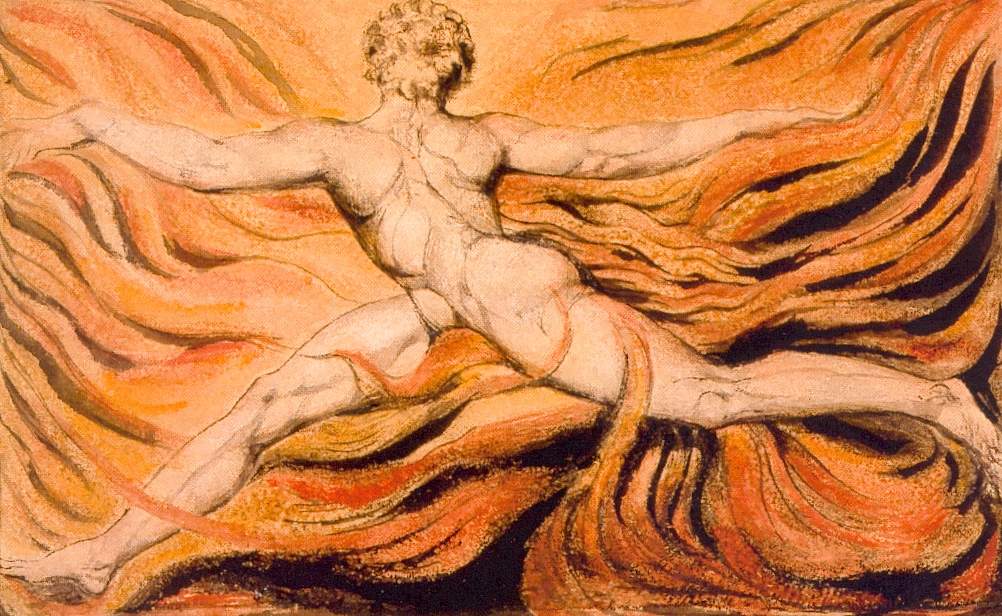
What
school of philosophy worthy of its name has not warred against the present? The
present, the now, has been demystified and shown up in a hundred different
ways. It is the vanishing point, the scapegoat, the zero of metaphysics. It sticks in the throat the way zero, too,
once stuck in the throat. And zero, too, is a hallmark of modernity. The
ancients did not have zero. The Babylonians had a placeholder that allowed them
to represent zero, but it was only a placeholder. It was analogous to the
decimal point, which is not itself a number. Zero was a gift from the East –
George Ifrah, in his book on numbers, dates the birth of zero to 458 in the
Lokavibhaga. From there it traveled to
China and Southeast Asia, and to Central Asia. In Baghdad, Al Khwarizmi
(780-850), who founded algebra – or at least picked up the stray pieces of
mathematical knowledge and put them in a book - used Hindu numbers. According
to Michel Soutif, “Leonardo Fibonacci of Pisa wrote a treatise of arithmetic,
the Liber Abacci, in 1202. This work, which would play a driving role during
the XIIIth century, describes the
« Novem figurae Indorum” with the 0 sign that
the arabs call “zephyrum”. The long adventure of zero in the West can be said
to conclude in 1898, when Peano substituted zero for one in his list of the
five primitive notions in mathematics, about which he said: “All systems which satisfy the five primitive
propositions are in one-to-one correspondence with the natural numbers”. Of course, long before 1898, it was realized
that nothing comes of nothing, which is precisely the use of nothing, and every
schoolboy knew how to draw the zero, multiply with it, add with it, etc. And
every engineer as well. We had already begun to build the artificial paradise
on the foundation of the zero.
We can call zero a
notion or an idea, or we can call it a devise. A devise is a thing, but it is
also the affordances of a thing – it is not only what the French call a truc,
but it is also what Americans call a “deal”,
or a “trick” (“the trick of the x is that it does such a such”). The deal and
the trick follow in the enchanted train of the trope, the turn. The
ancients didn’t have a notion of zero
as a natural number, but they did know all about shapeshifters, magicians, and
how the dead can be brought back to life – from beyond the zero, as Pynchon
puts it in Gravity’s Rainbow, where the trick is that extinguished reflexes
live again when they are whispered to by the unearthly elements, the
synthetics, the witch’s brew, the chemistry of zero.
From this point of
view, a history of devises – a history of technology – would be a history of
tricks. David Edgerton, one of the leading historians of technology, has
criticized the field for identifying technology with innovation, or invention,
when, he claims, technology is about use. To emphasize this clain, he gave one
of his books the title, “The Shock of the Old”. In it, he turns the readers
attention to the utterly mixed nature of modern technology, in which, contrary
to those historians that saw one technology after another inaugurate speeded up
ages (of steam, of petroleum, of biotech, of information, etc.), old tech and
new tech coexist. The age of the auto in the twentieth century was also the age
of the greatest use of horses in any war, in the Nazi invasion of Europe, where
the Germans alone employed 2 million horses. The age of the internet in the 21st
century saw Osama bin Laden escape on a pony (or a stallion) from Tora Bora,
and U.S. GIs relearn horseback riding whilst carrying telecommunications that
allowed precision aerial bombing.
Edgerton’s title
takes its wit from the word “shock”, which has come to be canonically
associated with modernism and the new, and was used by Robert Hughes as the
title of his book (The Shock of the New). Shock is modernism’s trick, its deal, its now, where the zero
comes into play. It is worth examining the notion of the shock, then, for it
forms a kind of model whose elements come into play in the industrial experience
of the accident and – significantly – alienation in all its distressing
wonders.
In Stanley Finger
and Marco Piccolino’s The Shocking History of Electrical Fishes (notice, again,
that shock is charged, here, with a certain irony – as though its metamorphosis
through the popular press, which hung shock on crime, or on truth, or on any sensation, had created a certain
self-refective numbness), there is a quotation from Galen about the torpedo, a
fish that seemed to fascinate the Greeks
Some [physicians] even believe that, through the action of their power (dunamei), some matters could alter nearby bodies by simple contact. Such
a nature is encountered in the sea torpedoes. They have a power so that that,
through the trident of the fishermen, the alteration is transmitted to the
hand, which soon gets numbed (narkison).”
That numbness has already been recorded in the Meno, where
Socrates is compared to the torpedo, which numbs those who come in contact with
it. Similarly, Meno says that he is ‘benumbed in my soul and my mouth…”
These instances of numbing, however, seem to elide the
moment of the simple contact, or moment of shock. In Finger and Piccolini’s
account, they helpfully comment on the numbing sensation that is referenced
over and over with the term shock – but the term in play, up through the
medieval period, is always some variant of numbing, or stupefying. It wasn’t
until the end of the 17th century, as various electrical devises,
such as the Leyden Jar, ‘condensed’ electricity to the point that people could
control electric shock to an extent that numbness began to be replaced by the
more naked word shock. In Samuel Johnson’s poem for the death of Stephen Grey, the
“electrician” – one of the scientists most interested in the qualities of the
electric fluid – shock has replaced numbness and become a sort of cosmological
element:
“No more shall Art thy dexterous hand require,To break the sleep of elemental fire;
To rouse the power that actuates Nature's frame,
The momentaneous shock, the electric flame;
The flame which first, weak pupil to thy lore,
I saw, condemn'd, alas! to see no more.”
Johnson was the last person on earth who wanted to break the sleep of elemental fire if it meant overturning the design of the classical universe presided over by a loving deity, and pervaded by the forces discovered by the Greeks and refined upon by the moderns. But his images betray him. They carry us irresistibly to Blake, Shelley, and romantic science: “the dextrous hand”, “Nature’s frame” and most particularly, the “momentaneous shock”.
Friday, April 27, 2012
wanker moment 5: Exxon scepticism, a b c
The most important thing that happened in the double 0s, as
we all know, was that more than 700 –800 million people were born in that
decade. Of that group, at considerable number will live the lifestyles of the
developed world. The lifestyle I live as I type this. Considered as a
phenomenon of natural history, this is quite a strange lifestyle – a biped who
stands 6 feet tall, and weighs in at between 145 and 165 pounds, uses every day
the amount of energy that a blue whale, who stands at 95 feet and weighs
238,000 pounds. An expert on these matters, about 6 A.D., asked, what man by
taking thought could add a cubit to his stature? About 1800, the answer was,
any man with the a rudimentary sense of geometry and mechanics. By 1900, by
taking thought a man could fly. But all bets are not off. Having taken thought
and added 237,850 pounds to my stature – along with about a billion and a half
fellow humans – I may well be part of a historical circus stunt that has not
long to go.
Of course, one can
well ask whether any man was taking any thought at all in the 2000s, the decade
in which the big environmental idea was to make the SUV a tax deductible item.
It was another decade of la la la, acidifying the oceans, pumping CO2 into the
atmosphere, getting dangerously close to an underwater mining of methane
pockets that were last disrupted during the Eocene era (also known as the big
crash for the downer effect it had on everything except certain peculiar forms
of bacteria), and promoting various housing booms in desert areas, for instance
in the Western U.S., where even in normal circumstances all signs speak of the
change to the sixty year drought cycle endemic to that region of the country.
It is a distinct problem with homo sapiens even of normal size that he must
drink fresh water. 70 percent of the
freshwater on earth is now being diverted, in one way or another, to irrigate
crops, leading to the massive desertification of land from the Imperial valley
in California to the Andhra Pradesh – since irrigation makes the
desert bloom, first with plants, and then with mineral salts that leach up to
the surface of the earth (where the wind sweeps them in vast poisonous arcs)
and down into the groundwater.
This is of course
nothing new. To cut it short, in the developed world, populations continue to live on the earth like meth
fiends in a cheap apartment – and if the earth did have a landlord, he’d be
kicking us out about now. We’d find our shit on Mars, and a large sign posted
on the Himalayas: YOU ARE HEREBY ORDERED TO EXIT THE PREMISES.
But, let’s face it,
meth is the only life we know how to lead. And since we aren’t going to change
anything, the next best thing is to find wankers to assure us that we, a.,
don’t need to, b., couldn’t even if we did need to, and c., hey, did you see
that thing happening across the street?
As is appropriate
with long events, they allow us to say, lo, wankery here, and lo, wankery
there, and enjoy, if we want, a corporation funded 24/7 surroundscape of
wankery on this issue. Public intellectuals, so to speak, are added simply as
sprinkles on the cake, the wonderful towering cake of shit that we are baking
ourselves. But public intellectuals there must be, according to a rule first
whispered by the snake to Eve in the
days when homo sapiens used up the energy that any other ape would use, and
nobody, by taking thought, could gain
an inch. I like to think that the
master moment in 00s wankery on this topic are spread out between the
appearance of Bjorn Lomborg in 2001, and the freakowankery spread by the holly
jolly freakonomists from the school of Chicago in 2008.
When I read the profile of the “skeptical
environmentalist” in the NYT in 2001, I realized that here was a cat on the
road to stardom. I knew that he going to be quoted, infinitely, to a,b, and c
his way across our sad news landscape, and to be the counterpoint inserted into
every environmental story by our good buddies, the petro-industry financed
think tanks and foundations (and such are the surprises of the plutocracy that
by the end of the decade, even the Sierra Club was on the dole of the natural
gas companies). In my blog I wrote one of my first posts, on 8/8/2001, about
the future I saw for Lomborg. I was frankly envious. At the time, I was
freelancing – a conman’s game, for low low stakes – and it was as if I saw a
pro step up to the table and proceed to three card monte the shit out of
everything. Lomborg and the failed Texas oilman and cheerleader who was hoisted
into the presidency eight months before by the cutest coup you ever saw, made
such a good cultural couple that I thought for sure their sleazy, implausible,
and irresistible ways would be the most we would have to deal with. Of course,
as I was writing, Bush was dismissing reports about the Al qaeda operatives in
the country with the memorable phrase: okay, you’ve covered your ass. He of
course didn’t, and we saw plenty of his bare bottom later, on 9/11, and we
didn’t care. Cause he was a hero!
But to return to Bjorn Lomborg: the cool thing about the con
was the way he played according to character. For Lomborg, you see, wasn’t some
oil type from Houston. No, he’d been a genuine Greenpeacer, a Scandinavian one
at that, and then – he was converted. The 00s were, among other things, the
decade of the conversion story. Americans love conversion. There he was, according to himself, your
average know nothing Greenpeace schmoe, kvetching about mass extinction and
Global Warming on Planet Gaia, when he got knocked down (spiritually, that is)
by libertarian skeptics of the environmental model. No doubt, like Saul, he had
his days of reclusion and blindness, the night sweats, the fever - but a vision
of Gale Norton apparently visited him, saying, in an unearthly voice, go and
tell all mankind about the wonders of cost benefit analysis! So he arose from
his bed and now he's come out with a book, and at such a convenient time, too!
What with the trashing of the Kyoto accords and all, which looks so terrible in
the press. The book plays a theme dear to the corporate mindset - that is, that
environmentalists exaggerate, and that such things as climate change, or
environmental damage, are myths generated by inaccurate or skewed stats and
projections of enviro- Nazis. Of course, modern day converts never convert all
the way - they want to bring their cultural capital with them, otherwise they
become just another Jack in the Pack. So instead of taking the mantle of
libertarian debunker, Lomborg, of course, is still describing himself as an
environmentalist. He is of that less dogmatic type, undisturbed when they
blacktop those pristine redwood forests in California. Plenty more where that
came from! Hell, wonders of biotech nowadays, we'll just fix us up a batch in a
laboratory. So come on down, Butterfly!!!
To go through Lomborg’s view that the environment is better today than it was in 1850 would be a waste of space. Scientific American, bless em, took care of the details – but in so doing locked the debate into a matter of mikiwiki-facts. What is needed in these cases as well is… the higher literary criticism! Or something like that. Criticism that takes up the curious case of ‘scepticism’ in the anti-environmentalist discourse. It is curious that skepticism is a virtue touted by the dubious, and foisted off on the credulous, to prove the incredible. At the same time, in the same decade, in which the overwhelming power of Saddam Hussein’s secret weapons of mass destruction were accepted as fact by the establishment and the population in the face of the fact that Saddam Hussein could not, manifestly, even threaten the breakaway Northern part of Iraq with any real force (sure, he could attack the U.S., but not fearsome Kurdistan!), the same people went into the lab and poured over the science to understand, in as neutral a way as possible, whether pouring Mississippi’s of CO2 into the atmosphere was a good thing or not. Such was the thirst for skepticism that petro companies, in their scientific fervor, funded think tank intellectuals to find out all about it.
To go through Lomborg’s view that the environment is better today than it was in 1850 would be a waste of space. Scientific American, bless em, took care of the details – but in so doing locked the debate into a matter of mikiwiki-facts. What is needed in these cases as well is… the higher literary criticism! Or something like that. Criticism that takes up the curious case of ‘scepticism’ in the anti-environmentalist discourse. It is curious that skepticism is a virtue touted by the dubious, and foisted off on the credulous, to prove the incredible. At the same time, in the same decade, in which the overwhelming power of Saddam Hussein’s secret weapons of mass destruction were accepted as fact by the establishment and the population in the face of the fact that Saddam Hussein could not, manifestly, even threaten the breakaway Northern part of Iraq with any real force (sure, he could attack the U.S., but not fearsome Kurdistan!), the same people went into the lab and poured over the science to understand, in as neutral a way as possible, whether pouring Mississippi’s of CO2 into the atmosphere was a good thing or not. Such was the thirst for skepticism that petro companies, in their scientific fervor, funded think tank intellectuals to find out all about it.
As with so much of the 00s, it was like amateur comedy night
at the moron’s club. And it blackened and generally shit one of the truly good
things about the conservative temperament, which is real skepticism –real
resistance to technocratically induced social change. The greatest single
conservative book ever written by an American bears the title: Scepticism and
Animal Faith. Santayana’s chapter, Knowledge and Faith, threads the needle for
the conservative epistemologist. I’d have to quote the whole of it, but I’ll content
myself with this paragraph – which, distinguishing the skepticism that affirms
faith from the skepticism that affirms solipsism,distinguishes, as well, the
conservatism of Burke, Yeats and Eliot from the for profit skepticism of Exxon
and Lomborg:
Plato and many other philosophers, being in love with
intuition (for which alone they were perhaps designed by nature), have
identified science with certitude, and consequently entirely condemned what I
call knowledge (which is a form of animal faith) or relegated it to an inferior
position, as something merely necessary for life. I myself have no passionate
attach ment to existence, and value this world for the in tuitions it can
suggest, rather than for the wilderness of facts that compose it. To turn away
from it may be the deepest wisdom in the end. What better than to blow out the
candle, and to bed ! But at noon this pleasure is premature. I can always hold
it in reserve, and perhaps nihilism is a system—the simplest of all —on which
we shall all agree in the end. But I seem to see very clearly now that in doing
so we should all be missing the truth : not indeed by any false assertion, such
as may separate us from the truth now, but by dumb ignorance—a dumb ignorance
which, when proposed as a solution to actual doubts, is the most radical of
errors since it ignores and virtually denies he pressure of those doubts, and
their living presence. Accordingly, so long as I remain awake and the light
burning, that total dogmatic scepticism is evidently an impossible attitude. It
requires me to deny what I assert, not to mean what I mean, and (in the sense
in which seeing is believing) not to believe what I see. If I wish, therefore,
to formulate in any way my actual claim to knowledge—a claim which life, and in
particular memory, imposes upon me—I must revise the premisses of this
nihilism. For I have been led to it not by any accidental error, but by the
logic of the assumption that knowledge should be intuition of fact. It is this
presumption that must be revoked.”
This presumption has a tendency to be assumed within the
hierarchy and planning of all large organizations, including science, even as
science officially renounces it for the play of probabilities – probabilities that
are much like Santayana’s essences, variable places more real than the values
that are inscribed into them. But enviro-scepticism is no such glorious
intellectual bird - it is, rather, that
familiar species, the American buzzard, even if it wears a Scandinavian haircut.
Americans however have no need to import Danes to fill our
buzzard quota. So the next wanker moment, the freakowanker moment, involves two
pundits in the American grain.
Tuesday, April 24, 2012
wanker moment 4: hero John Kerry, come on down!
The Dems had a problem in 2004. Was the problem that they
had shown zero integrity in opposing Bush tax cuts, the rich vein of corruption
that clogged the arteries of the administration like the cholesterol that
clogged the portals of Dick Cheney’s heart, indefensible fecklessness pre-9/11,
indefensible fecklessness post 9/11 in Afghanistan, the pill company bill, the
vicious and unacceptable invasion and occupation of Iraq, the torture, the
massive civil rights violations, the orgy of debt resulting from the
deregulation of the mortgage market? Of course not. Basically, these were
things they were for before they were against, and were things they might be
for again.
No. Their problem was they needed someone as heroic as
George Bush.
John Kerry as a young man did not become famous because, on
a swift boat speeding through the jungles of Vietnam, he was the model for all
Rambos and Hulk Hogans to come. John Kerry as a young man became famous because
he courageously came back from the war and organized the Vietnam Veterans
against the War to, among other things, shut the war down and make it known
through the length and breadth of America that the American military had
committed massive atrocities in the course of its actions in Vietnam. To that
end, he organized investigations – it was called the Winter Soldier project –
to expose what was happening on the ground: the torturings, the burning of
villages, the arbitrary shootings of civilians, and all the rest of it.
This is what Kerry said in 1973, testifying to the U.S.
Senate:
“I would like to talk on behalf of all those veterans and say that severalmonths ago in Detroit we had an investigation at which over 150 honorably discharged, and many very highly decorated, veterans testified to war crimes committed in Southeast Asia. These were not isolated incidents but crimes committed on a day-to-day basis with the full awareness of officers at all levels of command. It is impossible to describe to you exactly what did happen in Detroit - the emotions in the room and the feelings of the men who were reliving their experiences in Vietnam. They relived the absolute horror of what this country, in a sense, made them do.
They told stories that at times they had personally raped, cut off ears, cut off heads, taped wires from portable telephones to human genitals and turned up the power, cut off limbs, blown up bodies, randomly shot at civilians, razed villages in fashion reminiscent of Ghengis Khan, shot cattle and dogs for fun, poisoned food stocks, and generally ravaged the countryside of South Vietnam in addition to the normal ravage of war and the normal and very particular ravaging which is done by the applied bombing power of this country.”
With strong words like these, Kerry should have gone down with those unpleasant truthtellers in the American tradition, such as William Lloyd Garrison, who opposed with all their might the most powerful social evil of their time.
But William Lloyd Garrison did not have a magic formula to get him out of his former positions. John Kerry, of course, did. For looking in the face of the invasion of a country that had nothing to do with 9/11, Kerry uttered his immortal credo: “I was for the war before I was against it.”
Actually, that is unfair. Kerry never said the remark attributed to him by legend. Instead of using the plain speech of the young John Kerry, unafraid to call rape rape and torture, torture, Kerry’s comments and votes on the Iraq war went something like this:
"In October 2002, he supported the current war in Iraq, despite the fact that Iraq took no aggressive action against its neighbors.
In announcing his candidacy for president, in September 2003, he said his October 2002 vote was simply "to threaten" the use of force, apparently backtracking from his belief in 1991 that such a vote would grant the president an open-ended ticket to wage war."We should not have gone to war knowing the information that we know today," Kerry said Wednesday on ABC's "Good Morning America." "Knowing there was no imminent threat to America, knowing there were no weapons of mass destruction, knowing there was no connection of Saddam Hussein to al Qaeda, I would not have gone to war. That's plain and simple."
But on Aug. 9, 2004, when asked if he would still have gone to war knowing Saddam Hussein did not possess weapons of mass destruction, Kerry said: "Yes, I would have voted for the authority. I believe it was the right authority for a president to have." Speaking to reporters at the edge of the Grand Canyon, he added: "[Although] I would have done this very differently from the way President Bush has."
The Kerry campaign says voting to authorize the war in Iraq is different from deciding diplomacy has failed and waging war.”
The nuances, the nuances! The Democratic party fell into a
vat of nuances somewhere around 1982, and has never climbed out of it since.
What could be better, for such a party, then a hero?
And so the sausage was made. Kerry’s tour of duty in Vietnam
was given the JFK PT-1 treatment by Douglas Brinkley in 2004. I don’t recall
JFK leading the WWII Veterans Against the War – but don’t worry, John Kerry was
hoping that nobody would remember his own anti-war activity, and decided, by
hocus pocus, to nuance himself back the medals he had once thrown away in perhaps
real disgust in a demonstration against the war.
And thus Kerry went onward Christian soldiering through the
primaries and to the convention. The Democratic Convention of 2004 was a
spectacle to make the angels pull out their H.L. Mencken books and crack wise.
The magic moment of the coronation was preceded by a bit of hokum that I
remember to this day – for, not having a tv set, I had to wait patiently while
my dialup internet connection downloaded the clip, and thus I got to see it
slowly. And I got to hear this. And hear it again. Because I couldn’t believe
it the first time:
“''To every little girl her father is a hero -- it's taken
some getting used to, that my father actually is one,'' Alexandra Kerry
said.”
Cutting the wankery cake, here, I would need a samourai’s
sword. As I remember it – and my memory flees in horror before the impression –
this remark was made after the campaign film nicely basted our Kerry in the
stews of a Vietnam that had been filtered through the yearnings of John Milius
in Red Dawn. Somehow, this grown up
little girl forgot to mention that he father was a hero in a war in which, as
he said, American forces “cut off ears, cut off heads, taped wires from
portable telephones to human genitals and turned up the power, cut off limbs,
blown up bodies, randomly shot at civilians, razed villages in fashion
reminiscent of Ghengis Khan, shot cattle and dogs for fun, poisoned food
stocks, and generally ravaged the countryside of South Vietnam.” I guess that
is way too x-rated for little girls!
The con game of American politics is light on nuance. Nuance
scares the mark. Nuance creates a moment of, well, distance, instead of little girl stickiness to big
Daddy.
At the time, I did not foresee the comeuppance that would
result from that hero act. But come it did. And this is what I wrote back in
those dear, damned days:
August 29, 2004
A friend of mine who is pretty far to the right sent me an email about Swift Boat Veterans about a month ago. I thought, at the time: you gotta be kidding me. Bush, with an incredibly bad military record, can’t afford to open this little can of worms up.
I was wrong. The Bush campaign correctly gauged Kerry’s weakness – a massive, senatorial vanity that makes Oedipus’ hubris look like the shrinking modesty of a closet virgin. Kerry’s response has been, throughout, a comic exercise in hauteur. It is as if Kerry feels that we will all feel his pain that he, John Kerry, a senator, a presidential candidate, is being unfairly attacked in a tv ad. Wow – a presidential candidate attacked in a slimy way! That he has made this into an issue of Bush condemning or not the ads shows …. well, a pretty bad instinct in Kerry. Hardball does not consist of insisting that your opponent dominate the game. Surely even in the incubator of egocentricity and bad but expensive hair that is D.C., surely someone around Kerry could have gently said: get over it. But no: this utterly boring and irrelevant issue is bearing beautiful fruit for the Bush campaign. Kerry’s partisans are all in a lather – all of them amplifying the vanity response, all of them insisting on the utterly godlike heroism of the young Kerry, deigning to become a grunt from his position of privilege in the Ivies – we all should be so honored! I'm weeping in my whiskey! All of them determined to stick with the story of Kerry the hero unworthily blemished to the very end.
If, instead, Kerry had accepted being attacked, and attacked back – if he hadn’t sanctimoniously “condemned” moveon’s quite mild ads on Bush – he’d be in much better shape. Liberals have a tendency to confuse their arrogance with decency – they love that word decency – when, in reality, their niceness is all context dependent. I say: bring on the dirty campaigning. If I had inherited a million bucks, I could afford to be decent too. Or indecent. The truth is, most of us don’t have any choice about it – that’s what a restricted income does for ya. So we plug up the interstices with a few moral acts, gorge on superstitions in response to our dim awareness that we are vulnerable to everything in this universe and are going to die without having eaten enough, fucked enough, thought enough, or enjoyed any one moment enough, and plug along from one besotted moment to another thinking about sex, if we are lucky and our libido hasn’t been broken by our exhaustion. I really believe that the Dem establishment doesn’t have a clue. Hence, a small town Babbitt like Rove can look like a genius just for acting like a redneck drunk, since this provokes the most maddening, and unintentionally hilarious, responses from Dems. Their noses immediately go in the air. They act sullied. They begin talking about honor, by which they mean – I, me, my ego, my preciousness, was actually INSULTED by that lout. Can you imagine? This righteous indignation plays out as a particularly nauseating blend of petulance. The mask comes down. The hoi polloi insult and are insulted all of the time. It is our art form. And if you can’t deal with that, how are you going to deal with things like, uh, war?
It has still not resonated with the Dems that they are no longer the default party. Incredible as that seems, they still respond to these things as though they were still number one. This happens. Many American manufacturers, faced with competition from the Japanese in the seventies, folded not because the Japanese could make stuff cheaper, but because the Americans were arthritic about service, produced crap, had an executive structure that was stuck in cement, crushed innovation, and had so constituted themselves around a Pavlovian routine – put out crap, get back money – that they were unable to understand the changed circumstances.
This would be extremely funny if we had some other opposition party we could go to. Alas, the Dems are it, and their screw ups are threatening to land Bush, once again, in an office he so richly does not deserve.
A friend of mine who is pretty far to the right sent me an email about Swift Boat Veterans about a month ago. I thought, at the time: you gotta be kidding me. Bush, with an incredibly bad military record, can’t afford to open this little can of worms up.
I was wrong. The Bush campaign correctly gauged Kerry’s weakness – a massive, senatorial vanity that makes Oedipus’ hubris look like the shrinking modesty of a closet virgin. Kerry’s response has been, throughout, a comic exercise in hauteur. It is as if Kerry feels that we will all feel his pain that he, John Kerry, a senator, a presidential candidate, is being unfairly attacked in a tv ad. Wow – a presidential candidate attacked in a slimy way! That he has made this into an issue of Bush condemning or not the ads shows …. well, a pretty bad instinct in Kerry. Hardball does not consist of insisting that your opponent dominate the game. Surely even in the incubator of egocentricity and bad but expensive hair that is D.C., surely someone around Kerry could have gently said: get over it. But no: this utterly boring and irrelevant issue is bearing beautiful fruit for the Bush campaign. Kerry’s partisans are all in a lather – all of them amplifying the vanity response, all of them insisting on the utterly godlike heroism of the young Kerry, deigning to become a grunt from his position of privilege in the Ivies – we all should be so honored! I'm weeping in my whiskey! All of them determined to stick with the story of Kerry the hero unworthily blemished to the very end.
If, instead, Kerry had accepted being attacked, and attacked back – if he hadn’t sanctimoniously “condemned” moveon’s quite mild ads on Bush – he’d be in much better shape. Liberals have a tendency to confuse their arrogance with decency – they love that word decency – when, in reality, their niceness is all context dependent. I say: bring on the dirty campaigning. If I had inherited a million bucks, I could afford to be decent too. Or indecent. The truth is, most of us don’t have any choice about it – that’s what a restricted income does for ya. So we plug up the interstices with a few moral acts, gorge on superstitions in response to our dim awareness that we are vulnerable to everything in this universe and are going to die without having eaten enough, fucked enough, thought enough, or enjoyed any one moment enough, and plug along from one besotted moment to another thinking about sex, if we are lucky and our libido hasn’t been broken by our exhaustion. I really believe that the Dem establishment doesn’t have a clue. Hence, a small town Babbitt like Rove can look like a genius just for acting like a redneck drunk, since this provokes the most maddening, and unintentionally hilarious, responses from Dems. Their noses immediately go in the air. They act sullied. They begin talking about honor, by which they mean – I, me, my ego, my preciousness, was actually INSULTED by that lout. Can you imagine? This righteous indignation plays out as a particularly nauseating blend of petulance. The mask comes down. The hoi polloi insult and are insulted all of the time. It is our art form. And if you can’t deal with that, how are you going to deal with things like, uh, war?
It has still not resonated with the Dems that they are no longer the default party. Incredible as that seems, they still respond to these things as though they were still number one. This happens. Many American manufacturers, faced with competition from the Japanese in the seventies, folded not because the Japanese could make stuff cheaper, but because the Americans were arthritic about service, produced crap, had an executive structure that was stuck in cement, crushed innovation, and had so constituted themselves around a Pavlovian routine – put out crap, get back money – that they were unable to understand the changed circumstances.
This would be extremely funny if we had some other opposition party we could go to. Alas, the Dems are it, and their screw ups are threatening to land Bush, once again, in an office he so richly does not deserve.
Monday, April 23, 2012
A lament for the french elections
Pity
the decline of France. At one point (alright,in the 1790s), campaign
platforms had some zing to them. Here's Babeuf's proposal for the
communist state: ‘this government will make the boundaries disappear,
the hedges, the walls, the locks in doors, disputes, trials, thefts,
murders, all the crimes; the tribunals, prisons, gallows, penalties, the
despair that causes all calamities; envy, jealousy,
insatiability, pride, deceit, duplicity, and all the other vices; more
(and this point is no doubt essential) the gnawing worm of general
disquiet, particular disquiet , perpetually there for each of us on our
fate for tomorrow, for the month, for the following year, for our age,
for our children and their children.”
This is what I call a
campaign promise...
Sunday, April 22, 2012
wanker moment three: the killing fields
Christopher
Hitchens had a good war. In the beginning, he imagined a beautiful war, and
decided that it was identical to the war being machined into place by the oil
oligarchs and Cold War relics of the Bush administration; then he supported his
friends – and who had more friends than Hitchens? He was facebook before
facebook – who fell into different categories: there were the Kurdish
smugglers, the Iraqi financial frauds, the petro-criminals, the sneaks, the
spies, and those promoting a National Front cleansing of Eurabia. And of
course, the D.C. press corps, who, like the Arkansas rubes watching the Duke
and Dauphin perform their version of Shakespeare, were bowled over by
pisselegance proffered in a nurseryroom martinet voice. Then the war came, and
it was good. The invasion was good. Then the war went slightly out of kilter.
Then the fifth column at home raised traitorous questions. Then the clubman’s
yelps he was reliably grinding out started getting boring, even when, like the
ever heroic Orwell, he ventured into the very belly of the beast by visiting
the mansions of a few Kurdish millionaires (friends!) and the green zone (where
there were more friends!).Then, realizing that the thrill had gone in this war
between “everything I love versus everything I hate” (Hitchens’ narcissistic
cri de coeur summing up his impression of the attack on the World Trade
Center), he turned to drumming up a war against Iran, supporting McCain mainly
on the strength of McCain’s bomb bomb bomb Iran song. Finally, Hitchens passed
away as the American troops were reluctantly marching out of Iraq, due to the
failure of the American government to successful manage an invitation from the
Iraq government to stay – and, incidentally, violate ten years of promises
about the war.
Given
this record, to find one shining moment of wankery is no mean task. The river
is broad. There is, for instance, the column in Slate (where he did his best
contrarian wanking) when he described, with a smartness of tone that would
bring tears to Bungalow Bill, giving a talk at the Pentagon (on the invitation
of friends!); there were the numerous moments when he dared the entire world to
find any spots on Ahmed Chalabi (his friend!); there was the stern and stirring
shot over the bow of anyone daring to question the relationship of Paul Wolfowitz
(a friend!) and his mistress, Shaha Riza (a friend!) when Wolfowitz, made the
president of World Bank, oversaw raises to Riza’s salary that hiked it up past
the salary pulled down by the secretary of State; and there was, of course, the
grave moral fault Hitchens saw in those who complained that the hawks on the
war seemed chicken about fighting it themselves, or having their children fight
it – which of course was an attack on the entire civilian command structure
over the Pentagon.
Out
of this unceasing stream of buncombe, I should pause especially for Hitchens’
defense of Chalabi, which is a formula for his journalistic m.o.
"Yet every journalist feels compelled to state, as a matter of record, that Ahmad Chalabi was once convicted (by a very bizarre special court in the kingdom of Jordan) of embezzling money from a bank that was partly controlled by Iraq. I am not an accountant, and I admit that I don't know what happened at the Bank of Petra in 1972. I am not sure, after exhaustive inquiries, that I know anybody who really does know. But I do know what happened at the Iraqi Central Bank a few weeks ago, and I don't have to be an accountant or auditor to understand it.”
Exhaustive
inquiries here means – asking friends! And lo, behold his instant understanding
of what happened at the Iraqi Central Bank! This, of course, relies on second
hand intuition, which was pretty much the way Hitchens did everything in the
double Os – running on gas fumes. In
fact, three days before Hitchens wrote
these sentences (on May 14,2003), an L.A. Times story laid out the details of
the Petra Bank gig as clearly as, well, anything that transpired at the Iraqi
Central Bank.
However,
my own intuition is that none of these bloodthirsty rants quite equals the
killing fields moment.
Maestro,
a little music, please: back in the middle of the Iraq’s glorious liberation,
the Lancet published an article that presented the results of a survey
attempting to measure, in lives lost, the cost of it – to the happy Iraqis. The
team making the survey was not employing any very novel technique. Rather, it
was close to the techniques that had been used to measure the cost in human
lives of the civil war in the Sudan and the Congo. It included not only
battlefield casualties, but casualties due to lack of food, warmth, shelter,
medical care – that is, the burden of violence on non-combatants as well as
combatants.
The
report calculated that by 2006, there were "654,965 excess Iraqi deaths as
a consequence of the war.” This worried the American media. They had a nice
correct ratio in their heads of virtuous war-to-deaths, which was more like 40
thousand Iraqis killed (and all of them no doubt deserving it!). Thus, the
media gave a lot of space to conservatives and warhawks who shot spitballs at
the report (which allowed the media to split the difference, in the preferred
He said she said manner – NYT decorum calls for trotting out “from 100,000 to
150,000 victims” at the moment). It will astonish all and sundry that the American media
does not give a lot of space to, say, the Sudanese government’s counterclaims on the
number of the dead resulting from the attempt by Khartoum to crush the people
of the South, but can easily be accounted for by
the ‘friends!” rule – the owners and editors of the papers don’t normally go to
cocktail soirees where the leaders of the Revolutionary Command Council for
National Salvation are hanging around the wine bar. Also, see under Power, Establishment use of; Fourth Estate,corruption of; and various other like entries in the Encyclopedia of the double ohs.
Hitchens
came to the plate at this grave moment and wrote an immortal column about the
statistics of it all. As Hitchens himself, back in the nineties, relied
beaucoup on stats to prove that Clinton was committing an enormous crime by
starving the Iraqis through sanctions, he had a sticky wicket to navigate. And
so he pulls here, and he pulls there. He notes: “And it's been noticed that Dr.
Richard Horton, the editor of the magazine, is a full-throated speaker at rallies
of the Islamist-Leftist alliance that makes up the British Stop the War
Coalition.” He stops short of accusing Horton of making his wife wear a burqua,
but this is because Hitchens has a humane side. Of course, Hitchens does not
mention that the war he is fullthroatedly supporting had reached a stage in
which our liberated Iraqis were being led by the Islamic Da’wa party – this
would discouragingly muddy the invective, as of course that would make him a
supporter of the Islamicist-Rightist alliance. In the dream war that Hitchens
was fighting, that was unacceptable.
Then
Hitchens, in a moment of inspiration, realizes that starting a war means that
people on the other side kill people on your side, so that you have to really
count the people you save by killing the people on the other side. It is a
moment of Alice in Wonderland brightness:
This
is painful. At about the same time Hitchens was spilling these words onto some
screen, he pulled himself together for an interview with Reason Magazine
concerning the war, and there he regained his valor:
Yes: I was an advocate before the fact, not a supporter.
2. Have you changed your position?
Not in the least: I wish only that Saddam had not been able to rely upon Russian and French protection and the influence of oil-for-food racketeers and other political scum.
3. What should the U.S. do in Iraq now?
The United States and its allies should continue to stand for federal democracy, while making Iraq a killing-field for jihadists and fascists and a training ground for an army that will need to intervene again in other failed state/rogue state contexts.”
Who knew that the U.S. was standing heart and soul, chickenhawk and hero, for federal democracy in Iraq? But such are the wonders of liberation, I suppose, that the casus belli changes as fast as the top ten hits on Melody Maker. However, "the killing ground" phrase is truly immortal. It is the martinet mind finally freed from all scruples, and taking wing. Perhaps this was due to the fact that Hitchens, in the 00s, was also reveling in one of the laws of heredity he had forgotten: because his father was an navy man, which made Hitchens almost into a veteran.
I confess that I rather lost sight of Hitchens after 2006. The bubble of cretinism was bursting around the globe, and Hitchens brand of it seemed as outmoded and out of touch as the horrendous Fighting Words column, which Hitchens himself must have known was a mistake. Although perhaps the man whose increasingly leaden touch for language made him ever more popular in D.C. (where all were friends, and friends, and friends) could not understand the death of his talent underneath the avalanche of his verbiage.
For those who want to make the tour of the mock killing fields, here are some references:
Hitchens
on Chalabi.
John Dizard in Salon on Chalabi’s thievery.
Hitchens
on Wolfowitz and Shaha Riza.
The whistleblower report on Wolfowitz’sreign at the World Bank is here.
Hitchens
and the issue of the chicken hawks is here.
http://www.slate.com/articles/news_and_politics/fighting_words/2005/06/dont_son_me.html
Hitchens
on the Lancet report is here.
And the killing fields interview is here.
Subscribe to:
Posts (Atom)
Anger and repetition: a non-Kierkegaardian excursus
In Repetition, Kierkegaard’s founding binary is that between recollection and repetition. As founding binaries go, that is a good one. ...

-
 You can skip this boring part ... LI has not been able to keep up with Chabert in her multi-entry assault on Derrida. As in a proper duel, t...
 -
 Ladies and Gentlemen... the moment you have all been waiting for! An adventure beyond your wildest dreams! An adrenaline rush from start to...
 -
LI feels like a little note on politics is called for. The comments thread following the dialectics of diddling post made me realize that, ...